
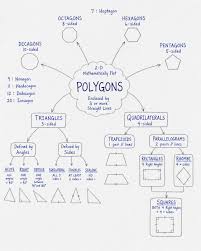
Shapes are everywhere. They define the buildings we walk into, the coins we carry, and the dice we roll during game night. Most people can identify a triangle or a square without thinking twice. But ask someone to name the shape with ten straight sides, and you will usually get silence.
That shape deserves more attention than it gets. A 10 sided polygon carries a rich history rooted in ancient Greek mathematics, a surprising connection to one of nature’s most famous ratios, and practical uses that stretch from mosque ceilings in Istanbul to the ten-faced dice sitting on a tabletop gamer’s shelf. Whether you are a student preparing for a geometry exam, a designer hunting for balanced visual forms, or simply someone who stumbled onto the question out of curiosity, this guide walks you through every detail worth knowing. We will cover the name and its origins, break down the angle measurements step by step, explore different types, explain how to draw one, and point out real-world places where this shape quietly shows up. By the time you finish reading, you will understand why the 10 sided polygon holds a unique place in geometry and why mathematicians, artists, and engineers keep returning to it century after century.
What Is a 10 Sided Polygon Called?
The formal name is the decagon. It comes from two Greek words. “Deka” means ten. “Gonia” means angle or corner. Put them together and you get a word that literally translates to “ten angles,” which makes perfect sense once you count the corners of the shape.
This naming pattern is consistent across geometry. A five-sided shape is a pentagon (pente = five). A six-sided shape is a hexagon (hex = six). An eight-sided shape is an octagon (okto = eight). Following that same logic, a polygon with 10 sides lands squarely on “decagon.” You may occasionally hear people call it a “ten-gon” in casual conversation, but decagon is the term used in textbooks, research papers, and standardized tests worldwide.
Within the broader family of polygons, the decagon sits between the nonagon, which has nine sides, and the hendecagon, which has eleven. It is classified as a simple polygon because its sides do not cross over each other. At its most basic level, any closed flat shape made of exactly ten straight line segments qualifies as a 10 sided polygon. But the version that gets the most mathematical attention is the regular decagon, where every side is the same length and every angle is identical. That regularity is what gives the shape its distinctive near-circular appearance and its deep ties to the golden ratio, which we will get to shortly.
Every decagon, regular or not, shares a few fixed characteristics. It always has ten vertices, ten interior angles, and exactly thirty-five diagonals. Those numbers are baked into the geometry and do not change regardless of how stretched or skewed the shape becomes. This predictability is part of what makes the decagon so useful in both pure mathematics and applied design.
Properties and Measurements of a Regular 10 Sided Polygon
Numbers bring a shape to life. Knowing the name is a good start, but understanding the measurements is what separates casual recognition from real geometric literacy. The regular decagon has some elegant numbers worth memorizing.
Interior Angle Calculation. The formula for finding the interior angle of any regular polygon is straightforward: take the number of sides, subtract two, multiply by 180 degrees, and then divide by the number of sides. Written out, it looks like this: (n − 2) × 180° / n. For a decagon, n equals 10. Plugging that in gives (10 − 2) × 180° / 10, which simplifies to 8 × 180° / 10, and that equals 1,440° / 10. The answer is 144 degrees per interior angle. That is noticeably wider than the 120-degree angle of a regular hexagon and far wider than the 90-degree corner of a square. It is this large angle that makes the 10 sided polygon look so close to a circle. If you were to stand inside a regular decagon-shaped room, the walls would curve around you so gently that you might not immediately realize you were not standing in a round space.
Exterior Angles. Every convex polygon has a neat trick: its exterior angles always add up to exactly 360 degrees, no matter how many sides it has. For a regular decagon, each exterior angle measures 360° / 10, which equals 36 degrees. If you have ever seen a compass rose with ten evenly spaced points, each gap between points corresponds to this 36-degree measurement.
Sum of All Interior Angles. Before dividing by the number of sides, the total sum of interior angles for a decagon is 1,440 degrees. That figure comes from (10 − 2) × 180°. Engineers and architects sometimes use this total when checking whether a multi-angled structure has been measured correctly. If the angles of a ten-sided floor plan do not add up to 1,440 degrees, something has gone wrong in the survey.
Diagonals, Symmetry, and Lines of Reflection. The diagonal count follows the formula n(n − 3) / 2. For ten sides, that gives 10 × 7 / 2, which equals 35. That is a dense web of internal lines, and it partly explains why decagonal patterns in Islamic art feel so intricate — the geometry naturally produces complexity. A regular decagon also has ten lines of symmetry and rotational symmetry of order ten, meaning you can rotate it by 36-degree increments and it will look exactly the same each time.
Regular vs. Irregular — Types of a Polygon With 10 Sides
Not every ten-sided shape looks like the crisp, balanced figure you see in a textbook. Decagons come in several varieties, and the differences matter depending on the context.
Regular Decagons. This is the textbook version. All ten sides measure the same length. All ten interior angles measure exactly 144 degrees. The shape has maximum symmetry, and if you inscribe it inside a circle, every vertex touches the circumference at perfectly equal intervals. It looks almost round, which is why regular decagons often serve as a visual middle ground between polygons and circles in design work. When people refer to a 10 sided polygon without any further description, they usually mean this regular form. Architects and graphic designers favor it precisely because it offers the clean geometry of a polygon while approaching the softer visual impression of a circle.
Irregular Decagons. Here, the only rule is that the shape must have ten straight sides forming a closed figure. Side lengths can vary. Angles can differ from one vertex to the next. An oddly shaped piece of land surveyed into ten boundary lines is technically an irregular decagon, even though it looks nothing like the symmetrical version. Irregular decagons appear more often in real-world mapping and architecture than most people realize, simply because property lines and building footprints rarely follow perfect geometric symmetry. Any time a surveyor or urban planner draws a boundary with exactly ten edges, they have created an irregular decagon, whether or not they use that term.
Convex vs. Concave. A convex decagon keeps all its interior angles below 180 degrees. Every side “pushes outward,” and a rubber band stretched around the shape would touch all ten sides. A concave decagon, on the other hand, has at least one interior angle greater than 180 degrees, which means part of the shape folds inward like a notch or dent. Concave decagons can look star-like or jagged. The regular decagon is always convex, but irregular versions can go either way.
How to Construct a 10 Sided Polygon
Drawing a perfect decagon by hand is more approachable than you might expect. There are two main methods, one classical and one modern, and both are worth understanding. Knowing how to construct this shape from scratch also deepens your appreciation for the geometry underlying it.
Compass-and-Straightedge Construction. Carl Friedrich Gauss proved in the late eighteenth century that a regular decagon is constructible using only a compass and an unmarked straightedge. The method relies on the deep relationship between the decagon and the regular pentagon. Start by drawing a circle. Inscribe a regular pentagon inside it, which is itself a well-known classical construction. Once you have the five vertices of the pentagon marked on the circle, bisect each of the five arcs between them. That gives you five new points, evenly spaced between the original five. Connect all ten points in order, and you have a regular decagon. The reason this works traces back to the golden ratio. The pentagon’s geometry is built on that ratio, and the decagon inherits it directly.
Protractor Method. If precision matters more than classical elegance, a protractor does the job quickly. Draw a circle and mark its center. Place the protractor at the center and make a small mark on the circle’s edge every 36 degrees. Since 360 divided by 10 equals 36, you will end up with exactly ten evenly spaced points. Connect them with straight lines, and the decagon appears. This method is standard in school geometry classes and works well for hands-on projects.
Digital Tools. Software like GeoGebra, Desmos, AutoCAD, and Adobe Illustrator can generate a perfect regular decagon in seconds. You typically input the number of sides and the desired radius or side length, and the program handles the rest. For engineering and professional design work, digital construction ensures accuracy down to fractions of a millimeter. Many online geometry calculators also let you input a side length and instantly receive the area, perimeter, apothem, and angle measurements for a 10 sided polygon, which saves considerable time when working on real projects under deadlines.
The Decagon in Mathematics and Geometry
Beyond its basic measurements, the decagon connects to some of the most fascinating ideas in mathematics. These connections are part of what makes it a shape worth studying rather than just memorizing.
Relationship With the Golden Ratio. The golden ratio, symbolized by the Greek letter phi (φ), is approximately 1.618. It appears throughout nature, art, and architecture. In a regular decagon, the ratio of any diagonal to the length of one side equals exactly φ. This is not a coincidence or an approximation. It is a precise geometric fact, and it links the 10 sided polygon to the same mathematical constant that governs the spiral of a nautilus shell and the proportions of the Parthenon’s facade. The connection runs through the regular pentagon as well, since a pentagon’s diagonal-to-side ratio is also φ, and the decagon is essentially a pentagon doubled. This golden-ratio relationship is one of the reasons the decagon has fascinated mathematicians since antiquity, and it continues to appear in modern research on proportional harmony in design.
Area and Perimeter Formulas. The perimeter of a regular decagon is simple: multiply the side length by ten (P = 10s). The area requires a bit more work. The exact formula is A = (5s² / 2) × √(5 + 2√5). Alternatively, if you know the apothem, which is the distance from the center to the midpoint of any side, you can use A = ½ × perimeter × apothem. For a quick example, if each side measures 6 centimeters, the perimeter is 60 centimeters, and the area works out to approximately 276.99 square centimeters. Having both formulas available is useful because sometimes you know the side length and sometimes you know the apothem, depending on the problem. Students and professionals working with a 10 sided polygon in applied settings, such as landscaping a decagonal garden bed or cutting a decagonal tile, will find the apothem-based formula particularly handy because the apothem is easy to measure directly with a ruler.
Tessellation and Tiling. A natural question in geometry is whether a shape can tile a flat surface with no gaps and no overlaps. For a regular decagon, the answer is no. The 144-degree interior angle does not divide evenly into 360 degrees, so you cannot fit whole decagons around a single point without leaving gaps or creating overlaps. However, decagonal geometry plays a starring role in Penrose tilings, the famous aperiodic patterns discovered by Sir Roger Penrose. These tilings use a combination of shapes whose angles relate to the 36-degree exterior angle of the decagon, and they produce patterns that never repeat yet fill the plane completely. Penrose tilings have been found to describe the structure of quasicrystals, a discovery that earned Dan Shechtman the 2011 Nobel Prize in Chemistry. The fact that a 10 sided polygon cannot tile on its own but can inspire one of the most important tiling discoveries in modern science is a wonderful paradox that highlights how even a shape’s limitations can lead to breakthroughs.
Where You Will Find a 10 Sided Polygon in Real Life
Geometry does not stay trapped in textbooks. The decagon appears in more everyday contexts than most people notice, and once you start looking, you will spot it in surprising places.
Architecture and Decorative Design. Islamic geometric art is arguably the richest source of decagonal patterns in the built environment. Artisans working centuries ago in Persia, Turkey, and Moorish Spain developed intricate tiling systems based on ten-fold symmetry. The result is the breathtaking star-and-polygon patterns you can see on mosque walls, madrasah facades, and palace ceilings across the Middle East and North Africa. Researchers studying these historical patterns have found that medieval craftsmen intuitively understood geometric principles that Western mathematicians did not formally describe until centuries later. Modern architects have drawn on similar ideas. Some contemporary buildings use decagonal floor plans to create open, airy interior spaces with sightlines radiating outward in ten directions. The ten-fold symmetry distributes structural loads evenly, which gives engineers more flexibility in designing large open spaces without internal support columns.
Coins, Medals, and Currency. Several national mints produce coins with ten edges for a practical reason: the distinct shape makes them easy to identify by touch, which helps visually impaired users. Various commemorative tokens and award medals also use the decagonal outline as a visual frame that feels more distinctive than a plain circle but less sharp than a star. The choice of a 10 sided polygon for coinage is not random. Its near-circular shape rolls well through coin-sorting machines while still being distinguishable from round coins by feel alone.
Engineering, Gaming, and Digital Design. Tabletop gamers know the ten-sided die, commonly called the d10, very well. It is a standard component in games like Dungeons & Dragons and the World of Darkness system, used whenever a percentage-based roll is needed. While the faces of a d10 are technically kite-shaped quadrilaterals rather than regular decagons, the die’s overall profile and cross-section reflect decagonal geometry. In graphic and UI design, the balanced proportions of the decagon make it a popular choice for badge shapes, logo frames, and icon containers. Its near-circular symmetry gives it a softer, more approachable feel than a hexagon or octagon while still reading clearly as a polygon rather than a circle. Social media platforms, award programs, and brand identity kits regularly use the decagonal frame to create a sense of distinction without visual harshness.
Frequently Asked Questions
What is a 10 sided polygon called? The proper name is a decagon. The term comes from Greek, where “deka” means ten and “gonia” means angle. It is the standard name used across all levels of mathematics.
What is the measure of each angle in a regular polygon with 10 sides? Each interior angle measures exactly 144 degrees. This is calculated using the formula (n − 2) × 180° / n, where n is the number of sides.
How many diagonals does a decagon have? A decagon contains 35 diagonals. The formula for counting diagonals in any polygon is n(n − 3) / 2, which gives 10 × 7 / 2 = 35.
What is the sum of all interior angles in a decagon? The total sum is 1,440 degrees. This comes from the formula (n − 2) × 180°, which for ten sides equals 8 × 180° = 1,440°.
Can regular decagons tile a flat surface by themselves? No, they cannot. The 144-degree interior angle does not divide evenly into 360 degrees, so gaps will always remain when you try to arrange regular decagons around a single point.
Is a 10 sided polygon always a regular shape? It can be, but it does not have to be. A regular decagon has equal sides and equal angles, while an irregular decagon still has ten sides but with varying lengths and angle measures.
What is the exterior angle of a regular decagon? Each exterior angle measures 36 degrees. Since exterior angles of any convex polygon always sum to 360 degrees, dividing by 10 gives 36 degrees per angle.
How is the decagon related to the golden ratio? In a regular decagon, the ratio of a diagonal to a side length equals the golden ratio, approximately 1.618. This connection links the decagon to the same mathematical constant found throughout nature, art, and classical architecture.
Where are decagons used in real life? Decagons appear in Islamic geometric art, certain coin designs, ten-sided gaming dice, logo frames, and architectural floor plans. Their balanced symmetry makes them both practical and visually appealing across multiple industries.
Can you draw a perfect decagon with just a compass and straightedge? Yes. The regular decagon is a constructible polygon, as proven by Gauss. The standard method involves inscribing a regular pentagon in a circle and then bisecting each arc to create ten equally spaced vertices.
What is the difference between a decagon and a decagram? A decagon is a ten-sided polygon with straight sides connecting adjacent vertices. A decagram is a ten-pointed star polygon formed by connecting every third vertex of a regular decagon, creating an overlapping star pattern.
How do you calculate the area of a regular decagon? The area formula is A = (5s² / 2) × √(5 + 2√5), where s is the side length. Alternatively, you can use A = ½ × perimeter × apothem if you know the perpendicular distance from the center to the midpoint of a side.
What is the perimeter of a decagon? For a regular decagon, the perimeter is simply ten times the side length (P = 10s). For an irregular decagon, you need to add up the lengths of all ten individual sides to find the total perimeter.
How many lines of symmetry does a regular decagon have? A regular decagon has exactly ten lines of symmetry. Each line passes through the center and either connects two opposite vertices or bisects two opposite sides, dividing the shape into two identical mirror halves.
What is the difference between a convex and a concave decagon? A convex decagon has all interior angles measuring less than 180 degrees, so the shape pushes outward uniformly. A concave decagon has at least one interior angle greater than 180 degrees, creating an inward dent or notch in the shape.
Is a 10-sided die actually shaped like a decagon? Not exactly. Each face of a standard d10 die is a kite-shaped quadrilateral, not a regular decagon. However, the die’s overall profile and cross-section at certain angles reflect decagonal geometry.
What is the apothem of a decagon and why does it matter? The apothem is the perpendicular distance from the center of a regular decagon to the midpoint of any side. It is essential for calculating the area because the formula A = ½ × perimeter × apothem depends directly on this measurement.
How many triangles can be formed inside a decagon? A regular decagon can be divided into exactly eight non-overlapping triangles by drawing diagonals from a single vertex. This triangulation is how the sum of interior angles (8 × 180° = 1,440°) is derived.
What is the difference between a decagon and a dodecagon? A decagon has ten sides, ten vertices, and ten angles, while a dodecagon has twelve of each. The interior angle of a regular decagon is 144 degrees compared to 150 degrees for a regular dodecagon.
Does a decagon appear in Penrose tiling? Yes. The 36-degree exterior angle of the regular decagon is fundamental to Penrose tiling patterns. These aperiodic tilings use shapes whose angles are multiples of 36 degrees to fill a plane in patterns that never repeat.
Why is the decagon considered a constructible polygon? Gauss proved that a regular polygon is constructible with a compass and straightedge if its number of sides is a product of a power of two and distinct Fermat primes. Since 10 = 2 × 5 and 5 is a Fermat prime, the decagon qualifies.
What is a complex or self-intersecting decagon? A complex decagon has sides that cross over each other, creating additional interior spaces. Unlike a simple decagon, its interior is not clearly defined, and the standard interior angle sum of 1,440 degrees may not apply.
Conclusion
The decagon is one of geometry’s quiet overachievers. It does not grab headlines the way triangles and circles do, but its properties run deep, and its applications reach further than most people expect. From the 144-degree precision of its interior angles to its elegant connection with the golden ratio, the 10 sided polygon rewards anyone willing to look past its less famous reputation. Its 35 diagonals create the kind of internal complexity that has inspired centuries of Islamic art. Its near-circular symmetry makes it a favorite in modern design. And its roots in classical Greek mathematics connect it to a tradition of inquiry that stretches back more than two thousand years.
Understanding the 10 sided polygon also builds spatial reasoning skills that transfer to other areas. Once you learn to calculate its angles, you can apply the same formulas to any polygon. Once you see how its geometry connects to the golden ratio, you start noticing that ratio everywhere, from flower petals to financial charts. The decagon is not just a shape to memorize for a test. It is a gateway into a deeper appreciation of how mathematics, art, and the physical world intertwine. Whether you need to solve a geometry problem, design a logo, plan an architectural layout, or simply satisfy your curiosity, the 10 sided polygon delivers. It is a shape that bridges the abstract beauty of mathematics and the tangible demands of the physical world, and that is exactly what makes it worth knowing well.

