
There is a good chance the cup sitting on your desk right now holds exactly twelve ounces of coffee. That is not a coincidence. Walk into any cafe, scroll through any online store, or check the cupboard above your kitchen counter, and you will find the same size dominating the shelves. The 12 ounce coffee cup has quietly become the default choice for millions of coffee drinkers around the world, and there are real, practical reasons behind it.
But here is what most people never stop to think about. When your coffee maker says it brews “12 cups,” does that actually fill twelve of these mugs? How much coffee should you put in the machine? And does the material of your cup change how the coffee tastes? These are the kinds of questions that trip people up every single morning, usually before they have had their first sip. This guide covers everything you need to know about choosing, brewing for, and getting the most out of your favorite cup size. Whether you are shopping for new mugs, setting up an office break room, or just trying to figure out why your coffee pot never fills as many cups as the label promises, the answers are all here.
Why 12 Ounce Coffee Cups Became the Industry Standard
Coffee cups have not always been this big. If you could step into a roadside diner in the 1950s, you would be served your coffee in a small porcelain cup that held about five or six ounces. That was the standard for decades. The cup was small, the refills were free, and nobody thought twice about it.
Things started to shift in the 1970s and 1980s as takeaway coffee culture grew. Coffee chains needed to offer customers different sizes, and the industry eventually settled on a three-tier system that most of us recognize today. Eight ounces became the “small,” twelve ounces the “medium,” and sixteen ounces the “large.” That framework stuck because it covered every type of coffee drinker without overcomplicating the menu.
What makes the twelve ounce size the sweet spot? It comes down to balance. A twelve ounce serving holds enough coffee to feel satisfying without tipping into the territory of lukewarm leftovers at the bottom of the cup. It works beautifully for drip coffee, pour-overs, and specialty drinks like lattes and cappuccinos because there is enough volume to maintain the right ratio of espresso to milk. From a design standpoint, 12 ounce coffee cups fit snugly into standard car cup holders, work with most single-serve brewers, and are compatible with the corrugated sleeves that cafes hand out by the thousands every morning. That universal compatibility is one of the biggest reasons this size has held its ground for so long.
Types of 12 Ounce Coffee Cups — Materials, Pros, and Cons
Not all cups are created equal. The material your coffee sits in has a direct impact on heat retention, flavor, durability, and even how the drink feels in your hand. When you start comparing the different types of 12 ounce coffee cups available today, the options are broader than you might expect. Here is a breakdown of the main categories so you can pick the right one for your routine.
Ceramic and Porcelain Mugs remain the classic choice for home and office use. They retain heat better than most alternatives, they are dishwasher safe, and they do not impart any flavor into the drink. A good porcelain mug lets you taste the coffee and nothing else. Double-walled ceramic designs have become popular over the past few years because they add an insulating air gap between the inner and outer walls, keeping the coffee warm longer while keeping the outside cool enough to hold comfortably. The downside is weight and fragility. Ceramic mugs are heavier than other options, and they will shatter if you drop them on a hard floor.
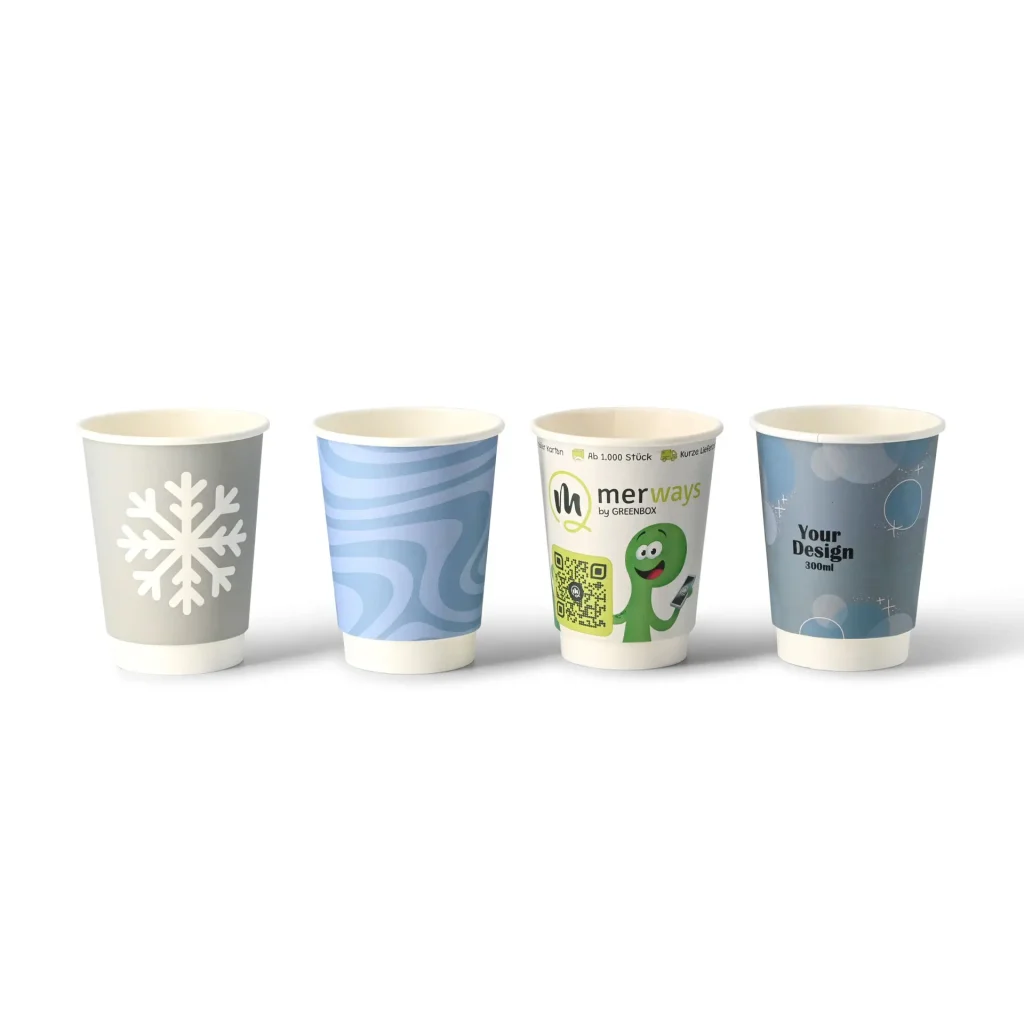
Disposable Paper Cups are the backbone of every cafe, catering event, and office coffee station. These come in two main styles: single-wall and insulated double-wall. Single-wall cups are thinner and cheaper but usually require a cardboard sleeve to prevent burned fingers. Double-wall cups have a built-in air pocket that handles insulation on its own. The materials have improved significantly in recent years. Many manufacturers now offer cups made from more than eighty percent plant-based materials, with compostable PLA linings instead of traditional polyethylene plastic. These pair with dome or flat lids depending on whether the drink is topped with foam or cream.
Stainless Steel and Insulated Travel Mugs are built for people who drink their coffee on the move. Vacuum insulation keeps the drink hot for hours, and spill-proof lids make them safe for car commutes and crowded trains. If you are shopping for one, look for a ceramic-lined interior. Stainless steel alone can sometimes leave a faint metallic taste, especially with lighter roasts, and the ceramic coating eliminates that problem entirely. Most 12 ounce travel mugs are designed to fit standard car cup holders, which is another reason this particular size dominates the commuter market.
Glass and Eco-Friendly Alternatives round out the options. Borosilicate glass cups with silicone sleeves are popular among coffee enthusiasts who want a clean, chemical-free drinking experience. You can see the color and clarity of the brew through the glass, which adds a small but real element of enjoyment to the ritual. Bamboo-fiber and recycled-material cups appeal to buyers who prioritize sustainability, though they typically offer less insulation than double-wall ceramic or stainless steel.
How Many Ounces in a 12 Cup Coffee Pot? Clearing Up the Measurement Confusion
This is where things get confusing for almost everyone, and it is one of the most commonly searched questions among coffee drinkers. If your coffee maker says it brews twelve cups, you might reasonably expect it to produce ninety-six ounces of coffee. After all, a standard U.S. measuring cup holds eight fluid ounces, and eight times twelve equals ninety-six. But that is not how coffee makers work.
Why a “cup” on your coffee maker does not equal eight ounces. The coffee industry inherited its measurement conventions from the era of small teacups and diner mugs. In coffee-maker language, one “cup” typically equals five to six fluid ounces, not eight. This convention was adopted decades ago by manufacturers and has stuck around ever since, even as the mugs people actually drink from have gotten larger. Nobody at the factory updated the math, so the labels remain misleading to this day.
So how many ounces does a 12 cup coffee maker actually produce? Using the five-ounce-per-cup standard that most manufacturers follow, a full 12 cup coffee pot holds approximately sixty ounces of brewed coffee. Some brands use six ounces per cup, which brings the total up to seventy-two ounces. The carafe that came with your machine almost certainly has small measurement lines etched into the glass — check those markings before you rely on the number printed on the box. In practical terms, sixty ounces translates to roughly five generously filled 12 ounce coffee cups. If your household has three or four coffee drinkers, a single pot might not stretch as far as you thought it would.
It is also worth noting that coffee grounds absorb water during the brewing process. Dry grounds soak up roughly twice their weight in water, which means you lose a few ounces between what you pour into the reservoir and what ends up in the carafe. So that sixty-ounce pot might yield closer to fifty-four or fifty-five ounces of drinkable coffee once the grounds have done their job.
How many ounces of coffee grounds should you put in a 12 cup coffee maker? The standard recommendation from most roasters and brewing guides is one and a half to two tablespoons of ground coffee per six ounces of water. For a full pot, that means you need between eighteen and twenty-four tablespoons of ground coffee. Measured by weight, that comes out to roughly four to six ounces, or about one hundred eight to one hundred thirty-five grams.
Here is a simple breakdown to make it easier. For a mild, lighter brew, start with around eighteen tablespoons, which equals approximately ninety grams. For a medium-strength pot that suits most palates, aim for twenty to twenty-two tablespoons, roughly one hundred eight grams. For a strong, bold brew, go up to twenty-four tablespoons or about one hundred thirty grams. Keep in mind that these are starting points, not hard rules. The type of bean, the roast level, and the coarseness of the grind all influence how the final cup tastes. A finely ground dark roast will extract much differently than a coarsely ground light roast, even if you use the same number of tablespoons.
How to Brew the Perfect Pot for Your 12 Ounce Coffee Cups
Getting the ratio right is only part of the equation. Water quality, temperature, grind size, and freshness all play a role in whether that first sip makes you smile or wince.
Water quality and temperature matter more than most people realize. Coffee is roughly ninety-eight percent water, so if your tap water has a strong chlorine or mineral taste, that flavor will carry directly into your cup. Using filtered water is one of the easiest and cheapest upgrades you can make. As for temperature, the ideal brewing range falls between one hundred ninety-five and two hundred five degrees Fahrenheit. Most quality drip machines hit this window automatically, but if you are using a pour-over or French press, a thermometer or a temperature-controlled kettle is worth the investment.
Grind size and freshness are the other two levers you can pull. For standard drip coffee makers, a medium grind works best. The texture should resemble kosher salt — not as fine as table salt, not as coarse as sea salt crystals. Grinding your beans immediately before brewing makes a noticeable difference because the volatile compounds that give coffee its aroma start to dissipate within minutes of grinding. If you have never tried pre-wetting your grounds before the full brew cycle, give it a shot. Pour just enough hot water to saturate the grounds, wait about thirty seconds, and then start the machine. This step, known as blooming, releases carbon dioxide trapped inside the grounds and leads to a more even extraction.
Matching the brew to your cup is the final piece. A twelve ounce pour leaves about an inch of room at the top of most mugs, which gives you space to add cream, milk, or sweetener without spilling. That practical headroom is another reason the size works so well across different drinking habits. And when you know that a full 12 cup pot produces about sixty ounces, you can plan your morning around it. Five cups for one person over a slow Saturday, or a cup each for a family of five before everyone heads out the door.
Choosing the Right 12 Ounce Coffee Cups for Every Setting
The right cup depends entirely on where and how you drink your coffee. What works in a kitchen will not work on a construction site, and what works at a catered event will not work on a daily commute. Here is how to think about it.
For your home kitchen, ceramic mugs in sets of four or six are the way to go. Look for ones labeled microwave-safe and dishwasher-safe so you are not handwashing mugs every morning. If you tend to sip slowly and find your coffee going cold before you finish, a double-wall ceramic or borosilicate glass mug will keep the temperature stable noticeably longer. Thick-rimmed mugs also tend to feel more comfortable against the lips, which is a small detail that makes a bigger difference than you might expect.
For the office or break room, the choice depends on your priorities. Disposable insulated paper cups in the twelve ounce size eliminate the dishwashing headache entirely and reduce spill risk for employees walking back to their desks. On the other hand, branded reusable mugs with the company logo create a sense of shared identity while cutting down on waste over time. Many businesses are now splitting the difference by keeping a stock of compostable disposables for guests and visitors while encouraging staff to bring their own cups.
For commuting and travel, a vacuum-insulated stainless steel mug with a leak-proof lid is hard to beat. Look for one with a ceramic-lined interior to keep the flavor clean, and make sure the dimensions fit your car’s cup holder before you buy. The twelve ounce form factor almost always fits, which is one more reason this size outsells both smaller and larger options in the travel mug category.
For cafes, events, and catering, the twelve ounce size serves as the ideal medium option. It covers drip coffee, pour-overs, and most espresso-based drinks without forcing guests to choose between a cup that feels too small and one they cannot finish. Double-wall or sleeve-compatible paper cups offer heat protection at a reasonable cost per unit. For businesses that want to position themselves as environmentally responsible, compostable options made from plant-based linings are now widely available and competitively priced.
Caffeine, Health, and What Fits Inside a 12 Ounce Serving
Knowing your cup size helps you keep track of something most coffee drinkers think about at least occasionally — caffeine intake.
A typical 12 ounce cup of drip coffee contains between one hundred twenty and two hundred milligrams of caffeine, depending on the bean variety, roast level, and brewing method. Light-roast coffee made from Robusta beans will land at the higher end of that range, while dark-roast Arabica sits closer to the lower end. Espresso-based drinks served in a twelve ounce cup, such as lattes and cappuccinos, often contain less total caffeine than plain drip coffee because only one or two espresso shots go into the drink and the rest of the volume comes from steamed milk.
Cold brew is the outlier. A twelve ounce glass of cold brew can deliver over two hundred milligrams of caffeine because of the extended steeping time and higher coffee-to-water ratio used during preparation. If you are sensitive to caffeine, keep that in mind the next time you grab an iced coffee thinking it will be gentler than a hot cup.
Portion awareness is easier when you use a consistent cup size. The FDA considers up to four hundred milligrams of caffeine per day generally safe for most healthy adults. That works out to roughly two to three 12 ounce coffee cups of standard drip coffee. By drinking from the same size every day, you build an intuitive sense of how much caffeine you have consumed without needing to do any math. People who constantly switch between random mug sizes have a much harder time tracking their intake, which is one more practical reason to settle on a standard and stick with it.
Sustainability and the Future of 12 Ounce Coffee Cups
The convenience of disposable cups comes with a significant environmental cost. Research estimates that roughly sixteen billion disposable coffee cups are used globally each year, and the vast majority — some studies place the figure at ninety-nine percent — end up in landfills rather than recycling facilities. The problem is not just volume. A large portion of those discarded cups are 12 ounce coffee cups, the most popular size sold at coffee shops and fast-food chains worldwide. Most disposable cups are lined with a thin layer of polyethylene plastic that makes them waterproof but also makes them extremely difficult to recycle through standard municipal systems.
The industry is responding on multiple fronts. Compostable PLA linings have become mainstream, with many major suppliers now offering cups made from eighty percent or more plant-based materials. Reusable cup programs at large coffee chains give customers a small discount when they bring their own mug, typically around ten to twenty-five cents per order. Several countries and cities have introduced or proposed taxes on single-use cups to shift consumer behavior, following the same model that dramatically reduced plastic bag usage in places like the United Kingdom and parts of Europe.
On the innovation side, engineers and designers are experimenting with edible cups made from compressed grains, mushroom-fiber materials that decompose naturally within weeks, and closed-loop recycling partnerships that collect used cups directly from businesses for specialized processing. These technologies are still in early stages, but they point toward a future where the convenience of a disposable twelve ounce cup does not have to come at the planet’s expense.
For consumers who want to make a difference today, the simplest step is investing in a reusable 12 ounce travel mug and using it consistently. One reusable mug replaces hundreds of disposable cups over its lifetime, and most are built to last for years with proper care.
Frequently Asked Questions
FAQ 1: Is 12 oz considered a standard coffee cup size?
Yes, 12 ounces is widely recognized as the standard medium coffee cup size across the global coffee industry. Most cafes, restaurants, and coffee chains use a three-tier system where 8 oz is small, 12 oz is medium, and 16 oz is large. In fact, many industry sources confirm that the 12 oz cup is the single most popular size sold at coffee shops worldwide, accounting for the majority of daily takeaway orders. At Starbucks, the 12 oz size is called a “Tall” and serves as the baseline for most drink orders.
FAQ 2: How many ounces are in a 12 cup coffee pot?
A 12 cup coffee pot holds approximately 60 ounces of brewed coffee, not 96 ounces as many people assume. This is because coffee makers define a “cup” as 5 fluid ounces, not the standard 8 ounce U.S. measuring cup. Some manufacturers use 6 ounces per cup, which brings the total to 72 ounces. Either way, a full 12 cup coffee pot will fill roughly five to six 12 ounce coffee cups, not twelve.
FAQ 3: How many tablespoons of coffee do I need for a 12 oz cup?
For a single 12 oz cup of coffee, you need about 3 to 4 tablespoons of ground coffee. This is based on the widely accepted brewing ratio of 1.5 to 2 tablespoons per 6 ounces of water. If you prefer a milder cup, lean toward 3 tablespoons. If you like your coffee strong, use 4 full tablespoons. Using a kitchen scale for even more precision, that comes out to roughly 21 to 28 grams of ground coffee per 12 oz serving.
FAQ 4: How much caffeine is in a 12 oz cup of coffee?
A standard 12 oz cup of drip coffee contains between 120 and 200 milligrams of caffeine, depending on the bean type, roast level, and brewing method. Light-roast coffees made from Robusta beans sit at the higher end, while dark-roast Arabica beans deliver less caffeine per cup. Cold brew served in a 12 oz glass can contain over 200 mg because of the extended steeping time and concentrated coffee-to-water ratio used during preparation.
FAQ 5: What are the dimensions of a 12 oz coffee cup?
A standard 12 oz paper coffee cup measures approximately 4.3 to 4.5 inches tall, with a top rim diameter of about 3.5 inches and a bottom diameter of roughly 2.3 inches. Ceramic mugs of the same capacity tend to be shorter and wider, typically standing around 3 to 4 inches tall with a wider diameter of about 3.5 to 4 inches. Exact measurements vary by manufacturer, but these figures represent the industry norm for both disposable and reusable 12 oz cups.
FAQ 6: How many ounces of coffee grounds should I put in a 12 cup coffee maker?
For a full 12 cup coffee maker, you need approximately 4 to 6 ounces (by weight) of ground coffee, which equals about 18 to 24 tablespoons. The exact amount depends on your strength preference. A mild brew calls for roughly 18 tablespoons or about 90 grams, a medium brew needs around 20 to 22 tablespoons or about 108 grams, and a strong brew requires 24 tablespoons or approximately 130 grams. Always check your specific coffee maker’s manual, as carafe capacities can vary between 60 and 72 ounces.
FAQ 7: What is the difference between a 12 oz coffee cup and a 12 oz coffee mug?
The terms are often used interchangeably, but there is a practical difference. A coffee cup typically refers to a disposable paper or foam vessel used for takeaway drinks, usually taller and narrower with a tapered shape. A coffee mug refers to a reusable ceramic, porcelain, or glass vessel with a handle, usually shorter and wider. Both hold the same 12 ounces of liquid, but mugs are designed for home and office use while cups are designed for portability and single use.
FAQ 8: Is a Starbucks Tall the same as 12 oz?
Yes. The Starbucks “Tall” size holds exactly 12 fluid ounces for both hot and cold beverages. Despite the name suggesting something large, Tall is actually one of the smallest sizes on the standard Starbucks menu. It sits between the off-menu Short (8 oz) and the Grande (16 oz). Most Tall espresso drinks are made with a single shot of espresso, while Tall Americanos and shaken espressos contain two shots.
FAQ 9: Are 12 oz paper coffee cups recyclable?
Most standard paper coffee cups are technically made from recyclable materials, but the thin polyethylene plastic lining inside makes them extremely difficult to process through regular municipal recycling systems. Globally, roughly 99 percent of disposable coffee cups end up in landfills rather than recycling facilities. However, newer compostable cups made with PLA (polylactic acid) linings from plant-based materials are becoming widely available and can be composted in commercial composting facilities. Always check the cup’s labeling and your local recycling guidelines before disposing.
FAQ 10: How many 12 oz cups of coffee can I get from a standard coffee pot?
A standard 12 cup coffee pot yields approximately 60 ounces of brewed coffee after accounting for water absorbed by the grounds. That means you can fill about five 12 oz cups comfortably, or roughly four very full mugs with room left for cream or milk. If your coffee maker uses the 6 oz per cup standard, a full pot produces 72 ounces, which stretches to about six 12 oz servings.
FAQ 11: What material is best for a 12 oz coffee cup?
For home use, ceramic is widely considered the best material because it retains heat evenly, does not impart any flavor to the coffee, and is both microwave-safe and dishwasher-safe. For travel, vacuum-insulated stainless steel with a ceramic-lined interior offers the best combination of temperature retention and flavor purity. For cafes and events, double-wall paper cups provide a practical balance of insulation, cost-effectiveness, and disposability. Glass cups made from borosilicate are a great eco-friendly choice for those who want a chemical-free drinking experience.
FAQ 12: Why does my 12 cup coffee maker not fill twelve mugs?
Because coffee makers use a much smaller definition of “cup” than standard U.S. measurements. In coffee-maker language, one cup equals approximately 5 to 6 fluid ounces, not the 8 ounces found in a measuring cup. So a 12 cup coffee maker brews only 60 to 72 ounces total. If you are pouring into 12 oz mugs, you will only fill five to six mugs from a full pot. Additionally, coffee grounds absorb roughly twice their weight in water during brewing, which further reduces the amount of drinkable coffee that ends up in the carafe.
FAQ 13: Is 12 oz of coffee a day too much?
No, 12 ounces of coffee per day is well within safe limits for most healthy adults. A single 12 oz cup of drip coffee contains roughly 120 to 200 mg of caffeine, and the FDA considers up to 400 mg of caffeine per day generally safe. That means you could drink two to three 12 oz cups daily and still stay under the recommended ceiling. However, individuals who are pregnant, caffeine-sensitive, or managing certain health conditions should consult a healthcare provider for personalized guidance.
FAQ 14: Can I use a 12 oz cup in a Keurig or single-serve coffee maker?
Yes, most Keurig and single-serve coffee makers include a 10 to 12 oz brew setting, and 12 oz disposable cups are designed to fit under the brew spout of these machines. Many insulated disposable 12 oz paper cups are also compatible with standard car cup holders, making them a convenient grab-and-go option after brewing. If you are using a reusable 12 oz travel mug, check that its height fits under the brewer’s drip tray before placing it.
FAQ 15: What is the ideal water-to-coffee ratio for a 12 oz cup?
The golden ratio recommended by most specialty coffee organizations is approximately 1:16 to 1:17 by weight, meaning one part coffee to sixteen or seventeen parts water. For a 12 oz cup (approximately 355 ml of water), that translates to about 21 to 22 grams of ground coffee. In simpler terms, use roughly 3 to 4 level tablespoons of medium-ground coffee for every 12 ounces of water. Adjust slightly based on your personal taste and the type of beans you are using.
FAQ 16: Do 12 oz coffee cups fit in standard car cup holders?
Yes, one of the key reasons the 12 oz size is so popular is its near-universal compatibility with car cup holders. Standard car cup holders are designed to accommodate containers with a bottom diameter of roughly 2.5 to 3 inches, and 12 oz paper cups, travel mugs, and disposable cups fall squarely within that range. Wider ceramic mugs may not fit as well, but the tapered shape of most 12 oz travel cups and paper cups is specifically engineered for vehicle cup holders.
FAQ 17: How many calories are in a 12 oz cup of black coffee?
A plain 12 oz cup of black coffee contains approximately 2 to 5 calories and virtually zero fat, sugar, or carbohydrates. The calorie count rises significantly once you add cream, sugar, flavored syrups, or milk. For example, a 12 oz latte made with whole milk can contain 150 to 200 calories, while a flavored coffee drink with whipped cream can exceed 300 calories. If you are watching your intake, black coffee in a 12 oz serving is one of the lowest-calorie beverages available.
FAQ 18: Are double-wall 12 oz coffee cups worth the extra cost?
For cafes and businesses, double-wall cups are often worth the investment because they eliminate the need for separate cardboard sleeves, which saves both money and waste over time. The built-in insulating air pocket keeps hot drinks warm and keeps the exterior comfortable to hold, reducing the risk of customer complaints about burned hands. For home use, a double-wall ceramic or glass mug in the 12 oz size keeps your coffee hotter significantly longer than a standard single-wall mug, which is especially useful if you are a slow sipper.
FAQ 19: What is the difference between 12 oz and 16 oz coffee cups?
The 12 oz cup is considered a medium or regular size at most coffee shops, while the 16 oz cup is the standard large. In practical terms, the 16 oz cup holds roughly one-third more liquid. For espresso-based drinks like lattes and cappuccinos, the 12 oz size tends to offer a better espresso-to-milk ratio and a more concentrated flavor. The 16 oz size works better for drinks where extra milk, ice, or flavored syrups are added. From a calorie and caffeine perspective, choosing the 12 oz size helps keep both in check without sacrificing the core coffee experience.
FAQ 20: How many 12 oz cups of coffee does a pound of beans make?
A standard one-pound bag of coffee beans (16 ounces by weight) yields approximately 26 to 28 cups of 12 oz coffee when using the recommended brewing ratio of 21 to 22 grams of coffee per 12 oz serving. The exact number depends on your grind size, brewing method, and how strong you prefer your coffee. Coarser grinds and weaker ratios stretch the bag further, while finer grinds and stronger brews use more coffee per cup and reduce the total yield.
Conclusion
The twelve ounce serving has earned its place as the most practical and popular cup size in coffee culture. It is large enough to deliver a satisfying portion, compact enough to fit every cup holder and bag pocket, and versatile enough to work with any brewing method or coffee style. Whether you prefer ceramic at home, stainless steel on the road, or compostable paper at your favorite cafe, the size remains the same reliable constant.
The next time someone asks you how many ounces are in a 12 cup coffee pot, you will know the answer is not ninety-six. It is closer to sixty, maybe seventy-two at most. And the next time you reach for your morning mug, you will understand why that particular size feels just right. It is not an accident. It is the result of decades of practical refinement by everyone from cup manufacturers to coffee roasters to the barista who hands you your drink every morning. Pick a cup that fits your life, measure your coffee with a little more intention, and enjoy the brew.

