
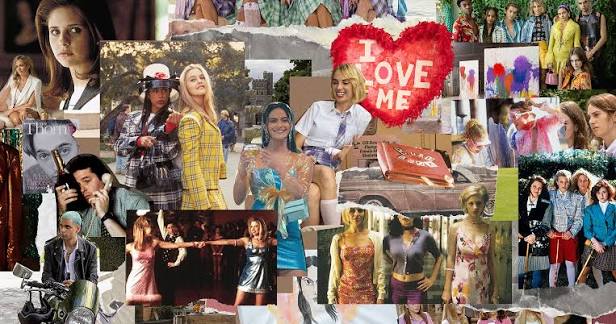
Some years in cinema just hit differently. 1995 was one of those years. While the world was busy adjusting to Windows 95 and the early internet, Hollywood was quietly producing a wave of vengeance-fueled stories that would go on to shape the next three decades of filmmaking. From Oscar-winning historical epics to genre-bending westerns and pitch-black psychological thrillers, the 1995 revenge movie landscape was staggeringly diverse.
Think about what audiences got in a single twelve-month stretch. Mel Gibson directed and starred in Braveheart, a sweeping tale of Scottish rebellion driven by one man’s grief. Sharon Stone strapped on a holster and rode into a gunfight tournament in The Quick and the Dead. Johnny Depp drifted through the surreal frontier of Jim Jarmusch’s Dead Man. Brad Pitt and Morgan Freeman chased a serial killer through the rain-drenched nightmare of Se7en. And on television, Courtney Thorne-Smith brought the chilling true-crime drama Beauty’s Revenge to life on a quiet September evening.
Each of these films approached vengeance from a completely different angle. Yet together, they formed a body of work that elevated the revenge genre far beyond the simple payback formulas of the 1980s. This was the year filmmakers stopped treating vengeance as a plot device and started treating it as a mirror — a way to examine loss, justice, morality, and what happens when ordinary people are pushed past their breaking point. What follows is a deep look at why 1995 produced such a remarkable crop of revenge-driven films and why they still matter today.
What Made 1995 a Defining Year for the Revenge Movie
To understand why 1995 became such a landmark year for vengeance on screen, you need to look at what came before it. The early 1990s had already started shifting Hollywood away from clean-cut heroics. Clint Eastwood’s Unforgiven won Best Picture in 1993 and proved that audiences were ready for morally complicated protagonists. Quentin Tarantino’s Pulp Fiction landed in 1994 and blew the doors off conventional storytelling structure. The stage was set for something bolder.
By 1995, moviegoers were no longer satisfied with straightforward action heroes who punched the bad guy and walked into the sunset. They wanted characters who carried real emotional weight. They wanted stories where the line between hero and villain felt genuinely blurred. The revenge plot turned out to be the perfect vehicle for that kind of storytelling because vengeance is, by its nature, morally messy. It asks uncomfortable questions. Is the person seeking payback justified? Where does justice end and cruelty begin? Can you destroy someone without destroying yourself in the process?
What made 1995 particularly special was the sheer variety of answers different directors offered to those questions. Sam Raimi brought a wild, spaghetti-western sensibility to his approach. David Fincher stripped the genre down to its bleakest psychological bones. Mel Gibson used personal tragedy as the fuse for a national uprising. Jim Jarmusch rejected the very idea of satisfying revenge and instead delivered an existential meditation on death. Even television got in on the conversation. Every corner of the industry seemed to be wrestling with the same theme at the same time, and the result was a 1995 revenge movie lineup that no single year has matched since.
Braveheart — The 1995 Revenge Movie That Won Best Picture
How Personal Loss Fuels a National Uprising
Braveheart remains one of the most emotionally powerful films of the 1990s, and its engine runs on something deeply personal. The story follows William Wallace, a Scottish commoner in the late 13th century who wants nothing more than to live a quiet life with the woman he loves. When English soldiers murder his wife, Murron, Wallace does not simply grieve. He erupts. That single act of violence against someone he cherished transforms him from a peaceful farmer into the leader of a full-scale rebellion against King Edward I of England.
What makes this revenge arc so compelling is its escalation. Wallace begins by attacking the local garrison that killed his wife. But once that first blow lands, there is no going back. His personal vendetta attracts followers. It grows into a movement. It becomes something far larger than one man’s pain. The genius of the screenplay is that it never lets you forget where all of this started — with a husband’s grief and a throat cut in a public square. Even as the battles grow massive and the political stakes become continental, the emotional core stays rooted in that intimate wound.
Mel Gibson directed the film with the kind of raw, unflinching energy that left audiences breathless. The battle sequences at Stirling and Falkirk are still studied in film schools for their choreography and emotional impact. James Horner’s orchestral score, built around Celtic instrumentation and the full London Symphony Orchestra, gave the story a heartbeat that made the violence feel tragic rather than gratuitous. The film swept the 1996 Academy Awards, winning five Oscars including Best Picture and Best Director.
Why Braveheart Remains Among the Best Cowboy and Frontier Films
Braveheart is not a western in the traditional sense. There are no saloons, no revolvers, and no dusty frontier towns. But it shares the soul of the best cowboy movie tradition in ways that matter more than setting. At its core, you have a lone figure standing against impossible odds. You have vast, rugged landscapes that become characters in themselves. You have a personal code of honor that drives the hero forward even when the rational choice would be to walk away. These are the same ingredients that made classics like Shane and The Searchers resonate with generations of viewers.
The film also set a template that Hollywood would follow for years. Ridley Scott’s Gladiator, which arrived five years later and also won Best Picture, borrowed heavily from Braveheart’s formula of a common man turned warrior-rebel after a devastating personal loss. The emotional DNA is unmistakable. Even modern historical revenge epics owe a clear debt to what Gibson accomplished in 1995.
The Quick and the Dead in West 1995 — Sharon Stone’s Gunslinger Revenge
A Female Cowboy Revenges Her Father’s Murder
If Braveheart was the prestige entry in the year’s revenge lineup, The Quick and the Dead was its wild, untamed counterpart. Directed by Sam Raimi, the film drops viewers into the fictional frontier town of Redemption, where a tyrannical gunslinger named John Herod, played by Gene Hackman, holds an annual quick-draw elimination tournament. Contestants enter knowing the odds of survival are terrible. The prize is glory and cash. The cost is almost certainly your life.
Into this arena rides Ellen, played by Sharon Stone. She is quiet. She is skilled. And she has a secret. Years earlier, Herod murdered her father — the town’s marshal — and forced a young Ellen to participate in his death. She has come back to Redemption for one reason, and it is not the prize money. Stone pushed hard to get this film made. She personally selected Sam Raimi as director after watching his work on Evil Dead and Army of Darkness, recognizing that his kinetic visual style would suit a revisionist western perfectly. The studio gave her a long list of approved directors. She sent back a list with a single name.
What makes Ellen’s character fascinating is how she flips the classic gunslinger archetype on its head. For decades, the lone avenger riding into a corrupt town was always a man — Clint Eastwood in the Dollars trilogy, Charles Bronson in Once Upon a Time in the West. Stone’s Ellen carries the same stoic determination, but her femininity is never erased or downplayed. She is a woman in a world of violent men, and she survives not by imitating them but by outthinking and outgunning them. This was among the most prominent examples of female cowboy revenges ever brought to mainstream cinema, and it opened a door that later films would walk through.
Sam Raimi’s Wild Visual Style and the Spaghetti-Western Homage
Raimi treated the material with the same gonzo energy he brought to his horror films. Dutch angles tilt the frame during tense standoffs. Bullets leave holes through bodies that the camera literally shoots through, sunlight streaming in from the other side. One memorable shot shows the sun piercing through a bullet hole in a hat brim. Critics and Raimi biographers have noted that the film is a very conscious attempt to recreate the themes, style, and appeal of Sergio Leone’s operatic spaghetti westerns from the 1960s, though filtered through Raimi’s distinctly American sensibility.
The cast alone makes this film worth revisiting. A young Leonardo DiCaprio, still a year away from Romeo + Juliet and two years from Titanic, plays the Kid — a cocky young gunslinger who might be Herod’s son. Russell Crowe, not yet the global star he would become, plays Cort, a former outlaw turned preacher who is dragged back into violence against his will. Gene Hackman delivers a performance of snarling, sadistic authority that ranks among the finest western villains ever captured on screen.
Critical reception was lukewarm when the film opened in February 1995. Some reviewers felt Stone could not carry the weight of a genre that belonged to Eastwood and Wayne. Others praised Raimi’s inventiveness but wished the story had more depth beneath its stylistic fireworks. Time, however, has been kind to this film. It has gained a devoted cult following and is now regularly cited as one of the most entertaining and visually inventive westerns of the decade.
Why This Film Matters in the History of Female-Led Westerns
Before The Quick and the Dead, female-led revenge westerns were rare enough to count on one hand. Raquel Welch starred in Hannie Caulder back in 1971, playing a frontierswoman who hunts down the outlaws who murdered her husband. Bad Girls arrived in 1994 with a cast of four women on the run in the Old West. But neither of those films achieved the mainstream visibility or the star power that Stone brought to Raimi’s project. The fact that a major studio released a western with a female lead, a female co-producer, and a revenge narrative driven entirely by a woman’s agency was genuinely significant for the genre. It proved that the archetype of the lone gunslinger seeking justice did not require a male face, and it helped lay the groundwork for later films like the Coen Brothers’ True Grit and Jennifer Kent’s The Nightingale.
Dead Man (1995) — Jim Jarmusch’s Surreal Frontier Revenge Journey
A Different Kind of Western Revenge Story
If every other entry on this list uses revenge as a driving force, Dead Man uses it as background noise. Jim Jarmusch’s 1995 film is technically a western. It has gunfights, wanted posters, bounty hunters, and frontier towns. But it operates on a completely different frequency than anything else released that year. Johnny Depp plays William Blake, a mild-mannered accountant from Cleveland who travels by train to the edge of civilization to accept a job at a factory in the ominously named town of Machine. The job no longer exists. Within hours of arriving, Blake kills a man in self-defense and is wounded himself. He flees into the wilderness, where he is found by Nobody, an excommunicated Native American played by Gary Farmer, who believes Blake is the reincarnation of the English poet William Blake.
What follows is not a chase film or a shootout picture. It is a slow, episodic, dreamlike journey toward death. Blake stumbles through encounters with bizarre characters — played by a stacked ensemble including Robert Mitchum, John Hurt, Iggy Pop, Billy Bob Thornton, and Lance Henriksen — while bounty hunters track him across the landscape. The film was shot entirely in black and white by cinematographer Robby Müller, and Neil Young composed an improvised, distortion-heavy guitar score that gives the entire experience the feel of a fever dream.
Among the films that define the 1995 revenge movie era, Dead Man stands apart because it refuses to give audiences the catharsis they expect. There is no triumphant showdown. There is no villain who gets what he deserves. There is only the slow, inevitable passage from life to death, rendered in images that are as haunting as they are beautiful. Film scholars have classified it as an acid western — a subgenre that folds hallucinatory and countercultural elements into the traditional frontier framework. Jarmusch himself described it as a comic, existential American trip, and that is about as accurate a summary as you will find.
How Dead Man Challenged Everything Audiences Expected
Dead Man divided critics sharply when it premiered. Some praised its ambition and its willingness to deconstruct the mythology of the American West. Others found it slow, pretentious, and deliberately obscure. Over the decades since its release, the critical consensus has shifted heavily in the film’s favor. It is now widely regarded as one of the finest westerns of the 1990s and one of Jarmusch’s crowning achievements. Its influence can be felt in later revisionist westerns and in the broader willingness of filmmakers to use the frontier setting for philosophical rather than purely action-driven storytelling.
Beauty’s Revenge 1995 Movie — The True-Crime TV Thriller Most People Missed
The Real Story Behind Beauty’s Revenge
Not every 1995 revenge movie arrived with a massive budget and a theatrical release. Some came quietly, on a weeknight, through the television screen. Beauty’s Revenge, which aired on September 25, 1995, is one of those films. Directed by William A. Graham, it stars Courtney Thorne-Smith as Cheryl Ann Davis, an obsessive small-town beauty queen who becomes fixated on a man named Kevin Reese, played by Kyle Secor. When Kevin attempts to reconcile with his former girlfriend Beth, played by Tracey Gold, Cheryl Ann’s obsession turns lethal.
The beauty’s revenge 1995 movie is based on a real criminal case from Wisconsin in the late 1980s. In the actual events, a young woman who had held the title of Dairy Princess drove over a hundred miles to her rival’s workplace and strangled her with the victim’s own belt. The crime shocked the community because the perpetrator seemed, on the surface, to be an ordinary small-town girl. She was convicted of first-degree murder and sentenced to life in prison. The film adapts these events with changed names but preserves the core of the story — the terrifying reality that obsession, entitlement, and jealousy can escalate into deadly violence.
Where Beauty’s Revenge Fits in the Larger 1995 Revenge Landscape
What makes this TV movie worth discussing alongside theatrical heavyweights like Braveheart and Se7en is the angle of vengeance it explores. This is not revenge born from noble grief or righteous anger. It is revenge born from possession — the twisted belief that another person belongs to you and that anyone who threatens that claim deserves to be destroyed. Courtney Thorne-Smith’s performance was praised by viewers who found her portrayal of a beautiful psychopath genuinely unnerving. She made the character feel real rather than cartoonish, which is exactly what a story rooted in true crime demands.
The film lacks the spectacle of its big-screen counterparts. There are no battle sequences, no dueling pistols, and no serial killers quoting scripture. But it captures a dimension of vengeance that blockbusters rarely touch — the quiet, personal, deeply human kind. In the broader context of what 1995 produced, Beauty’s Revenge serves as a reminder that vengeance does not always look cinematic. Sometimes it looks like a girl next door with a secret she cannot control.
Se7en — The Darkest 1995 Revenge Movie Ever Made
When Revenge Becomes the Villain’s Weapon
David Fincher’s Se7en might be the most disturbing entry in the entire 1995 revenge movie canon, and its power comes from a devastating inversion of the genre’s core promise. In most revenge stories, the protagonist suffers a wrong, hunts down the person responsible, and delivers justice. The audience leaves satisfied. Se7en refuses to let that happen.
The film follows two detectives — the weary, soon-to-retire William Somerset, played by Morgan Freeman, and the young, hot-tempered David Mills, played by Brad Pitt — as they investigate a serial killer who stages his murders around the seven deadly sins. Each crime scene is more elaborate and horrifying than the last. The rain never stops. The city feels rotten to its foundations. And when the killer, John Doe, played by Kevin Spacey, finally reveals himself, he does so on his own terms. The ending of Se7en, which remains one of the most shocking conclusions in film history, turns revenge into the villain’s weapon. Doe manipulates Mills into becoming the instrument of his final sin. The detective who spent the entire film chasing justice is tricked into committing the very act that completes the killer’s masterpiece.
How Se7en Redefined What a Revenge Film Could Be
This was a 1995 revenge movie that dared to punish its audience for wanting catharsis. Andrew Kevin Walker’s screenplay refused every opportunity to offer comfort or resolution. Fincher’s direction amplified that bleakness with a visual palette of rain, shadow, decay, and claustrophobic interiors that made the unnamed city feel like purgatory. The film proved that revenge stories did not need swords, horses, or gunfights. Sometimes the most devastating form of vengeance is psychological — a trap laid with patience and sprung with terrible precision.
Se7en’s influence on the thriller genre cannot be overstated. Its rain-soaked aesthetic, its willingness to leave audiences unsettled rather than entertained, and its refusal to redeem its hero became a template for dark cinema throughout the late 1990s and beyond. Without Se7en, films like Zodiac, Prisoners, and Gone Girl would look very different.
Why the 1995 Revenge Movie Still Resonates with Modern Audiences
Lasting Influence on Modern Revenge Cinema
The films of 1995 did not simply entertain and disappear. They planted seeds that grew into some of the most successful franchises and acclaimed standalone films of the 21st century. The stylized, over-the-top action of The Quick and the Dead can be traced directly to Quentin Tarantino’s Kill Bill films, which combined western iconography with martial-arts spectacle and a woman-driven revenge narrative. The emotional architecture of Braveheart — personal loss fueling a larger crusade — became the blueprint for historical revenge epics that studios continue to produce. Se7en’s bleak psychology opened the door for an entire generation of dark thrillers built around the idea that justice is not guaranteed and that pursuing revenge might destroy you.
Even the smaller entries from 1995 have left their mark. The true-crime obsession thriller, the kind of story that Beauty’s Revenge told three decades ago, has become one of the most popular genres in streaming-era entertainment. Dead Man’s willingness to use the western setting for philosophical exploration paved the way for revisionist entries like The Assassination of Jesse James and The Power of the Dog.
Streaming-Era Rediscovery of 1995 Gems
One of the most remarkable things about the revenge films of 1995 is how many of them have found entirely new audiences through streaming platforms. The Quick and the Dead, once dismissed as a commercial disappointment, is now regularly featured on curated “hidden gem” lists. Dead Man, which struggled to find a wide audience during its theatrical run, is available for free on several platforms and is frequently discussed in film communities and online retrospectives. Even Beauty’s Revenge, a TV movie that aired once and disappeared, has resurfaced on Prime Video, where a new generation of viewers has discovered its unsettling true-crime roots.
This streaming-era rediscovery has reinforced what cinephiles knew at the time — 1995 produced one of the richest and most varied collections of revenge-driven cinema ever assembled in a single year. These films keep appearing on best-of lists, film-school syllabi, and recommendation threads because they offer something timeless. The desire for justice, the cost of vengeance, and the question of how far is too far — these are themes that never go out of style.
Conclusion
Looking back across three decades, the sheer range of what 1995 delivered is staggering. You had a historical epic that won Best Picture. You had a feminist revisionist western with one of the decade’s most stacked casts. You had an art-house meditation on death disguised as a frontier tale. You had a true-crime TV thriller rooted in a real murder case. And you had a psychological horror film that broke every rule the revenge genre had ever established. No single year before or since has offered that kind of variety and quality under one thematic umbrella.
What ties all of these films together is their refusal to treat revenge as simple. Every one of them, in its own way, asks what vengeance actually costs — not just in blood, but in humanity. Wallace achieves his revenge but loses everything. Ellen gets her man but walks away from Redemption carrying a lifetime of trauma. William Blake drifts toward a death he cannot escape. Cheryl Ann Davis destroys a life and condemns her own. David Mills pulls the trigger and becomes exactly what the killer wanted him to be.
That complexity is what gives these films their staying power. They do not hand you easy answers or tidy conclusions. They leave you thinking, debating, and returning to them years later with fresh eyes. Whether you are drawn to the sweeping Scottish highlands of Braveheart, the sun-scorched duels of The Quick and the Dead, or the suffocating darkness of Se7en, the 1995 revenge movie era has something waiting for you. These films earned their place in cinema history not by shouting louder than everything else, but by cutting deeper. Thirty years later, those cuts have not healed. And that is exactly why we keep coming back.
Frequently Asked Questions
FAQ 1: What are the best revenge movies that came out in 1995?
The biggest revenge movies released in 1995 include Braveheart, which won Best Picture at the Academy Awards, The Quick and the Dead starring Sharon Stone in a western gunslinger revenge tale, Se7en directed by David Fincher with Brad Pitt and Morgan Freeman, and Dead Man directed by Jim Jarmusch starring Johnny Depp. The TV movie Beauty’s Revenge also aired in September 1995, based on a real murder case from Wisconsin.
FAQ 2: Is The Quick and the Dead a 1995 revenge movie?
Yes, The Quick and the Dead is a 1995 revenge movie directed by Sam Raimi. Sharon Stone plays Ellen, a mysterious female gunfighter who enters a deadly quick-draw elimination tournament in the frontier town of Redemption to avenge her father’s murder by the corrupt mayor John Herod, played by Gene Hackman. The film also features early performances from Leonardo DiCaprio and Russell Crowe.
FAQ 3: What is the Beauty’s Revenge 1995 movie about?
Beauty’s Revenge is a 1995 TV movie starring Courtney Thorne-Smith as an obsessive small-town beauty queen who stalks and ultimately kills a romantic rival. The film is based on the real 1989 murder of Lisa Cihaski in Wausau, Wisconsin, where a young woman named Lori Esker, who held the title of Dairy Princess, strangled a former Homecoming Queen out of jealous obsession over a shared love interest.
FAQ 4: Did Braveheart win any awards as a 1995 revenge movie?
Braveheart won five Academy Awards at the 1996 ceremony, including Best Picture and Best Director for Mel Gibson. The film also won Oscars for Best Cinematography, Best Makeup, and Best Sound Editing. The story follows William Wallace, whose personal revenge after the murder of his wife escalates into a full-scale Scottish rebellion against English rule, making it one of the most decorated revenge films in cinema history.
FAQ 5: Why is 1995 considered a golden year for revenge movies?
The year 1995 stands out because it delivered an unusually diverse and high-quality collection of revenge-driven films across multiple genres. Braveheart tackled historical epic revenge, The Quick and the Dead reinvented the western revenge formula with a female lead, Se7en redefined psychological revenge thrillers, and Dead Man offered an art-house take on frontier vengeance. No other single year has produced that level of variety and critical acclaim within the revenge genre.
FAQ 6: Who starred in The Quick and the Dead 1995?
The Quick and the Dead features an all-star cast that includes Sharon Stone as the lead gunfighter Ellen, Gene Hackman as the villainous John Herod, Leonardo DiCaprio as the cocky young gunslinger known as the Kid, and Russell Crowe as Cort, a reformed outlaw turned preacher. Sharon Stone personally paid DiCaprio’s salary when the studio refused to cast him, and she hand-picked Russell Crowe before either actor had achieved mainstream fame.
FAQ 7: Is Se7en from 1995 considered a revenge movie?
Se7en is widely classified as a revenge movie, though it subverts the genre in a groundbreaking way. Instead of allowing the protagonist to achieve satisfying revenge, the film’s serial killer John Doe manipulates Detective Mills into becoming the instrument of the villain’s final act. The shocking ending turns the concept of revenge inside out, making it the weapon of the antagonist rather than the hero, which is why Se7en is often called the darkest 1995 revenge movie ever made.
FAQ 8: What is the movie Dead Man 1995 about?
Dead Man is a 1995 black-and-white western directed by Jim Jarmusch. Johnny Depp plays William Blake, an accountant from Cleveland who travels to the frontier town of Machine and accidentally kills a man in self-defense. Wounded and on the run, he is guided by Nobody, an excommunicated Native American, on a spiritual journey toward death. The film is classified as an acid western and features a cast that includes Robert Mitchum, John Hurt, Iggy Pop, and Billy Bob Thornton, with an improvised guitar score by Neil Young.
FAQ 9: Are there any female-led revenge westerns from 1995?
The Quick and the Dead is the standout female-led revenge western from 1995. Sharon Stone plays Ellen, a woman who rides into a corrupt frontier town and enters a deadly gunfighting tournament to kill the man who murdered her father. The film was notable for casting a woman as the lone avenger in a genre historically dominated by male leads like Clint Eastwood and Charles Bronson. Stone also served as co-producer and personally selected Sam Raimi to direct.
FAQ 10: What true story is Beauty’s Revenge 1995 based on?
Beauty’s Revenge is based on the real 1989 murder case of Lisa Cihaski in Wausau, Wisconsin. Lori Esker, a 20-year-old who held the local Dairy Princess title, became obsessed with a man named Bill Buss after he ended their relationship and became engaged to Cihaski, a former Homecoming Queen. Esker drove over 150 miles from her college, strangled Cihaski with her own belt at her workplace, removed the engagement ring, and drove back. She was convicted of first-degree murder and sentenced to life in prison in 1990.
FAQ 11: How did The Quick and the Dead perform at the box office in 1995?
The Quick and the Dead was a commercial disappointment when it opened on February 10, 1995. It debuted in second place at the US box office with approximately 6.5 million dollars in its opening weekend, ultimately earning around 18.6 million domestically and 47 million worldwide. Despite the underwhelming box office, the film has since gained a strong cult following and is now considered one of Sam Raimi’s most underrated and visually inventive works.
FAQ 12: What revenge movies from 1995 can I stream today?
Most major 1995 revenge movies are accessible on modern streaming and digital platforms. The Quick and the Dead and Dead Man are available on various streaming services, while Beauty’s Revenge can be found on Prime Video. Braveheart and Se7en are typically available for digital rental or purchase through platforms like Apple TV, Fandango at Home, and similar digital storefronts. Availability rotates frequently, so checking multiple platforms is recommended.
FAQ 13: How did the revenge movies of 1995 influence modern cinema?
The revenge films of 1995 planted seeds that grew into major modern franchises and acclaimed films. Braveheart’s formula of personal loss igniting a larger crusade directly influenced Ridley Scott’s Gladiator in 2000. The Quick and the Dead’s stylized female-led vengeance story anticipated Quentin Tarantino’s Kill Bill series. Se7en’s bleak psychological approach paved the way for dark thrillers like Zodiac, Prisoners, and Gone Girl. Even the true-crime obsession angle explored by Beauty’s Revenge foreshadowed the massive true-crime streaming genre that dominates entertainment today.
FAQ 14: Why did Sharon Stone choose Sam Raimi to direct The Quick and the Dead?
Sharon Stone was given a lengthy list of studio-approved directors for The Quick and the Dead but sent back a list containing only one name — Sam Raimi. When asked why, she explained that she admired his work on Evil Dead and Army of Darkness, recognizing that his kinetic visual style and inventive camera work would bring a fresh energy to the western genre. Raimi’s direction gave the film its distinctive horror-inflected duels and exaggerated spaghetti-western visual flair.
FAQ 15: Is Braveheart considered a western or a revenge movie?
Braveheart is primarily classified as a historical epic and a revenge movie, not a traditional western. However, many film scholars note that it shares the DNA of the best frontier and cowboy films — a lone figure standing against impossible odds, sweeping landscapes, personal codes of honor, and violent confrontations driven by moral conviction. These thematic parallels are why Braveheart is frequently discussed alongside western revenge classics despite being set in medieval Scotland rather than the American frontier.
FAQ 16: What makes the ending of Se7en so shocking compared to other 1995 revenge movies?
The ending of Se7en shocked audiences because it denied the cathartic payoff that revenge films traditionally deliver. The serial killer John Doe surrenders voluntarily and arranges for a box to be delivered during the climax. The contents of the box trigger Detective Mills to execute Doe, completing the killer’s seven-sin masterpiece by making Mills embody wrath. Instead of the hero defeating the villain, the hero becomes the villain’s final weapon, a reversal that no other 1995 revenge movie attempted.
FAQ 17: Were there any other revenge movies released in 1995 besides the major ones?
Beyond the well-known titles, 1995 also saw the release of several lesser-known revenge-themed films. Ultimate Revenge, a Taiwanese-Filipino action film starring Cynthia Khan, arrived the same year. The straight-to-video Revenge Quest attempted a futuristic revenge tale on a micro-budget. On television, Beauty’s Revenge offered a true-crime take on obsessive vengeance. The year was saturated with revenge narratives across both theatrical and television formats, reflecting a broader cultural fascination with vengeance-driven storytelling.
FAQ 18: How did Dead Man 1995 differ from traditional western revenge movies?
Dead Man stands apart from traditional revenge westerns because it treats vengeance as almost incidental rather than central to the plot. While the film contains gunfights, bounty hunters, and frontier violence, its real focus is existential and spiritual — a meditation on mortality, identity, and the mythologized brutality of the American West. Shot entirely in black and white and described by director Jim Jarmusch as a comic existential American trip, Dead Man rejects the satisfying showdown structure that defines most western revenge stories.
FAQ 19: Did Leonardo DiCaprio almost not appear in The Quick and the Dead?
Leonardo DiCaprio almost did not appear in The Quick and the Dead because the studio considered him too unknown for the role. Sharon Stone, who was both star and co-producer, was so insistent on casting DiCaprio as the Kid that she personally paid his salary out of her own pocket when the production company refused. She also hand-picked Russell Crowe for the role of Cort, though the studio agreed to that casting without requiring Stone to cover his pay.
FAQ 20: What is the best 1995 revenge movie to watch first?
The best starting point depends on your taste. For epic historical drama with massive battle sequences, start with Braveheart. For a stylish, action-packed western with a female lead, choose The Quick and the Dead. For a dark, psychologically intense thriller, Se7en is the obvious pick. For a surreal, art-house experience, try Dead Man. And for a compact true-crime story based on real events, Beauty’s Revenge offers something entirely different from the theatrical blockbusters.
FAQ 21: Why do 1995 revenge movies still appear on best-of lists decades later?
The revenge films of 1995 continue to rank on best-of lists because they tackled vengeance with unusual depth and moral complexity rather than relying on simple payback formulas. Braveheart explored how personal grief can ignite national movements. Se7en questioned whether pursuing revenge might destroy the pursuer. The Quick and the Dead challenged gender norms in the western genre. Dead Man turned the revenge western into philosophy. This thematic richness gives these films staying power that shallow action-revenge movies from the same era lack.
FAQ 22: Is The Quick and the Dead 1995 based on a book?
The Quick and the Dead 1995 is not based on a book. The screenplay was written by British screenwriter Simon Moore as an original script and homage to the spaghetti westerns of Sergio Leone, particularly the Dollars Trilogy and Once Upon a Time in the West. There is a separate novel titled The Quick and the Dead by western author Louis L’Amour, which was adapted into a different 1987 TV movie starring Sam Elliott, but the two films are completely unrelated.
FAQ 23: How many Academy Awards did 1995 revenge movies win combined?
The revenge movies of 1995 earned a remarkable combined total of six Academy Awards. Braveheart alone won five, including Best Picture and Best Director. Se7en received one Oscar for Best Film Editing. The Quick and the Dead and Dead Man did not win any Academy Awards, though Stone received a Saturn Award nomination for her performance. Together, these films accumulated numerous additional nominations across categories like cinematography, sound, and screenplay.
FAQ 24: What role did Courtney Thorne-Smith play in Beauty’s Revenge 1995?
Courtney Thorne-Smith played Cheryl Ann Davis, an obsessive beauty queen who becomes fixated on a man and refuses to accept his relationship with another woman. Her performance was praised by viewers for being genuinely unsettling rather than over-the-top, bringing a quiet menace to the character that made the true-crime story feel disturbingly realistic. Kyle Secor played the love interest, and Tracey Gold played the rival who becomes the target of the protagonist’s deadly obsession.

