
You spot a job listing that pays $20 per hour and the first question that crosses your mind is simple — what does that actually add up to over a full year? It sounds decent on paper, but “decent” does not pay rent. Real numbers do. And the real numbers look quite different once you factor in taxes, hours worked, and where you live.
That is exactly what this guide breaks down. If you have ever searched 20 dollars an hour is how much a year, you are in the right place. Thousands of workers type that exact question into Google every month, and most answers they find only scratch the surface. We are going to walk through the gross annual figure, the after-tax reality for 2026, monthly and weekly pay, how it stacks up against the national average, and what kind of lifestyle it can support. By the end, the question of 20 dollars an hour is how much a year will be answered from every angle that actually matters to your wallet.
The Simple Math — How Much Per Year Is 20 Dollars an Hour?
Let us start with the straightforward calculation before anything else gets in the way.
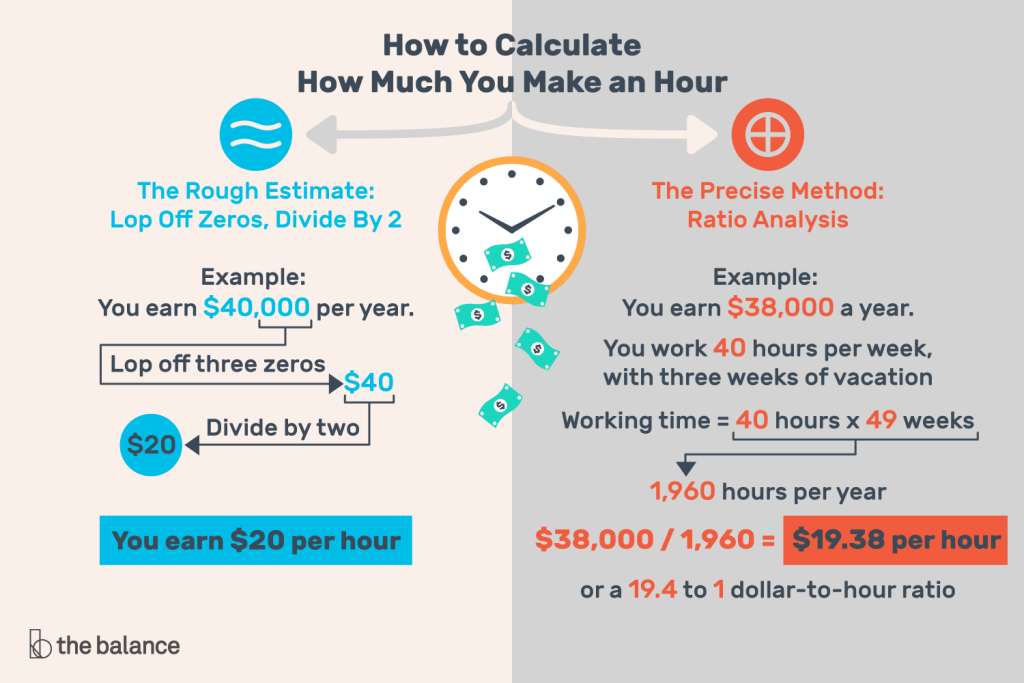
The Standard Full-Time Formula: The universally accepted baseline for full-time work is 40 hours per week across 52 weeks. Multiply $20 by 40 hours and you get $800 per week. Multiply that $800 by 52 weeks and your gross annual income lands at $41,600. That is the number you would see on a job offer letter. It is the number mortgage lenders look at. And it is the number the IRS uses as your starting point come tax season. So the quick answer to how much a year is 20 dollars an hour is $41,600 before a single deduction is taken out. Every time someone types 20 dollars an hour is how much a year into a search engine, that $41,600 figure is the first number they should know.
What Changes When You Work Fewer Hours: Not everyone works a full 40-hour schedule. Part-time hours change the picture significantly. At 30 hours per week, your annual gross drops to $31,200. At 25 hours, it falls to $26,000. Freelancers and gig workers rarely hit a clean 2,080 hours either, because unpaid sick days, gaps between contracts, and seasonal slowdowns chip away at the total. Whether you phrase it as 20 dollar an hour is how much a year or twenty bucks an hour — the math stays the same, but your actual total depends on hours logged. If you are budgeting based on a $20 hourly wage, always calculate using the hours you actually expect to work — not the theoretical maximum.
Overtime and Its Effect on Your Annual Total: On the other side of the coin, overtime can push your earnings well beyond the standard figure. Under the Fair Labor Standards Act, non-exempt employees earn time-and-a-half for every hour beyond 40 in a workweek. At $20 base pay, that means $30 per overtime hour. If you consistently pick up 10 extra hours each week, that adds roughly $15,600 in gross pay over the course of a year. Your total would climb above $57,000 before taxes — a meaningful jump that many workers at this pay rate rely on to get ahead.
20 Dollars an Hour Is How Much a Year After Taxes?
Here is where the gap between what you earn and what you keep becomes painfully clear. Anyone asking 20 dollars an hour is how much a year needs to understand that the gross figure of $41,600 never reaches your bank account intact. Federal income tax, Social Security, Medicare, and potentially state taxes all take their share before you see a dime. Understanding the after-tax number is what actually helps you plan a budget, negotiate a raise, or decide whether a job offer meets your needs.
Federal Income Tax at $41,600: For the 2026 tax year, the standard deduction for a single filer is $16,100. That brings your taxable income down to roughly $25,500. Most of that falls within the 12% federal tax bracket, which means your estimated federal income tax bill lands somewhere between $2,800 and $2,950 for the year. Married couples filing jointly get a $32,200 standard deduction, which nearly eliminates federal income tax at this income level — a significant difference in take-home pay.
Social Security, Medicare, and FICA Deductions: On top of federal income tax, every paycheck gets hit with FICA contributions. Social Security takes 6.2% of your gross earnings, which amounts to about $2,579 per year on a $41,600 salary. Medicare adds another 1.45%, pulling out approximately $603. Combined, FICA deductions cost you roughly $3,182 annually — money that comes out before you ever see your paycheck. These are not optional. They apply to every W-2 worker regardless of filing status.
State Taxes and Why Your Location Matters: This is the variable that creates a massive swing in take-home pay. Nine states charge zero personal income tax: Texas, Florida, Nevada, Wyoming, Washington, Tennessee, South Dakota, New Hampshire, and Alaska. If you live in one of these states, your only deductions are federal tax and FICA. But if you work in a state like California, you are looking at an additional 4% to 6% in state income tax on top of everything else. California also charges State Disability Insurance at 1.3% of your wages in 2026, which pulls another $541 from your annual earnings with no wage cap. That is money a lot of workers forget to account for until they look at their first few pay stubs and wonder where the rest went.
The Realistic Take-Home Range: So when someone asks 20 dollars an hour is how much a year after taxes, the honest answer is a range, not a single number. In a state with no income tax, you can expect to keep roughly $35,000 to $36,400 per year after federal tax and FICA. In a high-tax state like California or New York, that number drops to approximately $31,900 to $33,400. The difference between gross and net can be anywhere from $5,000 to nearly $10,000 depending entirely on where you live and how you file. That is why the question 20 dollars an hour is how much a year cannot be answered with just one number — taxes change everything.
Monthly, Biweekly, Weekly, and Daily Pay at $20 an Hour
Knowing your annual salary is helpful, but most bills arrive monthly or biweekly. Once you understand that 20 dollars an hour is how much a year in gross terms, the next step is seeing how that money distributes across each pay period so you can match it against your actual expenses.
Gross Earnings by Pay Period: Your yearly gross of $41,600 works out to $3,466.67 per month, $1,600 per biweekly paycheck (assuming 26 pay periods), $800 per week, and $160 per standard eight-hour workday. These are the pre-tax figures — what your employer calculates before withholdings.
After-Tax Estimates by Pay Period: Using federal tax and FICA only — no state income tax applied — your approximate take-home numbers look like this: roughly $2,955 per month, about $1,364 per biweekly check, around $682 per week, and close to $136 per day. Keep in mind, these figures do not include state taxes, health insurance premiums, or retirement contributions. If your employer deducts for a 401(k) or health plan, your actual deposit will be lower. Always check your pay stub rather than relying on estimates alone, because small deductions add up fast across 26 pay periods.
The reason this breakdown matters is simple — it lets you see whether your recurring bills fit within what actually hits your account, not what the job listing promised.
How Does a $20 Hourly Wage Compare to the National Average?
A paycheck does not exist in a vacuum. Understanding 20 dollars an hour is how much a year only becomes useful when you compare it to what other workers around you are earning and what your local cost of living demands.
$20 an Hour vs. Median U.S. Wages in 2026: Bureau of Labor Statistics data puts the median hourly wage for all occupations at roughly $23 per hour. That means $20 an hour falls below the national midpoint, though not dramatically. At $41,600 annually, this wage sits well above the 2026 federal poverty guideline for a single person, which is $15,960 per year. You are earning more than two and a half times the poverty line, which qualifies you for very few — if any — means-tested assistance programs.
Is $20 an Hour Middle Class? By most commonly used definitions, a single earner bringing home $41,600 falls into the lower end of the middle-class income band for a one-person household. However, the word “middle class” means vastly different things depending on geography. That same $41,600 covers rent, groceries, transportation, and modest savings in a smaller city in the South or Midwest. In San Francisco, Manhattan, or Boston, it barely covers a studio apartment. Purchasing power — not raw salary — determines your actual standard of living. So when people ask how much per year is 20 dollars an hour, the follow-up question should always be “and where do you live?”
20 Dollars an Hour Is How Much a Year — And Can You Actually Live on It?
This is the question behind the question. People do not search for 20 dollars an hour is how much a year out of idle curiosity. They want to know whether they can pay their bills, save a little, and still have a life. When someone Googles 20 dollars an hour is how much a year, what they really mean is “can I live on this?” The answer depends on your expenses, your location, and how disciplined you are with a budget.
The 30% Housing Rule: Financial advisors generally recommend spending no more than 30% of your gross income on housing. At $41,600 per year, that gives you roughly $1,040 per month for rent or a mortgage payment. In many mid-sized cities and smaller towns across the country, that budget is workable. You can find a decent one-bedroom apartment in cities like Indianapolis, Memphis, San Antonio, or Tulsa at or below that price point. In major coastal metros, that number is a fantasy. Average rents in cities like Los Angeles, New York, and Seattle run well above $1,500 for a studio, which means shared housing or a long commute becomes a necessity rather than a choice.
A Sample Monthly Budget on $20 an Hour Take-Home: Working from a monthly net of approximately $2,700 to $3,000 (depending on your state), here is a realistic spending framework that many workers at this wage level follow. Housing takes the biggest chunk at $900 to $1,040. Groceries run about $350 to $400 if you cook at home most of the time. Transportation — whether a car payment, insurance, and gas or a transit pass — costs between $350 and $450. Utilities and a phone plan add another $200 to $250. Health insurance and renter’s insurance together run $200 to $300, depending on whether your employer covers part of the premium. That leaves $150 to $200 for an emergency fund or savings, and another $150 to $200 for everything else — dining out, subscriptions, personal care, clothing. It is tight, but it works if you are intentional about where each dollar goes.
High-Cost vs. Low-Cost Cities: The same annual income of $41,600 produces two completely different lifestyles depending on geography. In a city like Austin, Texas, where there is no state income tax and rents are moderate by major-metro standards, a $20-an-hour worker can live independently with some breathing room. In Brooklyn, New York, that same paycheck gets stretched until it snaps. Workers in no-income-tax states keep thousands of extra dollars each year, which effectively raises their purchasing power without a single cent in additional wages.
Jobs That Pay $20 an Hour in 2026
If you are wondering what kind of work lands you at this pay rate, the list is broader than most people expect. Once you know 20 dollars an hour is how much a year, the natural next question is which jobs actually pay that rate. And many of these roles do not require a four-year college degree.
Skilled Trades and Hands-On Roles: Electrician apprentices typically start between $18 and $22 per hour and climb well above $30 with experience and licensure. Carpenters, HVAC technicians, plumbers, and solar panel installers all fall squarely in the $20-an-hour range at the entry to mid-career level. The Bureau of Labor Statistics projects solar installer positions to grow by more than 20% over the coming decade, making this one of the fastest-growing trades in the country. These jobs reward skill and reliability, and they offer clear advancement paths without requiring a bachelor’s degree.
Healthcare and Office Support: Licensed practical nurses, dental hygienists, medical coders, medical billing specialists, and administrative assistants regularly earn $20 or more per hour. Healthcare roles often require a certification or associate degree, but the training timelines are short compared to a four-year program — usually six months to two years — and the demand stays consistently strong across almost every region.
Flexible and Remote Positions: Virtual assistants, freelance proofreaders, freelance writers, social media managers, online tutors, and delivery drivers all offer paths to $20 an hour with varying levels of flexibility. For workers who value schedule control or need to work from home, these roles provide earning power without a commute. The trade-off is that many of these positions are freelance or contract-based, which means no employer-sponsored benefits and a less predictable income stream. Factor that into your planning when you evaluate the true value of a $20 hourly rate.
Smart Strategies to Make $20 an Hour Go Further
Earning $41,600 a year is a solid starting point, but knowing 20 dollars an hour is how much a year is only half the battle. Keeping more of it — and growing beyond it — is where financial progress actually happens.
Maximize Pre-Tax Deductions: Every dollar you contribute to a 401(k) or traditional IRA reduces your federal taxable income dollar for dollar. If your employer offers a match, contributing enough to capture the full match is the closest thing to free money you will find anywhere. A Health Savings Account offers an even stronger advantage for workers on eligible high-deductible health plans — contributions are tax-deductible going in, grow tax-free, and come out tax-free when used for qualified medical expenses.
Review Your W-4 Withholding: If you receive a large tax refund every spring, that means you have been giving the government an interest-free loan all year. Adjusting your W-4 so that less is withheld from each paycheck puts more cash in your pocket throughout the year, when you can actually use it. The goal is to break even or get a small refund at tax time — not to hand over hundreds of extra dollars per month that you will not see again until April.
Build Skills to Move Beyond $20: This wage does not have to be permanent. Pursuing industry certifications, volunteering for leadership responsibilities, or specializing within your trade are all proven ways to push into a higher pay bracket. Bumping your rate from $20 to $25 per hour adds over $10,000 to your gross annual income. In most skilled trades, healthcare support roles, and tech-adjacent positions, that kind of increase is realistic within one to three years of focused effort. Think of $20 an hour not as a ceiling, but as a foundation.
Frequently Asked Questions
1. How much is $20 an hour per year before taxes?
At 40 hours per week for 52 weeks, $20 an hour equals $41,600 per year in gross income. This is the standard full-time calculation used on offer letters, tax filings, and loan applications. Your actual take-home will be lower once federal, state, and payroll taxes are deducted.
2. 20 dollars an hour is how much a year after taxes?
After federal income tax, Social Security, and Medicare, a single filer earning $20 an hour takes home roughly $35,000 to $36,400 per year in states with no income tax. In higher-tax states like California or New York, the net figure drops to approximately $31,900 to $33,400 depending on filing status and deductions.
3. How much is $20 an hour per month?
Gross monthly pay at $20 an hour is approximately $3,467 based on a 40-hour workweek. After federal taxes and FICA deductions, monthly take-home pay is closer to $2,650 to $3,000, depending on your state and withholding elections.
4. What is $20 an hour biweekly?
If you work 40 hours per week and are paid every two weeks, your gross biweekly paycheck at $20 an hour is $1,600. After estimated federal tax and FICA withholdings, the net biweekly amount comes in around $1,364, though state taxes and employer-deducted benefits will reduce it further.
5. Is $20 an hour a good wage in 2026?
It depends heavily on location and household size. For a single person in a low-to-moderate cost-of-living area, $20 an hour provides a stable lifestyle with room for modest savings. In expensive metro areas like San Francisco, New York, or Boston, the same wage often requires shared housing and strict budgeting to get by.
6. Is $20 an hour considered middle class?
At $41,600 per year, a single earner falls into the lower-middle-class income band under most commonly used definitions. However, purchasing power varies widely by geography — the same salary covers far more in a small Southern city than it does on either coast. Family size also plays a major role in how this income is classified.
7. How much rent can I afford making $20 an hour?
Financial experts recommend spending no more than 30% of gross income on housing. At $41,600 per year, that caps rent at roughly $1,040 per month. This budget works in many mid-sized cities but falls short in most major metro areas where average rents exceed $1,500 for a one-bedroom apartment.
8. Can I buy a house making $20 an hour?
It is possible but challenging without a co-borrower or significant savings. On a $41,600 gross income, lenders using the 28% front-end ratio would approve a maximum housing payment of about $970 per month. With current 2026 mortgage rates around 6–7%, that supports a home purchase price in the $130,000 to $180,000 range depending on your down payment, debt, and credit score.
9. Can you live on your own making $20 an hour?
Yes, in many parts of the country a single person can live independently on $20 an hour. The key is choosing a location where rent falls at or below $1,000 per month and budgeting carefully for groceries, transportation, and utilities. In high-cost cities, living alone at this wage is difficult without supplemental income or a roommate.
10. How does $20 an hour compare to the U.S. median wage?
The Bureau of Labor Statistics reports the median hourly wage for all occupations at roughly $23 per hour. At $20 an hour, you earn about 13% below the national median. However, $41,600 annually still places you well above the 2026 federal poverty guideline for a single person, which is $15,960.
11. How much does $20 an hour equal per day?
At a standard eight-hour shift, $20 an hour equals $160 per day before taxes. After estimated federal and FICA deductions, daily take-home pay is closer to $136. These figures assume no overtime and do not account for state income tax.
12. What tax bracket does $20 an hour put you in?
On a $41,600 gross salary, a single filer with the 2026 standard deduction of $16,100 has approximately $25,500 in taxable income. Most of that income falls within the 12% federal tax bracket. Your effective overall tax rate — including FICA — works out to roughly 14% to 15%.
13. How many hours do I need to work at $20 an hour to make $50,000?
To reach $50,000 in gross annual earnings at $20 per hour, you would need to work approximately 2,500 hours. That breaks down to about 48 hours per week for all 52 weeks, meaning regular overtime beyond a standard 40-hour schedule.
14. What jobs pay $20 an hour without a degree?
Many roles pay $20 or more per hour without requiring a four-year degree. Common examples include electrician apprentices, HVAC technicians, plumbers, truck drivers, dental hygienists, medical coders, licensed practical nurses, solar panel installers, and virtual assistants. Most require trade certifications, on-the-job training, or short-term credential programs rather than a bachelor’s degree.
15. Is $20 an hour above minimum wage?
Yes, significantly. The federal minimum wage remains at $7.25 per hour, making $20 an hour nearly three times the federal floor. Even in states with the highest minimum wages — several of which now exceed $15 to $17 per hour in 2026 — $20 an hour still sits above the legal minimum.
16. How much does $20 an hour add up to per week?
Working a full 40-hour week at $20 per hour produces $800 in gross weekly earnings. After estimated federal taxes and FICA, weekly take-home pay is approximately $682. Part-time workers at fewer hours will see proportionally lower weekly totals.
17. Can I support a family on $20 an hour?
Supporting a family on a single income of $41,600 per year is difficult in most areas of the country. Childcare, groceries, health insurance, and housing for multiple people strain this budget significantly. Most families at this wage level rely on a second household income, government assistance programs, or both to cover expenses comfortably.
18. Which states let me keep the most of my $20 an hour paycheck?
Nine U.S. states charge no personal income tax: Texas, Florida, Nevada, Wyoming, Washington, Tennessee, South Dakota, New Hampshire, and Alaska. Workers earning $20 an hour in these states keep an estimated $2,000 to $4,000 more per year compared to those in high-income-tax states like California, New York, or Oregon.
19. Is $20 an hour enough to save money?
Yes, but it requires deliberate budgeting. At a monthly take-home of roughly $2,700 to $3,000, a single person in a moderate-cost area can realistically set aside $150 to $400 per month toward an emergency fund or retirement account. The 50/30/20 budgeting rule — 50% needs, 30% wants, 20% savings — is a practical framework at this income level.
20. How much is $20 an hour for a part-time worker?
Part-time earnings depend on weekly hours. At 20 hours per week, $20 an hour equals $20,800 gross per year. At 25 hours per week, it comes to $26,000. At 30 hours per week, the annual total reaches $31,200. In all cases, these are pre-tax figures — actual take-home will be lower after withholdings.
21. Does overtime change the $41,600 annual total at $20 an hour?
Yes, significantly. Under federal law, non-exempt employees earn time-and-a-half — $30 per hour — for every hour beyond 40 in a single workweek. Consistently working 10 hours of overtime per week would add approximately $15,600 per year to gross income, pushing total annual earnings above $57,000 before taxes.
22. Should I negotiate if offered $20 an hour?
Always consider negotiating. Frame the conversation around the value you bring, not just the dollar amount. Research market rates for your role using BLS wage data, and anchor your counteroffer to your skills, experience, and results. If the base rate cannot move, negotiate non-wage benefits such as extra PTO, remote work flexibility, or employer retirement contributions.
23. How does $20 an hour as a W-2 employee compare to $20 an hour as a contractor?
They are not equivalent. A W-2 employee at $20 an hour has the employer covering half of FICA taxes plus often providing benefits like health insurance and paid time off. An independent contractor at $20 an hour pays self-employment tax (roughly 15.3%), buys their own insurance, and typically has no paid leave. The effective hourly value for a contractor at $20 is closer to $14 to $16 after these costs.
24. What is the fastest way to move beyond $20 an hour?
The most proven strategies include earning industry-recognized certifications, taking on supervisory or lead roles, specializing within your trade or field, and negotiating raises backed by documented performance. A move from $20 to $25 per hour adds over $10,400 to annual gross income — a jump that is achievable within one to three years in most skilled trades, healthcare support, and tech-adjacent roles.
Wrapping Up
So, 20 dollars an hour is how much a year? At a standard 40-hour workweek, the answer is $41,600 in gross income. But gross income is the number on the offer letter — not the number in your checking account. After federal taxes and FICA, your take-home falls to roughly $35,000 to $36,400 in states with no income tax, and closer to $31,900 to $33,400 in higher-tax states like California. Now that you fully understand 20 dollars an hour is how much a year, you can plan around the real numbers instead of the theoretical ones.
The gap between what you earn and what you keep is real, and it is the number that actually matters when you sit down to plan your housing budget, set savings goals, or weigh one job offer against another. Knowing your annual gross is step one. Knowing your after-tax reality is what lets you make decisions with confidence.
What this income can support also depends heavily on geography. The same paycheck stretches far in a mid-sized Southern or Midwestern city and gets eaten alive in a coastal metro. Where you choose to live might be the single biggest financial decision you make at this wage level.
And finally, remember that $20 an hour is a foundation — not a finish line. Workers who invest in certifications, build specialized skills, and negotiate raises consistently push past this rate within a few years. Whether you are evaluating a new job, planning a move, or building a budget from scratch, the breakdowns in this guide give you every number you need to move forward with clarity.