
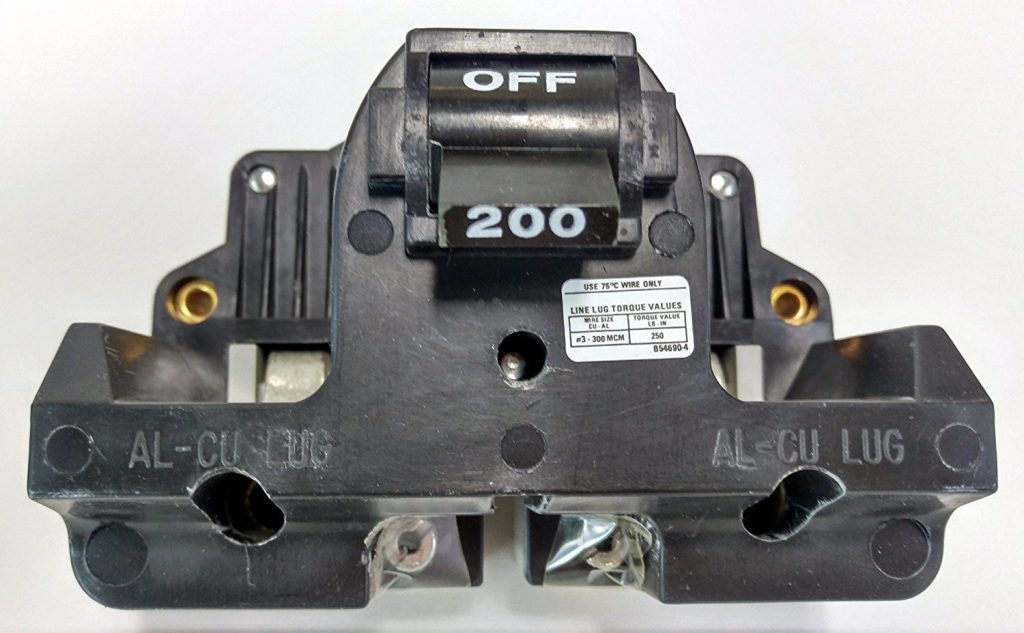
You flip the switch on your air conditioner, and the kitchen lights flicker. The microwave trips a breaker every time the dryer is running. Or maybe you just bought an electric vehicle and your electrician told you the panel cannot handle a 60-amp charger. These are the moments when most homeowners hear the term “200 amp main breaker” for the first time. It sounds technical, but the concept behind it is actually pretty simple. This single component is the gatekeeper for every watt of electricity flowing into your home. It decides how much total power your house can safely draw at any given moment, and it shuts everything down if that limit is exceeded.
Over the past decade, residential electrical demands have skyrocketed. Central air conditioning, tankless water heaters, induction cooktops, solar inverters, home battery systems, and Level 2 EV chargers have turned the average American home into a serious power consumer. A 100-amp service that felt perfectly adequate fifteen years ago now buckles under the weight of modern living. That is exactly why the 200 amp main breaker has become the baseline standard for new construction and the most common upgrade path for older homes.
This guide covers everything you need to know. We will walk through what this breaker actually does, how to pick the right panel from brands like GE and Cutler Hammer, what the replacement process looks like, when an outdoor load center makes sense, and how to keep the whole system running safely for decades. Whether you are planning an upgrade or just trying to understand your existing setup, this is the resource that answers the questions your electrician may not have time to explain.
What Is a 200 Amp Main Breaker and How Does It Work?
Think of your electrical panel as the heart of your home’s power system. The main breaker sits at the very top of that panel, and it acts as the master switch for everything downstream. When your utility company delivers power through the meter, it enters the panel through thick service entrance cables. Those cables connect directly to the main breaker. From there, electricity flows down two metal rails called bus bars, and each individual circuit breaker in the panel taps into those rails to feed a specific part of your home — a bedroom, the kitchen outlets, your HVAC system, and so on.
The “200 amp” rating refers to the maximum current this breaker can carry before it trips. In a standard residential setup, that translates to roughly 48,000 watts of total available power across both 120-volt and 240-volt circuits. But here is a detail that confuses a lot of people: if you add up every individual breaker in your panel, the total will be far more than 200 amps. That is completely normal. Electrical engineers call it load diversity, and it accounts for the fact that every circuit in your home is never running at full capacity at the same time. Your oven, dryer, and air conditioner are not all pulling maximum current simultaneously around the clock. The 200 amp main circuit breaker is sized for the realistic peak load, not a theoretical maximum.
Why 200 Amps Became the Residential Standard
Older homes built in the 1950s through the 1980s typically came with 60- or 100-amp service. Back then, a household might have had a single window air conditioner, a gas stove, and a handful of lights and outlets. That kind of load barely scratched 60 amps. Fast forward to today, and the average new home has central HVAC, a full suite of kitchen appliances, multiple entertainment systems, home office equipment, and often an EV charger that alone draws 30 to 60 amps. The National Electrical Code now effectively mandates 200-amp service for most new single-family construction, and local jurisdictions across the country have followed suit. If you are building, renovating, or adding any significant electrical load, 200 amps is not just recommended — it is the practical floor.
Choosing the Right 200 Amp Main Circuit Breaker Panel
Buying a panel is not like picking a light fixture. The breaker, the enclosure, and the bus bars all have to match, and the brand of your panel dictates which breakers you can install. Mixing brands is not just frowned upon — it is a code violation and a legitimate safety risk. So the first decision you make is the brand, and everything else follows from there.
Before you start shopping, understand the two main panel types. A main breaker panel comes with the 200-amp disconnect already installed inside the enclosure. This is the standard configuration for a primary service panel. A main lug panel, on the other hand, has no built-in disconnect and is typically used as a subpanel or in systems where the main disconnect is located elsewhere, such as at the meter. For a home’s primary panel, you almost always want the main breaker version.
Beyond that, pay attention to a few key specifications. Space count tells you how many circuit breakers the panel can hold — a 24-space panel is entry level, while 40- or 42-space panels give you room to grow. The AIC (Ampere Interrupting Capacity) rating indicates how much fault current the panel can safely interrupt; 10 kA is standard for most residential work, but 22 kA panels are available for areas closer to utility transformers. And if you are installing outdoors, you need a NEMA 3R enclosure that can handle rain, sleet, and ice.
GE 200 Amp Main Breaker Panel — Features and Best Uses
General Electric’s PowerMark Gold series has been a staple in residential electrical work for years. The TM3220CCU, for example, offers 32 spaces, 40 circuits, and a 22 kAIC rating — enough capacity and fault protection for most single-family homes. The enclosure is galvanized for corrosion resistance, and the interior features full-length split neutral bars that make wiring faster and cleaner. The panel is compatible with GE Q-Line THQL and THQP breakers, which are widely stocked at major retailers.
One thing buyers should know: GE’s residential panel line is transitioning to the ABB brand. The new ABB Q-Line THQL breakers are backward compatible with existing GE PowerMark Gold panels, so current owners do not need to worry about finding replacements. If you are looking for a GE 200 amp main breaker panel that balances price, availability, and solid engineering, the PowerMark Gold series remains one of the most reliable mid-range choices on the market.
Cutler Hammer 200 Amp Main Breaker CC2200 — What You Need to Know
The Cutler Hammer name carries decades of reputation in North American electrical distribution, and the CC2200 is a breaker you will find in countless older panels across the country. It is a 2-pole, 200-amp, 240-volt molded case circuit breaker with a 10 kAIC interrupting rating. Originally manufactured under the Cutler-Hammer brand, it is now part of the Eaton product family. The CC2200 was designed primarily for use in CH-series load centers and multi-tenant metering setups, making it common in apartment buildings, condominiums, and older single-family homes with CH panels.
If you need to replace one today, here is the catch: the original CC2200 has been discontinued. Its direct replacement is the CCV2200, which fits the same footprint and snaps into the same bus bar configuration. Electricians on professional forums confirm that the CCV2200 drops right in — the only adjustment needed is removing the load-side lugs in some cases. Sourcing can be tricky, though. These breakers are frequently out of stock at retail stores, and many buyers end up purchasing from specialty electrical suppliers. If you go the reconditioned route, verify that the unit carries a valid UL listing before installing it. The Cutler Hammer 200 amp main breaker CC2200 and its CCV2200 successor remain solid performers, but availability requires a bit of patience and planning.
Other Major Brands Worth Considering
Square D, manufactured by Schneider Electric, dominates the U.S. market. Their Homeline series is the go-to value option, while the QO line is considered premium with features like the Visi-Trip indicator that shows exactly which breaker tripped. Eaton’s BR and CH product lines are widely preferred by contractors for their build quality and ease of installation. Siemens competes aggressively on price and availability. And for homeowners interested in smart-home integration, Leviton offers panels with per-circuit energy monitoring built right in. The best advice here is practical: your electrician’s brand preference matters. They know which panels install cleanly, which breakers they can source fast, and which brands cause the fewest callbacks.
How to Replace a 200 Amp Main Breaker
Let’s get the most important point out of the way first. Replacing a main breaker is not a weekend DIY project. The service entrance conductors — the heavy cables running from your utility meter into the panel — remain energized even after the main breaker is switched off. That means there are live, high-amperage wires inside the panel at all times unless the utility company pulls the meter or disconnects the service. Working around those conductors without proper training and protective equipment can result in severe electrocution or an arc flash that causes burns and fires. This work should always be performed by a licensed electrician.
That said, understanding the process helps you have informed conversations with your contractor, evaluate quotes, and know whether the scope of work sounds reasonable.
Common Reasons for Replacement
Breakers do not last forever. Most manufacturers estimate a lifespan of 30 to 40 years under favorable conditions, but heat, moisture, and repeated tripping can shorten that considerably. The most common triggers for a replacement include a breaker that trips repeatedly without an identifiable overload, visible signs of arcing or burn marks on the breaker or bus bars, a panel that is more than 25 years old and has never been professionally inspected, or an upgrade from 100-amp to 200-amp service to accommodate new loads like an EV charger or heat pump.
Tools and Materials Required
A qualified electrician will arrive with the essentials: a calibrated torque screwdriver (breaker terminal screws have specific torque specifications from the manufacturer), insulated screwdrivers and pliers, a non-contact voltage tester, a digital multimeter for verifying zero-energy state, a headlamp or flashlight, the replacement breaker matched exactly to the panel brand and model, anti-oxidation compound for aluminum conductor connections, and personal protective equipment including insulated gloves rated for the voltage class, safety glasses, and rubber-soled footwear.
Step-by-Step Overview of the Replacement Process
The first step is coordinating with the utility company. The electrician requests a meter pull or temporary service disconnect so the service entrance conductors are fully de-energized. This eliminates the most dangerous element of the job. Once the meter is pulled, the electrician removes the panel cover and uses a multimeter to verify zero voltage on both bus bars and the line-side lugs. Even with the meter pulled, double-checking is standard practice.
Next, the terminal screws securing the service entrance conductors to the old breaker are loosened, and the conductors are carefully moved aside. The old breaker is then disengaged from the bus bar clips — most main breakers are bolt-on or clip-in designs that can be pulled straight out once the wires are disconnected. Before installing the new unit, the electrician inspects the bus bars and enclosure interior for corrosion, pitting, heat damage, or loose connections. Any of these issues could indicate deeper problems that a simple breaker swap will not fix.
The new breaker is aligned with the bus bar and pressed firmly into place until it seats securely. The service conductors are reconnected and the terminal screws are torqued to the manufacturer’s exact specification — over-tightening can damage the terminal, and under-tightening can cause arcing. The panel cover goes back on, the utility reconnects the meter, and the electrician tests voltage on all legs with a multimeter to confirm proper operation.
When a Full Panel Swap Is Smarter Than a Breaker-Only Replacement
Sometimes the breaker is fine, but the panel itself is the problem. Certain older panels have well-documented safety issues — Federal Pacific Stab-Lok and Zinsco panels, for example, are known for breakers that fail to trip during overloads. If the bus bars show heat discoloration or pitting, the enclosure is corroded, or the panel simply lacks enough spaces for modern AFCI and GFCI breakers now required by code, a full panel replacement is the smarter move. Expect to pay between $1,500 and $4,000 for a straightforward 200 amp main breaker panel replacement, including labor, the permit, and inspection. That range goes higher if the service entrance cables also need upgrading or if the panel location has to change.
Understanding the 200 Amp Outdoor Main Breaker Load Center
Not every panel lives inside the house. In many parts of the country, local codes or utility requirements dictate that the main service disconnect be mounted on the exterior of the building, typically near the electric meter. This is where the 200 amp outdoor main breaker load center comes into play. It is essentially the same breaker panel you would find indoors, but housed in a weather-rated NEMA 3R enclosure designed to withstand rain, sleet, snow, and ice formation.
Outdoor panels also make sense for detached garages, workshops, pool and spa equipment, and agricultural buildings where running a long feeder cable from the house panel is impractical. In many modern installations, the outdoor load center acts as the primary disconnect and feeds power to an indoor subpanel where all the branch circuits are distributed.
Indoor vs. Outdoor Load Centers — Key Differences
The biggest difference is the enclosure rating. Indoor panels carry a NEMA 1 rating, which protects against incidental contact and falling dirt. Outdoor panels carry a NEMA 3R rating, which adds protection against rain, sleet, and external ice formation. This means the enclosure has gaskets, drip shields, and a more robust latch to keep moisture out.
Outdoor panels also tend to be smaller in terms of circuit capacity. An 8-space or 16-space outdoor load center is common because the panel often serves only as a main disconnect with feed-through lugs that pass power to a larger indoor panel. Those feed-through lugs sit at the bottom of the bus bar and allow thick feeder cables to pass straight through to the interior subpanel without needing a separate breaker.
Top Outdoor Load Center Picks
Several manufacturers offer strong options in this category. The GE PowerMark Gold TM820RCUFLP is a popular 200-amp, 8-space outdoor panel with a galvanized NEMA 3R enclosure and flush-mount capability. Eaton’s BR BRP08B200RF brings a plug-on neutral design to the outdoor space, which eliminates pigtail connections and saves installation time. Square D’s QO series is a contractor favorite known for premium build quality and the Visi-Trip indicator on each breaker. And Leviton’s LR420-BDD stands out as a larger option with 42 circuits and a wiring-before-breakers design that speeds up rough-in work. All of these support 200-amp service and are built for long-term outdoor durability.
Cost, Permits, and Hiring an Electrician
What Does a 200 Amp Panel Upgrade Actually Cost?
The panel hardware itself is the cheapest part of the project. A quality 200-amp load center runs $150 to $400 depending on brand, space count, and whether it comes bundled with breakers. Labor is where the real cost lives. Expect $800 to $2,500 or more for installation, depending on the complexity of the job. Permit and inspection fees add $75 to $300, and if the utility needs to disconnect and reconnect service, that may involve additional scheduling and coordination fees.
Panel location plays a surprisingly large role in cost. If the existing panel is already on an exterior wall with easy access to the meter, the job is relatively simple. If the panel is buried inside a closet, a laundry room, or a basement with limited clearance, the electrician may need to relocate it entirely, which involves running new service entrance cables and conduit. Some states and utility companies offer rebates or incentives for panel upgrades when they are tied to solar installations, EV charger additions, or whole-home electrification projects. It is worth checking with your local utility before signing a contract.
Why You Should Never Skip the Permit
Pulling a permit is not just a formality. It triggers a municipal inspection by a qualified inspector who checks the installation for wiring errors, improper grounding and bonding, NEC code violations, and fire hazards. That inspection is your safety net. It catches mistakes that could cause problems years down the road. An electrician who discourages pulling a permit should raise a serious red flag. Permits protect you, and they also protect the resale value of your home. An unpermitted panel upgrade can create major headaches during a home sale inspection.
Maintenance Tips to Extend the Life of Your Panel
A 200 amp main breaker that is properly installed and not chronically overloaded can last 40 years or more. But “properly installed and not overloaded” is doing a lot of heavy lifting in that sentence. Without basic upkeep, even the best equipment degrades. Here is what responsible homeownership looks like when it comes to your electrical panel.
Perform a visual inspection once a year. Open the panel cover (with the breakers left on — do not touch anything inside) and look for rust, discoloration, burn marks, or signs of moisture intrusion. If you smell anything burning near the panel, or if the cover feels warm to the touch, shut off the main breaker and call an electrician immediately. Those are warning signs of loose connections or overheating components that can start a fire.
Keep the area around the panel clear. The National Electrical Code requires 36 inches of unobstructed working space in front of the panel, 30 inches wide, with adequate headroom. This is not just a code requirement — it is a practical safety measure. In an emergency, you need to reach that main breaker without moving boxes, shelving, or laundry baskets out of the way. Schedule a professional inspection every three to five years, or annually if your panel is older than 25 years. An electrician can check torque on connections, test breakers for proper trip response, and identify components that are nearing the end of their useful life.
Final Thoughts
The 200 amp main breaker is not a glamorous piece of equipment. It does not have an app. It does not connect to your phone. But it is arguably the most important single component in your home’s electrical system. It protects your wiring, your appliances, and your family from overloads and fault currents that could cause fires. And as homes continue to electrify — EVs replacing gas cars, heat pumps replacing furnaces, solar panels and batteries replacing grid dependency — a properly rated and well-maintained 200-amp service is no longer a luxury. It is the minimum.
If your panel is more than 25 years old, if you are planning to add any significant electrical load, or if you have noticed any of the warning signs discussed above, consult a licensed electrician. Get at least three quotes. Pull the permit. And invest in the right panel for your home, because the cost of doing it right is always less than the cost of a failure.
Frequently Asked Questions About the 200 Amp Main Breaker
1. What does a 200 amp main breaker actually do?
A 200 amp main breaker serves as the master disconnect switch for your entire home’s electrical system. It controls the flow of electricity from the utility meter into the panel and trips automatically when the total current draw exceeds 200 amps, preventing wires from overheating and reducing the risk of electrical fire.
2. How do I know if my house has a 200 amp main breaker?
Open your electrical panel and look at the large breaker at the very top or bottom of the panel. It will be noticeably bigger than the other breakers and labeled with “200” on its handle or face. You can also check the metal data tag on the inside of the panel door, which lists the panel’s maximum amperage rating.
3. What is the difference between a 100 amp and a 200 amp main breaker?
A 100 amp main breaker allows up to 100 amps of total current, which supports roughly 24,000 watts at 240 volts, while a 200 amp main breaker doubles that capacity to around 48,000 watts. The 200 amp panel also provides more breaker spaces, thicker bus bars, and the capacity needed for modern high-draw appliances like EV chargers, heat pumps, and central air conditioning.
4. Can the total amps of all breakers in my panel exceed 200 amps?
Yes, this is completely normal and expected. If you add up the amperage of every breaker in a 200 amp panel, the total often reaches 400 amps or more. This works because of a principle called load diversity, meaning not all circuits operate at full capacity at the same time. The main breaker only trips if the actual simultaneous draw exceeds 200 amps.
5. What wire size is required for a 200 amp main breaker?
Per NEC Table 310.12, a 200 amp residential service requires a minimum of 2/0 AWG copper conductors or 4/0 AWG aluminum conductors at the 75°C rating. For wire runs exceeding 75 feet, many electricians upsize to 4/0 copper to keep voltage drop below the recommended 3 percent threshold.
6. How much does it cost to replace a 200 amp main breaker?
If only the breaker itself needs swapping and the panel is in good shape, the cost typically ranges from $200 to $600 including parts and labor. However, if the entire panel needs replacement, expect total project costs between $1,500 and $4,000 depending on panel location, service entrance cable condition, and local permit and inspection fees.
7. Can I replace a 200 amp main breaker myself?
This is strongly discouraged, even for experienced DIYers. The service entrance conductors that feed the main breaker remain energized even after you switch the breaker off, meaning there are live high-amperage wires inside the panel at all times. Only a licensed electrician with proper protective equipment should handle this work, and a utility meter pull is typically required to fully de-energize the panel.
8. How long does a 200 amp main breaker last before it needs replacement?
Most circuit breaker manufacturers rate their products for 30 to 40 years under normal operating conditions. However, factors like excessive heat, moisture exposure, frequent tripping, and loose terminal connections can shorten that lifespan. Many electricians recommend a professional inspection after 25 years and proactive replacement at 30 years to avoid unexpected failures.
9. What are the warning signs that my 200 amp main breaker is failing?
Common red flags include a main breaker that trips repeatedly without an obvious overload, a panel cover that feels warm or hot to the touch, buzzing or humming sounds coming from the panel, visible burn marks or discoloration on the breaker body, a burning or metallic smell near the panel, and flickering lights throughout the house when large appliances cycle on.
10. Is a 200 amp panel enough for a house with an EV charger?
For most homes, yes. A Level 2 EV charger typically requires a dedicated 240-volt circuit with a 40 to 60 amp breaker. A 200 amp service can accommodate that alongside normal household loads in most cases. However, if your home also runs electric heat, a hot tub, and multiple high-draw kitchen appliances, an electrician should perform a detailed load calculation to confirm there is enough headroom.
11. Can I install solar panels on a home with a 200 amp main breaker?
Yes, but you need to comply with the NEC’s 120 percent rule. This rule limits the total current that can be fed back into a panel’s bus bar. For a 200 amp panel, the combined rating of the main breaker and the solar backfeed breaker cannot exceed 240 amps. If your solar system requires a larger backfeed breaker, you may need a panel with a 225 amp-rated bus bar or a dedicated solar disconnect.
12. What is the difference between a main breaker panel and a main lug panel?
A main breaker panel includes a built-in 200 amp disconnect switch inside the enclosure and is used as the primary service panel for a home. A main lug panel has no internal disconnect and is designed for use as a subpanel or in installations where the main disconnect is located separately, such as at the meter base or in an outdoor disconnect enclosure.
13. How many circuit breakers can fit in a 200 amp panel?
A standard 200 amp residential panel typically has between 30 and 42 full-size breaker spaces, depending on the brand and model. Some panels accommodate tandem breakers that fit two circuits into one space, potentially doubling the circuit count. A 40-space panel is the most commonly recommended configuration for homes planning future additions like EV chargers or workshop circuits.
14. Do I need an outdoor or indoor 200 amp main breaker panel?
That depends on your local electrical code and utility company requirements. Many jurisdictions now require the main service disconnect to be accessible from the exterior of the building, which means an outdoor panel with a NEMA 3R weather-rated enclosure. Indoor panels are used when the service disconnect is already handled at the meter or in a separate outdoor disconnect box.
15. What is the Cutler Hammer CC2200 breaker and is it still available?
The CC2200 is a 2-pole, 200 amp, 240-volt molded case circuit breaker originally manufactured by Cutler-Hammer, now part of Eaton. It was widely used as a main breaker in CH-series load centers and multi-tenant metering setups. The original CC2200 has been discontinued, but the CCV2200 is its direct replacement and fits the same bus bar configuration without modification.
16. Which brand makes the best 200 amp main breaker panel?
The top residential panel brands are Square D (Homeline for value, QO for premium), Eaton (BR and CH lines), GE (PowerMark Gold series), Siemens, and Leviton (smart panels with per-circuit monitoring). There is no single “best” brand for everyone because availability, breaker pricing, and your electrician’s familiarity all play a role. Most professionals recommend sticking with whichever brand your contractor knows and trusts.
17. Does upgrading to a 200 amp panel increase my home’s resale value?
Yes. Real estate professionals consistently report that an updated 200 amp electrical service is a significant selling point, especially in markets where buyers are looking at EV charger readiness, solar compatibility, and modern kitchen upgrades. An outdated or undersized panel can also become a red flag during home inspections, potentially delaying or killing a sale.
18. Will I need to rewire my entire house when upgrading to 200 amp service?
In most cases, no. The existing branch circuit wiring running to your outlets, switches, and appliances can typically stay in place as long as it is in good condition and meets basic safety standards. The upgrade primarily involves replacing the panel, the main breaker, and the heavier service entrance cables that connect the panel to the utility meter.
19. How long does a 200 amp panel upgrade take to install?
A standard panel upgrade performed by a licensed electrician typically takes 4 to 8 hours of on-site work, with the power off for most of that duration. However, the total timeline from start to finish, including permit applications, utility disconnect scheduling, and final inspection, can stretch over several days to a few weeks depending on your jurisdiction.
20. What is the 80 percent rule for a 200 amp main breaker?
The NEC states that continuous loads, defined as loads expected to run for three hours or more, should not exceed 80 percent of the breaker’s rated capacity. For a 200 amp main breaker, that means your continuous load should stay at or below 160 amps. Non-continuous loads can use the full 200 amps, but the 80 percent guideline is what electricians use when performing load calculations.
21. Can a 200 amp main breaker panel support a hot tub and central air at the same time?
In most homes, yes. A central air conditioning system typically draws 20 to 40 amps, and a hot tub requires a dedicated 50 to 60 amp circuit. Together, that is roughly 60 to 100 amps, which leaves ample capacity on a 200 amp service for the rest of your household loads. An electrician should verify this with a load calculation based on your specific appliances.
22. Is it safe to have a 200 amp panel in a garage or laundry room?
Current NEC codes and many local jurisdictions now restrict panel installations in areas where flammable materials may be stored, such as closets and laundry rooms with gas appliances. Garages are generally acceptable as long as NEC clearance requirements are met, including 36 inches of clear space in front of the panel, 30 inches wide, and unobstructed access at all times.
23. What happens if my 200 amp main breaker trips and won’t reset?
If the main breaker trips and refuses to reset, do not force it. This usually indicates a serious problem such as a short circuit in the service entrance wiring, a failed breaker mechanism, or a ground fault somewhere in the system. Leave the breaker off, avoid touching anything inside the panel, and call a licensed electrician immediately to diagnose and resolve the issue safely.
24. When did 200 amp service become the standard for residential homes? The shift toward 200 amp service began in the 1980s as homes started using more electrical appliances, central air conditioning, and electric water heaters. By the early 2000s, 200 amps had become the de facto standard for new single-family construction across most of the United States. Today, some newer homes with high electrical demands are being built with 300 or even 400 amp service panels.