
Whether you just landed a new job, received a raise, or you are browsing hourly positions on job boards, one of the first questions that crosses your mind is simple. If I earn $20 an hour, what does that actually look like over a full year? It sounds like a basic math problem, and it is, until you factor in taxes, variable schedules, overtime, and the cost of simply existing in 2026. The answer to 20hr is how much a year goes deeper than most people realize. That is exactly why the question 20hr is how much a year keeps showing up in search bars across the country. People want a real answer, not just a calculator result.
This article breaks down every angle of that question. You will get the gross number, the after-tax reality, comparisons to national wage data, a workable monthly budget, and practical strategies for earning more. Everything here uses current federal tax brackets, Bureau of Labor Statistics figures, and cost-of-living data so you can make informed decisions about your money right now.
$20hr Is How Much a Year? The Straightforward Math
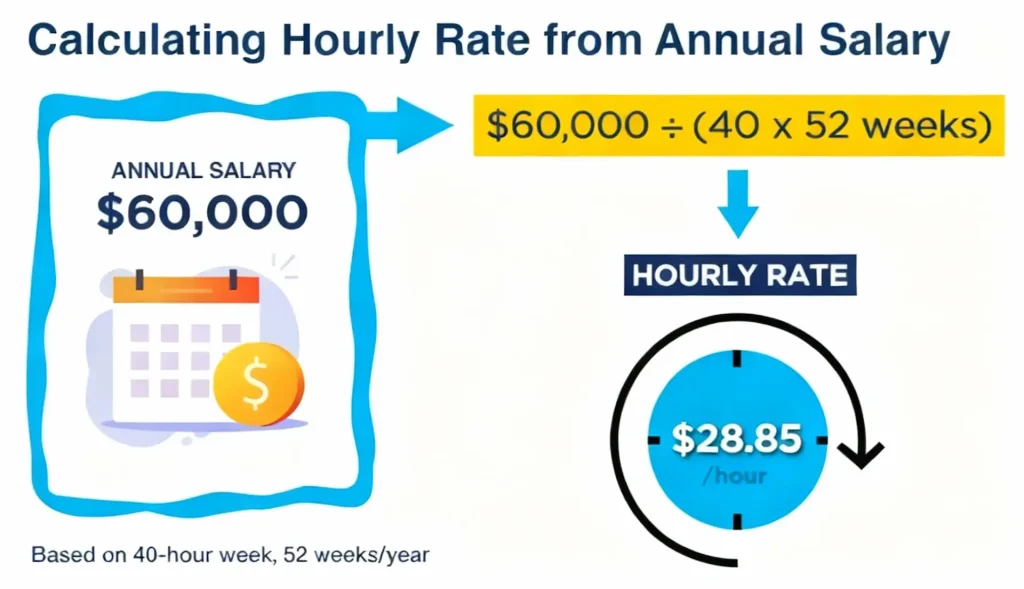
Let us start with the number everyone is looking for. If you work a standard full-time schedule of 40 hours per week for all 52 weeks of the year, your gross annual income at $20 an hour comes out to $41,600. That is before any taxes or deductions touch your paycheck.
Here is how that breaks down across smaller time frames. Your weekly gross pay would be $800. Every two weeks, or each biweekly pay period, you would bring in $1,600 before deductions. On a monthly basis, your gross income works out to roughly $3,467. These numbers assume no unpaid time off, no holidays without pay, and a consistent 40-hour workweek throughout the entire year.
What If You Work Part-Time or Overtime?
Not everyone works a neat 40-hour week. If you are part-time at 20 hours per week, your annual gross drops to $20,800. At 30 hours per week, you are looking at $31,200 for the year. These are significant differences, and they matter when you are planning a budget or deciding whether to pick up additional shifts.
On the flip side, overtime can push your yearly earnings well above that $41,600 baseline. Under federal labor law, most hourly employees earn 1.5 times their regular rate for any hours beyond 40 in a single workweek. At $20 an hour, your overtime rate would be $30 per hour. If you consistently work just five extra hours of overtime each week, that adds $7,800 to your annual gross, bringing you to $49,400. That is a meaningful jump, and it explains why so many hourly workers actively seek overtime when it is available.
For those with seasonal or variable schedules, the best approach is to track your average weekly hours over two or three months and multiply by 52. This gives you a more realistic picture of 20hr is how much a year for your specific work situation.
How Much Is 20hr a Year After Taxes?
Here is where the conversation gets real. Your gross pay and your take-home pay are two very different numbers, and the gap between them is larger than most people expect. When someone asks 20hr is how much a year, they usually want to know what actually hits their bank account, not what shows up on paper before Uncle Sam takes his share.
Federal Income Tax at $41,600
For a single filer earning $41,600 in 2026, your taxable income drops after the standard deduction. The current standard deduction for a single filer sits around $15,000, which brings your taxable income down to roughly $26,600. That places most of your income in the lower federal tax brackets. Your effective federal tax rate on that amount is typically somewhere between 8% and 12%, depending on any additional credits or deductions you qualify for.
In practical terms, you can expect to pay approximately $2,800 to $3,500 in federal income taxes on a $41,600 salary. That is a rough estimate, and your exact number will vary based on filing status, dependents, and any tax credits like the Earned Income Tax Credit that may apply to your situation.
State Taxes, FICA, and Other Deductions
Federal income tax is only one piece of the puzzle. Every paycheck also gets hit by FICA taxes, which fund Social Security and Medicare. Social Security takes 6.2% of your gross pay, and Medicare takes another 1.45%. Combined, that is 7.65% right off the top, which works out to about $3,182 per year on a $41,600 salary.
Then there is state income tax, and this is where your location makes a huge difference. If you live in a state with no income tax like Texas, Florida, Nevada, or Washington, you keep that money. But if you live in California, New York, or Oregon, you could lose another 4% to 9% of your income to state taxes. That is the difference between taking home $36,000 and taking home $32,000 on the same hourly wage.
Beyond taxes, most paychecks also reflect deductions for health insurance premiums, retirement contributions like a 401(k), and sometimes union dues or other withholdings. Each of these further reduces what lands in your checking account.
Take-Home Pay Estimates by State Type
To give you a practical picture, here is how your annual take-home pay shakes out at $20 an hour depending on where you live. In a no-tax state like Texas or Florida, your estimated annual take-home falls between $34,500 and $36,000. In a low-tax state like Arizona or Colorado, you are looking at roughly $33,000 to $34,500. In a high-tax state like California or New York, expect somewhere between $31,000 and $33,000. Monthly, that translates to a range of about $2,583 to $3,000 depending on your state.
These figures assume the standard deduction with no dependents. Your actual take-home will shift based on your personal tax situation, insurance costs, and retirement contributions. So when people ask 20hr is how much a year after taxes, there is no single answer. Free online paycheck calculators from reputable financial sites can give you a precise number for your exact circumstances.
How Does $20 an Hour Compare to National Averages?
Knowing that $20hr is how much a year only tells part of the story. The next natural question is whether $20 an hour is actually good money. That depends on context, and the context that matters most is how your wage stacks up against what everyone else earns.
$20 an Hour vs. the Median Hourly Wage
According to recent data from the Bureau of Labor Statistics, the median hourly wage for all workers in the United States sits in the range of $22 to $24 per hour as of mid-2026. That means $20 an hour puts you slightly below the national midpoint. You are not far off, but you are earning less than half of all American workers.
Industries that commonly pay around $20 an hour include retail management, entry-level skilled trades like electrical or plumbing apprenticeships, administrative and office support roles, warehouse and logistics positions, and certain healthcare support jobs like medical assistants and dental hygienists just starting out.
$20 an Hour vs. Minimum Wage
Compared to the federal minimum wage of $7.25 per hour, which has not changed in years, $20 an hour is nearly three times as much. Even compared to higher state and city minimums, many of which now sit between $15 and $17 per hour, $20 an hour represents a noticeable step up. You are earning more than minimum wage workers in every single state, and that provides a meaningful financial cushion that those at the bottom of the pay scale simply do not have.
Cost of Living Considerations
The real measure of any wage is what it buys you where you live. Earning $41,600 a year in a small city in the Midwest or the South can feel quite comfortable. Housing costs are lower, groceries tend to be cheaper, and your dollar stretches further in almost every category.
The same $41,600 in San Francisco, New York City, or Seattle paints a very different picture. Rent alone can consume 50% or more of your take-home pay in these markets, leaving precious little for everything else. The general guideline is that housing should not exceed 30% of your gross income. At $41,600, that means your monthly rent or mortgage payment should ideally stay at or below $1,040. In many major metros, that number is nearly impossible to hit without roommates or a long commute.
So when you ask how much is 20hr a year, the follow-up question should always be “and where do I live?” Geography changes the answer more than almost anything else.
Can You Live Comfortably on $41,600 a Year?
The honest answer is that it depends on your location, your household size, and how deliberately you manage your spending. Once you know 20hr is how much a year in take-home terms, the next step is building a budget that actually works. For a single person in a moderate cost-of-living area, $41,600 a year is workable. For a family of four in an expensive city, it is going to be tight. But regardless of your situation, having a clear budget makes the difference between feeling in control and feeling stressed about money.
Building a Realistic Monthly Budget
Let us work with a monthly take-home of roughly $2,800, which is a reasonable middle estimate for someone earning $20 an hour after taxes. Using the popular 50/30/20 budgeting framework, your money breaks down like this.
About 50% of your take-home, or $1,400, goes to needs. That covers rent or mortgage, utilities, groceries, transportation costs like gas or a transit pass, basic insurance, and minimum debt payments. The next 30%, around $840, goes to wants. That includes dining out, entertainment, subscriptions, clothing that is not strictly necessary, and hobbies. The remaining 20%, or $560, is directed toward savings and extra debt repayment. This includes your emergency fund, any additional payments on student loans or credit cards, and long-term savings goals.
The biggest pressure point for most people earning this wage is housing. If your rent eats up $1,200 of that $1,400 needs category, there is almost nothing left for groceries, utilities, and transportation. That is why finding affordable housing is often the single most impactful financial decision you can make at this income level.
Managing Debt and Building an Emergency Fund
If you are carrying debt, especially high-interest credit card debt, tackling it should be a priority. The avalanche method, which targets your highest-interest debt first while making minimum payments on everything else, saves you the most money over time. The snowball method, which pays off the smallest balance first for a psychological win, works better for people who need motivation to stick with a plan. Pick whichever one you will actually follow through on.
As for an emergency fund, even $500 set aside in a separate savings account provides a buffer that keeps unexpected car repairs or medical bills from derailing your entire budget. The standard advice is to build up three to six months of expenses over time, but do not let that big number stop you from starting small. Fifty dollars a month is $600 in a year, and that is enough to cover a lot of emergencies.
If your employer offers a 401(k) match, contribute at least enough to get the full match. That is free money added to your retirement, and walking away from it is one of the most expensive mistakes hourly workers make.
Tips for Stretching Every Dollar
Beyond budgeting, there are practical moves that make your $20 an hour go further. Meal planning and cooking at home can save $200 to $400 per month compared to eating out regularly. Call your internet, phone, and insurance providers once a year and negotiate your rates. Many companies will lower your bill just to keep you as a customer.
Take advantage of every employer benefit available to you. Health Savings Accounts, commuter benefits, employee discounts, and tuition reimbursement programs are all tools that effectively raise your income without requiring a single extra hour of work. Depending on your household size and income, you may also qualify for certain assistance programs, including Medicaid, SNAP benefits, or energy assistance in some states. There is no shame in using resources that exist specifically for working families at this income level.
Realistic Ways to Earn More Than $20 an Hour
Understanding 20hr is how much a year is a great starting point, but most people asking this question are also wondering how to move beyond it. The good news is that $20 an hour does not have to be your ceiling. There are concrete, realistic steps you can take to increase your earning power without going back to school for four years or taking on massive debt.
Negotiating a Raise at Your Current Job
The simplest path to higher pay is the job you already have. Many hourly workers never ask for a raise because they assume the answer will be no, or they do not know how to bring it up. Timing matters here. The best moments to ask are during or just after a performance review, after you have taken on new responsibilities, or when your company is doing well financially.
When you have that conversation, frame it around the value you bring, not your personal expenses. Talk about the projects you have completed, the problems you have solved, and any positive feedback from managers or customers. Come prepared with data on what similar roles pay in your area. Even a $2 per hour raise, from $20 to $22, adds $4,160 to your annual gross income.
Skills and Certifications That Push You Past $20 an Hour
Certain credentials consistently lead to higher-paying roles, and many of them are affordable and fast to earn. In the IT field, certifications like CompTIA A+, Google IT Support, and AWS Cloud Practitioner can open doors to help desk and cloud support roles paying $25 to $35 an hour. In healthcare, certifications for phlebotomy, medical coding, or pharmacy technician roles can be completed in weeks or months and often come with immediate pay bumps.
In the skilled trades, completing an apprenticeship in plumbing, electrical work, or HVAC regularly leads to journeyman wages well above $30 an hour. Project management certifications like the CAPM or PMP are valued across industries and can move you into supervisory roles with significantly higher compensation.
The return on investment for these credentials is remarkable. Once you understand 20hr is how much a year and decide you want more, a $200 to $500 certification that leads to a $5 per hour raise pays for itself within the first one to two weeks of your new wage.
Side Income and Freelancing
Another route is adding income outside your primary job. Freelancing in areas where you already have skills, whether that is writing, graphic design, bookkeeping, or handyman work, can bring in an additional $500 to $1,500 per month without requiring you to quit your day job.
Even modest side income changes your financial picture dramatically. An extra $500 per month adds $6,000 to your annual earnings, effectively bumping your total from $41,600 to $47,600. That reshapes the entire answer to $20hr is how much a year in your favor.
The key is choosing something sustainable. Side hustles that burn you out after two months do not help your bottom line. Pick work you can maintain consistently, even if it is only five to ten hours per week, and treat the extra income as fuel for debt payoff, savings, or investment.
Frequently Asked Questions
FAQ 1: How much is $20 an hour annually for a full-time worker?
A full-time worker earning $20 an hour and working 40 hours per week for 52 weeks earns $41,600 per year before taxes. This is calculated by multiplying the hourly rate by 2,080 total work hours in a standard year. Your actual take-home will be lower once federal, state, and FICA taxes are deducted from each paycheck.
FAQ 2: What is $20 an hour after taxes?
After federal income tax, Social Security, and Medicare deductions, a single filer earning $20 an hour typically takes home between $31,200 and $35,600 per year. The exact amount depends on your filing status, state of residence, and any additional deductions or credits you qualify for. Workers in no-tax states like Texas and Florida keep more than those in high-tax states like California.
FAQ 3: Is $20 an hour a good wage in 2026?
Whether $20 an hour is good depends heavily on where you live and your household size. The Bureau of Labor Statistics places the national median hourly wage around $22 to $24, meaning $20 an hour falls just below the midpoint. It is a livable wage in many lower cost-of-living areas but can feel tight in expensive metro areas like New York, San Francisco, or Los Angeles.
FAQ 4: How much is $20 an hour per month?
At $20 an hour working full-time, your gross monthly income is approximately $3,467 before taxes. After federal and state tax withholdings plus FICA deductions, most workers take home between $2,583 and $3,000 per month. Your exact monthly take-home depends on your location, filing status, and payroll deductions for benefits like health insurance.
FAQ 5: How much is $20 an hour per week?
If you work a standard 40-hour week at $20 an hour, your gross weekly pay is $800 before any deductions. After taxes and standard withholdings, most single filers bring home approximately $600 to $685 per week. Workers who put in overtime hours will see higher weekly totals since overtime is typically paid at 1.5 times the regular rate.
FAQ 6: How much rent can I afford making $20 an hour?
Following the widely recommended 30% rule, a person earning $20 an hour with a gross monthly income of $3,467 should spend no more than about $1,040 per month on rent. In practice, keeping rent below this threshold can be challenging in high-cost cities, which is why many workers at this wage level use roommates or seek housing in more affordable neighborhoods. Factor in utilities, renters insurance, and parking costs on top of base rent when calculating your true housing budget.
FAQ 7: What is $20 an hour biweekly?
If you are paid every two weeks at $20 an hour, your gross biweekly paycheck is $1,600 before deductions. After federal and state taxes plus FICA, expect to take home roughly $1,200 to $1,370 per biweekly pay period as a single filer. Biweekly pay schedules result in 26 paychecks per year, which means two months out of the year you receive three paychecks instead of two.
FAQ 8: How much is $20 an hour for part-time workers?
Part-time earnings at $20 an hour vary based on weekly hours. At 20 hours per week, your gross annual pay is $20,800, and at 30 hours per week it rises to $31,200. Part-time workers should note that they may not qualify for employer-sponsored benefits like health insurance or retirement plan matching, which affects their total compensation package.
FAQ 9: How does overtime affect a $20 an hour salary?
Under federal law, most hourly employees earn 1.5 times their regular rate for hours worked beyond 40 in a week, making the overtime rate $30 per hour at a $20 base. Working just five extra overtime hours each week adds approximately $7,800 to your annual gross income, bringing the yearly total from $41,600 to roughly $49,400. Consistent overtime can meaningfully change your financial picture over the course of a full year.
FAQ 10: How much does a self-employed person earning $20 an hour take home?
Self-employed or 1099 workers earning $20 an hour face a higher tax burden because they pay both the employee and employer portions of FICA taxes, totaling 15.3%. After self-employment tax plus federal and state income taxes, a 1099 worker at $20 an hour may take home only $24,000 to $29,000 annually from a $41,600 gross. This is significantly less than a W-2 employee at the same hourly rate because employers normally cover half of the FICA obligation.
FAQ 11: Is $41,600 a year considered middle class?
A $41,600 annual salary from a $20 hourly wage falls below the national median household income of roughly $80,000, placing it in the lower-middle income range for a single-person household. Whether it qualifies as middle class depends on your geographic area and household composition. In lower cost-of-living states, a single person earning $41,600 can live comfortably, while in expensive metro areas it may qualify as low income.
FAQ 12: What jobs pay $20 an hour?
Common positions that pay around $20 an hour include retail management, warehouse and logistics roles, administrative and office support, skilled trade apprenticeships in plumbing or electrical work, medical assistants, dental hygienists starting out, and customer service lead positions. Many of these roles also offer overtime opportunities that can push total annual earnings well above the $41,600 baseline. The specific wage can vary by region, employer, and experience level.
FAQ 13: How does $20 an hour compare to the federal minimum wage?
The federal minimum wage has remained at $7.25 per hour since 2009, making $20 an hour nearly three times that amount. Even when compared to higher state and city minimums that range from $15 to $17 per hour, $20 an hour provides a noticeable step up in purchasing power. However, $20 an hour still falls slightly below the national median hourly wage, which sits in the $22 to $24 range according to Bureau of Labor Statistics data.
FAQ 14: Can I buy a house making $20 an hour?
Buying a house on a $41,600 annual salary is possible but challenging depending on your location and down payment savings. Most mortgage lenders follow the 28% rule, meaning your monthly mortgage payment should not exceed about $970 at this income level. In affordable housing markets across the Midwest and South, this can qualify you for a modest home, but in most urban markets along the coasts, additional income or a co-borrower would likely be necessary.
FAQ 15: How much should I save per month if I earn $20 an hour?
Financial experts generally recommend saving at least 20% of your after-tax income. On a monthly take-home of roughly $2,700 to $3,000, that works out to approximately $540 to $600 per month directed toward savings and debt repayment. Even if you cannot hit that target right away, starting with $50 to $100 per month builds the habit and creates a financial cushion over time.
FAQ 16: What is $20 an hour daily?
Working a standard eight-hour shift at $20 an hour, you earn $160 per day before taxes. After typical federal and state withholdings, your net daily earnings are approximately $120 to $137 depending on your tax situation. This daily figure can be useful for budgeting on a day-to-day basis or for calculating lost wages if you miss work without paid time off.
FAQ 17: Does $20 an hour qualify for the Earned Income Tax Credit?
Single filers without children earning $41,600 may not qualify for the Earned Income Tax Credit since the income threshold for this group is lower. However, single filers with one or more qualifying children may still be eligible at this income level, depending on specific filing circumstances. The EITC can provide a refundable credit of several hundred to several thousand dollars, so it is worth checking your eligibility using the IRS guidelines or a free tax filing service.
FAQ 18: How much is $20 an hour compared to the average American salary?
The average annual wage in the United States is approximately $63,000 to $65,000, meaning a $41,600 salary from $20 an hour sits well below the national average. However, the median hourly wage is around $22 to $24, putting $20 an hour only slightly below the middle. The average is pulled higher by top earners, so the median is generally considered a more useful comparison for typical workers.
FAQ 19: Can I support a family on $20 an hour?
Supporting a family of four on $20 an hour alone is extremely difficult in most areas of the country. The MIT Living Wage Calculator estimates that a family of four with two working adults needs at least $20 to $29 per hour per adult to cover basic expenses, depending on the state. In practice, most families at this wage rely on a second income, government assistance programs, or a combination of both to meet their household needs.
FAQ 20: How much do I lose to taxes on a $41,600 salary?
On a $41,600 gross salary, total tax deductions typically range from $6,000 to $10,600 per year depending on your state. Federal income tax after the standard deduction runs approximately $2,800 to $3,500, while FICA taxes add another $3,182. State income taxes can add anywhere from $0 in states like Florida and Texas to over $3,000 in higher-tax states like California and New York.
FAQ 21: What is the difference between $20 an hour and $25 an hour annually?
The difference between $20 and $25 per hour over a full-time year is $10,400 in gross annual income, with $25 an hour yielding $52,000 compared to $41,600 at $20 an hour. After taxes, this gap translates to roughly $620 to $750 more per month in take-home pay. That extra income can cover a car payment, fund an emergency savings account, or make renting without roommates feasible in many mid-cost cities.
FAQ 22: What certifications can help me earn more than $20 an hour?
Several affordable certifications consistently lead to wages above $20 an hour. In IT, CompTIA A+, Google IT Support, and AWS Cloud Practitioner can open doors to help desk and cloud roles paying $25 to $35 per hour. In healthcare, phlebotomy, medical coding, and pharmacy technician credentials offer quick paths to higher pay, while skilled trade apprenticeships in HVAC, plumbing, and electrical work regularly lead to journeyman wages above $30 per hour.
Conclusion
So, 20hr is how much a year? At a standard full-time schedule, it is $41,600 before taxes and roughly $31,000 to $36,000 after taxes depending on where you live and what deductions apply to your paycheck. That single number branches out into weekly, biweekly, and monthly figures that shape every financial decision you make, from where you can afford to live to how quickly you can pay off debt or build savings.
The real takeaway is that $20 an hour is a solid foundation. It puts you above minimum wage by a wide margin and within striking distance of the national median. With disciplined budgeting, smart use of employer benefits, and a clear plan for growing your income through raises, certifications, or side work, this wage does not have to define your financial ceiling. It can be the floor you build from. Know your numbers, make a plan, and put your money to work as hard as you do.