
There is a moment in every homeowner’s life when they stand in front of a blank wall, holding a picture frame in one hand and a drill in the other, and think — there has to be a better way. Maybe you are renting and cannot put holes in the wall. Maybe you are tired of patching drywall every time you rearrange the living room. Or maybe you just want a faster, cleaner solution that does not involve anchors, screws, and a stud finder.
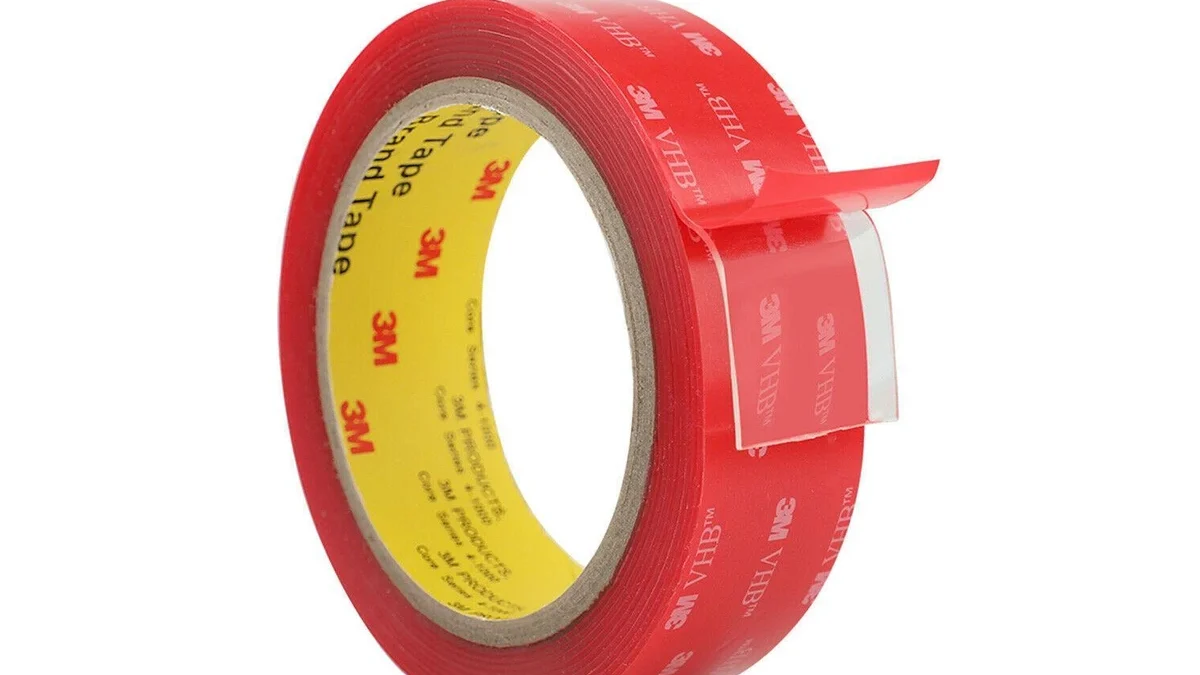
That better way already exists. 3M double sided mounting tape has been solving this problem for decades. What started as a niche industrial product — 3M invented its Very High Bond tape in 1980 to replace rivets on ambulance panels — has evolved into a massive family of adhesive tapes designed for just about every mounting challenge you can think of.
This guide breaks down the different types, explains how to choose the right one, and walks you through the application steps that actually matter. Because here is the thing most people learn the hard way — when this tape fails, it is almost never the tape’s fault. It is a preparation problem.
What Is 3M Double Sided Mounting Tape and How Does It Work?
Before you pick a product off the shelf, it helps to understand what happens when you press a strip of mounting tape onto a wall. The concept sounds simple — sticky on both sides, right? — but the engineering behind it is more interesting than you might expect.
The Science Behind the Bond. Every roll of 3M mounting tape features pressure-sensitive adhesive exposed on both sides of a carrier material — a thin film, a dense foam, or a conformable acrylic core, depending on the product. When you press the tape firmly against a surface, the adhesive flows into the tiny peaks and valleys in the material’s texture. This process is called “wetting,” and it creates the mechanical grip between the tape and the wall. The more surface contact the adhesive makes, the stronger the bond becomes. That is why 3M recommends applying firm, even pressure during installation — a light finger press does not push the adhesive deep enough into the surface texture to hold.
The foam core in many of these tapes absorbs vibration, fills small gaps between uneven surfaces, and spreads weight across the entire bond area instead of concentrating it at a single point. That stress distribution is the reason a strip of foam-core tape can hold a 15-pound mirror without any mechanical fasteners.
Why People Choose Tape Over Nails and Screws. The appeal is straightforward. You skip the drilling, avoid wall damage, and eliminate the need for anchors or hardware. The bond line is invisible — no screw heads poking through your décor. Installation takes seconds, and you get immediate handling strength the moment you press the object into place. For renters, for homeowners who want clean surfaces, and for anyone mounting on tile or glass where drilling is impractical, tape is not a compromise. It is the right tool.
Types of 3M Mounting Tape — Picking the Right One for Your Project
This is where most people go wrong. They grab whatever roll of 3M double sided mounting tape looks heavy-duty at the store and assume it will work for everything. It will not. 3M makes dozens of variants, and each one is formulated for specific surfaces, weight loads, and environments. Here are the four product families you are most likely to encounter, and when to reach for each one.
Scotch-Mount Indoor Mounting Tape. This is the everyday workhorse for household projects, designed for painted drywall, finished wood, metal, acrylic, tile, and glass. It holds up to 15 pounds when you use the full recommended length — roughly 3 inches of tape per pound. If you are hanging picture frames, creating a gallery wall, or mounting a shelf organizer, this is your starting point. Application temperature range sits between 50°F and 100°F.
Scotch-Mount Extreme Tape for Heavy-Duty Jobs. When the indoor tape is not strong enough, this is the next step up. The Extreme line uses a more aggressive adhesive formulated for tougher surfaces — painted concrete, smooth stone, finished wood, and metal. It holds up to 30 pounds using 60 inches of tape and is weather-resistant for outdoor use. If you are mounting garage organization, outdoor house numbers, or heavy wall art, this tape handles the load.
3M VHB Mounting Tape — The Industrial-Grade Option. VHB stands for Very High Bond, and this is where 3M’s tape technology moves from consumer convenience into serious structural bonding. The VHB line uses 100 percent acrylic adhesive on a closed-cell foam core, handling short-term temperatures up to 300°F and continuous exposure up to 200°F. The 5952 variant is the most popular — a black foam tape designed for painted, powder-coated, and plastic surfaces. The 4910 is a clear version for glass-to-glass bonds. The 4611 handles high-temperature applications. VHB tape holds architectural panels on buildings, badges on cars, screens on smartphones, and signage on highway structures. It replaces rivets, welds, and screws in thousands of industrial applications worldwide. For home use, it is the tape you reach for when nothing else is strong enough.
Multipurpose Gel Tape for Removable Mounting. The Scotch-Mount Gel Tape fills a different niche. It holds up to 20 pounds on hard surfaces like metal, tempered glass, tile, painted wood, smooth stone, and acrylic. The big difference is that it peels off without leaving residue, making it ideal for seasonal decorations or situations where you might reposition things later. It is also water-resistant for humid environments. One note — it is not recommended for painted drywall or wallpaper.
How to Use 3M Double Sided Tape to Mount on Flat and Curved Surfaces
Sticking 3M double sided mounting tape to a flat wall is easy enough. But what happens when the surface curves — a car dashboard, a rounded column, a contoured piece of trim, or a cylindrical post? This is where a lot of standard tapes fall apart, sometimes literally.
Why Curved Surfaces Cause Problems. Thin, rigid tapes cannot maintain full contact across a curved surface. The tape bridges the curve instead of conforming to it, creating air pockets where the adhesive never touches the surface. Over time, the edges lift, the bond weakens, and the whole thing peels off. Standard mounting squares are especially prone to this failure on dashboards, curved furniture, and rounded trim.
Choosing the Right Tape Thickness. The fix is to use a tape with a thicker, more conformable foam core. VHB 5952, with its 45-mil thickness, is one of the best options for gentle curves and textured surfaces. The foam compresses and conforms to the contour, maintaining full adhesive contact across the entire bond area. For tighter curves — like mounting a phone holder on a curved dashboard — 3M makes flexible mounting tapes with modified acrylic adhesive that mold to the shape without leaving gaps. The 300LSE adhesive series is specifically engineered for curved bonding applications, particularly in automotive and electronics work where surfaces are rarely perfectly flat.
Step-by-Step Application on Curved Surfaces. Start by cleaning both surfaces with a 50:50 mix of isopropyl alcohol and water. Cut the tape slightly longer than needed — on curves, you want full coverage with no exposed edges. Peel the liner from one side and apply the tape to the flatter surface first, pressing from the center outward to push air toward the edges. Then peel the second liner, position your object, and apply firm pressure across the entire bond area. Allow 72 hours before applying the full intended load — that curing window is when the bond goes from strong to permanent.
Can You Use 3M Tape to Mount Crown Molding?
This question comes up constantly in DIY forums, and the answer is more nuanced than a simple yes or no. Let us break it down honestly.
What the Professionals Say. Traditional crown molding installation uses brad nails or finish nails driven into wall studs and ceiling joists with a nail gun. Many pros also apply construction adhesive along the back of the molding for extra holding power. The combination of mechanical fasteners and adhesive handles the weight of solid wood, the stress of seasonal expansion and contraction, and the constant downward pull of gravity on an angled surface. Most experienced carpenters will tell you that relying on tape alone for full-length solid wood crown molding is not reliable. Forum posts from contractors who tried it back that up — one commenter noted that tape-only crown lasted about three days before it came crashing down.
Where Tape Actually Makes Sense for Molding. That said, there are specific scenarios where 3M double sided mounting tape is a legitimate tool for trim and molding projects. Lightweight foam crown molding or PVC decorative molding weighs a fraction of solid wood and places far less stress on the bond. Short runs of accent trim, chair rail, or baseboard on smooth painted walls can hold well with heavy-duty tape when nail holes are not acceptable. Cabinet crown molding on kitchen uppers — where the spans are short and the molding is light — is another application where tape works. Many DIYers also use 3M mounting tape as a temporary positioning tool. You apply strips of tape to hold the molding in place while construction adhesive or caulk sets and cures. Once the adhesive hardens, the tape becomes a secondary bond rather than the primary one.
Best Practices for Taping Lightweight Trim. If you are going the tape route on decorative molding, use VHB tape or Scotch-Mount Extreme for maximum adhesion. Clean both the wall and the back of the molding with isopropyl alcohol before applying anything. Run the tape in long, continuous strips rather than small patches — longer strips distribute the load more evenly. On heavier sections, supplement with a bead of construction adhesive. Give the bond 72 hours to reach full strength before removing temporary supports. If the molding is solid wood or spans more than three feet, nails are still the safer choice.
Surface Preparation — The Step Most People Skip
If there is one section of this article you need to read carefully, it is this one. Surface preparation is the single biggest factor in whether your 3M double sided mounting tape holds for years or falls off in a week. According to 3M’s own technical documentation, most bonding failures trace back to contaminated or improperly prepared surfaces. The tape is not the weak link — the surface is.
Clean Surfaces Are Non-Negotiable. Dust, fingerprint oils, moisture, and invisible residue from cleaning sprays create a barrier between the adhesive and the surface. The tape sticks to the contaminant layer instead of the actual wall, and when that layer breaks loose, the tape goes with it. The fix is simple but essential — wipe both bonding surfaces with a 50:50 mixture of isopropyl alcohol and water using a clean, lint-free cloth. Wipe in one direction only, because scrubbing back and forth redeposits contaminants. Let the surface dry completely before applying tape. This step takes less than a minute, and it makes all the difference.
When You Need a Primer. Certain materials have what engineers call low surface energy — their molecular structure makes it difficult for adhesives to grip. Polypropylene, polyethylene, and powder-coated metals all fall into this category. On these surfaces, even VHB tape can lift over time without help. 3M Primer 94 is the standard solution — it creates a chemical bridge between the surface and the adhesive, dramatically improving both initial tack and long-term strength. Apply a thin coat with a brush, let it dry for five minutes, then apply your tape. For porous surfaces like wood or concrete, seal the surface with paint or varnish first. Glass and ceramic surfaces benefit from silane coupling agents in the cleaning solution, which reduce the material’s tendency to attract moisture and weaken the bond.
Light Abrasion for Stubborn Surfaces. When surfaces are glossy, oxidized, or coated, a light scuff with a fine-grade Scotch-Brite pad can increase the available surface area by up to 40 percent. Those micro-scratches give the adhesive more texture to grip. Use circular motion rather than straight-line strokes, and always clean with IPA after abrading to remove loose particles. One exception — VHB tapes 4932 and 4952 perform best on smooth, glossy surfaces, so skip abrasion for those.
Common Mistakes That Cause 3M Double Sided Mounting Tape to Fail
Even with the right product and a clean surface, there are errors that trip people up. Most are easy to avoid once you know what to watch for.
Applying Tape in Cold Temperatures. Most 3M mounting tapes require a minimum application temperature of 50°F. Below that, the adhesive becomes too stiff to flow into the surface texture. This catches people off guard during winter garage projects or early-morning outdoor installations. If you must apply tape in cool conditions, warm both the surface and the tape with a heat gun on a low setting before pressing them together.
Not Applying Enough Pressure. A light finger press is not enough. The adhesive needs firm, consistent force — roughly 15 PSI — to wet the surface properly. Use a roller or squeegee for larger applications. Press across the entire bond area, not just the center and edges. Uneven pressure creates weak spots that become failure points over time.
Loading the Bond Too Soon. This is the most common cause of unexpected failures. 3M double sided mounting tape provides immediate handling strength — you can let go and the object stays in place. But handling strength and full bond strength are not the same thing. The adhesive continues to flow into the surface texture for up to 72 hours after application. At room temperature, it reaches about 50 percent of its maximum strength in roughly 20 minutes, but full performance takes three days. Hanging a heavy mirror or loading a shelf within the first 24 hours is asking the bond to carry weight it is not ready for yet. Give it time.
Using the Wrong Tape for the Surface. Standard mounting tape on a textured or porous wall only contacts the high points of the texture, leaving most of the adhesive in the air between peaks. That partial contact cannot support significant weight. VHB tape on untreated low-surface-energy plastic will peel over time without a primer. Matching the tape family to the surface material is not optional — it is the foundation of a successful installation.
Indoor vs. Outdoor Use — What Changes?
Not every roll of 3M double sided mounting tape is built for outdoor exposure, and using an indoor tape outside is a recipe for failure. The differences matter, especially if you live somewhere with temperature extremes, high humidity, or direct sunlight.
Weather Resistance and UV Stability. Outdoor-rated tapes like the Scotch-Mount Extreme line and VHB families 4941, 4611, and 5952 resist ultraviolet degradation, rain, and temperature cycling — some from as low as minus 40°F to over 200°F. The acrylic chemistry is inherently UV-stable, so the adhesive does not break down or yellow in prolonged sunlight. Indoor-only tapes, by contrast, may soften in direct sun, lose tack in high humidity, or become brittle in freezing weather. Using an indoor tape outdoors might seem fine for the first few weeks, but seasonal temperature swings will expose the mismatch quickly.
Choosing Between Indoor and Outdoor Tape. For painted drywall, finished wood, glass, and tile in climate-controlled spaces, the Scotch-Mount Indoor line or standard VHB works well. For outdoor surfaces — painted concrete, smooth stone, metal siding, brick — step up to the Scotch-Mount Extreme or weather-rated VHB. Humid environments like bathrooms and garages sit in a middle zone where water-resistant gel tape or weather-rated VHB is the safer choice. The general rule is simple — if the tape will see direct sun, rain, or freezing temperatures at any point during the year, use an outdoor-rated product.
How to Get the Strongest Possible Bond Every Time
Knowing which roll of 3M double sided mounting tape to buy is only half the equation. Application technique makes just as much difference as product selection. Here is a reliable process you can follow on any project.
Start with surface preparation — clean both surfaces with IPA, let them dry, and apply primer if the material requires it. Cut your tape to the correct length, keeping in mind the weight guidelines on the packaging. For the Scotch-Mount Indoor line, that ratio is roughly 3 inches per pound. For the Extreme line, it is about 2 inches per pound. Peel the first liner and apply the tape to the flatter of the two surfaces. Press firmly across the entire strip using a roller or the flat of your hand. Then peel the second liner, position your object carefully, and press it firmly into place for at least 30 seconds across the entire bond area.
After mounting, resist the urge to test the bond by pulling on it. Let it sit undisturbed for 72 hours. One more tip — always do a small test application on an inconspicuous spot first. If it holds well after 24 hours, the surface is compatible. If it falls off, adjust your approach before committing to the full installation.
Conclusion
Choosing and using 3M double sided mounting tape is not complicated, but it does reward attention to detail. The right tape for an indoor frame is not the same product you need for an outdoor fixture on concrete, and neither will work on untreated plastic without a primer. When this tape fails, the cause is almost always a preparation shortcut, a temperature issue, or loading the bond too soon.
Start with the surface — clean it, prime it if necessary, and let it dry. Choose a tape rated for your specific surface, weight, and environment. Apply firm pressure during installation, then walk away for 72 hours. Follow those steps, and you will get a bond that holds for years — no nails, no holes, no regrets.
Frequently Asked Questions
FAQ 1. How much weight can 3M double sided mounting tape hold?
It depends on the product. Scotch-Mount Indoor holds up to 15 pounds (3 inches per pound), the Extreme version holds up to 30 pounds (2 inches per pound), and VHB industrial tape can support even heavier loads depending on the variant and surface area used.
FAQ 2. Will 3M double sided mounting tape damage my walls when removed?
Permanent products like VHB and Scotch-Mount Extreme can pull paint or leave residue when removed. For damage-free removal, use the Scotch-Mount Gel Tape or 3M Command strips instead, which are specifically engineered for clean removal from painted surfaces.
FAQ 3. What is the difference between 3M mounting tape and Command strips?
Command strips are designed for temporary, removable mounting with a stretch-release tab for clean removal. 3M mounting tape (especially VHB) creates a permanent, industrial-strength bond meant to replace nails and screws. Command strips prioritize clean removal; mounting tape prioritizes holding power.
FAQ 4. Can I use 3M double sided mounting tape outdoors?
Only outdoor-rated products work reliably outside. Scotch-Mount Extreme and certain VHB tapes (like 4941 and 5952) resist UV light, moisture, and temperature cycling from minus 40°F to over 200°F. Indoor-only tapes will soften in sun and fail in weather exposure.
FAQ 5. Does 3M mounting tape work on textured or rough walls?
Standard thin tapes struggle on textured walls because they only contact the high points. Thicker foam-core tapes like VHB 5952 conform to texture much better. For heavily textured surfaces, thorough cleaning and a primer like 3M Primer 94 significantly improve adhesion.
FAQ 6. How long does it take for 3M double sided mounting tape to reach full strength?
The tape provides immediate handling strength on contact, but the adhesive continues flowing into the surface texture for up to 72 hours. At room temperature, it reaches about 50 percent strength in 20 minutes and full rated strength after three days.
FAQ 7. Can I use 3M mounting tape to hang a heavy mirror?
Yes, provided you use a strong enough product like VHB tape or Scotch-Mount Extreme and apply the correct amount of tape for the mirror’s weight. Clean both surfaces with isopropyl alcohol, apply firm pressure, and wait 72 hours before letting the bond carry the full load.
FAQ 8. Is 3M double sided mounting tape waterproof?
Several products in the lineup are water-resistant or waterproof. VHB tapes use closed-cell acrylic foam that seals against moisture, and the Scotch-Mount Extreme line is weather-resistant. The Gel Tape is also water-resistant. However, standard indoor mounting tape is not rated for wet environments.
FAQ 9. What is the best 3M tape for mounting on a car dashboard?
For curved car dashboards, use a conformable tape like VHB 5952 or a 3M flexible mounting tape with modified acrylic adhesive. These mold to dashboard contours without leaving air pockets. Avoid rigid thin tapes, which will bridge the curve and lose contact over time.
FAQ 10. Can 3M double sided mounting tape replace nails for crown molding?
For lightweight foam or PVC decorative molding on short runs, tape can serve as the primary bond. For solid wood crown molding, professionals still recommend nails and construction adhesive. Tape works well as a temporary positioning tool to hold molding while adhesive cures.
FAQ 11. Why does my 3M mounting tape keep falling off?
The most common causes are dirty surfaces, insufficient application pressure, cold temperatures during installation, or loading the bond before it fully cured. Surface preparation with isopropyl alcohol is the most overlooked step and the most frequent cause of adhesive failure.
FAQ 12. What surfaces does 3M double sided mounting tape NOT stick to?
Most 3M mounting tapes are not recommended for unpainted or raw wood, wallpaper, fabric-covered walls, silicone-treated surfaces, or heavily textured brick. Low-surface-energy plastics like polypropylene and polyethylene require a primer (3M Primer 94) for reliable adhesion.
FAQ 13. What is 3M VHB tape and how is it different from regular mounting tape?
VHB stands for Very High Bond. It is an industrial-grade acrylic foam tape originally designed in 1980 to replace rivets, welds, and screws. Unlike consumer mounting tape, VHB handles extreme temperatures (up to 300°F short-term), resists UV and chemicals, and creates a permanent structural bond.
FAQ 14. Can I use 3M mounting tape on glass or tile surfaces?
Yes. Several 3M products bond well to glass and tile, including Scotch-Mount Indoor tape and VHB 4910 (a clear variant designed for transparent materials). Clean the surface with isopropyl alcohol first, and in humid bathrooms, consider adding a silane coupling agent to prevent moisture from undermining the bond.
FAQ 15. How do I remove 3M double sided mounting tape without damaging the surface?
For removable products like Gel Tape, peel the tab slowly at a sharp angle. For permanent tapes like VHB, use dental floss or fishing line to saw behind the tape and separate it. Warming the tape with a hair dryer on low softens the adhesive. Clean residue with rubbing alcohol or a citrus-based remover.
FAQ 16. Does temperature affect 3M double sided mounting tape performance?
Yes, significantly. Most products require a minimum application temperature of 50°F (10°C) — below that, the adhesive is too stiff to bond properly. Once cured, outdoor-rated tapes like VHB can handle service temperatures from minus 40°F to over 200°F depending on the variant.
FAQ 17. How much 3M mounting tape do I need per pound of weight?
Scotch-Mount Indoor requires approximately 3 inches of tape per pound of load. Scotch-Mount Extreme requires about 2 inches per pound. VHB ratios vary by series, but 3M provides specific weight guidelines on each product’s packaging and technical data sheet.
FAQ 18. Does 3M double sided mounting tape have a shelf life?
Yes. Scotch brand mounting products have a minimum shelf life of two years from the date of manufacture. VHB tapes have a 24-month shelf life when stored between 40°F and 100°F at moderate humidity. Expired tape may still work but could show reduced tack or be harder to apply.
FAQ 19. Can I use 3M mounting tape in a bathroom or shower area?
For bathroom walls outside the shower, water-resistant Gel Tape or VHB tape works well on tile and glass. Inside a direct shower spray zone, tape alone is risky — water can undermine the bond over time. Sealing tape edges with silicone caulk and ensuring thorough surface prep improves results in humid environments.
FAQ 20. Is 3M double sided mounting tape safe to use on rental apartment walls?
For rentals, use removable products like Scotch-Mount Gel Tape or 3M Command strips, which are designed for damage-free removal. Avoid permanent tapes like VHB or Scotch-Mount Extreme on rental walls, as they can pull paint and leave residue that may cost you your security deposit.
FAQ 21. Can 3M mounting tape hold a TV or monitor on the wall?
3M does not recommend using consumer mounting tape to hang televisions. TVs are heavy, expensive, and pose a safety risk if they fall. Professional TV wall mounts with mechanical fasteners drilled into studs are the only safe method. Tape can be used for lightweight accessories around a TV setup, but not for the TV itself.
FAQ 22. What is the difference between 3M VHB 5952 and 4910 tape?
VHB 5952 is a black foam tape with modified acrylic adhesive designed for painted, powder-coated, and plastic surfaces — it is the most versatile general-purpose option. VHB 4910 is a clear tape designed for glass, transparent materials, and high-surface-energy substrates where an invisible bond line is needed.
FAQ 23. Do I need to use a primer with 3M double sided mounting tape?
Not always. On clean, smooth, high-surface-energy materials like metal, glass, and most painted surfaces, tape bonds well without primer. On low-surface-energy plastics (polypropylene, polyethylene), powder-coated metals, or porous surfaces like wood and concrete, 3M Primer 94 or Adhesion Promoter 111 is recommended.
FAQ 24. Can I reuse 3M double sided mounting tape after removing it?
No. Once 3M mounting tape has been applied and removed, the adhesive has already bonded with surface contaminants and lost its original tack. Attempting to reuse spent tape will result in a weak, unreliable bond. Always apply a fresh strip of tape for each new installation.