
The third-party logistics sector is in the middle of a seismic shift. Tariff volatility, artificial intelligence, warehouse robotics, and the entrance of Amazon as a full-service logistics provider have turned what was already a fast-moving industry into something barely recognizable from just two years ago. For anyone tracking 3pl logistics news, the pace of change in 2026 demands constant attention — and a willingness to rethink what a supply chain partnership actually looks like.
The numbers tell the story. The U.S. 3PL market was valued at roughly $220 billion in 2025 and is projected to climb to $272 billion by 2031, according to Mordor Intelligence. On a global scale, the picture is even more dramatic. Global Market Insights pegs the worldwide third-party logistics market at $1.8 trillion in 2026, with projections pointing toward $4.3 trillion by 2035 at a compound annual growth rate of 10.1 percent. Behind those figures sit real operational shifts — new competitors entering the market, providers investing heavily in automation, shippers reevaluating partnerships, and regulatory pressure mounting on everything from emissions to trade compliance. This article breaks down the developments that matter most right now, from warehouse floors to boardrooms. Consider it your essential guide to 3pl logistics news in 2026 — written to help you make better decisions about your supply chain strategy heading into the second half of the year.
Amazon Enters the 3PL Arena — and Raises the Stakes for Everyone
In May 2026, Amazon officially launched Amazon Supply Chain Services, or ASCS, and in doing so sent a clear signal to every logistics provider in the market: the rules are changing. ASCS opens Amazon’s entire logistics network — freight forwarding, bulk distribution, order fulfillment, and parcel shipping — to any business, regardless of whether they sell through the Amazon marketplace. It is a move that industry analysts have compared to what Amazon Web Services did for cloud computing, and one that has generated some of the most talked-about 3pl logistics news this year.
The early adopters are already in place. American Eagle Outfitters is using Amazon’s parcel shipping network to deliver online orders from both its American Eagle and Aerie websites directly to customers nationwide. Lands’ End is taking a different approach, leveraging a unified inventory pool within Amazon’s network to fulfill orders across multiple sales channels. Andrew McLean, the CEO of Lands’ End, said publicly that the partnership allows the company to position inventory closer to customers and reach them faster. These are not small, experimental pilot programs. They are full-scale operational commitments from major retail brands.
For incumbent logistics providers — FedEx, UPS, DHL, and the hundreds of mid-market 3PLs that form the backbone of the industry — Amazon’s entry raises hard questions. Russell Hoppes, vice president of solutions and delivery at Locus and a former UPS executive, noted that while opening up the network is a logical move, scaling into true forwarding, 3PL, and supply chain logistics is a fundamentally different challenge. That said, the sheer scale of Amazon’s infrastructure gives it advantages that few can match. ASCS generated $41.6 billion in net sales during the first quarter of 2026 alone, representing 23 percent of Amazon’s total revenue. Sellers using Amazon’s end-to-end solutions reportedly see nearly 20 percent higher sales.
The real opportunity, according to Keith Biondo, publisher of Inbound Logistics, is not just for shippers who use ASCS directly. It is for regional and local 3PLs who position themselves as ASCS integrators. By partnering with Amazon’s platform and leveraging its API and data management tools, smaller providers can offer their own customers access to global supply chain infrastructure they could never build independently. Biondo called this the democratization of capability, and it may be the most significant structural change the sector has seen in a generation. It is worth noting that 94 percent of U.S. Fortune 500 companies now work with at least one 3PL, up from 46 percent in 2001, according to Armstrong and Associates. Amazon’s entry reflects and accelerates a trend that was already well underway. How this plays out over the next 12 to 18 months will be one of the most closely watched stories in 3pl logistics news.
3PL Logistics News Today — Tariffs, Trade Shifts, and Freight Market Recovery
If there is a single thread running through the biggest stories in 3pl logistics news this year, it is uncertainty. U.S. trade policy has been one of the most disruptive forces in the supply chain over the past 18 months, and its effects continue to ripple across every segment of the 3PL market.
The Tariff Rollercoaster and Its Impact on Shippers. Throughout 2025 and into 2026, shifting tariffs on U.S. imports disrupted established trade patterns and forced shippers and their logistics partners into a constant state of recalculation. The result was a surge of pre-emptive importing, as companies rushed to bring goods into the country ahead of anticipated tariff increases. That surge drove international transportation management — which includes air and ocean forwarding, customs brokerage, warehousing, compliance, and inland transportation — to become the fastest-growing 3PL segment in 2025, increasing 7.7 percent to $85.9 billion in gross revenue. Evan Armstrong, CEO of Armstrong and Associates, attributed the growth directly to tariff concerns and uncertainty surrounding the Red Sea and Suez Canal.
The geopolitical dimension cannot be ignored. Conflict involving Iran, combined with continued instability around the Red Sea and Strait of Hormuz, has created simultaneous chokepoints that are driving higher transportation costs and unpredictable service timelines. Rerouting via the Cape of Good Hope adds 10 to 14 days to Asia-Europe ocean routes and significantly increases fuel costs. With capacity tightening, air freight rates on both Asia-Europe and Asia-U.S. lanes have climbed as well, putting additional pressure on shippers who were already dealing with tariff-driven cost increases.
Signs of a Freight Market Rebound. Despite the headwinds, there are genuine signs that the prolonged freight recession — which has weighed on the 3PL sector since mid-2022 — is beginning to ease. High-frequency indicators tracked by FreightWaves show steady growth in U.S. tender rejection rates, with Q4 2025 average rates up 32.6 percent quarter-over-quarter. This is an early but meaningful signal that carrier capacity is tightening and pricing power is starting to shift.
Armstrong and Associates forecasts that domestic transportation management will be the fastest-growing 3PL segment in 2026, increasing 8.3 percent to $139 billion in gross revenue. Value-added warehousing and distribution is expected to grow 3.5 percent, while dedicated contract carriage is projected to increase 4 percent. Looking further ahead, the removal of certain emergency tariffs and a more stable trade environment could reduce shipper uncertainty and support sustained growth across the sector. For providers who have spent nearly four years weathering a down market, these numbers represent the first real light at the end of a very long tunnel — and a reason that freight market recovery has become a recurring headline in 3pl logistics news today.
AI, Robotics, and the New Warehouse Playbook
The conversation around artificial intelligence in logistics has shifted dramatically. A year ago, much of the discussion centered on potential and pilot programs. In 2026, AI and robotics are operating at production scale in warehouses across the country, and they are rapidly becoming the deciding factor in how shippers choose their logistics partners. It is no exaggeration to say that automation has become the dominant theme in 3pl logistics news over the past six months.
Why 74 Percent of Shippers Would Switch Providers Over AI Capabilities. That statistic, drawn from the 2025 Third-Party Logistics Study by NTT DATA and Penn State University, tells you everything you need to know about how the market is evolving. Nearly three-quarters of shippers say that a provider’s AI capabilities are important enough to justify changing partners. This is not a theoretical preference. It is an operational requirement driven by the need for faster fulfillment, better inventory visibility, and lower error rates.
Robots-as-a-Service, or RaaS, has emerged as the model that is making automation accessible to mid-market providers. Instead of committing millions of dollars in capital expenditure to purchase robotic systems outright, 3PLs can now deploy automation through usage-based operating expense contracts. ABI Research predicts 1.3 million RaaS installations by 2026, generating over $34 billion in revenue. Autonomous mobile robots are delivering payback in under 24 months with return on investment exceeding 250 percent in live deployments. At Productiv, a Dallas-based tech-enabled 3PL, the company currently operates 13 cobots, 2 humanoid robots, and 1 palletizing robot in live commercial production — making it one of the first mid-market operators to deploy humanoid robots in fulfillment operations.
From Pilot Programs to Production Scale. The real breakthrough in 2026 is not just the hardware. It is the intelligence layer. Agentic AI systems — platforms that go beyond generating insights to autonomously acting on them — are now managing real-time decision-making inside warehouses. These systems analyze data from warehouse management systems, transportation platforms, labor tools, and IoT devices, then adjust dock schedules, reallocate labor, and reprioritize inventory without waiting for human intervention. Unlike conventional analytics tools that stop at generating reports, agentic platforms execute changes instantly as conditions shift on the ground.
Warehouse digital twins are another technology that has moved from concept to standard practice. These 3D virtual replicas of physical facilities use real-time data from AI, warehouse management systems, and IoT sensors to mirror and monitor operations. They allow providers to simulate layout changes, automation scenarios, and workflow adjustments before implementing them physically — reducing risk and accelerating deployment timelines. DHL Supply Chain, in partnership with Locus Robotics, surpassed 500 million picks using autonomous mobile robots across 35 global sites as of mid-2024. The acceleration curve is striking: the first 10 million picks took two and a half years, while the most recent 100 million were completed in just 154 days. Roughly 4.7 million warehouse robots are now installed globally, and the warehouse automation market is projected to reach $65.7 billion by 2031. These are no longer experimental numbers. They represent a fundamental shift in how goods move through the supply chain, and they are shaping every major story in 3pl logistics news right now.
Which 3PL Providers in Big Box Retail Logistics and Fulfillment Are Recognized
Retail logistics operates under a unique set of pressures that most general-purpose 3PLs are not equipped to handle. Major retailers enforce strict routing guides, precise labeling standards, and tightly controlled delivery windows. Even minor errors in documentation, packaging, or timing can trigger costly chargebacks and strained relationships. As a result, one of the most frequently searched questions in 3pl logistics news circles is which providers are actually equipped to handle the demands of big box retail — and the answer keeps getting more nuanced.
Leaders in Omnichannel Retail Fulfillment. GXO Logistics continues to stand out for contract logistics and warehouse automation, particularly for large retail and consumer packaged goods brands. DHL Supply Chain brings large-scale distribution expertise with over 73 million square feet of warehouse space in North America and integrations with platforms like Shopify, Magento, and Wayfair. Radial has carved a niche in omnichannel order management and fulfillment, helping retailers synchronize inventory and orders across online and offline sales channels. Buske Logistics has earned attention as a mid-market provider capable of handling both palletized shipments for big box retailers and unit-level pick-and-pack for direct-to-consumer channels simultaneously — a dual capability that many larger providers struggle to offer with the same level of flexibility.
The Growing Role of Specialty and Niche Providers. Not every product fits neatly into a standard fulfillment workflow. Red Stag Fulfillment has built its entire operation around heavy, bulky, and high-value items — products that many 3PLs either refuse or handle poorly. Operating from two strategically located warehouses in Tennessee and Utah, Red Stag reaches 96 percent of the continental U.S. within two days by ground shipping. For temperature-sensitive products, Lineage Logistics and Americold dominate the cold chain space with hundreds of temperature-controlled warehouses worldwide. ShipBob continues to serve as a go-to option for high-volume direct-to-consumer brands seeking tech-forward fulfillment with broad platform integrations. Cart.com has taken a different approach, combining a nationwide fulfillment network with a proprietary order management system and warehouse management system that gives brands real-time control over inventory across every channel. The emergence of 3PL matchmaking platforms like Fulfill.com, which vets thousands of providers and matches shippers to specialists based on product type, volume, and channel requirements, reflects just how fragmented and specialized the market has become. Finding the right provider is no longer about picking the biggest name. It is about finding the partner whose capabilities align precisely with your operational needs.
Mergers, Acquisitions, and the Latest 3PL Logistics News on Industry Consolidation
The 3PL sector’s merger and acquisition landscape has been one of the most closely watched stories of the past two years, and 2026 is proving to be a pivotal chapter. Deal volume rose 23.4 percent year-over-year in 2024, according to Capstone Partners, driven by a combination of strategic repositioning, shareholder pressure, and financial sponsors taking advantage of a buyer’s market created by the prolonged freight recession.
Public companies have largely focused on portfolio-thinning transactions — shedding underperforming segments to concentrate resources on profitable core services. The most notable example was UPS divesting its subsidiary Coyote Logistics after the unit accounted for roughly one-third of the $3 billion in year-over-year revenue losses within UPS’s forwarding division. On the private side, strategic buyers have moved in the opposite direction, acquiring regional operators at favorable valuations to build scale, expand geographic reach, and add customers ahead of an anticipated market recovery. Bohn Crain, CEO of Radiant Logistics, noted in the company’s Q4 earnings call that valuations have settled to levels where both buyers and sellers feel more comfortable transacting.
Interest rate reductions have added fuel to the fire. Cheaper debt capital has enabled financial sponsors to fund acquisitions more aggressively, and the pipeline of potential targets remains robust. Trinity’s acquisition of Granite, a 14-year freight agent partner based in Minnesota, was designed to enhance its nationwide presence and increase specialized freight capabilities. DHL Supply Chain announced a new one-million-square-foot life sciences and healthcare center of excellence in Pennsylvania, scheduled to open in 2026 with FDA and GMP-compliant infrastructure. Kuehne and Nagel expanded its facility in El Paso, Texas, adding over 20,000 square meters of bonded warehouse space and increasing capacity by 60 percent to meet growing demand for cross-border logistics between the U.S. and Mexico. Despite the overall down market, deal volumes between 2023 and 2024 remained 21.6 percent below the levels seen between 2021 and 2022, suggesting there is still significant room for consolidation as the freight market improves. For those watching 3pl logistics news for investment signals, the M&A pipeline remains one of the clearest indicators of where the sector is headed next.
Sustainability Moves From Buzzword to Selection Criteria
For years, sustainability in logistics was treated as a marketing talking point. That era is over. In 2026, environmental credentials are directly influencing how shippers choose their 3PL partners, and regulatory frameworks are making green initiatives a compliance requirement rather than a voluntary commitment.
The 2025 Third-Party Logistics Study reports that 47 percent of shippers now emphasize sustainability commitments within their supply chains when selecting a provider. That is not a fringe concern — it represents nearly half the market actively factoring environmental performance into procurement decisions. The regulatory side is equally forceful. The EU’s Fit for 55 package extends the Emissions Trading System to maritime transport starting in 2026, requiring shipping companies to purchase allowances covering 100 percent of their verified emissions. This carbon pricing mechanism is pushing 3PLs to develop lower-emission solutions across their networks, and the cost implications are flowing directly into rate structures and contract negotiations.
Major carriers have responded with ambitious public targets. UPS aims to achieve carbon neutrality by 2050, with an interim goal of reducing CO2 per package by 50 percent by 2035. FedEx is committed to carbon-neutral operations by 2040. These commitments cascade through 3PL networks as shippers evaluate partners based on their ability to contribute to corporate sustainability goals. On the ground, providers are investing in electric vehicle fleets for last-mile delivery, solar-powered warehouse facilities, AI-driven route optimization to reduce fuel consumption, and eco-friendly packaging materials. Logistics accounts for approximately 8 percent of global greenhouse gas emissions, so even incremental improvements at scale translate into meaningful environmental impact. The providers who treat sustainability as a core operational capability rather than a checkbox on an RFP questionnaire are the ones gaining a competitive edge. It is a shift that has become impossible to ignore for anyone following 3pl logistics news closely.
Nearshoring, Reshoring, and the Shift Toward Regional Supply Chains
The movement toward shorter, more regionally concentrated supply chains has been building for several years, but the combination of tariff uncertainty and geopolitical disruption has pushed it past the tipping point. According to Bain and Company’s 2024 operations survey, 81 percent of CEOs and COOs now report plans to bring supply chains closer to market — up 18 percentage points from 63 percent in 2022. The 2025 Inbound Logistics 3PL Market Research Report found that 59 percent of respondents favor nearshoring or reshoring as a strategy for navigating supply chain challenges.
Mexico sits at the center of this shift. It surpassed China as the top U.S. trading partner in 2023, and inspection and audit demand in Mexico grew 17 percent year-over-year through the third quarter of that year. The trend has continued into 2026, with 3PLs expanding cross-border infrastructure to meet rising demand. Kuehne and Nagel’s expanded bonded warehouse in El Paso is purpose-built for this reality, adding 53 dock doors and 65 trailer spaces to handle the growing volume of U.S.-Mexico trade. Americold’s import-export hub in Kansas City, built in partnership with Canadian Pacific Kansas City, serves as a key node on the Mexico Midwest Express route and marks a strategic investment in rail-connected cold chain infrastructure.
This shift is also influencing how industrial distribution companies think about their supply chain partnerships. Companies in sectors like manufacturing, automotive, and heavy industry — including firms in the Motion Industries ecosystem — are rethinking supply chain proximity and working with logistics partners who can support reshored production operations with faster transit times, reduced inventory carrying costs, and more responsive replenishment cycles. The 3PLs that have invested in nearshoring-ready infrastructure are not just riding a trend. They are positioning themselves for what many analysts believe will be a long-term structural realignment of global trade flows, and this remains one of the most consequential threads running through 3pl logistics news heading into the second half of 2026.
What It All Means Going Forward
The 3PL sector in 2026 is defined by four forces operating simultaneously: competitive disruption from Amazon’s entry as a full-service provider, technological transformation driven by AI and robotics reaching production scale, geopolitical adaptation through tariff navigation and nearshoring strategies, and strategic consolidation as M&A activity builds ahead of a freight market recovery.
For shippers, the message is clear. The old model of selecting a logistics partner based on price and lane coverage is no longer sufficient. The providers that will lead in the next phase are those blending machine intelligence with human expertise, building flexible and regionally distributed networks, and treating sustainability as a core capability. The gap between a standard fulfillment vendor and a high-performance 3PL has widened considerably, and the stakes of choosing the wrong partner have never been higher. Staying current with the developments covered in this article is not just helpful — it is essential for anyone responsible for supply chain performance in today’s market. The stories shaping 3pl logistics news right now are not temporary disruptions. They are structural changes that will define how goods move for years to come.
Frequently Asked Questions
FAQ 1: What does 3PL stand for and how does it work?
3PL stands for third-party logistics. It refers to an outside company that manages warehousing, order fulfillment, shipping, and sometimes freight forwarding on behalf of a business. Instead of handling logistics in-house, companies outsource these operations to a specialist provider who stores inventory, picks and packs orders, and ships products directly to customers.
FAQ 2: What is the difference between a 3PL and a 4PL?
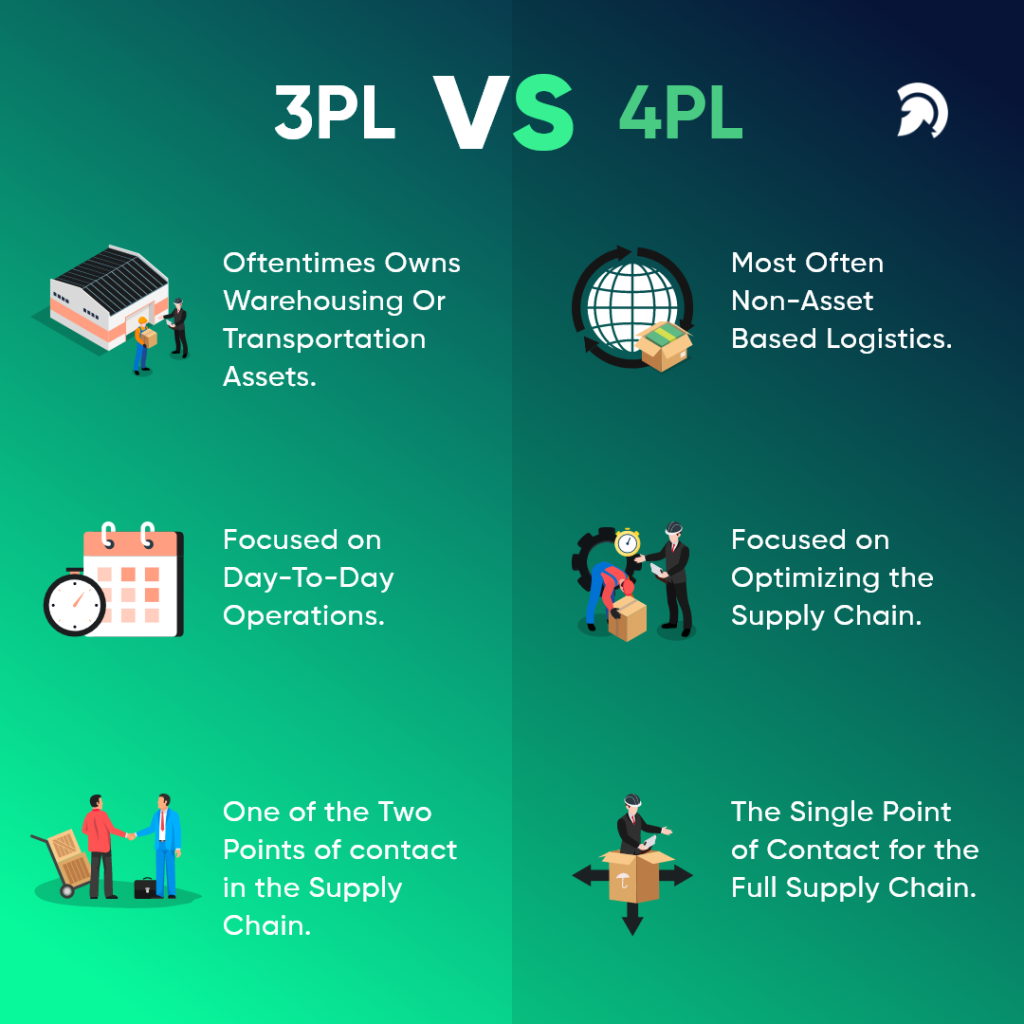
A 3PL handles the day-to-day execution of logistics tasks like warehousing, picking, packing, and shipping. A 4PL operates at a higher strategic level, managing the entire supply chain and often coordinating multiple 3PL providers on behalf of the client. In simple terms, a 3PL does the physical work while a 4PL oversees and orchestrates the full logistics network.
FAQ 3: Why is keeping up with 3PL logistics news important for businesses?
The 3PL sector is evolving rapidly due to AI adoption, warehouse automation, tariff shifts, and major new entrants like Amazon. Businesses that stay informed can make smarter decisions about provider selection, contract negotiations, and supply chain investments. Falling behind on industry developments can lead to outdated partnerships and higher logistics costs.
FAQ 4: How much does it cost to use a 3PL in 2026?
The average 3PL fulfillment cost in 2026 ranges from $3.50 to $8.00 per order for standard pick and pack, with storage adding $15 to $25 per pallet per month. Total monthly costs vary widely — small brands typically pay $2,000 to $3,200, while high-volume operations spend $28,000 to $50,000 or more. Actual pricing depends on order volume, product type, warehouse location, and the services required.
FAQ 5: What are the biggest trends shaping the 3PL industry in 2026?
The biggest trends include AI-powered warehouse automation, the rise of Robots-as-a-Service models, Amazon’s launch of full-service logistics for non-marketplace businesses, sustainability becoming a provider selection criterion, and the acceleration of nearshoring strategies. Labor shortages and tariff volatility continue to drive operational changes across the sector.
FAQ 6: How has Amazon’s entry as a 3PL provider changed the market?
Amazon launched Amazon Supply Chain Services in May 2026, opening its freight, distribution, fulfillment, and shipping network to any business regardless of marketplace participation. This move intensifies competition for traditional 3PLs while also creating partnership opportunities for regional providers who can integrate with Amazon’s platform. Early adopters include American Eagle Outfitters and Lands’ End.
FAQ 7: What percentage of Fortune 500 companies use 3PL services?
According to Armstrong and Associates, 94 percent of U.S. Fortune 500 companies now work with at least one 3PL provider. That figure has risen dramatically from just 46 percent in 2001. The growth reflects the increasing complexity of global supply chains and the strategic value that outsourced logistics partners deliver at enterprise scale.
FAQ 8: What role does artificial intelligence play in 3PL operations?
AI now powers demand forecasting, real-time warehouse decision-making, route optimization, inventory management, and autonomous robot coordination inside 3PL facilities. According to a 2025 NTT DATA and Penn State study, 74 percent of shippers say they would switch providers based on AI capabilities alone. The 2025 Inbound Logistics report found AI was cited as the most impactful logistics technology by 94 percent of respondents.
FAQ 9: What is Robots-as-a-Service and why does it matter for 3PLs?
Robots-as-a-Service, or RaaS, is a subscription-based model that allows 3PLs to deploy warehouse automation without massive capital investments. Instead of purchasing robotic systems outright, providers pay usage-based fees that convert capital expenditure into operating expense. ABI Research predicts 1.3 million RaaS installations by 2026, and autonomous mobile robots using this model deliver payback in under 24 months.
FAQ 10: Which 3PL providers are best for big box retail fulfillment?
Providers recognized for retail-grade fulfillment in 2026 include GXO Logistics for contract logistics and automation, DHL Supply Chain for large-scale distribution, Radial for omnichannel order management, and Buske Logistics for mid-market retail compliance. Retail 3PLs must handle strict routing guides, EDI integration, chargeback prevention, and precise delivery windows that big box retailers require.
FAQ 11: How are U.S. tariffs affecting the 3PL industry in 2026?
Shifting tariffs on U.S. imports have caused significant volatility for shippers and their logistics providers since 2025. Companies rushed to import goods ahead of anticipated tariff increases, driving international transportation management to grow 7.7 percent to $85.9 billion in gross revenue. Ongoing Red Sea instability has compounded the disruption by forcing reroutes that add 10 to 14 days to ocean shipping lanes.
FAQ 12: Is the freight recession finally ending for 3PL companies?
Signs point to a gradual recovery. U.S. tender rejection rates rose 32.6 percent quarter-over-quarter in Q4 2025, signaling tightening carrier capacity. Armstrong and Associates forecasts domestic transportation management will grow 8.3 percent in 2026 to $139 billion. However, the sector remains cautious as geopolitical disruptions and tariff uncertainty continue to create unpredictable conditions.
FAQ 13: What is nearshoring and how does it impact 3PL strategy?
Nearshoring is the practice of relocating supply chain operations closer to the end market instead of relying on distant overseas manufacturing. In 2026, 81 percent of CEOs plan to bring supply chains closer to home, and Mexico surpassed China as the top U.S. trading partner in 2023. 3PLs are responding by expanding cross-border infrastructure, especially along the U.S.-Mexico corridor.
FAQ 14: How important is sustainability when selecting a 3PL partner?
Sustainability has moved from a bonus feature to a deciding factor. Nearly 47 percent of shippers now weigh environmental commitments when choosing a 3PL, according to the 2025 Third-Party Logistics Study. The EU’s Fit for 55 regulation, which requires 100 percent emissions allowance coverage for maritime transport from 2026, is accelerating the shift toward greener logistics across global supply chains.
FAQ 15: What are the most common hidden fees in 3PL contracts?
Common hidden fees include long-term storage penalties that increase 1.5 to 3 times after 30 to 90 days, minimum volume surcharges when order counts drop below contract floors, peak season markups of 10 to 30 percent during Q4, and accessorial charges for special handling, returns processing, or after-hours receiving. Always request a sample invoice and full fee breakdown before signing.
FAQ 16: How do you choose the right 3PL partner for your business?
Start by defining your logistics profile — monthly order volume, SKU count, product dimensions, special handling needs, and sales channels. Then evaluate at least three providers on accuracy SLAs, warehouse locations, technology integrations, and total cost of ownership, not just headline pick-and-pack rates. Request current performance data, talk to existing clients, and run a small pilot before committing to a long-term contract.
FAQ 17: What is reverse logistics and why is it critical for 3PLs?
Reverse logistics covers the process of handling returned products, including receiving, inspecting, restocking, refurbishing, or disposing of items sent back by customers. With e-commerce return rates reaching 20 to 30 percent in some categories, 3PLs that can process returns efficiently help their clients protect margins and maintain customer satisfaction. DHL’s 2025 acquisition of Inmar Supply Chain Solutions created North America’s largest returns platform.
FAQ 18: Can small businesses benefit from using a 3PL provider?
Yes. Small businesses typically reach the breakeven point for outsourced fulfillment at around 100 to 200 orders per month. Beyond that volume, 3PL economics usually outperform in-house operations by eliminating the need for warehouse leases, seasonal hiring, and shipping carrier negotiations. Flat-rate and usage-based pricing models now make professional fulfillment accessible to brands shipping as few as 50 to 100 orders monthly.
FAQ 19: What industries benefit most from 3PL services in 2026?
Retail and e-commerce remain the largest 3PL market segment, accounting for about 32 percent of global revenue. Life sciences and healthcare is the fastest-growing segment, with a projected 4.56 percent compound annual growth rate through 2031, driven by cold chain requirements and regulatory compliance. Manufacturing, automotive, food and beverage, and consumer packaged goods are also heavy 3PL users.
FAQ 20: How big is the global 3PL market in 2026?
The global third-party logistics market is valued at approximately $1.8 trillion in 2026 and is projected to reach $4.3 trillion by 2035, growing at a compound annual growth rate of 10.1 percent, according to Global Market Insights. The U.S. market alone is estimated at $227 billion in 2026, with domestic transportation management and value-added warehousing as the fastest-growing segments.
FAQ 21: What is the difference between a freight broker and a 3PL?
A freight broker acts strictly as an intermediary, matching shippers with carriers for specific loads without owning trucks, warehouses, or handling goods directly. A 3PL provides a broader range of services including warehousing, inventory management, order fulfillment, shipping, and sometimes freight forwarding. In short, a freight broker connects you with transportation while a 3PL manages your entire logistics operation.
FAQ 22: How do 3PLs handle peak season and holiday demand spikes?
Experienced 3PLs prepare for peak season by scaling warehouse labor through temporary staffing, adjusting storage allocations, extending operating hours, and pre-positioning inventory closer to high-demand regions. Many now use AI-driven demand forecasting to anticipate volume surges and prevent bottlenecks. Peak season surcharges of 10 to 30 percent during Q4 are common and should be negotiated during contract discussions.
FAQ 23: What technology should a modern 3PL provider offer?
At minimum, a competitive 3PL in 2026 should offer a cloud-based warehouse management system with real-time inventory visibility, API integrations with major e-commerce platforms, automated order routing, and performance dashboards. Advanced providers also offer AI-driven demand forecasting, warehouse execution systems, digital twins for facility simulation, and autonomous mobile robot deployments for faster picking and packing.
FAQ 24: Where is the best place to find reliable 3PL logistics news?
The most trusted sources for 3PL logistics news include Transport Topics, Logistics Management, Inbound Logistics, FreightWaves, and Supply Chain Dive for editorial coverage. For market data and research, Armstrong and Associates, Capstone Partners, NTT DATA, and Mordor Intelligence publish regular reports with sector-level analysis, deal tracking, and growth forecasts.