
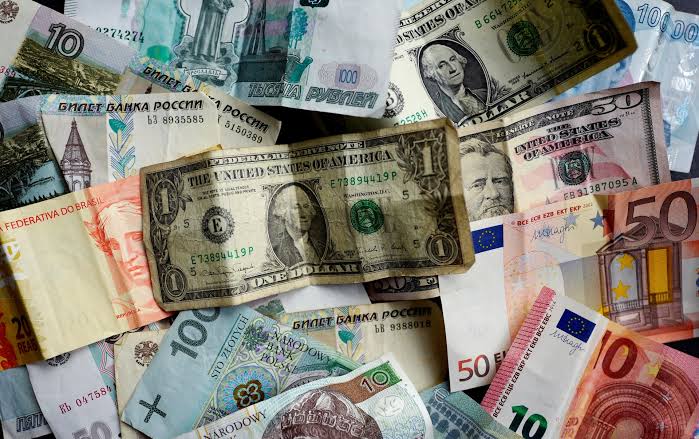
There is something genuinely fascinating about seeing a number with the word “billion” attached to it and then watching it shrink once you convert it into another currency. That is exactly what happens when you look up 4.56 billion won to usd. The figure sounds massive in South Korean won, yet it lands at a far more modest sum when measured in US dollars. As of July 2026, with the exchange rate sitting near ₩1,530 per dollar, that enormous-sounding 4.56 billion Korean won translates to approximately $2.98 million. Still a life-changing amount of money for most people, but nowhere close to what the word “billion” might make you imagine.
This particular number has exploded in search popularity thanks to Netflix’s Squid Game, where 456 contestants each carry a price tag of 100 million won. The total prize pool reaches 45.6 billion won, and breakdowns of that figure naturally lead curious viewers to search for smaller chunks — including 4.56 billion. But beyond pop culture, there are real financial reasons why people need this conversion. Business deals, real estate purchases, overseas investments, and immigration planning all demand a clear understanding of what Korean won amounts are actually worth in US dollars.
This article breaks down the conversion in plain terms, explains why the rate keeps moving, shows what this money can buy on both sides of the Pacific, and walks through the practical steps of actually moving that kind of cash between currencies.
What Does 4.56 Billion Won to USD Look Like Right Now?
Let us start with the math because it is simpler than most people think. To convert 4.56 billion won to usd, you divide the won amount by the current exchange rate. As of early July 2026, one US dollar buys roughly 1,530 South Korean won. So the calculation looks like this: 4,560,000,000 divided by 1,530 equals approximately $2,980,392.
That is the mid-market rate — the “real” exchange rate that sits halfway between what buyers and sellers are offering on global currency markets. It is the rate you will see on Google, on financial news sites, and on platforms like Wise or XE. However, the rate you actually receive when you convert money is almost always a little worse. Banks, money transfer services, and airport exchange counters all build in a margin. On a sum this large, even a small spread can cost you tens of thousands of dollars.
Here is some useful context. Just one year ago, in July 2025, the same 4.56 billion won would have converted to roughly $3.35 million. That is a difference of over $350,000 — not because anyone moved the decimal point, but because the Korean won has weakened considerably against the dollar throughout the past twelve months. The won’s value dropped more than 11 percent year-over-year, which means anyone holding won and converting to dollars today is getting significantly less purchasing power than they would have received a year ago.
If you need to check a live rate before making a decision, stick with trusted platforms. The Bank of Korea publishes official reference rates daily. Wise and XE both offer mid-market conversions with transparent fee structures. Google’s built-in currency converter is handy for quick checks but does not account for transfer costs or bank margins.
Why Do People Search for This Specific Conversion?
The search volume for 4.56 billion won to usd did not appear out of nowhere. It has a clear origin story, and it goes beyond simple financial curiosity.
The Squid Game effect is undeniable. When Netflix released Squid Game in 2021, audiences worldwide were introduced to Korean won figures that sounded astronomical. The show’s central prize pool is 45.6 billion won — roughly $31 million — and it accumulates as contestants are eliminated, with each player valued at 100 million won. Naturally, viewers started Googling won-to-dollar conversions by the millions. The reality competition spinoff, Squid Game: The Challenge, reinforced the association by awarding a $4.56 million grand prize. That number — 4.56 — became practically synonymous with the franchise. Whether someone is doing the math on individual player stakes, splitting prize money among hypothetical survivors, or simply curious about how Korean money stacks up against the dollar, searches for 4.56 billion won to usd keep rolling in.
But there are serious financial reasons too. South Korea is home to some of the world’s largest corporations — Samsung, Hyundai, LG, SK Hynix — and international business transactions regularly involve billion-won figures. Commercial real estate in Seoul can easily cost several billion won for a single property. Luxury apartments in the Gangnam district routinely sell for 2 to 3 billion won, and premium commercial spaces push well past the 4.56 billion mark. For the Korean diaspora living abroad, converting large sums tied to inheritance, property sales, or business exits is a common and very practical need. Expats planning to relocate to or from South Korea also need to understand exactly what their savings will be worth after conversion.
Understanding the South Korean Won and Its Relationship with the US Dollar
The South Korean won, symbolized by ₩ and officially coded as KRW, has been the country’s official currency since 1962. It replaced the earlier hwan at a rate of 10 hwan to 1 won, and it has been the backbone of one of the most remarkable economic transformations in modern history.
The Miracle on the Han River describes South Korea’s rise from one of the poorest countries in the world in the 1950s to the 13th-largest economy globally by 2025. That growth was powered by an export-driven industrial strategy, massive investment in education and technology, and the rise of conglomerate giants known as chaebols. Today, South Korea’s economy is worth approximately $1.87 trillion, and it ranks as the fourth-largest in Asia behind China, Japan, and India.
The won’s relationship with the dollar has never been static. During the 1997 Asian Financial Crisis, the won collapsed from around 800 per dollar to nearly 1,800 in a matter of months. Recovery took years of painful restructuring. More recently, the currency has faced a new set of pressures in 2026. The year started with the won trading at roughly ₩1,428 per dollar. By early June, it had weakened to ₩1,559 — its lowest level since March 2009. As of July 7, it has recovered slightly to around ₩1,530, but the year-to-date decline of roughly 5.5 percent still means that conversions like 4.56 billion won to usd return fewer dollars than they did at the start of the year.
Several forces are driving this decline. The US Federal Reserve has kept interest rates elevated as it wrestles with persistent inflation, which strengthens the dollar against most global currencies. The Bank of Korea held its policy rate at 2.5 percent for much of the year, though rising domestic inflation — which hit 3.2 percent in June — has fueled speculation about a possible rate hike at the July 16 meeting. Meanwhile, Korean investors have been pouring money into US assets, particularly stocks tied to the artificial intelligence boom. This capital outflow weakens domestic demand for the won even as South Korea’s exports have been hitting records. In June 2026, the country reported monthly exports of $102.25 billion, the first time the figure crossed the $100 billion mark. Yet the won still weakened, creating a paradox that puzzled even veteran economists. The explanation lies in the difference between trade flows and capital flows — strong exports bring won into the economy, but massive investment outflows into US markets send even more capital in the opposite direction.
Geopolitics also plays a role. The won functions as what currency traders call a “risk proxy” — a currency that weakens when global uncertainty rises and strengthens when markets feel calm. Tariff disputes, regional tensions, and shifts in US trade policy all contribute to volatility that directly affects how much you get when converting won to dollars.
How Much Can You Actually Buy with This Amount?
Numbers on a screen mean very little without context. So let us put the result of converting 4.56 billion won to usd — roughly $2.98 million — into real-world terms.
Inside South Korea, this is a substantial fortune. A solid mid-range apartment in Seoul costs between 800 million and 1.5 billion won. With 4.56 billion, you could buy a luxury apartment in the prestigious Gangnam district, or you could purchase three to five comfortable homes in other parts of the city. The average South Korean household earns roughly 65 million won per year, which means 4.56 billion won represents approximately 70 years of typical household income. It could also wipe out the average household debt — roughly 6.5 million won — for nearly 700 families.
In the United States, the picture shifts. Once you convert 4.56 billion won to usd, the roughly $2.98 million you receive is enough to buy a nice home in most parts of the country, though you would barely afford a modest apartment in Manhattan or a house in San Francisco’s most desirable neighborhoods. You could live comfortably off the investment returns if managed carefully. But by American standards, you are solidly upper-middle-class, not wealthy in the way “billionaire” might suggest. For perspective, Jeff Bezos earns this amount in roughly a minute and a half. The gap between what 4.56 billion sounds like and what it buys after conversion is exactly why understanding these numbers matters.
How to Convert 4.56 Billion Won to USD in Practice
Converting small amounts of currency is straightforward — you walk into an exchange booth, hand over cash, and walk out with dollars. But when you are dealing with billions of won, the process becomes considerably more involved.
For amounts this large, wire transfers are the standard method. You will work with a bank or a licensed foreign exchange broker. Most retail currency exchange services simply cannot handle transactions of this size. Major banks like Citibank, HSBC, and Korean institutions like KB Kookmin or Shinhan Bank all offer large-value foreign exchange services. Specialist platforms such as Wise, OFX, and Moneycorp can also handle high-value conversions, often at better rates than traditional banks because they operate with thinner margins.
Fees and hidden costs deserve close attention. The mid-market rate is a benchmark, not a promise. When you look up 4.56 billion won to usd online and see $2.98 million, that is not what your bank will actually give you. Banks typically add a spread of 0.5 to 2 percent on top of the mid-market rate, and on a $3 million transfer, that margin can cost anywhere from $15,000 to $60,000. Then there are wire transfer fees from the sending bank, intermediary bank charges if the transfer routes through a correspondent institution, and receiving fees on the other end. These can stack up to several hundred dollars on top of the exchange rate markup.
Tax and regulatory considerations are significant. In the United States, transfers exceeding $10,000 trigger reporting requirements. If you hold foreign financial accounts above certain thresholds, you may need to file an FBAR (Report of Foreign Bank and Financial Accounts) and IRS Form 8938. South Korea also imposes regulations on large capital movements — amounts over a certain threshold require advance notice to the Bank of Korea and documentation proving the source and purpose of the funds. Failing to comply with these rules can result in penalties, delays, or frozen transactions.
Timing matters more than most people realize. With the won trending weaker throughout 2026, waiting to convert means you might receive even fewer dollars tomorrow. On the other hand, currency markets are unpredictable, and a sudden shift in US monetary policy or a major economic event could strengthen the won overnight. Some businesses manage this risk through hedging — locking in a future exchange rate via forward contracts. For individuals, the simplest approach is often to convert in tranches rather than all at once, spreading out the risk of catching the rate on a particularly bad day.
What Influences How Much You Get When Converting Won to Dollars
The exchange rate between the Korean won and the US dollar does not move randomly. It responds to a specific set of forces, and understanding them helps explain why the value of 4.56 billion won to usd can shift by tens of thousands of dollars from one month to the next.
Macroeconomic indicators set the foundation. South Korea’s GDP growth is projected at roughly 2 percent for 2026, an improvement over the 1.2 percent recorded in 2025. Inflation climbed to 3.2 percent in June, which may push the Bank of Korea toward tighter monetary policy. On the American side, jobs data, consumer spending, and the Federal Reserve’s commentary about future rate decisions all move the dollar. When the US economy shows strength, the dollar tends to rise, and the won tends to fall — which means fewer dollars for your won.
Market sentiment and capital flows are equally powerful. The US-led boom in artificial intelligence has attracted enormous investment from across Asia, including South Korea. Korean institutional and retail investors have been buying US technology stocks at record levels, sending capital out of the country and weakening the won in the process. Ironically, South Korea’s own tech sector has been a massive beneficiary of the AI wave — semiconductor exports hit $25.2 billion in April 2026 alone. But those export earnings have not been enough to offset the sheer volume of investment flowing toward Wall Street.
A landmark structural change also deserves mention. In July 2026, South Korea officially launched 24-hour foreign exchange trading, a reform designed to improve the won’s accessibility to global investors, deepen market liquidity, and reduce the kind of sharp overnight gaps that used to catch traders off guard. Over time, this reform could help stabilize the won and reduce the volatility that makes large conversions unpredictable.
Common Mistakes People Make with Large KRW to USD Conversions
Even experienced investors and businesspeople stumble when handling large cross-border currency transactions. If you are working out 4.56 billion won to usd for a real deal, here are the most frequent errors worth avoiding.
Confusing numbering systems is surprisingly common. Korean uses a different counting structure than English. One hundred million is called 억 (eok), and a trillion is 조 (jo). What we call 4.56 billion in Western notation is written as 45.6억 in Korean. Misreading these can lead to tenfold errors — a mistake that has real consequences in contracts and negotiations.
Relying on a single outdated rate is another trap. Currency values shift every second during market hours. Using yesterday’s rate — or worse, last week’s — to price a deal or plan a transfer can cost you thousands. Always check a live source at the moment of decision.
Ignoring taxes and compliance rules can create serious problems. Both the US and South Korea have strict reporting requirements for large international transfers, and violating them — even unintentionally — can lead to fines or frozen accounts.
Assuming Google’s rate is the rate you will receive is a universal mistake. The mid-market rate is a reference point, not a guaranteed price. Your bank will always offer a worse rate, and the gap on a multi-million-dollar transfer is substantial. Compare at least three providers before committing.
The Outlook for the Won — Will This Conversion Be Worth More or Less Soon?
Predicting exchange rates is notoriously difficult, but current trends and expert analysis offer some reasonable guideposts.
In the short term, the won is likely to remain under pressure. Forecasts from multiple financial institutions suggest the USD/KRW rate could stay within the 1,490 to 1,580 range through the end of 2026. If those projections hold, the value of 4.56 billion won to usd would hover between roughly $2.89 million and $3.06 million — a range of more than $170,000 depending on timing alone.
The medium-term case for a stronger won exists. If the US Federal Reserve begins cutting interest rates — which markets expect at some point — the dollar would likely weaken, allowing the won to recover. Combined with South Korea’s record export performance and the new 24-hour trading reform, there is a plausible path back toward ₩1,400 per dollar, which would push the conversion value closer to $3.25 million.
The bearish scenario is also real. If capital outflows continue, geopolitical tensions escalate, or the global tech rally falters, the won could weaken further. At ₩1,600 per dollar, a conversion of 4.56 billion won to usd would only return about $2.85 million.
None of this constitutes financial advice. Exchange rate forecasting carries inherent uncertainty, and anyone making decisions involving large sums should consult a qualified financial professional.
Conclusion
When you convert 4.56 billion won to usd at today’s exchange rate, you get approximately $2.98 million. That number is not fixed — it shifts daily based on the interplay of central bank policies, trade flows, investor sentiment, and global events. A year ago, the same conversion returned over $3.3 million. Six months from now, it could be more or less depending on how the economic landscape evolves.
Whether your interest in this number was sparked by watching Squid Game, planning a real estate transaction in Seoul, negotiating a cross-border business deal, or simply satisfying a curiosity, the mechanics behind the conversion matter just as much as the number itself. The South Korean won is a currency shaped by one of the world’s most dynamic economies — an economy that exports more than $100 billion in goods per month, leads the world in semiconductor manufacturing, and is undergoing ambitious structural reforms to its financial markets.
The takeaway is practical: always check live rates from a trusted source before making any financial decision involving large currency conversions. Understand the fees, know the regulatory requirements, and compare multiple providers. The difference between a careless conversion and a well-timed, well-executed one can easily exceed the annual salary of an average worker in either country.
Frequently Asked Questions
1. How much is 4.56 billion won to usd today? As of July 2026, 4.56 billion South Korean won equals approximately $2.98 million US dollars at the mid-market exchange rate of around ₩1,530 per dollar. This figure fluctuates daily based on live currency market conditions and may differ slightly depending on the platform or provider you use.
2. Why is 4.56 billion won such a popular search term? The number gained worldwide popularity because of Netflix’s Squid Game, where 456 players compete for 45.6 billion won. Each player is valued at 100 million won, and breakdowns of the prize structure naturally lead curious viewers to search related figures like 4.56 billion won to usd.
3. Is 4.56 billion won the same as 45.6 billion won? No, they are two different amounts. 4.56 billion won (₩4,560,000,000) is roughly $2.98 million, while 45.6 billion won (₩45,600,000,000) is roughly $29.8 million. The confusion often arises because both numbers appear in discussions about the Squid Game franchise.
4. How do you manually calculate 4.56 billion won to usd? Divide 4,560,000,000 by the current USD/KRW exchange rate. For example, at ₩1,530 per dollar: 4,560,000,000 ÷ 1,530 = approximately $2,980,392. Always use a live exchange rate from a trusted source for the most accurate result.
5. Has the value of 4.56 billion won in dollars changed over the past year? Yes, significantly. In July 2025, the same amount was worth roughly $3.35 million. The Korean won weakened by more than 11 percent against the dollar over the past twelve months, which means 4.56 billion won now converts to approximately $350,000 less than it did a year ago.
6. What is the current exchange rate between the Korean won and the US dollar? As of early July 2026, the exchange rate hovers around ₩1,530 per US dollar. The rate opened the year near ₩1,428, hit a low of ₩1,559 in June, and has since recovered slightly. Rates shift throughout the trading day based on market conditions.
7. Why is the Korean won getting weaker in 2026? The won has declined roughly 6 percent against the dollar in 2026 due to several factors: heavy foreign selling of Korean stocks (over 156 trillion won sold year-to-date), Korean investors pouring capital into US assets driven by the AI boom, and a strong US dollar supported by elevated Federal Reserve interest rates.
8. What can you buy with 4.56 billion won in South Korea? In South Korea, 4.56 billion won can purchase a luxury apartment in Seoul’s Gangnam district, fund roughly 70 years of average household income, or clear the typical household debt for nearly 700 families. It represents serious personal wealth within the Korean economy.
9. What can $2.98 million buy in the United States? In the US, $2.98 million can purchase a comfortable home in most cities, a modest property in high-cost areas like New York or San Francisco, or fund approximately 40 to 50 years of median household expenses. It is life-changing wealth for an individual but falls far short of billionaire territory.
10. What fees are involved when converting 4.56 billion won to dollars? Expect an exchange rate markup of 0.5 to 2 percent from banks, plus wire transfer fees, intermediary bank charges, and receiving-bank fees. On a conversion worth nearly $3 million, total costs can range from $15,000 to $60,000 depending on the provider.
11. Where is the best place to convert large amounts of Korean won to US dollars? For large sums, specialist foreign exchange platforms like Wise or OFX often offer better rates than traditional banks. Banks may negotiate custom rates for high-value transfers. Always compare at least three providers and check their all-in cost, not just the headline exchange rate.
12. Are there tax implications when converting 4.56 billion won to usd? Yes. In the United States, international transfers exceeding $10,000 trigger bank reporting requirements. You may also need to file an FBAR and IRS Form 8938 for foreign account holdings. South Korea requires documentation for large cross-border capital movements and may impose its own tax obligations.
13. How much is 1 billion Korean won in US dollars? At the current exchange rate of approximately ₩1,530 per dollar, 1 billion won equals roughly $654,000. This figure changes daily with the exchange rate and was approximately $734,000 a year ago when the won was stronger.
14. How much is 100 million won in US dollars? 100 million won converts to approximately $65,400 at today’s rate. In Squid Game, each player’s life is valued at 100 million won, which puts the human cost of the fictional game into stark financial perspective.
15. What is the difference between the mid-market rate and the rate banks offer? The mid-market rate is the true exchange rate between two currencies, halfway between buy and sell prices on global markets. Banks and transfer services add a markup — typically 0.5 to 4 percent — to this rate as their profit margin. The rate you see on Google is the mid-market rate, not what you will actually receive.
16. How much was 4.56 billion won worth in dollars in 2021 when Squid Game first aired? In September 2021, the exchange rate was approximately ₩1,185 per dollar, which means 4.56 billion won would have been worth roughly $3.85 million — nearly $870,000 more than its current value. The won has weakened substantially since then.
17. Does South Korea use billion the same way as the United States? No. Korean counting uses 만 (man) for 10,000 and 억 (eok) for 100 million. What English speakers call 4.56 billion is written as 45.6억 in Korean. This difference frequently causes confusion and can lead to tenfold calculation errors if misread.
18. How much did Gi-hun win in Squid Game Season 1? Gi-hun won the full prize of 45.6 billion won, which equated to approximately $38.5 million in 2021 and roughly $29.8 million at today’s exchange rate. The prize pool accumulated as players were eliminated, with each life valued at 100 million won.
19. How much was the Squid Game: The Challenge reality show prize? The reality competition spinoff Squid Game: The Challenge awarded its winner $4.56 million — a deliberate nod to the 456 players in the fictional series. This real-world prize directly reinforced the association between the number 4.56 and the franchise.
20. Will the Korean won get stronger against the dollar in late 2026? Forecasts are mixed. Some analysts project the USD/KRW rate could stay between ₩1,490 and ₩1,580 through year-end. A potential US Federal Reserve rate cut could strengthen the won, but continued capital outflows and global uncertainty may keep pressure on the currency. No one can predict forex movements with certainty.
21. What is the Bank of Korea’s current interest rate and how does it affect the won? The Bank of Korea held its base rate at 2.5 percent as of mid-2026. With South Korean inflation rising to 3.2 percent in June, the central bank may consider raising rates, which could strengthen the won. However, the gap between US and Korean interest rates still favors the dollar.
22. Does South Korea’s record export performance help the won? Not as much as expected. South Korea hit record monthly exports of $102.25 billion in June 2026, led by semiconductors. However, capital outflows from Korean investors buying US assets have offset the trade surplus, keeping the won weak despite strong export earnings.
23. What is 24-hour forex trading in South Korea and does it affect conversions? South Korea launched 24-hour foreign exchange trading in July 2026, allowing won trading outside traditional Asian market hours. This reform aims to deepen market liquidity, reduce overnight volatility, and make the won more accessible to global investors, which could gradually improve exchange rate stability.
24. Is it better to convert won to dollars all at once or in smaller amounts? For large sums, converting in tranches (smaller portions over time) can help spread exchange rate risk, since no one can accurately predict short-term currency movements. However, if you believe the won will continue weakening, converting sooner may preserve more dollar value. Businesses often use forward contracts or hedging strategies to manage this uncertainty.