
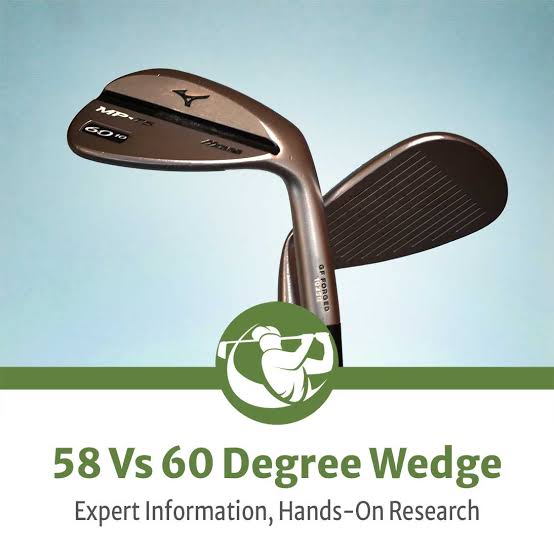
You are standing 70 yards from the pin. A deep greenside bunker sits right between you and the flag, and the pin is tucked tight with barely ten feet of green to work with. You need a club that launches the ball high, carries the sand, and stops dead on the putting surface.
The club that handles this situation better than almost anything else in the bag is a 58 degree wedge. It sits right in the sweet spot between the traditional 56-degree sand wedge and the full 60-degree lob wedge, and it is a club that far too many recreational golfers either overlook or misunderstand. While the 60-degree gets all the attention on highlight reels, and the 56-degree is the safe default that ships with most iron sets, this versatile in-between loft quietly fills a gap that can shave real strokes off your scorecard.
There is good reason why the best players in the world are gravitating toward this setup. Shot Scope data analyzed by MyGolfSpy shows that scratch golfers overwhelmingly favor a 50/54/58 wedge configuration over the older 52/56/60 layout. Better players use this loft for the largest share of shots inside 50 yards. That is not a coincidence. It is a trend built on results.
This article breaks down everything you need to know. You will learn how far it should go, how it compares to a 56 degree, what bounce angle to look for, when to pull it out on the course, whether buying one used makes financial sense, and how to practice with it so you actually trust it under pressure.
What Is a 58 Degree Wedge and Where Does It Fit in Your Bag?
A 58 degree wedge has 58 degrees of loft on its clubface. Most manufacturers classify it as a lob wedge, though it technically sits right on the border between the sand wedge and lob wedge categories. Standard sand wedges typically range from 54 to 56 degrees, while lob wedges start at 58 and go up to 62 or even 64 degrees. So this club straddles both worlds, and that dual identity is actually one of its biggest strengths.
In practical terms, this is a finesse club. It is not built for distance. It is designed to launch the ball high with a steep descent angle, generate significant backspin, and stop the ball quickly once it hits the green. That combination of height and spin makes it extremely useful for approach shots inside 80 yards, greenside chip shots where you have very little room between the edge of the green and the hole, bunker escapes from deep traps, and flop shots where you need to carry the ball over an obstacle and land it softly.
The club also performs well on firm courses with tight lies. Because of its built-in loft, golfers do not need to manipulate the face open as aggressively as they would with a lower-lofted sand wedge to achieve the same height. That means cleaner contact, more predictable results, and fewer of those thin or skulled shots that happen when you try to lay a 56 degree wide open. Think of this club as the scoring weapon that does the detailed work your driver and irons cannot.
How Far Should You Hit a 58 Degree Wedge?
Distance with this club varies more than with almost any other club in the bag, and that is by design. It is built for control, not for power. But you still need to know your numbers so you can make smart decisions on the course.
Average Distance by Skill Level
For the average male golfer taking a full swing, a 58 degree wedge carries between 65 and 80 yards. Longer hitters with faster swing speeds can push that number closer to 85 yards. The average female golfer hits the same club between 45 and 60 yards on a full swing, with stronger players reaching up to 80 yards. On the PGA Tour, professionals carry their lob wedges between 75 and 95 yards, with outliers like Bryson DeChambeau reportedly reaching 110 yards, though that is far from normal.
Here is the important part that most golfers miss. You should rarely be taking a full swing with this club. The majority of shots you hit with a high-lofted wedge will be partial swings — half swings, three-quarter swings, and everything in between. Your practical distance range with this club is more like 30 to 70 yards, and the golfers who score well with it are the ones who know exactly how far each swing length carries.
Factors That Change Your Distance
Several variables affect how far the ball travels with this club. Swing length is the most obvious factor. A quarter swing, half swing, and three-quarter swing each produce distinctly different carry numbers. Ball position in your stance also matters. Playing the ball farther back tends to lower the launch and reduce carry, while a more forward position promotes height. Shaft lean at impact changes things as well. Leaning the shaft too far forward effectively de-lofts the club, creating a lower ball flight that goes farther but defeats the purpose of carrying a high-lofted wedge.
Course conditions play a role too. Altitude adds distance. Cold, dense air reduces it. Wind can add or subtract yards depending on direction. Rather than memorizing averages from a chart, the smartest move is to build your own personal distance matrix. Spend time on the range with a launch monitor or use range markers, and log your carry distances at different swing lengths. Those are the only numbers that actually matter when you are standing over a shot on the course.
58 vs 56 Degree Sand Wedge — Which One Belongs in Your Bag?
This is one of the most common equipment debates in golf, and the answer depends entirely on how you set up the rest of your wedges.
The Key Differences on Paper
Two degrees of loft might not sound like much, but it does make a measurable difference. On a full swing, the higher-lofted club flies roughly 5 to 10 yards shorter than a 56 degree. It also launches higher, generates more backspin, and stops faster on the green. The tradeoff is that the higher loft makes it slightly less forgiving on off-center hits.
The 56 degree sand wedge is a more versatile, easier-to-hit club for the average player. It handles bunker shots, chip shots, pitch shots, and full approach shots with a predictable trajectory. It has been the most common sand wedge loft for decades. The 58, on the other hand, is more of a specialist. It gives you extra height and stopping power when you need it, but it demands better technique. Skilled golfers who have developed solid feel around the greens tend to prefer the precision it offers.
How to Decide Between Them
The decision comes down to gapping. You want 4 to 6 degrees of loft between each wedge in your bag so there are no awkward distance holes. If you already carry a 60-degree lob wedge, then a 56-degree sand wedge gives you clean 4-degree spacing on each side. That is a proven setup. But if you want to skip the 60 degree altogether and make your highest-lofted club a 58, the math changes. A setup like 46 (pitching wedge), 50 (gap wedge), 54 (sand wedge), and 58 gives you even 4-degree gaps all the way through. Many scratch golfers and low handicappers prefer this configuration because it eliminates the 60-degree club, which most amateurs find difficult to trust on full swings, and replaces it with something more forgiving that still gets the ball up quickly.
Legendary instructor Butch Harmon has been widely quoted saying that the average golfer should not use anything higher than 58 degrees. A 60-degree lob wedge requires a level of consistency that most weekend players simply do not invest in. If you are a beginner or high-handicap player, start with a 56 and master that club first. If you are an intermediate or advanced player with a reliable short game, the 58 degree wedge can be a genuine upgrade to your scoring ability.
Understanding Bounce on This Wedge and Why It Matters
Most golfers spend all their time thinking about loft and almost no time thinking about bounce. That is a mistake. Bounce is arguably just as important as loft when it comes to how a wedge performs on real turf, real sand, and real course conditions.
What Bounce Actually Does
Bounce is the angle between the leading edge of the clubface and the lowest point of the sole. When the club makes contact with the ground, the bounce angle determines whether the sole glides through the turf or digs into it. A club with more bounce has a sole that acts like a skid plate, preventing the leading edge from knifing too deep. A club with less bounce allows the leading edge to sit closer to the ground — great for tight lies but punishing when you hit behind the ball.
Bob Vokey, the master wedge designer behind Titleist’s Vokey line, has a famous saying: “Bounce is your friend.” He means that bounce provides built-in forgiveness. Even when your contact is not perfect, the right amount of bounce keeps the club from digging.
Choosing the Right Bounce for Your Game
For this loft, bounce options typically range from 4 degrees all the way up to 14 or even 16 degrees, depending on the manufacturer. Here is a practical breakdown of what each range suits. Low bounce, between 4 and 6 degrees, works best on firm turf, courses with tight lies, and bunkers with hard or coarse sand. It favors golfers who have a shallow, sweeping swing and take very little divot. Low bounce also makes it easier to hit open-faced flop shots off firm ground, which is why Tour players who play creative greenside shots often lean toward lower bounce on their lob wedges. Mid bounce, between 7 and 10 degrees, is the most versatile range. It works on firm to normal turf, handles a variety of bunker conditions, and suits golfers with a neutral swing and moderate attack angle. If you are unsure what bounce to pick, mid bounce is almost always a safe starting point. High bounce, above 10 degrees, is designed for soft turf, fluffy sand, and players who take steep divots with a digger-style swing. High bounce prevents the club from burying in soft conditions and is particularly helpful from greenside bunkers with powdery, loose sand.
For most recreational golfers, a bounce of 10 degrees or higher is the safer choice on this wedge. The extra forgiveness from higher bounce outweighs the slight loss of versatility on very tight lies. If you play a lot of bunker shots with this club, and most golfers do, higher bounce will make your life in the sand significantly easier. Beyond bounce, there is also the matter of sole grind, which shapes how the bounce interacts with the turf depending on how much you open or close the face. Grinds like the M-grind, S-grind, and C-grind each serve different swing types and course conditions. But for most golfers, getting the bounce right is the priority.
When to Use This Wedge on the Course
Knowing what this club can do on the range is one thing. Knowing when to pull it out of the bag during an actual round is something else entirely. The best wedge players are not just good at hitting the shot — they are good at recognizing when the situation calls for that specific club and when a different club would be the smarter play.
Situations Where This Club Shines
The 58 degree wedge is at its best from greenside bunkers, especially deep ones where the lip is high and you need to get the ball up fast. The loft does most of the work. Open the face slightly, aim a couple inches behind the ball, and let the bounce carry the club through the sand. Pitch shots from 30 to 80 yards where you need the ball to stop quickly also call for this wedge. When the pin is tucked behind a bunker or near the edge of the green, you need a club that produces enough height and spin to hold the landing zone. Chip shots from the fringe are another strong situation, particularly when there is very little green between you and the flag. And flop shots — those dramatic, high-arcing shots that clear an obstacle and float down softly — are the signature play of any lob wedge.
When to Leave It in the Bag
This club is not the answer in every situation, and golfers who force it into the wrong spots pay the price. If you are more than 90 yards from the green, a gap wedge or sand wedge will give you better distance control. If you have plenty of green to work with and no obstacles to carry, a chip-and-run with a pitching wedge or 9-iron is almost always the safer play. If the ball is sitting down in thick, heavy rough, getting the leading edge under it cleanly with a high-lofted club is extremely difficult — a lower-lofted wedge will cut through the grass better. And on windy days, height is your enemy. This club launches the ball into the wind’s path, where gusts can knock it offline or short. A lower, more penetrating shot with a 52 or 54 degree keeps the ball under the wind and gives you more predictable results.
Is Buying a Used 58 Degree Wedge Worth It?
The pre-owned golf equipment market has exploded in recent years, and wedges are one of the most popular categories. Golfers who want to experiment with a new loft, bounce, or grind can pick up a used club for 40 to 60 percent less than retail and try it without a major financial commitment.
There are real advantages to shopping used. You get access to specific loft and bounce combinations that may no longer be available new. You can test whether this loft actually fits your game before investing in a brand-new model. And if you are building out a full wedge set on a budget, buying pre-owned lets you get three or four quality clubs for the price of one or two new ones.
But there is one critical risk with used wedges that does not apply the same way to drivers or irons: groove wear. The grooves on a wedge face are what generate spin. Over time, those grooves wear down from repeated contact with the ball, sand, and turf. A wedge with worn grooves produces less spin, less stopping power, and less control around the greens. Most experts estimate that wedge grooves begin to lose their edge after 75 to 100 rounds of regular play.
When shopping for a used wedge, inspect the face closely. Look for visible wear lines across the grooves, especially in the center of the face where most contact occurs. Check the leading edge for nicks and chips. If the grooves look smooth or shiny rather than sharp and defined, the club has seen too much use. The best value play is to find a wedge that is one or two model years old but has been lightly played. The price drops once a new model releases, but the grooves on a lightly used club are still sharp enough to perform well. That sweet spot between savings and performance is where the used market really delivers.
How to Practice and Build Confidence with This Club
Buying the right club is only half the equation. The other half is putting in the time on the practice green to learn what it does and to build the kind of trust that holds up when there is a scorecard on the line.
Dial In Your Distances
The single most valuable thing you can do with any wedge is map out your carry distances at different swing lengths. Use a launch monitor if you have access to one, or work with range markers. Hit ten balls with a quarter swing and note the average carry. Do the same with a half swing, a three-quarter swing, and a full swing. Write those numbers down and keep them on your phone or in your bag. When you are standing over a 55-yard pitch shot, you should already know whether that calls for a three-quarter swing or a firm half swing.
Short Game Drills That Work
The clock drill is one of the most effective ways to build distance control. Imagine your backswing as a clock face. Practice swings where your hands stop at the 9 o’clock, 10 o’clock, and 11 o’clock positions, and track where each one lands. Over time, you develop a feel for the connection between swing length and carry distance that becomes automatic.
The bunker ladder drill is great for golfers who use this club primarily from the sand. Drop five balls in a bunker and hit them to five different targets at varying distances. This forces you to adjust your swing length and clubface angle on every shot, which builds the kind of adaptable touch you need in real bunker situations. The landing zone game is simple but effective. Pick a specific spot on the practice green — a towel, a tee, or a circle drawn with a club — and try to land ten balls within a three-foot radius. This trains precision over distance, which is the entire point of carrying a high-lofted wedge.
One last note on technique. The most common mistake golfers make with this club is decelerating through impact. They take a long backswing, then lose confidence and slow down before contact. That leads to fat shots, thin shots, and everything in between. The fix is to shorten the backswing and commit to a smooth, accelerating motion through the ball. Let the loft do the work. You do not need to help the ball into the air.
Frequently Asked Questions
Conclusion
The 58 degree wedge is not a flashy club, and it does not get the same attention as a new driver or a set of bladed irons. But round after round, it might save you more strokes than any of them. It bridges the gap between the workhorse sand wedge and the specialist lob wedge, giving you height, spin, and stopping power without the extreme difficulty that comes with higher-lofted clubs.
Whether it belongs in your bag depends on your current wedge gapping, your skill level, and the types of shots you face most often on the courses you play. If you already carry a 56-degree sand wedge and find yourself wishing for a little more loft on greenside shots, this is a natural next step. If you are currently playing a 60-degree lob wedge and struggling with consistency, dropping down to 58 degrees might be the change that finally gives you confidence around the greens.
Get the bounce right for your swing and your course conditions. Spend real time on the practice green mapping out your carry distances at different swing lengths. And whether you buy new or pick up a quality used option, make sure the grooves are sharp and the club fits comfortably in your hands. Do those things, and this club will quietly become one of the most valuable tools in your bag.