
Hyundai spent the better part of the last decade shedding its budget-car image, and the results are hard to argue with. What was once a brand people settled for has become a brand people actively seek out. Bold styling, generous warranty coverage, and cabin quality that punches well above its price tag — all of it has added up to a genuine shift in perception. The 2024 Hyundai range represents the most complete version of that transformation yet, bringing meaningful updates to its sedans, SUVs, electric vehicles, and even its compact pickup truck. Whether you are a first-time buyer shopping for an affordable commuter or a family looking for a loaded three-row SUV, there is likely something in this year’s catalog that deserves a closer look. This guide walks through the most talked-about models from the 2024 lineup, answers common buyer questions around the Tucson’s luxury credentials, the Azera’s international appeal, the Sonata’s smart key and remote features, and the fate of the long-running Accent nameplate. By the end, you should have a clear picture of which model fits your daily life and your budget.
What Changed Across the 2024 Hyundai Lineup
Hyundai did not treat 2024 as a carryover year. Several models received major redesigns, while the rest picked up notable upgrades to safety technology and cabin equipment. Understanding what changed across the board helps you appreciate why this model year stands out from the ones before it.
Design and Platform Updates for the Model Year
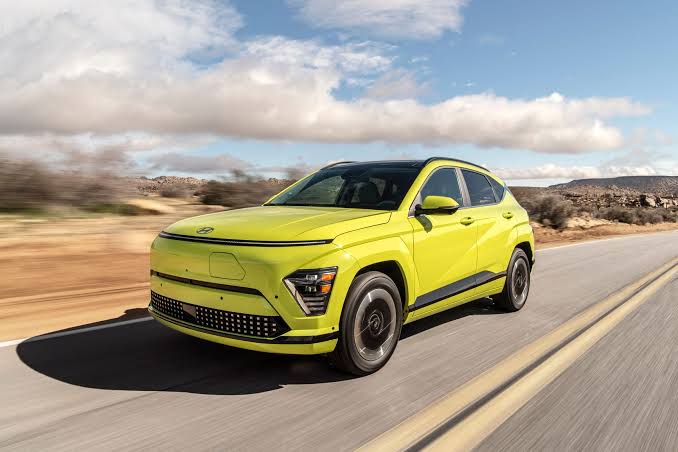
The most obvious changes hit the Sonata and the Kona. Hyundai gave the Sonata a mid-cycle makeover that borrows heavily from its Ioniq EV lineup — a horizontal light bar stretches across the nose, the dash now features a panoramic curved display with dual 12.3-inch screens, and the gear selector has moved to a column-mounted stalk to open up the center console. The Kona, meanwhile, arrived as an entirely new second-generation model. It grew in every dimension, picked up a fresh exterior design, and gained a more spacious cabin with a standard 12.3-inch touchscreen. The Santa Fe also debuted a bold new look for 2024, featuring an angular body, available captain’s chairs with Nappa leather, and a distinctive vertical rear window design that turned heads at every auto show. Even the models that carried over largely unchanged, like the Tucson and Palisade, received subtle but important updates to keep them competitive.
Safety and Technology Improvements
Across almost every 2024 Hyundai model, the SmartSense safety suite expanded. Haptic steering-wheel feedback for lane-keeping assist and blind-spot monitoring became standard on most trims. Seatbelt reminders for all occupants and rear side airbags also joined the standard equipment list on several vehicles. On the technology front, Hyundai pushed its 10.25-inch and 12.3-inch dual-screen infotainment layouts deeper into the lineup, making them available on mid-range trims rather than reserving them for top-tier options. The Digital Key 2.0 system, which allows owners to lock, unlock, and start their vehicle through a compatible smartphone, expanded to more models as well. And the warranty package remains one of the strongest selling points in the industry — five years or 60,000 miles of basic coverage, ten years or 100,000 miles on the powertrain, and three years of complimentary scheduled maintenance. Few competitors can match that combination.
Is the 2024 Hyundai Tucson a Luxurious Car?
This question comes up often in online forums and search queries, and the honest answer depends on what you mean by luxury. If you are comparing the Tucson to a Mercedes GLC or a BMW X3, it does not quite reach that level of refinement. But if you are asking whether it delivers a premium-feeling experience at a mainstream price, the answer is a confident yes.
Interior Quality and Comfort Features
The Tucson Limited trim is where this conversation gets interesting. At a starting price of roughly $36,500, it offers leather upholstery, heated and ventilated front seats, heated rear seats, a panoramic sunroof, ambient interior lighting, a wireless charging pad, and a Bose premium audio system. That is a feature list you would normally associate with vehicles costing $10,000 or more above the Tucson’s sticker price. Consumer feedback backs this up. On Kelley Blue Book, 77 percent of verified owners recommend the vehicle, and comfort along with styling consistently rank as its strongest qualities. Multiple reviewers have noted that the Tucson’s interior outshines the Toyota RAV4 and Honda CR-V at equivalent price points, offering materials and design that feel a full tier above what competitors deliver in the same budget.
How It Compares to Entry-Level Luxury SUVs
When you put the Tucson Limited side by side with something like a Lexus NX or an Acura RDX, the Korean crossover holds its own surprisingly well in terms of cabin equipment and technology. The dual 12.3-inch screen setup, available surround-view monitor, and Remote Smart Parking Assist are features that mirror what luxury brands offer. Where the Tucson falls short is under the hood. The base 2.5-liter four-cylinder engine produces 187 horsepower, which multiple reviewers have called sluggish, particularly during highway merging. The touch-sensitive climate controls also lack haptic feedback, making them frustrating to use on the move. Still, the verdict from most auto journalists is that the Tucson delivers a near-luxury experience without requiring a near-luxury budget. It punches above its weight, even if it does not quite knock out the established premium players.
Hybrid and Plug-In Hybrid Options Worth Considering
Buyers willing to spend a bit more should seriously consider the Tucson Hybrid. It pairs a turbocharged 1.6-liter engine with an electric motor for a combined 226 horsepower, and it returns an impressive 37 miles per gallon in combined driving. All-wheel drive comes standard on every hybrid Tucson, which is a meaningful bonus for buyers in colder climates. The Plug-In Hybrid takes things further with 261 horsepower and roughly 33 miles of electric-only range — enough for most daily commutes to happen without burning any gasoline at all. Both hybrid variants address the power complaint that dogs the base engine, making them the smarter buy for drivers who want the Tucson’s excellent cabin with a more capable powertrain underneath it.
2024 Hyundai Azera Reviews — A Flagship Sedan Most Buyers Cannot Purchase
The Azera is one of those vehicles that generates a lot of online curiosity but very little showroom traffic in North America, and there is a simple reason for that. You cannot buy one here. Still, the reviews from international markets paint a picture of what Hyundai is capable of when it aims for the top of the sedan market.
What Reviewers Say About the Azera’s Luxury and Performance
The seventh-generation Azera, also known as the Grandeur in South Korea, has earned strong praise from outlets across the Middle East and Asia. YallaMotor gave it 4.2 stars, highlighting its futuristic design, spacious rear cabin, and generous tech package. Under the hood sits a 3.5-liter V6 producing around 300 horsepower, paired with an eight-speed automatic transmission that delivers smooth, confident acceleration. The interior is where the Azera really makes its case. The cabin is trimmed in real wood, brushed aluminum, and quilted Nappa leather. A trio of screens — a 12.3-inch infotainment display, a 12.3-inch digital instrument cluster, and a 12-inch head-up display — creates a cockpit that feels thoroughly modern. A 10-speaker Bose audio system comes standard on higher trims, and the SmartSense safety suite includes blind-spot monitoring, lane-keeping assist, and Remote Smart Parking Assist. At roughly 198 inches long, the Azera competes in size with the BMW 5 Series and Mercedes E-Class, but at a price point that undercuts both significantly. Reviewers in the Middle East have called it a genuine alternative to European luxury sedans for buyers who prioritize comfort, technology, and cabin space over brand prestige.
Why the Azera Is Unavailable in North America
Hyundai sold the Azera in the United States from 2006 through 2017. When the Genesis luxury brand launched and began offering its own premium sedans — the G70, G80, and G90 — the Azera lost its reason to exist in the North American market. Hyundai chose not to have its mainstream brand compete directly with its own luxury division. The seventh-generation model is currently available in South Korea, the Middle East, and a handful of other international markets, but there are no plans to bring it back to the U.S. or Canada. For North American buyers who want that flagship sedan experience within the Hyundai family, the closest option is the Sonata N Line with its 290-horsepower turbo engine, or stepping up to the Genesis G80 for a true luxury alternative.
Remote Features for the 2024 Hyundai Sonata — Key Fob, Digital Key, and Smart Parking
One of the most commonly searched questions around the Sonata involves its remote and smart key capabilities. The 2024 model year brought a redesigned key fob alongside expanded digital key functionality, and understanding how these systems work can save you both money and frustration down the road.
Smart Key Fob Functions and Remote Start
Every 2024 Hyundai Sonata comes with a five-button smart key fob that handles lock, unlock, trunk release, remote start, and panic. Remote start is straightforward — press the lock button once, then hold down the circular remote start button for a few seconds. The engine will fire up and the climate system will begin conditioning the cabin based on your last settings, which is invaluable during both summer heat and winter cold. Hyundai limits each vehicle to two programmed key fobs at a time. If you lose one or need a replacement, the new fob must be programmed by a professional locksmith or dealer. Aftermarket replacement fobs typically cost between $85 and $130, while OEM units run closer to $100 to $150 before programming fees. Always verify the FCC ID and part number before purchasing a replacement, as fobs that look identical can have different internal components and frequencies.
Digital Key 2.0 and BlueLink Connectivity
The N Line trim and the optional Convenience Package on the SEL bring Hyundai’s Digital Key 2.0 system into play. This feature lets you add your Sonata to Apple Wallet on a compatible iPhone, turning your phone into a proximity key. Walk up to the car with your phone in your pocket, grab the door handle, and it unlocks. Sit inside, and after a few seconds the car recognizes the device and allows you to start the engine. Owners who have used this system consistently describe it as seamless and far more convenient than carrying a bulky key fob. Beyond the digital key, a BlueLink subscription unlocks remote start through the app, vehicle location tracking, remote door locking, and the ability to pre-condition the cabin climate before you walk outside. On higher trims, Remote Smart Parking Assist lets you maneuver the Sonata in and out of tight parking spots using only the key fob while standing outside the vehicle — a feature that feels like it belongs on cars costing twice as much.
What to Know Before Replacing a Lost Remote
Losing a Sonata key fob is not the end of the world, but it does require some homework. The 2024 model is not self-programmable, meaning you cannot pair a new fob at home by following a button sequence in the car. A qualified automotive locksmith or dealership will need specialized equipment to complete the programming. Most locksmiths charge less than dealers for the same service, so shopping around is worth the effort. If you have already set up Digital Key 2.0 on your phone, you can still access and drive the vehicle while arranging a replacement fob. However, remember that service departments typically require a physical key fob to communicate with the vehicle’s diagnostic systems, so keeping at least one working fob is important.
Hyundai Accent 2024 — The End of an Affordable Era
For nearly three decades, the Accent was the front door to Hyundai ownership. It was the car college students bought, the car new drivers learned on, and the car budget-conscious commuters relied on for cheap, reliable transportation. That era is now over in North America, though the story is more nuanced than a simple discontinuation.
Why Hyundai Discontinued the Accent in North America
Hyundai pulled the Accent from the U.S. market after the 2022 model year and from Canada after 2020. The decision was driven by a combination of declining subcompact sedan sales, a strategic pivot toward SUVs and electric vehicles, and portfolio simplification. Between 2016 and 2022, Hyundai discontinued several well-known nameplates — the Veloster, Equus, Elantra GT, and the Accent among them — to make room for electrified models and a rapidly expanding SUV lineup. By the 2025 model year, Hyundai’s car portfolio had shrunk to just four models while its SUV lineup ballooned to a dozen. The Accent’s sales numbers in its final years did not justify keeping it around when the Venue and Kona were drawing the same entry-level buyers toward crossover body styles. However, the Accent nameplate is not dead globally. A sixth-generation model launched in Vietnam in May 2024 and reached the UAE in early 2025, sold under the Accent or Verna name depending on the market. So while North American buyers can no longer walk into a dealership and order a brand-new Accent, the car continues to serve budget-conscious buyers in other parts of the world.
Alternatives for Budget-Conscious Buyers
If you were planning to buy an Accent and discovered it is no longer available, Hyundai still has options for you. The Venue starts at roughly $19,900 and serves as the brand’s most affordable new vehicle. It trades the sedan body style for a subcompact crossover shape, but it offers similar fuel efficiency and a higher seating position that many drivers prefer. The Elantra, starting around $22,000, picks up where the Accent left off in terms of sedan buyers who want more interior space and a stronger feature set. For shoppers who specifically want that small, affordable sedan form factor, certified pre-owned 2020 to 2022 Accents remain a solid choice. Many still carry remaining warranty coverage, and their fuel economy ratings — up to 41 miles per gallon on the highway — are hard to beat at their used-market price points.
Which 2024 Hyundai Model Is Right for You?
With so many vehicles across different segments, narrowing down the right choice comes down to how you drive, what you need, and what you are willing to spend. Here is a quick breakdown organized by buyer type.
City commuters on a tight budget should look at the Venue or a certified pre-owned Accent. Both keep running costs low and handle urban driving with ease. Families needing space and value will find the Tucson or Tucson Hybrid hard to beat, with their roomy cabins, generous safety tech, and strong fuel economy. Sedan enthusiasts who want style and technology should test-drive the Sonata SEL or the N Line — the refreshed design alone is worth the trip to the dealership. Eco-conscious drivers have excellent options in the Ioniq 5 or the Tucson Plug-In Hybrid, both offering meaningful electric range without range anxiety. Households that need three rows of seating will appreciate the redesigned Santa Fe or the Palisade, which comfortably seats up to eight and comes loaded with premium amenities.
Warranty and Ownership Advantages
Regardless of which model you choose, every new Hyundai comes with one of the best warranty packages in the automotive industry. The five-year basic warranty and ten-year powertrain warranty provide long-term peace of mind, and the three years of complimentary maintenance eliminate the cost of oil changes, tire rotations, and filter replacements during early ownership. Resale values across the lineup have also been trending upward as brand perception continues to improve. Combined with competitive pricing and a growing network of electrified powertrains, buying a Hyundai in this model year makes a stronger financial case than it ever has before.
Final Thoughts
The 2024 Hyundai lineup proves that value and quality no longer have to be an either-or choice. From the Tucson’s near-luxury cabin and the Sonata’s smart remote capabilities to the Azera’s flagship aspirations abroad and the Accent’s quiet farewell in North America, every corner of this range tells a story of a brand that refuses to stand still. If you have been considering a new vehicle purchase, taking the time to visit a dealership and experience these models firsthand is well worth the effort. Check current incentives, compare trims, and drive the one that speaks to your daily needs. Chances are good that the right Hyundai is already sitting on the lot.
Frequently Asked Questions
Q1: Is the 2024 Hyundai a reliable car? Most 2024 Hyundai models have earned above-average reliability scores from Consumer Reports and J.D. Power. The Tucson and Palisade scored particularly well, while the redesigned Kona and Santa Fe had slightly more reported issues during their first year. Overall, the brand continues to improve its dependability record year over year.
Q2: What is the warranty on a 2024 Hyundai? Every 2024 Hyundai comes with a 5-year/60,000-mile basic warranty and a 10-year/100,000-mile powertrain warranty. Buyers also receive three years of complimentary scheduled maintenance covering oil changes, tire rotations, and multi-point inspections at any authorized Hyundai dealership.
Q3: How many models are in the 2024 Hyundai lineup? The 2024 Hyundai lineup includes over a dozen models spanning sedans, SUVs, crossovers, electric vehicles, and a compact pickup truck. Key nameplates include the Elantra, Sonata, Venue, Kona, Tucson, Santa Fe, Palisade, Ioniq 5, Ioniq 6, Santa Cruz, and the hydrogen-powered Nexo.
Q4: What is the cheapest 2024 Hyundai you can buy? The Hyundai Venue holds the position of the most affordable new vehicle in the lineup, with a starting MSRP of approximately $19,900 before destination charges. It is a subcompact crossover SUV equipped with standard safety features, an 8-inch touchscreen, and wireless smartphone integration.
Q5: Is the 2024 Hyundai Tucson considered a luxury vehicle? The Tucson is not classified as a luxury vehicle, but its Limited trim offers features commonly found in entry-level luxury SUVs, including leather upholstery, heated and ventilated seats, a panoramic sunroof, and a Bose premium audio system. At around $36,500, it delivers a near-premium experience at a mainstream price point.
Q6: Does the 2024 Hyundai Sonata come with remote start? Yes, remote start is a standard feature on the 2024 Hyundai Sonata across all trims. Owners can activate it through the key fob by pressing the lock button followed by the remote start button, or through the BlueLink smartphone app with an active subscription.
Q7: What is Hyundai Digital Key 2.0 and which 2024 models have it? Digital Key 2.0 allows owners to lock, unlock, and start their vehicle using a compatible smartphone through Apple Wallet or the BlueLink app. It is available on select trims of the 2024 Sonata, Tucson, Kona, and Santa Fe, either as standard equipment or through an optional convenience package.
Q8: Is the 2024 Hyundai Azera sold in the United States? No, the 2024 Hyundai Azera is not available in North America. Hyundai discontinued the Azera in the U.S. after the 2017 model year when it launched the Genesis luxury brand. The seventh-generation Azera is currently sold in South Korea, the Middle East, and select international markets.
Q9: Why did Hyundai discontinue the Accent? Hyundai ended Accent production for North America after the 2022 model year due to declining subcompact sedan sales, a strategic shift toward SUVs and electric vehicles, and portfolio streamlining. The Venue and Kona crossovers now serve as the brand’s entry-level options in the U.S. and Canadian markets.
Q10: Is the Hyundai Accent still available anywhere in 2024? Yes, while the Accent was discontinued in North America, a sixth-generation model launched in Vietnam in May 2024 and in the UAE in early 2025. The nameplate also continues under the Verna name in markets like India, so it remains globally active outside of the U.S. and Canada.
Q11: What is the towing capacity of a 2024 Hyundai Tucson? The 2024 Hyundai Tucson can tow up to 2,000 pounds when properly equipped with trailer brakes. Without trailer brakes, the maximum towing capacity is 1,650 pounds. All trims are powered by a 2.5-liter four-cylinder engine with available all-wheel drive for better traction while hauling.
Q12: Which 2024 Hyundai SUV has the highest towing capacity? The 2024 Hyundai Santa Cruz leads the lineup with a maximum towing capacity of 5,000 pounds when equipped with the turbocharged 2.5-liter engine and all-wheel drive. Among traditional SUVs, the Santa Fe can tow up to 3,500 pounds with the turbocharged powertrain and AWD.
Q13: Does the 2024 Hyundai Tucson come in a hybrid version? Yes, the 2024 Tucson is available as a standard hybrid and a plug-in hybrid. The Tucson Hybrid pairs a turbocharged 1.6-liter engine with an electric motor for 226 combined horsepower and 37 mpg combined. The Plug-In Hybrid delivers 261 horsepower and offers approximately 33 miles of electric-only driving range.
Q14: What is the best-selling 2024 Hyundai model? The Tucson was Hyundai’s best-selling model in 2024, accounting for nearly a quarter of the brand’s record 836,802 units sold in the U.S. that year. Its combination of competitive pricing, versatile powertrains, and a well-equipped cabin made it the top choice among Hyundai buyers.
Q15: How much does a 2024 Hyundai Sonata cost? The 2024 Hyundai Sonata starts at $28,650 for the SEL trim, including the destination charge. The performance-oriented N Line begins at $36,100, while the hybrid variants range from $31,950 for the SEL Hybrid to $38,350 for the Limited Hybrid. All-wheel drive is available on the base engine for an additional $1,500.
Q16: Are there any recalls on 2024 Hyundai vehicles? Yes, several 2024 Hyundai models have been subject to recalls. Notable recalls include the Tucson for a power steering issue and tire label error, the Kona for seat belt and battery cable concerns, the Santa Fe for wiring harness and sunshade switch problems, and the Sonata for brake light software. All recall repairs are performed free of charge at authorized dealerships.
Q17: Do 2024 Hyundai vehicles hold their resale value well? Hyundai’s resale values have been improving and now perform above the industry average, though they still trail behind Toyota and Honda. According to CarEdge, a 2024 Hyundai retains roughly 69 percent of its original value while still having 92 percent of its useful lifespan remaining, making it a strong value pick on the used market.
Q18: What safety rating did the 2024 Hyundai Sonata receive? The 2024 Hyundai Sonata earned an IIHS Top Safety Pick designation. It received the highest rating of Good in the original crash tests and the updated side test, though it scored Poor in the updated moderate overlap front crash test. Standard safety features include automatic emergency braking, adaptive cruise control, and blind-spot monitoring.
Q19: Can I use my phone as a car key for a 2024 Hyundai? Yes, select trims of several 2024 Hyundai models offer Digital Key 2.0, which turns a compatible iPhone or Android device into a proximity key. You simply walk up to the vehicle with your phone in your pocket, and the car recognizes it for unlocking and starting. A BlueLink subscription adds remote start and climate pre-conditioning through the app.
Q20: What is the fuel economy of the 2024 Hyundai Tucson? The gas-powered 2024 Tucson achieves up to 26 mpg in the city and 33 mpg on the highway with front-wheel drive. The Tucson Hybrid improves that significantly to 37 mpg combined, while the Plug-In Hybrid can handle most daily commutes on electric power alone with its 33-mile battery range before the gasoline engine kicks in.
Q21: Is the 2024 Hyundai Ioniq 5 worth buying? The 2024 Ioniq 5 is widely regarded as one of the best electric vehicles in its price range. It offers up to 303 miles of EPA-estimated range, ultra-fast 800-volt DC charging that goes from 10 to 80 percent in roughly 18 minutes, and unique features like bidirectional charging that can power external appliances. It earned strong reviews for its retro-futuristic design and spacious, flat-floor interior.
Q22: What is the difference between the 2024 Hyundai Santa Fe and the Palisade? The Santa Fe is a midsize SUV that was fully redesigned for 2024 with available three-row seating for up to seven passengers and a turbocharged engine. The Palisade is a full-size three-row SUV that seats up to eight, offers a more powerful 3.8-liter V6 engine, and targets buyers who need maximum interior space and premium comfort for larger families.
Q23: Does the 2024 Hyundai Kona come as an electric vehicle? Yes, the 2024 Kona is available as both a gas-powered model and an all-electric version called the Kona Electric. The EV variant offers two battery options — a 48.6 kWh pack with an estimated 197-mile range and a 64.8 kWh pack with an estimated 260-mile range. It also supports 400-volt DC fast charging and vehicle-to-load capability.
Q24: How does the 2024 Hyundai compare to Toyota and Honda in overall value? The 2024 Hyundai lineup generally offers more standard features and technology at lower price points compared to equivalent Toyota and Honda models. Multiple reviewers have noted that Hyundai interiors feel a full tier above competitors like the RAV4 and CR-V at the same price. While Toyota still leads slightly in long-term reliability and resale value, Hyundai’s industry-leading warranty and complimentary maintenance bridge much of that gap for buyers who prioritize upfront value.