
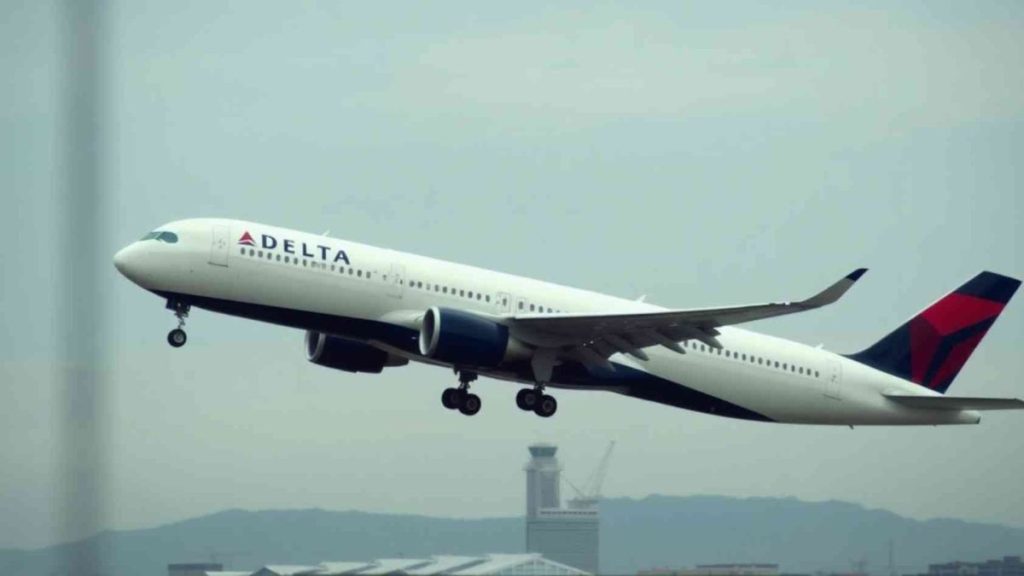
Imagine settling into your seat for a 13-hour flight from Detroit to Tokyo, only to find yourself stepping off the plane in Los Angeles instead. That is exactly what happened to hundreds of passengers aboard Delta Flight DL275 on May 28, 2025. What started as a perfectly routine trans-Pacific journey quickly turned into one of the most talked-about aviation events of the year when the crew made the decision to reroute the aircraft to Los Angeles International Airport.
The story of Delta Flight DL275 diverted LAX is not just about one airplane changing course. It is a story about crew professionalism, safety-first decision-making, and the complicated logistics that kick into gear the moment a long-haul flight goes off script. It is also a reminder that modern aviation, for all its reliability, still faces moments where the best choice is to land somewhere safe rather than push forward into risk.
Within hours of the landing, the news of Delta Flight DL275 diverted LAX was trending across Reddit, X (formerly Twitter), and every major aviation tracking platform. Passengers shared firsthand accounts. Aviation experts weighed in on the technical details. Families scrambled to figure out what happened. The whole thing unfolded in real time, turning a single flight diversion into a public conversation about airline safety, transparency, and passenger rights.
In this article, we are going to walk through every piece of this story. From the moment the Airbus A350 left Detroit to the second it touched down on Runway 06R at LAX, and everything that happened afterward. If you have been searching for updates on Delta Flight DL275 diverted LAX today or trying to understand the full picture, you are in the right place.
What Is Delta Flight DL275 and Its Usual Route?
Delta Flight DL275 is a regularly scheduled international service connecting Detroit Metropolitan Wayne County Airport to Tokyo Haneda Airport in Japan. It is one of the key routes in Delta Air Lines’ trans-Pacific network, used heavily by business travelers, tourists, and passengers connecting through Detroit’s hub to reach Asia.
The flight typically covers around 6,300 miles and takes approximately 13 hours, following a northern Pacific route that passes over Canada, Alaska, and the open ocean before descending into Tokyo. The aircraft assigned to this route is usually an Airbus A350-900, a modern wide-body twin-engine jet powered by two Rolls-Royce Trent XWB engines. It is one of the most fuel-efficient and technologically advanced long-haul aircraft in commercial service today.
On board, passengers can expect a layout of roughly 306 to 325 seats spread across Delta One Suites, Premium Select, Comfort+, and Main Cabin. The A350 offers lie-flat business class seats, personal entertainment screens, USB charging at every seat, and onboard Wi-Fi. It is built for the kind of extended journey that DL275 represents.
What makes this route important to understand is that diversions on trans-Pacific flights are genuinely rare. These flights are planned meticulously, with fuel calculations, weather routing, and mechanical checks all accounted for well before departure. So when something like the Delta Flight DL275 diverted LAX incident happens, it draws attention for good reason. Something significant had to happen for the crew to make that call.
How Delta Flight DL275 Diverted to LAX — The Complete Timeline
The Departure from Detroit
The trouble, if you want to call it that, actually started before the plane even left the ground. The Airbus A350-900 operating this particular flight, registered as N508DN, was arriving from Amsterdam on Delta Flight DL133. That inbound flight landed over an hour late at Detroit, touching down around 1:19 PM local time. Since DL275 was scheduled to depart at 2:07 PM, the late arrival created a chain reaction. After the standard turnaround — cleaning, fueling, boarding — DL275 finally pushed back and got airborne at approximately 3:53 PM, nearly two hours behind schedule.
At that point, though, nothing seemed out of the ordinary. The aircraft climbed to cruising altitude and settled into its northwestward path toward Japan. Passengers were served meals, the entertainment systems were running, and the flight proceeded normally for the first several hours.
The Mid-Flight Alert Over the Bering Sea
Roughly five hours into the flight, with the aircraft cruising at approximately 38,000 feet over the North Pacific, things changed. The crew received a system alert indicating a fault with one of the Rolls-Royce Trent XWB engines — specifically, its anti-ice system. At this point, the A350 was around 620 nautical miles southwest of Anchorage, Alaska, deep into the remote airspace between North America and Asia.
For those unfamiliar with how the anti-ice system works, it is a critical component that prevents ice from forming on engine inlets and other vital surfaces during high-altitude flight. At 38,000 feet, temperatures regularly drop to minus 50 degrees Celsius or lower. If ice builds up on engine components, it can restrict airflow, reduce engine efficiency, and in extreme cases, lead to power loss. This is exactly the kind of failure that turned Delta Flight DL275 diverted LAX into a major talking point across the aviation community.
The Decision to Divert
After detecting the alert, the flight crew immediately began following standard operating procedures. The captain and first officer consulted with Delta’s Operations Control Center on the ground, sharing real-time data from the aircraft’s monitoring systems. Together, they assessed the risk. The conclusion was clear: continuing across the Pacific with a potentially compromised anti-ice system was not worth the gamble.
The crew made the call to divert. The aircraft banked southeast and began the long descent toward Los Angeles. It took approximately five more hours to reach LAX from the point of diversion, meaning the total flight time from Detroit to Los Angeles came to around 12 hours and 15 minutes. Ironically, that is almost as long as the originally scheduled flight to Tokyo would have taken.
The Landing at LAX
Delta Flight DL275 touched down safely on Runway 06R at Los Angeles International Airport at approximately 1:08 AM local time. The landing was smooth and controlled. Emergency services were on standby as a precaution, but they were not needed. There was no fire, no smoke, and no injuries. Passengers deplaned in an orderly fashion and were directed to Delta’s ground support team inside the terminal. For anyone tracking the Delta Flight DL275 diverted LAX status that night, the flight showed as safely arrived and then inactive for nearly 19 hours.
Why Was LAX Chosen as the Diversion Airport?
When a trans-Pacific flight needs to divert, the crew does not just pick the nearest airport. They need a facility that can handle a wide-body international aircraft, offer the right maintenance capabilities, and support hundreds of passengers who suddenly need rebooking, accommodations, and answers. LAX checked every one of those boxes.
First, Los Angeles International Airport is one of Delta’s largest West Coast hubs. That means Delta has a significant operational presence there — ground crews, customer service agents, gate space, and logistics support that smaller airports simply cannot match. When something goes wrong on a major flight, you want to land where your airline has the deepest resources.
Second, LAX has Rolls-Royce technicians stationed on-site. Since the issue involved the Trent XWB engine’s anti-ice system, having specialists who could immediately begin diagnostic work on the engine was a huge advantage. Sending the aircraft to an airport without that capability would have meant days of delay instead of hours.
Third, the runways at LAX are rated for heavy, fuel-laden wide-body aircraft. Because DL275 was diverted mid-flight, it was still carrying a large fuel load — far more than it would carry on a normal domestic arrival. Not every airport can safely handle that kind of weight on landing. LAX can.
Finally, LAX offers full international arrival facilities, including customs and immigration services. While the flight originated domestically in Detroit, the complexity of rebooking passengers onto international flights to Tokyo required that level of infrastructure. Other airports in range, such as San Francisco or Salt Lake City, were considered, but LAX offered the strongest combination of everything the situation demanded.
Delta Flight DL275 Diverted LAX — Passenger Reactions and Experiences
Inside the Cabin During the Diversion
For the passengers aboard DL275, the experience ranged from mild concern to genuine anxiety. Multiple travelers later described the moment the captain came on the intercom and announced that the flight would not be continuing to Tokyo. Some said the cabin went quiet immediately. Others recalled nervous glances exchanged between seatmates. A few passengers clapped — not out of celebration, but out of a strange mix of relief and nervous energy.
The cabin crew, by most accounts, handled the situation with remarkable composure. Flight attendants moved through the aisles, answering questions, offering water and snacks, and providing whatever reassurance they could. The captain made multiple follow-up announcements, each time emphasizing that the diversion was precautionary and that the aircraft was in no immediate danger. That kind of steady communication made a measurable difference in keeping the mood from tipping into panic.
What Passengers Said on Reddit and Social Media
Almost immediately after the diversion became public, threads began appearing on Reddit’s r/flights and r/aviation communities. The search term Delta Flight DL275 diverted LAX Reddit trended as passengers who were actually on board started posting firsthand accounts, and aviation enthusiasts tracked the A350’s unusual flight path in real time using tools like Flightradar24 and FlightAware.
One passenger described the descent into LAX as physically uncomfortable, noting that the extended flight time combined with the pressure changes during descent left them with significant ear pain. Another traveler, who was seated in Delta One, reported that the crew handled the premium cabin with particular attention, keeping business class passengers informed with individual updates.
The general tone across social media was mixed but largely positive toward the crew. Relief at landing safely was the dominant emotion, but frustration ran close behind. Many passengers had tight connections in Tokyo, and the sudden reroute threw their entire itineraries into chaos. Some travelers posted about spending the night at LAX hotels, unsure when they would finally reach Japan. Others found humor in the absurdity of flying for 12 hours and ending up in California instead of Asia.
What stood out most in the online conversation was how quickly real-time information spread. Families tracking the flight at home saw the route change on their tracking apps before they heard from their loved ones on board. That kind of transparency, enabled by modern flight tracking technology, turned the story of Delta Flight DL275 diverted LAX into a widely followed public event within hours of it happening.
How Delta Handled the Aftermath
Passenger Accommodations and Rebooking
Once the aircraft was parked and passengers had deplaned, Delta’s ground team at LAX went to work. The airline’s response was swift and organized, which is worth noting given that the flight arrived well after midnight. Customer service agents were stationed at the gate to begin rebooking passengers immediately. Those with the tightest onward connections were prioritized.
Delta provided hotel accommodations for all affected passengers, along with ground transportation to and from the hotels and meal vouchers to cover food expenses during the unplanned layover. Passengers traveling in Delta One reportedly received priority handling throughout the process, including expedited rebooking and upgraded hotel arrangements.
For most travelers, the wait for an alternative flight to Tokyo lasted until the following day. Delta worked to consolidate affected passengers onto the next available departures, though some travelers opted to reroute through other carriers or adjust their plans altogether. The airline also set up a dedicated phone line and email channel for passengers who needed additional assistance after leaving the airport.
Aircraft Inspection and Return to Service
The Airbus A350-900 that operated DL275 was grounded at LAX for approximately 18.5 hours following the landing. During that time, Delta’s maintenance engineers and Rolls-Royce technicians conducted a thorough inspection of the engine anti-ice system. The fault was diagnosed, repaired, and the aircraft was cleared to return to service.
The Federal Aviation Administration requested flight data recorder and cockpit voice recorder logs as part of its standard review process. This is routine for any significant diversion and does not necessarily indicate that a formal investigation is underway. Notably, the National Transportation Safety Board did not open a separate investigation into the incident, which suggests that while the malfunction was serious enough to warrant diversion, it was not classified as a catastrophic safety event.
Delta issued a public statement following the incident, emphasizing that the diversion was carried out in accordance with established safety protocols and that the crew’s decision-making was appropriate. The airline commended both the flight crew and the ground team at LAX for their professionalism throughout the event. For travelers who searched Delta Flight DL275 diverted LAX status in the days that followed, Delta’s communication channels confirmed the aircraft had been cleared and returned to normal operations.
The Financial and Operational Impact of the DL275 Diversion
Flight diversions on long-haul international routes are not just inconvenient — they are expensive. Industry estimates suggest that the total financial impact of the DL275 diversion on Delta was approximately 2.3 million dollars. That figure accounts for the extra fuel burned during the extended flight and the subsequent repositioning of the aircraft, unplanned maintenance and repair costs at LAX, hotel accommodations, meal vouchers, and ground transportation for all affected passengers, rebooking expenses and lost revenue from the canceled Tokyo arrival, and downstream schedule disruptions caused by the grounded aircraft.
The operational ripple effect extended beyond the single flight. When a wide-body aircraft like the A350 sits on the ground for nearly 19 hours at an unscheduled location, it throws off the airline’s fleet planning. At least one subsequent scheduled flight was disrupted because the aircraft was not where it was supposed to be.
To put this in perspective, Delta maintains a strong on-time performance record — roughly 90 percent across its network, even during peak travel seasons. Diversions of this magnitude are rare on the airline’s trans-Pacific routes. But when they do happen, the costs are real and significant. It is worth mentioning that Delta is in the process of transitioning to an all-A350 fleet for its continental trans-Pacific network, a move planned for 2026. That makes the reliability and maintenance of these specific engines even more critical to the airline’s long-term strategy.
What This Incident Tells Us About Aviation Safety
Why Precautionary Diversions Are a Good Sign, Not a Bad One
It is natural for passengers and the general public to hear about a flight diversion and assume something went terribly wrong. But in aviation, a precautionary diversion is actually evidence that the safety system is working exactly as it should. Flight crews are trained to prioritize safety over everything else — over schedules, over costs, over passenger convenience. The moment the crew on DL275 detected a fault in the anti-ice system, they followed their training and made the conservative choice.
Modern aircraft like the Airbus A350 are designed with multiple layers of redundancy. Sensors constantly monitor every critical system and flag abnormalities long before they become emergencies. That is exactly what happened here. The anti-ice fault was detected early enough that the crew had time to evaluate options, consult with ground control, and choose the best diversion airport — all without ever putting the aircraft or its passengers in immediate danger.
Continuing over the vast, remote Pacific with even a slight question about engine ice protection would have been a far riskier choice. The crew chose caution, and every aviation expert who has weighed in on the incident agrees that it was the right call.
Lessons for the Industry — Predictive Maintenance and Future Prevention
One of the most interesting conversations to emerge from the DL275 diversion is whether the anti-ice system fault could have been detected before the aircraft ever left Detroit. Predictive maintenance technology — systems that use data analytics and machine learning to identify early signs of component degradation — is advancing rapidly across the aviation industry.
Some analysts have suggested that a more advanced predictive monitoring system might have flagged abnormal readings in the anti-ice components during pre-flight checks, potentially three to six hours before departure. If that had happened, the issue could have been addressed on the ground in Detroit, avoiding the diversion entirely.
This is not a criticism of Delta’s current maintenance practices, which meet or exceed industry standards. It is more of a forward-looking observation about where the industry is headed. Airlines worldwide are investing heavily in real-time engine health monitoring, sensor data analytics, and automated fault prediction. Incidents like the one involving Delta Flight DL275 diverted LAX add momentum to those investments by demonstrating the tangible costs — both financial and reputational — of in-flight system failures that could potentially be caught earlier.
How to Check Delta Flight DL275 Status and Track Diversions
If you are a traveler booked on DL275 or any other long-haul international flight, staying informed is one of the most valuable things you can do. Real-time flight tracking tools have made it easier than ever to monitor your flight’s progress, even from the ground.
Delta’s official mobile app is the most direct source for flight status updates. It provides gate information, departure and arrival times, delay notifications, and diversion alerts. Beyond the Delta app, third-party tracking platforms like FlightAware and Flightradar24 offer detailed route maps, altitude data, and historical flight records. During the DL275 diversion, both platforms showed the aircraft’s unusual southeastward turn in real time, and thousands of people followed the flight’s progress as it made its way to LAX.
For peace of mind on future flights, consider signing up for automatic flight status alerts through Delta’s app or through a tracking service. These notifications can tell you about delays, diversions, or gate changes before you even arrive at the airport. It is also worth considering travel insurance that specifically covers diversion-related expenses — things like hotel stays, meals, and rebooking fees — particularly if you are flying long-haul international routes where diversions, while rare, carry outsized consequences.
Your Rights as a Passenger During a Diverted Flight
Understanding your rights during a flight diversion can make a stressful situation significantly more manageable. In the United States, airlines are generally expected to provide care for passengers during extended delays and diversions, though the specifics vary by carrier and are not as strictly regulated as they are under the European Union’s EC 261 passenger rights framework.
Delta Air Lines’ own Customer Plan commits the airline to providing meals, hotel accommodations, and rebooking assistance when a diversion causes a significant delay that is within the airline’s control. Mechanical issues like the one that grounded DL275 typically fall into this category, meaning affected passengers are entitled to the accommodations that Delta provided.
If you ever find yourself on a diverted flight, the most practical advice is to keep all of your documentation. Hold onto your boarding pass, any receipts for meals or transportation, and any written communication from the airline. These records can be essential if you need to file a reimbursement claim later. It is also smart to contact Delta directly — through the app, by phone, or at the airport service desk — rather than relying on third-party booking agents. The airline’s own staff will have the most up-to-date information and the broadest authority to rebook you or arrange accommodations.
One more thing worth knowing: if your diverted flight was booked as part of a connecting itinerary, the airline is generally responsible for getting you to your final destination, even if that means booking you on a competitor’s flight. Do not hesitate to ask about all available options.
Broader Context — How Common Are Flight Diversions?
Flight diversions are more common than most travelers realize, though the majority are minor and attract little public attention. According to data from the Bureau of Transportation Statistics, U.S. airlines collectively experience thousands of diversions each year. Most are caused by weather, followed by medical emergencies and mechanical issues.
What made the DL275 diversion stand out was the combination of factors: a long-haul international route, a mid-ocean location at the time of the fault, a dramatic reroute that added hours to the journey, and the subsequent visibility on social media and aviation forums. If you followed the Delta Flight DL275 diverted LAX Reddit discussions, you saw just how many people were tracking this event in real time. Most diversions involve domestic flights that land at a nearby alternate airport, with passengers delayed by an hour or two at most. The DL275 situation was far more complex and far more visible.
It is also worth noting that Delta’s handling of the situation — both in the air and on the ground — has been widely praised by industry observers. The crew followed textbook procedures, Delta’s ground team at LAX responded quickly, and affected passengers received the care and rebooking support they needed. Not every airline handles diversions this smoothly, and the DL275 case is being cited in some aviation circles as an example of how a diversion should be managed.
Conclusion
The story of Delta Flight DL275 diverted LAX is, at its core, a story about the aviation industry doing what it is designed to do. A fault was detected. A crew made the safe choice. An airline mobilized its resources. And every single person on that plane walked away unharmed.
Was it disruptive? Absolutely. Hundreds of passengers had their travel plans upended. Delta absorbed millions in unplanned costs. An A350 sat idle for nearly a full day. But measured against the alternative — continuing across the remote Pacific with a compromised engine system — the disruption was a small price to pay.
For travelers, the key takeaway is this: diversions happen, and when they do, they are almost always the safest possible outcome for the situation at hand. Stay informed by using flight tracking tools. Know your rights. Keep your documentation. And trust that the crew making the call to divert is doing so because they have been trained to put your safety above everything else.
Looking ahead, advances in predictive maintenance and engine health monitoring will likely reduce the frequency of incidents like the one involving Delta Flight DL275 diverted to LAX. But the willingness of a flight crew to change course when something is not right — that is a feature of aviation, not a flaw. And it is exactly the kind of decision that kept everyone on DL275 safe.
1. Why was Delta Flight DL275 diverted to LAX? Delta Flight DL275 was diverted to Los Angeles International Airport on May 28, 2025, after the flight crew detected a malfunction in the Rolls-Royce Trent XWB engine’s anti-ice system. The crew made a precautionary decision to land at LAX rather than continue the trans-Pacific route to Tokyo, prioritizing passenger safety over schedule.
2. What happened on Delta Flight DL275? Delta Flight DL275, an Airbus A350-900 flying from Detroit to Tokyo Haneda, experienced an engine anti-ice system failure approximately five hours into the flight while cruising at 38,000 feet over the North Pacific. The crew diverted the aircraft to LAX, where it landed safely at 1:08 AM with no injuries reported among the 287 passengers and crew on board.
3. When did Delta Flight DL275 get diverted to LAX? The diversion occurred on May 28, 2025. The aircraft departed Detroit nearly two hours behind schedule at approximately 3:53 PM local time and was rerouted mid-flight after detecting the engine fault over the Bering Sea. It landed at LAX just after 1:08 AM Pacific Time.
4. Was Delta Flight DL275 an emergency landing? The landing was classified as a precautionary emergency. While the anti-ice system failure was a serious mechanical concern, there was no fire, smoke, or immediate danger to passengers. Emergency services were placed on standby at LAX as a standard precaution, but they were not needed upon arrival.
5. Where was Delta Flight DL275 when it was diverted? The aircraft was approximately 620 nautical miles southwest of Anchorage, Alaska, flying over the Bering Sea at 38,000 feet when the crew detected the anti-ice system fault. From that point, the aircraft flew southeast for approximately five hours before landing at LAX.
6. What type of aircraft was Delta Flight DL275 using? Delta Flight DL275 was operated by an Airbus A350-900 with the registration number N508DN. The aircraft is a modern wide-body twin-engine jet powered by two Rolls-Royce Trent XWB engines, and it was approximately 7.3 years old at the time of the incident.
7. What is an engine anti-ice system and why does it matter? The engine anti-ice system uses heated bleed air from the engine compressor to prevent ice from forming on engine inlets and critical internal components during flight. At high altitudes where temperatures can drop below minus 50 degrees Celsius, ice buildup can restrict airflow into the engine, reduce performance, and in severe cases cause engine power loss or flameout.
8. How dangerous is an anti-ice system failure on an airplane? An anti-ice system failure during flight over cold, remote airspace is considered a serious safety concern. Without functioning anti-ice protection, ice can accumulate on engine components and potentially cause reduced thrust, engine surging, blade damage, or engine failure. This is why aviation regulations require crews to divert immediately when this system fails in icing conditions.
9. What are the Rolls-Royce Trent XWB engines on the Airbus A350? The Rolls-Royce Trent XWB is the exclusive engine option for the Airbus A350 family. It is one of the most fuel-efficient large commercial jet engines in the world, producing between 75,000 and 97,000 pounds of thrust depending on variant. The Trent XWB powers all A350-900 and A350-1000 aircraft in service globally.
10. Has the Airbus A350 had anti-ice problems before? While isolated anti-ice system incidents have occurred on various aircraft types, the Airbus A350 maintains one of the strongest safety records in commercial aviation. The FAA has issued airworthiness directives related to anti-ice systems on other aircraft such as the Boeing 737 MAX and 787, but the DL275 incident was not linked to a fleet-wide design flaw in the A350.
11. How many passengers were on Delta Flight DL275 when it was diverted? There were approximately 287 passengers and crew members on board during the diversion. The aircraft was configured with Delta One Suites, Premium Select, Comfort+, and Main Cabin seating, and reports indicate the flight was near full capacity for the trans-Pacific route.
12. What did passengers on Delta Flight DL275 say about the experience? Passenger reactions were mixed. Many praised the flight crew for their calm, professional handling of the situation and frequent communication updates. Some travelers expressed frustration over missed connections and uncertainty about their onward travel. Reddit threads and social media posts from passengers described the cabin as tense but orderly throughout the diversion.
13. What did Reddit users say about Delta Flight DL275 diverted to LAX? Threads on Reddit’s r/flights and r/aviation communities became a central hub for real-time information during the diversion. Passengers shared firsthand accounts, aviation enthusiasts tracked the flight path on Flightradar24, and discussions ranged from the technical cause of the fault to praise for the crew’s professionalism. The general sentiment was supportive of Delta’s handling of the situation.
14. How long was Delta Flight DL275 in the air before landing at LAX? The total flight time from Detroit to Los Angeles was approximately 12 hours and 15 minutes. This was nearly as long as the originally scheduled 13-hour flight to Tokyo Haneda, making it one of the longest diversions by total airtime that many passengers had ever experienced.
15. What did Delta Air Lines do for passengers after the DL275 diversion? Delta provided all affected passengers with complimentary hotel accommodations, ground transportation, meal vouchers, and rebooking assistance onto the next available flights to Tokyo. Delta One passengers received priority handling. The airline also set up dedicated support channels by phone and email for passengers who needed further help after leaving the airport.
16. How long was the DL275 aircraft grounded at LAX after the diversion? The Airbus A350-900 (N508DN) remained grounded at LAX for approximately 18.5 hours. During this time, Delta maintenance engineers and Rolls-Royce technicians inspected the engine, diagnosed the anti-ice system fault, completed the necessary repairs, and cleared the aircraft to return to service.
17. Did the FAA investigate the Delta Flight DL275 diversion? The FAA requested standard flight data recorder and cockpit voice recorder logs for review, which is routine for any significant flight diversion. However, the National Transportation Safety Board did not open a separate formal investigation, suggesting the incident was treated as a serious but non-catastrophic event that was properly handled by the crew.
18. Is Delta Flight DL275 still operating the Detroit to Tokyo route? Yes. Delta continues to operate Flight DL275 as a daily scheduled service between Detroit Metropolitan Wayne County Airport and Tokyo Haneda Airport. The specific aircraft involved in the diversion (N508DN) was returned to active service after repairs were completed at LAX.
19. How much did the Delta Flight DL275 diversion cost? Industry estimates place the direct financial impact at approximately 2.3 million dollars. This figure includes extra fuel costs, unplanned maintenance and repair work, hotel and meal expenses for passengers, rebooking costs, and lost revenue from the canceled Tokyo arrival. Some analyses suggest the broader impact, including network disruption and brand-related costs, may have been higher.
20. How common are flight diversions on trans-Pacific routes? Flight diversions on trans-Pacific routes are relatively rare. According to FAA data, less than 1 percent of all commercial flights globally experience diversions, and most of those involve domestic flights diverted for weather or medical emergencies. Long-haul international diversions like the DL275 incident attract more attention because of the greater logistical complexity and passenger impact involved.
21. Can I get compensation if my Delta flight is diverted? Under U.S. regulations, airlines are not legally required to provide financial compensation for diversions, but Delta’s Customer Plan commits to providing meals, hotel accommodations, and rebooking assistance when a diversion is caused by a controllable issue like a mechanical fault. If your flight departed from an EU airport, you may be eligible for up to 600 euros under EU Regulation 261/2004 if the delay exceeds three hours.
22. What should I do if my flight gets diverted? Stay calm and listen to crew announcements for instructions. Keep your boarding pass and any receipts for meals, transportation, or lodging during the delay. Contact the airline directly through their app, phone line, or airport service desk for rebooking. Avoid relying solely on third-party booking agents, as the airline will have the most current availability and rebooking authority.
23. How can I track the real-time status of Delta Flight DL275? You can track DL275 through Delta’s official mobile app, which provides gate information, delay alerts, and diversion notifications. Third-party platforms like FlightAware and Flightradar24 offer detailed route maps, altitude data, and historical flight records. Signing up for automatic flight alerts ensures you receive notifications about any changes before they happen.
24. Does travel insurance cover expenses from a flight diversion? Most comprehensive travel insurance policies cover expenses incurred during a flight diversion, including hotel stays, meals, and transportation. However, coverage varies by policy, so it is important to check whether your plan specifically includes mechanical-related diversions. Passengers on long-haul international routes are generally advised to carry travel insurance as a safety net for situations exactly like the DL275 incident.

