
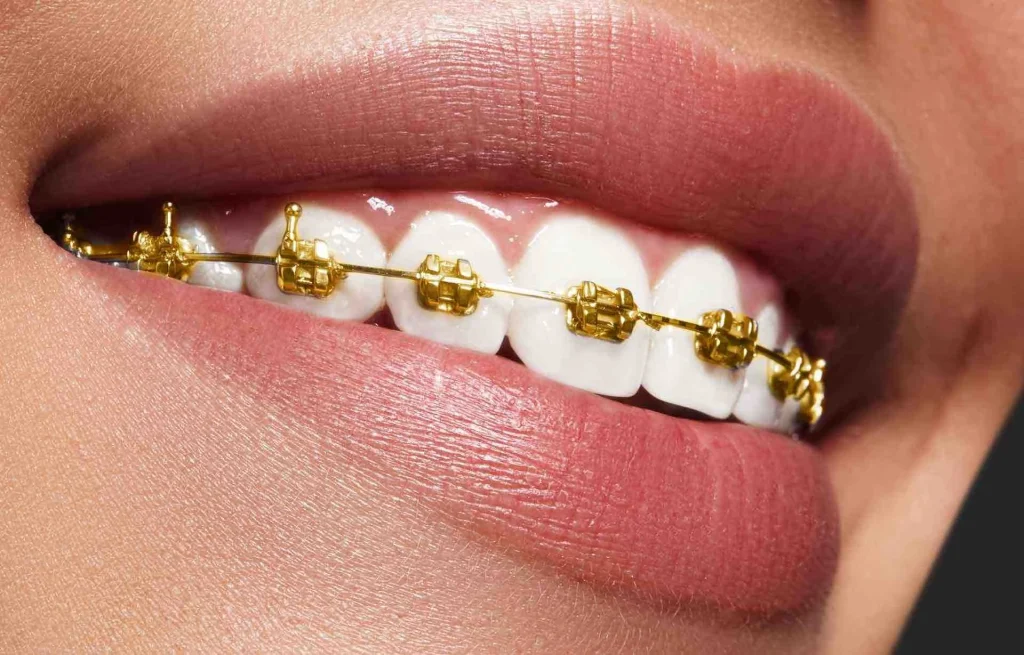
You sit down in that orthodontist’s chair, you hear the word ‘braces,’ and suddenly you are making a decision that will shape how you look for the next year or two. For most people, the first thought is silver metal brackets. But more and more patients — teenagers, adults, and even kids — are asking about gold braces, and the reasons go well beyond wanting to stand out.
Gold braces are a genuine orthodontic solution with a long, credible history in dentistry. They work just as effectively as conventional metal braces, and for certain patients, they are actually the smarter clinical choice. Whether you are drawn to the look, concerned about metal allergies, or simply want to understand every available option before you commit, this guide breaks it all down.
By the time you finish reading, you will know exactly what gold braces are, who benefits most from them, what they cost, how the treatment process works, and how to find a qualified provider near you. No fluff, no jargon — just clear, honest information you can use.
What Are Gold Braces?
At their core, gold braces are orthodontic brackets and wires that carry a gold coating or gold-toned finish. Most versions on the market today use high-grade stainless steel brackets coated with a layer of gold — either through a plating process or a physical vapor deposition method that bonds the finish at a molecular level. Some premium options use brackets partially constructed with gold alloy material.
Functionally, they work exactly the same way as standard metal braces. The brackets bond to the front surface of each tooth. An archwire threads through each bracket and applies consistent, controlled pressure. Over time, that pressure shifts teeth gradually into the correct position. The gold finish does not change this process in any way.
What it does change is the experience. The warm gold tone is softer against the skin of the lips and cheeks. Patients who are sensitive or allergy-prone often report less irritation compared to plain nickel-steel brackets. And visually, gold braces carry a completely different energy — bold, intentional, and surprisingly stylish.
A Bit of History Worth Knowing
Gold is not new to dentistry. Before stainless steel became the industry standard in the mid-twentieth century, gold wire was the primary material orthodontists used to straighten teeth. It was soft enough to bend, biocompatible enough to sit in the mouth for years, and durable enough to hold tension over long treatment periods.
Modern gold dental braces are the evolved form of that original material. Today, you get all the structural advantages of high-tensile steel combined with the biocompatibility and aesthetics of gold. That is a meaningful upgrade, not just a cosmetic one.
Types of Gold Braces for Teeth
Not all gold dental braces are the same. There are a few distinct variations, and knowing the difference helps you have a far more productive conversation with your orthodontist.
Traditional Gold Metal Braces
These are the most common type. Standard-size brackets with a gold coating, threaded with either gold-toned or standard stainless archwires. They handle everything from mild crowding to complex bite correction. They are also the most affordable gold option and the easiest for orthodontists to work with, meaning more providers offer them.
Gold Self-Ligating Braces
Self-ligating brackets clip directly onto the archwire rather than relying on elastic ties. This reduces friction along the wire, which many orthodontists believe can shorten overall treatment time and reduce the number of adjustment appointments needed. The gold version offers these mechanical benefits alongside the aesthetic and biocompatibility advantages of the finish.
Gold Lingual Braces
Lingual braces are placed on the inside surface of teeth — the side facing your tongue. From a social visibility standpoint, they are essentially invisible. Gold is a particularly good material choice here because its biocompatibility reduces gum and tongue irritation, which is a common complaint with standard lingual bracket materials. These are custom-fabricated for each patient and carry a higher price point.
Gold-Tone Hybrid Options
Some patients choose ceramic brackets — which are tooth-colored — paired with gold-toned archwires. This creates a subtle aesthetic accent without the full gold bracket commitment. It is a middle-ground option for patients who want a hint of gold without the full visual impact.
The Real Benefits of Gold Braces
There is a reason patients keep asking about gold braces specifically. Beyond the obvious visual appeal, there are some clinically meaningful advantages that make them a genuinely compelling choice for a wide range of patients.
Biocompatibility and Allergy Safety
This is the most important clinical advantage. Nickel is a standard component in stainless steel orthodontic brackets, and nickel allergies are more common than most people realize. Studies published in orthodontic journals estimate that somewhere between 8 and 15 percent of the population has some degree of nickel sensitivity. For these patients, standard metal braces can cause chronic mouth sores, gum inflammation, and persistent discomfort.
Gold is hypoallergenic. It does not contain nickel in any meaningful quantity, and it does not react with saliva or oral tissues the way some metals can. For patients with confirmed or suspected metal sensitivity, gold dental braces can be a genuine medical recommendation, not just a stylistic one.
Durability Over a Multi-Year Treatment
Quality gold-plated brackets resist corrosion well. Saliva is mildly acidic, and over a treatment period that can stretch 18 to 30 months, the material a bracket is made from does matter. Gold’s resistance to oxidation means the brackets are less likely to degrade or discolor visibly during a long treatment, which keeps the finish looking consistent from start to finish.
Personal Expression and Confidence
This matters more than people give it credit for. Orthodontic treatment is a significant commitment. Patients who feel self-conscious about their braces tend to smile less, speak more guardedly, and sometimes feel lower confidence throughout the process. Gold braces flip that dynamic. They are meant to be noticed. Wearing them becomes a deliberate choice rather than something to hide, and that shift in mindset can genuinely improve how a patient moves through the world during treatment.
There is also a strong cultural dimension to this. Gold braces carry social cachet in several communities — they have been worn as a fashion statement and symbol of boldness by people across a wide range of backgrounds. For some patients, choosing gold is a way of owning the orthodontic process completely.
No Compromise on Clinical Effectiveness
Whatever shape a bite problem takes — crowding, spacing, overbite, underbite, crossbite, or rotation — gold braces correct it with the same precision and reliability as any other fixed bracket system. The gold finish does not affect bracket adhesion, wire tension, or tooth movement mechanics in any way that reduces effectiveness.
Potential Drawbacks to Consider
No orthodontic option is perfect for every patient. Gold braces have real advantages, but there are a few honest trade-offs worth knowing before you decide.
They Cost More Than Standard Metal Braces
Gold brackets cost more to manufacture than plain stainless steel ones, and that cost gets passed on. Depending on the practice and the complexity of your case, gold braces typically run anywhere from a few hundred to over a thousand dollars more than conventional metal braces. The gap varies widely based on location, provider, and whether you are choosing labial (front of teeth) or lingual (back of teeth) placement.
It is also worth checking with your dental insurance provider before assuming they will cover the difference. Many insurance plans cover orthodontic treatment up to a set dollar amount. Whether they treat the gold option as a purely cosmetic upgrade depends entirely on your policy language and, in some cases, on how your orthodontist codes the treatment.
They Are More Visible Than Clear Options
Gold braces are bold. If total discretion is your goal, they are not the right choice. Clear aligners, ceramic braces, or lingual systems (including the gold lingual option) all offer more camouflage than gold front-surface brackets. For patients who want their orthodontic treatment to go largely unnoticed in professional settings, this visibility is a real consideration.
Oral Hygiene Demands More Attention
All fixed bracket systems require consistent, careful oral hygiene. With gold braces, the stakes feel a bit higher because plaque buildup becomes more visible against the warm tone of the brackets. Food particles caught in the brackets are easy to spot, which is actually useful feedback — but it also means that skipping your brushing routine is never a good idea.
How Gold Braces Compare to Other Orthodontic Options
Gold vs. Standard Silver Metal Braces
Standard metal braces and gold braces are mechanically identical. The differences come down to three things: material cost, aesthetics, and biocompatibility. If you have no metal sensitivity and no preference for the gold look, standard metal braces are a sensible, budget-friendly choice. If either of those two factors matters to you, gold is worth the upgrade.
Gold vs. Clear Aligners
Clear aligners like Invisalign have dominated orthodontic marketing for years, and they offer real benefits — primarily the ability to remove them for eating, drinking, and cleaning. But they have limitations. They are less effective for severe bite correction, they require the patient to be disciplined about wearing them 20 to 22 hours per day, and they often cost more than any braces option. Gold braces require no compliance discipline, handle complex cases with ease, and in many markets cost significantly less.
Gold vs. Ceramic Braces
Ceramic braces use tooth-colored or clear brackets designed to blend with the natural shade of teeth. They are more subtle than gold. However, ceramic brackets are more brittle than metal — they chip more easily and can sometimes stain from coffee, tea, or curry if the elastic ties absorb the pigment. Gold brackets are tougher, more color-stable, and arguably more distinctive. The choice comes down to whether you want subtlety or individuality.
The Treatment Process: What to Expect
Your Initial Consultation
The process begins with a consultation appointment. Your orthodontist will take digital X-rays, full mouth photographs, and often a 3D scan or dental impressions to understand the structure of your bite. Based on this, they will present a treatment plan with recommended options, timelines, and cost breakdowns. This is the moment to ask specifically about gold options — not every practice keeps them in stock, and some may need to order the brackets from a specialized supplier.
Good questions to ask at this stage include: What type of gold coating does the bracket use? Is the finish guaranteed for the full treatment duration? Does the price include all adjustments and retainers, or are those billed separately?
Getting Your Braces Fitted
The bonding appointment typically takes between 60 and 90 minutes. The teeth are cleaned, conditioned, and dried before each bracket is bonded with a dental adhesive and cured under a blue light. The archwire is then threaded through each bracket and secured. There is no drilling, no injections, and no significant pain. Most patients feel pressure and a bit of unfamiliar bulk in their mouth, but the procedure itself is straightforward.
The first few days after placement can involve mild soreness as your teeth begin responding to the wire tension. Soft foods, over-the-counter pain relievers if needed, and orthodontic wax for any bracket irritation will handle most of the initial adjustment discomfort.
Routine Adjustment Appointments
You will return to your orthodontist roughly every four to eight weeks. At these appointments, the wire is evaluated and often replaced with a progressively thicker gauge as treatment advances. Your orthodontist will assess tooth movement and make any necessary bracket adjustments. Most appointments take 20 to 40 minutes. Treatment duration varies from about 12 months for minor cases to 30 months for more complex ones.
Removal and the Retainer Phase
When your treatment is complete, the brackets are removed with a debonding tool, and any remaining adhesive is polished off. The removal appointment usually takes less than an hour and is entirely painless. You will immediately be fitted for retainers — typically a clear removable retainer for nighttime use and sometimes a fixed wire bonded behind the front teeth. Retainers are non-negotiable. Without them, teeth shift back. The gold braces did the work; the retainer keeps the result.
Finding Gold Braces Near Me: A Practical Guide
Not every orthodontic practice stocks gold bracket options. Finding a provider who offers them is straightforward if you know where to look and what to ask.
How to Search Effectively
Start with a targeted search using terms like “orthodontist gold braces” combined with your city or neighborhood. Google Maps reviews often mention specific treatment options patients received, which can give you a real-world sense of which practices genuinely offer gold braces for teeth versus those who might offer to order them as a one-off. Insurance provider directories are another good starting point — filter for orthodontists and then call to confirm gold bracket availability before booking.
Questions to Ask Before You Book
When you call or email a potential provider, ask the following:
- Do you currently offer gold metal braces, or would these need to be ordered specially?
- What brand of gold bracket do you use, and what type of coating process does it involve?
- Does the quoted price include all adjustment appointments and the retainer phase?
- Do you have before-and-after cases you can share from patients who chose gold brackets?
A provider who hesitates or gives vague answers to these questions is probably not the right fit. A good orthodontist will be matter-of-fact and transparent about materials, costs, and timelines.
Red Flags to Watch For
Be cautious of quotes that seem unusually low with no breakdown of what is included. Be equally cautious of providers who frame gold dental braces purely as a cosmetic add-on without discussing the clinical benefits for allergy-prone patients. A quality orthodontist will treat it as a legitimate material choice, not an upsell.
Cost Breakdown: What You Are Actually Paying For
The price of orthodontic treatment varies significantly based on geography, case complexity, and provider experience. Broadly speaking, standard metal braces in the United States range from around $3,000 to $7,000 for a full course of treatment. Gold metal braces typically add between $300 and $1,200 to that range, depending on the bracket brand and whether the practice charges a flat premium or a per-bracket material cost.
Lingual gold braces — placed on the back of the teeth — are the most expensive variant, often running between $8,000 and $15,000, because they require custom fabrication and more technically demanding placement by the orthodontist.
Many orthodontic practices offer in-house payment plans that spread the cost over the length of treatment with zero interest. Flexible Spending Accounts and Health Savings Accounts can typically be used for orthodontic treatment, making it possible to pay with pre-tax income — a meaningful saving over the full cost. Ask your provider about all payment options before assuming the sticker price is what you will actually pay out of pocket.
Daily Care Habits That Protect Your Braces
Good oral hygiene with braces is not optional — it is the foundation of a successful result. The good news is that the routine is straightforward once it becomes habit.
Brush after every meal using a soft-bristle or electric toothbrush. Angle the brush at 45 degrees above and below the brackets to dislodge food and plaque. Pay particular attention to the gumline and the spaces around each bracket where buildup tends to hide. Fluoride toothpaste is essential — it strengthens enamel against the slightly elevated cavity risk that comes with fixed brackets.
Flossing daily is non-negotiable. A floss threader or an orthodontic flosser makes it far easier to navigate the wire. Water flossers are an excellent complement — they flush debris from areas that string floss can miss. Interdental brushes, which are small bottle-brush-shaped tools, are particularly effective for cleaning the space between the bracket and the gumline.
Avoid hard, crunchy foods like raw carrots, hard candy, ice, and crusty bread that can snap a bracket off its bond. Sticky foods — caramel, chewing gum, fruit snacks — are equally problematic because they cling to the bracket and pull at the adhesive. These restrictions apply to all fixed braces, not only the gold variety. Teeth-staining foods and drinks do not affect the gold coating itself, but they can discolor the elastic ties if your orthodontist uses them. Asking for clear or gold-toned ties at each adjustment appointment keeps the look clean.
Final Thoughts
Gold braces are not a gimmick, and they are not just for people who want to make a fashion statement. They are a medically sound, clinically effective, and beautifully distinctive orthodontic option that has been part of dentistry in one form or another for well over a century. For patients with nickel sensitivities, they may be the most comfortable choice available. For patients who want to feel confident and intentional during treatment, they remove the self-consciousness that often comes with wearing braces.
The key is finding the right provider, asking the right questions, and going in with clear expectations about cost, timeline, and care requirements. If you have been on the fence about orthodontic treatment because you did not like any of the options in front of you, it is worth asking your next orthodontist specifically about gold. The answer might surprise you.
Schedule that consultation. Bring your questions. And if gold braces turn out to be the right fit for your teeth and your personality, commit to the decision with full confidence — because a great smile, arrived at intentionally, is always worth it.
Q1. What exactly are gold braces?
Gold braces are orthodontic brackets and archwires made from stainless steel and coated with a layer of gold — either through gold plating or a physical vapor deposition process. They function identically to traditional metal braces, applying gradual pressure to shift teeth into proper alignment, but carry a warm gold tone instead of the standard silver appearance. Some premium versions use partial gold alloy in the bracket construction itself.
Q2. Are gold braces made of real gold?
Most gold braces are not made of solid gold. They are typically stainless steel brackets and wires coated with a thin layer of gold plating. However, some higher-end options use 24-karat gold-plated hardware or brackets partially constructed with gold alloy. Pure 24-karat gold-plated braces are the most hypoallergenic option, as lower karat gold may still contain trace amounts of other metals like nickel.
Q3. How long have gold braces been used in dentistry?
Gold has been used in dentistry for centuries and was actually the primary material in early orthodontics. Before stainless steel became the standard in the 1930s and 1940s, orthodontists relied on gold wire to realign teeth. Today’s gold braces are a modern evolution of that tradition — combining the biocompatibility of gold with the structural strength of contemporary orthodontic-grade steel.
Q4. What is the difference between gold braces and regular metal braces?
The only functional difference is cosmetic. Gold braces use the same bracket-and-archwire mechanics as standard silver metal braces. The gold coating does not affect how pressure is applied or how fast teeth move. The key differences are appearance (gold vs. silver), material cost (gold braces cost more), and biocompatibility (gold is hypoallergenic; standard metal braces often contain nickel, which some patients react to).
Q5. How much do gold braces cost in 2025 and 2026?
Gold-plated braces with a cosmetic finish cost roughly the same as standard metal braces — typically $3,000 to $7,000 in the United States. If you upgrade to 24-karat gold-plated brackets, the cost rises significantly, with some practices pricing them between $6,000 and $8,000 or higher. Lingual gold braces (placed on the inner surface of teeth) are the most expensive option, often ranging from $8,000 to $15,000. Costs vary based on case complexity, geography, and provider experience.
Q6. Does dental insurance cover gold braces?
General health insurance rarely covers braces. Dental insurance plans that include orthodontic coverage will typically cover a portion of treatment costs — often up to 50% — but may not cover the premium cost of the gold material if it is deemed a cosmetic upgrade. It is worth contacting your insurer directly to ask how gold braces are coded and whether the additional material cost qualifies for coverage. Some policies treat gold as a medically necessary alternative for patients with documented nickel allergies.
Q7. Can I use an HSA or FSA to pay for gold braces?
Yes. Orthodontic treatment is an eligible expense under both Health Savings Accounts (HSA) and Flexible Spending Accounts (FSA). You can use pre-tax funds from either account to cover the cost of gold braces, which effectively reduces your out-of-pocket expense by your marginal tax rate. Check with your account administrator to confirm eligibility and any spending caps that may apply to orthodontic treatment.
Q8. Do orthodontists offer payment plans for gold braces?
Most orthodontic practices offer in-house payment plans that spread treatment costs over the duration of your time in braces, often with zero interest. Some practices also partner with third-party financing services like CareCredit. It is always worth asking during your consultation whether the practice offers discounts for upfront payment, family discounts for multiple patients, or promotional rates for new patients.
Q9. Are gold braces safe for people with nickel allergies?
Yes — this is one of the most clinically significant reasons to choose gold braces. Standard metal braces are made from stainless steel, which contains nickel, a common allergen. Research published in peer-reviewed journals, including studies in the British Dental Journal and PMC, confirms that nickel allergy is the most frequently encountered metal allergy in orthodontic treatment. Gold-plated brackets — especially 24-karat — do not expose patients to nickel and are considered hypoallergenic. Orthodontists often specifically recommend gold braces for patients with confirmed or suspected nickel sensitivity.
Q10. What are the symptoms of a nickel allergy from braces?
Symptoms of a nickel reaction during orthodontic treatment include persistent redness or swelling around the brackets, mouth sores that don’t resolve with standard wax treatment, itching or burning sensations along the gums or lips, and in some cases skin rashes around the mouth. These symptoms typically appear days to weeks after braces are placed. If you experience any of these, contact your orthodontist promptly — switching to gold or ceramic brackets may resolve the issue without ending treatment.
Q11. Do gold braces cause any health risks?
Gold braces are approved for orthodontic use and are considered biocompatible. They do not pose health risks beyond those common to all fixed orthodontic appliances — such as increased plaque buildup around brackets if oral hygiene is neglected. Patients who choose lower-karat gold-plated braces should note that the coating may contain trace amounts of other metals; anyone with multiple metal sensitivities should confirm the exact karat and alloy composition with their orthodontist before proceeding.
Q12. Can you whiten your teeth while wearing gold braces?
Teeth whitening is not recommended during active orthodontic treatment with fixed braces of any kind, including gold braces. Whitening products cannot penetrate beneath the bracket bonding, which means the areas under the brackets will not be treated. This creates uneven coloration once the braces are removed — lighter teeth around the bracket footprint and the original shade underneath. It is best to complete any whitening treatment either before braces are placed or after the brackets have been removed.
Q13. Are gold braces as effective as traditional metal braces?
Yes. Gold braces are equally effective as standard stainless steel braces. The gold coating does not affect the structural mechanics of the bracket or the tension properties of the archwire. Gold braces can correct overbites, underbites, crossbites, crowded teeth, gaps, and complex rotations with the same precision and reliability as conventional metal braces. Treatment timelines are also comparable — typically 12 to 30 months depending on case complexity.
Q14. How long does treatment with gold braces take?
Treatment duration with gold braces is determined by the complexity of the patient’s orthodontic needs, not by the material of the brackets. Most patients wear braces for 18 to 24 months on average, with simpler cases completing in as little as 12 months and more complex cases running up to 30 months. Your orthodontist will provide a treatment timeline estimate during the initial consultation based on your specific bite and alignment issues.
Q15. Do gold braces hurt more than regular braces?
No. Gold braces cause the same level of discomfort as standard metal braces. Most patients experience mild soreness in the first few days after fitting and for a day or two following each adjustment appointment. This happens because the teeth are responding to the pressure applied by the wire — not because of the bracket material. Over-the-counter pain relievers and orthodontic wax for bracket irritation manage the vast majority of discomfort effectively.
Q16. How often do you need adjustment appointments with gold braces?
Adjustment appointments for gold braces are typically scheduled every four to eight weeks, the same frequency as standard metal braces. At each appointment, your orthodontist assesses tooth movement, adjusts or replaces the archwire as treatment progresses, and makes any necessary bracket corrections. Most adjustment appointments take between 20 and 40 minutes. Keeping all scheduled appointments is essential for staying on track with your treatment timeline.
Q17. How do you clean and care for gold braces?
Brush after every meal using a soft-bristle toothbrush angled at 45 degrees to clean above and below each bracket. Use fluoride toothpaste to protect enamel. Floss daily using a floss threader or water flosser to reach between teeth and under the archwire. Interdental brushes are highly effective for cleaning the space between brackets and gums. Avoid abrasive toothpastes, as these can scratch the gold coating over time. A fluoride mouthwash at night adds an extra layer of protection throughout treatment.
Q18. What foods should you avoid with gold braces?
The food restrictions for gold braces are the same as for all fixed bracket systems. Hard and crunchy foods — raw carrots, hard candy, crusty bread, ice — can snap brackets off their bonding. Sticky and chewy foods — caramel, chewing gum, fruit snacks, toffee — cling to brackets and pull at the adhesive. Sugary drinks increase the risk of enamel demineralization around brackets. These restrictions apply for the full duration of treatment, not just the first few weeks.
Q19. Do gold braces stain or discolor over time?
Quality gold-plated brackets resist staining and maintain their color well across a multi-year treatment period. The gold coating itself does not absorb pigment from food or beverages. However, if your orthodontist uses colored elastic ties to hold the archwire, those can pick up stain from coffee, tea, or certain foods. The good news is that elastic ties are replaced at every adjustment appointment, so any discoloration is automatically resolved at your next visit.
Q20. Can you play sports with gold braces?
Yes. Patients with gold braces can participate in all sports, including contact sports. It is strongly recommended to wear a custom-fit or over-the-counter orthodontic mouthguard during any sport that involves physical contact, flying objects, or the risk of impact to the mouth. A mouthguard protects both the teeth and the brackets from damage. Your orthodontist can advise you on the best mouthguard type for your specific sport and bracket configuration.
Q21. Who is the best candidate for gold braces?
Gold braces are an excellent choice for patients who have a confirmed or suspected nickel allergy and need a hypoallergenic alternative to standard metal braces. They are also well-suited for patients who want the reliability and effectiveness of traditional fixed braces but prefer a bolder, more intentional aesthetic. Teens and adults who are comfortable being seen in braces — or who actively want their braces to be a style statement — are ideal candidates. People seeking total invisibility during treatment may prefer clear aligners or lingual braces instead.
Q22. How do gold braces compare to Invisalign?
Gold braces and Invisalign solve the same problem through different approaches. Gold braces are fixed, require no patient compliance, and handle complex bite corrections effectively. Invisalign is removable, nearly invisible when worn, and more comfortable for some patients — but requires wearing the aligners 20 to 22 hours a day without fail to work correctly. For complex cases, gold braces are often the more reliable choice. For mild to moderate alignment issues where discretion is a priority, Invisalign may be preferable. Cost-wise, gold braces are frequently less expensive than full Invisalign treatment.
Q23. How do gold braces compare to ceramic braces?
Ceramic braces use tooth-colored or clear brackets designed to blend with the natural shade of teeth, making them less noticeable than gold. However, ceramic brackets are more brittle than metal, chip more easily, and can stain from coffee, tea, and highly pigmented foods if the elastic ties absorb color. Gold brackets are tougher, more color-stable over the full treatment period, and are arguably more distinctive in appearance. Ceramic braces are better for patients prioritizing subtlety; gold braces are better for those who want durability and a defined aesthetic.
Q24. How do I find a provider who offers gold braces near me? Search online for ‘orthodontist gold braces’ combined with your city or neighborhood. Google Maps reviews often mention specific treatment types, which can help identify practices that genuinely stock gold brackets. You can also call orthodontic offices directly to ask if they offer gold metal braces or would need to order them specially. When you speak with a provider, ask what brand of gold bracket they use, whether the finish is guaranteed for the full treatment period, and whether the quoted price includes adjustments and retainers. A board-certified orthodontist will be able to answer these questions with full transparency.

