
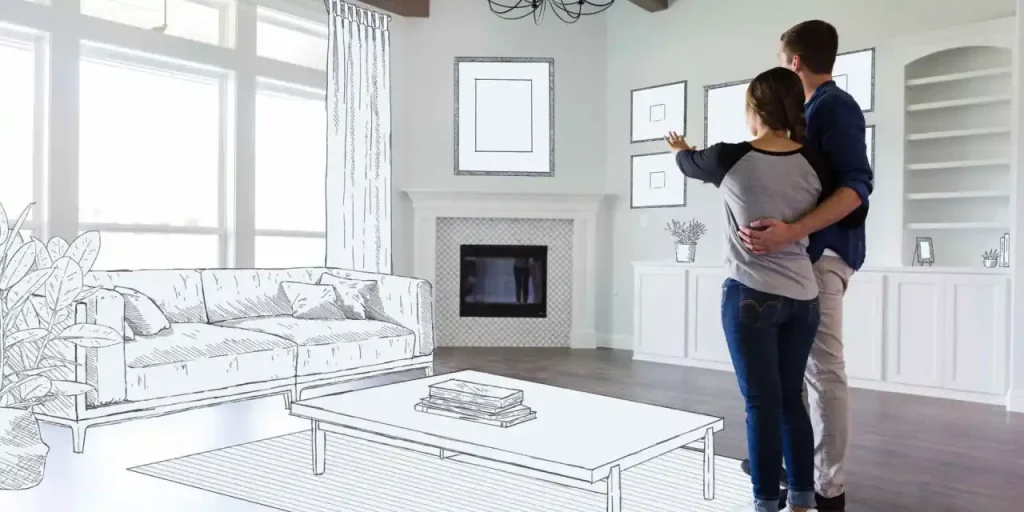
You found the perfect sofa. The color is exactly right. The style fits your home. You order it, wait two weeks, and then — it doesn’t fit through the door. Or worse, it lands in the middle of your living room and swallows the entire space whole.
This happens more often than anyone wants to admit. Knowing how to measure room for furniture before you buy a single thing is one of the most underrated skills in home decorating. It takes no more than 20 minutes, costs absolutely nothing, and can save you hundreds of dollars in return fees, delivery headaches, and furniture that simply doesn’t work once it arrives.
This guide covers the complete process of how to measure room for furniture from start to finish. From the tools you need, to how to sketch a floor plan, to the clearance rules that professional interior designers follow, this is everything you need before you walk into any furniture store. Whether you’re moving into a new home, giving a room a full refresh, or just replacing one tired piece, the steps here apply to every situation.
WHY MEASURING YOUR ROOM BEFORE BUYING FURNITURE ACTUALLY MATTERS
Most people skip this step entirely. They walk into a store, fall in love with a piece, guess whether it’ll fit, and hope for the best. Sometimes it works out fine. More often, it doesn’t.
The problem is not buying furniture that looks good. The problem is buying furniture that looks good in the showroom but changes how your entire room feels once it’s home. A sofa that is six inches too wide can make a living room feel like a corridor. A dining table that seats six in the store might leave no room for chairs in your actual space.
Common Mistakes People Make Without Measuring First
Here are the situations that play out every day when people skip the measuring step:
- Buying a sofa that blocks the window, the radiator, or the only wall outlet in the room
- Choosing a dining table that leaves so little space behind the chairs that nobody can stand up without scraping against the wall
- Picking a wardrobe so tall it can’t stand upright in a room with a sloped ceiling
- Ordering a bed frame that leaves barely a foot of space on each side, making the room feel like a storage unit
- Getting a coffee table that sits so close to the sofa there’s nowhere to put your legs
Every one of these mistakes is completely avoidable. All you need is a tape measure and a commitment to measuring before you fall in love with something.
The Hidden Costs of Getting It Wrong
Returns are rarely free. Many furniture retailers charge restocking fees of 15 to 25 percent of the purchase price. Some do not accept returns at all once an item has been assembled. Then there’s the cost of hiring someone to collect it, the time wasted waiting for a collection slot, and the frustration of living in a disrupted room for weeks while you sort it all out.
Measuring first is not an extra step. It is the step that makes every other decision easier and more confident.
TOOLS YOU NEED BEFORE YOU START MEASURING
Before you begin to learn how to measure room for furniture, gather what you need. You don’t need anything expensive or specialized. Most of these items are already sitting somewhere in your home.
Physical Tools: Tape Measure, Graph Paper, and a Pencil
A standard 25-foot tape measure covers the length and width of almost any residential room. Anything shorter and you’ll end up stretching it at awkward angles that introduce errors. Bring a pencil and a notebook, or print a sheet of graph paper to sketch your room as you go.
Painter’s tape is also surprisingly useful and worth picking up if you don’t have any. You can use it to tape the exact footprint of a sofa, bed, or dining table directly on your floor before you buy. It sounds low-tech, but it’s one of the most honest ways to see whether a piece of furniture will suit your space.
Digital Tools: Apps and Online Options to Measure a Room for Furniture Online
If you prefer working digitally, there are several solid room planner apps that let you measure a room for furniture online using your smartphone’s camera. IKEA Place uses augmented reality to show full-scale furniture sitting in your actual room. Planner 5D and Roomstyler let you build a full floor plan on screen and drag furniture pieces around to test different configurations.
These digital tools work best when you’ve already taken accurate physical measurements and entered them into the app. Don’t rely on the app’s camera to measure for you — AR tools can be off by several inches depending on lighting and angle. Use the app to visualize once your real-world measurements are already confirmed.
HOW TO MEASURE A ROOM FOR FURNITURE: THE COMPLETE STEP-BY-STEP PROCESS
This is the part that matters most. The process of how to measure room for furniture follows four clear steps, each one building on the last. Follow these steps in order and you’ll have everything you need to make confident furniture decisions, whether you’re shopping in a store or browsing online. Learning how to measure a room for furniture properly takes about 15 to 20 minutes and needs to happen only once per room.
Step 1 — Measure the Length and Width of the Room
Start from wall to wall at floor level. Measure both dimensions — length and width — and then measure each one again at a different point in the room. Rooms in older homes especially are rarely perfectly square, and a difference of even two or three inches at different points along a wall matters when you’re placing a large piece of furniture flush against it.
Write down the smaller of the two measurements for each dimension. That is your working figure. It’s the safe number, the one that prevents you from ordering something that technically should fit but physically doesn’t because the room tapers.
Step 2 — Note Down Doors, Windows, and Architectural Features
Doors are more than just an opening in a wall. You need to know the door width, which direction the door swings, and how much clearance the door sweeps through when it’s fully open. A wardrobe placed where a door swings will either block the door or get scratched every time someone enters the room.
Write down all of the following:
- Door width and swing direction (inward or outward, and toward which side)
- Window width, window sill height, and whether windows open inward
- Radiator positions along each wall and how far they project into the room
- Alcoves, chimney breasts, and built-in recesses — their width, height, and depth
- Electrical outlets, light switches, and cable entry points
- Any pipes or fixed brackets mounted to walls
These details determine not just where furniture can go, but where it absolutely cannot go. A sofa can’t sit flush against a wall that has a radiator on it without restricting heat. A television unit can’t sit where the cable entry point doesn’t reach.
Step 3 — Measure Ceiling Height (It Matters More Than You Think)
Ceiling height is easy to overlook because most furniture lives on the floor. But if you’re planning on buying a tall wardrobe, a large bookshelf, a four-poster bed frame, or pendant lighting, ceiling height becomes a critical measurement.
Measure from floor to ceiling in at least two spots in the room. In older properties, ceilings are not always perfectly level. In rooms with sloped ceilings — common in loft conversions and attic rooms — measure the ceiling at the lowest point where you plan to place the furniture. That is the number that limits you, not the highest point of the slope.
Step 4 — Sketch a Simple Floor Plan to Scale
You don’t need to be an artist and you don’t need any special software. On graph paper, let one square equal one foot or 30 centimeters. Draw the outer walls of your room, then mark every doorway, window, radiator, and fixed feature in their correct positions and at their correct sizes.
This sketch becomes your planning tool. Once it’s done, you can cut small paper rectangles to represent furniture pieces — at the same scale as your sketch — and physically move them around the floor plan to test different layouts before you buy a single thing. It’s the oldest trick in the book and it still works better than guessing.
HOW TO MEASURE FURNITURE FOR A ROOM: MATCHING PIECES TO YOUR SPACE
Once your room is measured and sketched, the next step is understanding furniture dimensions so you can match pieces to your space confidently before they leave the warehouse.
Reading Furniture Dimensions on Product Listings (W x D x H Explained)
Every furniture product listing shows dimensions in the format W x D x H. Here is what each of those measurements means in practical terms:
- Width (W): How wide the piece is from left to right when you face it from the front
- Depth (D): How far the piece extends out from the wall into the room
- Height (H): How tall the piece stands from the floor to its highest point
For sofas, depth matters most. A sofa listed at 40 inches deep takes up a substantial amount of floor space even if the width seems fine on paper. For beds, width tells you whether two people can sleep with reasonable personal space. For wardrobes and bookshelves, height determines whether the piece physically fits in your room without pressing against the ceiling.
There is one more dimension that most shoppers never think to check: the diagonal. When a delivery team brings a large piece of furniture through a doorway or up a staircase, the piece is typically tilted at an angle. The diagonal measurement of the furniture — from one corner to the opposite corner — is what determines whether the piece can physically pass through your doorway during delivery. For sofas with high backs and large bed frames, check the diagonal measurement against your door frame width before you click buy.
Using Painter’s Tape to Test Fit Before You Buy
Before committing to any significant purchase, spend five minutes taping out the footprint on your floor. Use painter’s tape to mark the exact width and depth of the piece on the floor in the spot where you plan to place it.
Then simply live with it for a day or two. Walk around it. Open the door. Sit where you would normally sit. Does it feel right? Can you move through the room without turning sideways? Does the room still feel like a room, or does the taped area crowd everything?
This method removes all the guesswork. It takes a theoretical floor plan dimension and makes it real in the space you actually live in.
HOW TO MEASURE ROOM FOR FURNITURE PLACEMENT — NOT JUST SIZE
Fitting furniture into a room and placing it well are two different skills. Getting the size right is the first step. But placement — how each piece relates to every other piece and to the room as a whole — is what determines whether a room feels good to live in. Once you understand how to measure room for furniture correctly, placement is the layer that transforms a functional space into a genuinely comfortable one.
Standard Clearance Rules Every Room Needs
Interior designers follow a set of clearance guidelines that most homeowners have never been told about. These are the minimum distances that allow a room to function properly rather than just look good in a photograph:
- Hallways and main walkways through the room: at least 36 inches (90 cm) of clear floor space for comfortable movement
- Behind a dining chair when pulled out: 36 inches between the back of the chair and the nearest wall or piece of furniture
- On each side of a bed: 24 inches (60 cm) to make the bed comfortably and move around it
- Between a sofa and a coffee table: 12 to 18 inches — close enough to reach easily, not so close you’re bumping your shins constantly
- Between facing sofas or chairs: 3.5 to 4 feet for natural conversation distance without straining
- Sofa to television: approximately 1.5 to 2.5 times the diagonal screen size for comfortable viewing at normal brightness
These are not rigid rules. In tighter rooms you can work with slightly less. But going below these thresholds is where spaces start to feel cramped regardless of how well they’re decorated.
Focal Points and Traffic Flow: Placing Furniture With Purpose
Every room has a natural focal point. In a living room it might be the fireplace, the television wall, or a large window with a view. In a bedroom, it is almost always the bed. Good furniture placement means arranging pieces so they acknowledge the focal point while keeping the room’s traffic routes clear.
Traffic flow refers to the invisible paths people naturally take through a room. From the doorway to the sofa. From the bed to the wardrobe. From the dining table to the kitchen door. These routes need to stay open and unobstructed. When furniture is placed across these natural paths, the room never quite feels right, even if each individual piece looks perfectly fine on its own.
Room-by-Room Placement Tips
Living Room: Anchor the seating area with a rug. The rug defines the group and holds the arrangement together visually. Place the sofa and chairs close enough for easy conversation — no more than 8 to 10 feet apart. In a larger room, float furniture away from the walls. It almost always looks more intentional and feels less like a waiting room.
Bedroom: The bed is the anchor and everything else is arranged around it. Position the headboard against a solid wall, away from the door, and away from a window if possible to avoid drafts and direct morning light. Aim for equal clearance space on both sides where the layout allows. Wardrobes should sit flush against walls and should not obstruct the natural light coming from windows.
Dining Room: Center the table beneath the pendant or ceiling light, or position it so it’s the visual anchor of the room when you enter. Apply the 36-inch clearance rule behind every chair. If you plan to add a sideboard or buffet against a wall, measure the distance between the front of the sideboard and the back of a fully pulled-out dining chair before you buy either piece.
SPECIAL SCENARIOS: TRICKY ROOMS AND HOW TO HANDLE THEM
Not every room is a clean, evenly lit rectangle. Some rooms come with challenges that basic measuring advice doesn’t prepare you for. Here’s how to handle the ones that come up most often.
Small Rooms — Making Every Inch Count
In a small room, every square foot of floor space is a choice you’re making. The goal is to keep as much floor clear as possible, which means thinking vertically. Tall bookshelves, wall-mounted shelving, beds with deep drawers built underneath, and overhead storage all add capacity without stealing floor area.
Multi-functional furniture earns its place in small rooms in a way it doesn’t always elsewhere. A sofa bed, a dining table that folds flat against the wall, a storage ottoman that doubles as a coffee table — each of these does the work of two pieces while occupying the footprint of one. When you need to know how to measure room for furniture in a tight space, always subtract your minimum clearance distances from the total floor area before you start planning what fits. Square footage alone doesn’t tell you whether a room will feel livable once it’s furnished.
Open-Plan Spaces — Defining Zones Without Walls
Open-plan rooms present the opposite challenge to small rooms. There’s plenty of space, but without walls it can feel unanchored and genuinely hard to furnish in a way that makes sense.
The approach is to create zones using furniture and rugs in place of walls. A large rug beneath the sofa and coffee table creates a defined living zone. A pendant light centered over the dining table creates a dining zone. The zones don’t need physical barriers between them — they need enough visual definition and purpose to feel deliberate rather than random.
Measure each zone as if it were its own self-contained room. Give each zone its own clearance distances, its own furniture footprint, and its own sense of boundary. This turns an open-plan space from an overwhelming blank canvas into a room that functions clearly in every part.
Awkward Layouts — Sloped Ceilings, Chimney Breasts, and Bay Windows
In rooms with sloped ceilings, the usable height is not the same as the total ceiling height. Measure from the floor to the ceiling at the exact spot where any tall piece of furniture will stand. A wardrobe that is 7 feet tall will not fit in the section of a loft room where the ceiling has sloped down to 6 feet 3 inches — and no amount of optimism will change that.
Chimney breasts create alcoves on either side that are natural homes for shelving, cabinetry, or a media unit. Measure each alcove at its narrowest point — both the width and the depth — before planning anything for the space. Shallow alcoves are common and they limit you to shallower shelving or custom-made pieces.
Bay windows are wasted space in most homes. A window seat with storage running along the full length of the bay is one of the smartest uses of the space. Measure the width of the bay at both its widest point and its narrowest point — bay window widths often differ by several inches from one end to the other — and use the smaller figure when planning any built-in bench or seat.
QUICK-REFERENCE MEASUREMENT CHECKLIST BEFORE YOU SHOP
Before you visit a showroom or open a browser tab to start browsing furniture, work through this checklist. It takes five minutes and prevents almost every avoidable furniture mistake.
Room Measurements Checklist:
- Room length and width measured at multiple points; smallest figure noted for each
- Ceiling height measured in at least two spots
- All door widths and swing directions recorded
- Window positions, sill heights, and inward-opening directions noted
- Radiators, vents, and projecting fixtures marked on floor plan
- Electrical outlets, light switches, and cable entry points recorded
- Alcoves, chimney breasts, and recesses measured for width, depth, and height
- Floor plan sketched to scale on graph paper with all features marked
Furniture Measurements Checklist:
- Width, depth, and height of every intended piece confirmed from product listing
- Diagonal measurement of large pieces checked against doorway width for delivery
- Furniture footprint taped out on floor before purchase
- Minimum clearance distances confirmed around each piece
- Traffic routes through the room checked and kept clear at 36 inches minimum
Running through this checklist every time you need to know how to measure room for furniture is what separates a room that feels designed from a room that just happened over time.
CONCLUSION
Knowing how to measure room for furniture is genuinely one of the most useful things you can do before making any home purchase. It is not complicated. It is not time-consuming. It requires a tape measure, a pencil, and the commitment to do it before you fall in love with something in a showroom window.
The steps in this guide work whether you are furnishing a studio apartment, a family home, or a single awkward room that has always frustrated you. Measure the room thoroughly. Sketch the floor plan. Check every furniture dimension carefully. Test the placement with painter’s tape before you buy. Then purchase with confidence.
The rooms that feel best to live in are not always the ones with the most expensive furniture or the most elaborate design. They are the rooms where every piece fits — not just physically, but spatially and functionally. That always starts with understanding how to measure room for furniture correctly, and it always starts before you ever set foot in a store.
Q1. What is the correct order of measurements when you measure a room for furniture?
Start with the room’s length and width, measured wall to wall at floor level. Then measure ceiling height, followed by doorway dimensions (width, height, and diagonal depth), window positions, and finally any fixed features like radiators, alcoves, or built-in shelving. Taking measurements at both floor level and waist level at multiple points is recommended, since walls aren’t always perfectly straight. Megafurnituretx This order ensures you capture every constraint before you start comparing furniture dimensions.
Q2. How many times should you measure a room before buying furniture?
Measure each wall at least twice — once near the floor and once at mid-height. A single measurement may not be reliable, so measuring multiple times to verify is strongly advised. Voltage Furniture In older homes especially, walls often taper slightly, which means a piece of furniture that fits on paper may not sit flush in reality. Always use the smallest figure recorded as your working measurement.
Q3. What does W x D x H mean on furniture listings and which number matters most?
Width refers to the side-to-side distance when the piece is placed against a wall, Depth is how far it projects out from the wall into the room, and Height is the measurement from floor to the top of the piece. Rooms and Rest Depth is consistently the most underestimated figure — a sofa that is 40 inches deep will claim far more usable floor space than its width alone suggests.
Q4. What is the diagonal measurement of furniture and why does it matter for delivery?
The diagonal depth is the measurement from the top back corner of the frame to the front of the arm, and it determines whether furniture can pivot through doorways or hallways during delivery. La-z-boy If a sofa is too wide to pass through a door horizontally, the delivery team will tilt it — and the diagonal measurement determines whether that angle clears the frame. Always check this figure against your narrowest doorway before ordering large pieces.
Q5. What is the most common mistake people make when measuring a room for furniture?
By far, the most common mistake is forgetting to measure the delivery path. People map out the perfect spot in their living room but completely forget about the hallways, stairs, and doorways the new piece has to travel through. Guynn Furniture A second frequent error, according to multiple design experts, is failing to account for baseboards, chunky window sills, and radiators — all of which reduce the actual usable space along a wall.
Q6. How much walking space should you leave around furniture in a room?
For main pathways, 36 inches or more is the ideal clearance. Between pieces of furniture, leave at least 18 to 24 inches of walkway to maintain comfort and flow. Megafurnituretx For smaller, less-traveled paths such as the space between an accent chair and a wall, around 24 inches is generally workable. Guynn Furniture These clearances apply regardless of room size — going below them is where spaces start to feel genuinely cramped.
Q7. How do you measure a doorway to check if furniture will fit through it?
Measure the door height from the inside top frame to the inside bottom frame, and the width from the inside edges of the trim on each side. Also take a diagonal depth measurement from the inside top left corner of the door frame to the inside bottom right. La-z-boy Record both the measurements with and without trim included, since some furniture has to clear the trim itself — not just the opening.
Q8. Do you need to measure staircases and hallways, not just the room itself?
Yes, and this step is frequently overlooked. Don’t forget the elevator or stairwell if you live in an apartment or multi-story home — getting stuck in the stairwell with a bulky piece of furniture is a far more common problem than people expect. Gardner White Blog Measure the height, width, and diagonal width of every doorway, hallway, and staircase the furniture will pass through, and account for handrails, doorknobs, trim, and hinges that cannot be removed.
Q9. What is the painter’s tape trick and how does it help when measuring a room for furniture?
Use a roll of painter’s tape to outline the footprint of potential furniture directly on the floor. This simple trick helps you visualize not just the fit, but also the traffic flow around the piece before you commit. Tiptopfurniture Once the footprint is taped out, walk around it, open nearby doors, and sit where you normally would. It converts a theoretical measurement into a physical reality you can actually experience.
Q10. Should you measure the furniture you already own when planning a new layout?
If you’re keeping any current furniture, measure those items as well so you can plan accordingly. Even if you’re starting fresh, knowing the general size of items you need — like a queen versus a king bed — will guide your room planning from the beginning. Megafurnituretx Many layout mistakes happen when people plan only for the new pieces and forget that existing furniture also occupies floor space and clearance.
Q11. What minimum space does a queen bed need in a bedroom?
Queen beds need a minimum room size of 10 by 10 feet with 2 to 3 feet of clearance on each side of the mattress. King beds need at least 12 by 12 feet. The Painted Hinge These clearances apply to one side of the bed if the room is too small to achieve them on both sides, but both sides should be prioritized wherever the layout allows. Always confirm doorway width too — a king bed frame may need to be partially disassembled for delivery.
Q12. How much space should you leave between a sofa and coffee table?
The sweet spot is between 16 and 18 inches between the sofa and coffee table. This is close enough to set down a drink or prop your feet up, but still gives you enough legroom to sit comfortably. Tiptopfurniture Going narrower than 12 inches creates a cramped feeling and makes it difficult to move in front of the sofa. Going wider than 20 inches makes the table feel disconnected from the seating arrangement.
Q13. How much clearance do you need behind dining chairs when they’re pulled out?
To let guests pull out their chairs and sit down comfortably, leave at least 36 inches of space between the edge of your dining table and the nearest wall or piece of furniture. Guynn Furniture This measurement should be taken from the back edge of the chair when it is fully pulled out — not from the table edge itself. Anything less makes it difficult to stand up without scraping against the wall or an adjacent piece of furniture.
Q14. How do you measure a room for furniture if the walls are not straight?
Measure at multiple points along each wall — near the entrance, in the middle, and near the opposite wall — since rooms in older homes especially are not always perfectly square. La-z-boy Always use the smallest measurement as your working figure, since that gives you a worst-case-scenario number to work with. Guynn Furniture Additionally, having a small spirit level on hand helps identify whether the floor is also uneven, which matters for tall freestanding furniture.
Q15. Does ceiling height need to be measured when planning furniture placement?
Ceiling height is just as important as horizontal dimensions. It is critical for tall items like wardrobes, shelves, or canopy beds, and in older homes and custom builds ceiling heights can vary significantly. Megafurnituretx Many people skip this step, but it’s absolutely essential for getting the scale of the room right. Tiptopfurniture In rooms with sloped ceilings — common in loft conversions — always measure the height at the exact spot where the tall piece will stand, not at the room’s highest point.
Q16. What should you include in a floor plan sketch when measuring a room for furniture?
A useful floor plan sketch should capture the room’s length and width to scale, plus the position and size of every doorway (including swing direction), all windows and their sill heights, radiators, electrical outlets, light switches, alcoves, chimney breasts, and any fixed built-in features. Mark the exact locations of light switches, electrical outlets, and heating vents — there’s nothing worse than getting a new media console home only to find it completely blocks the only usable outlet on that wall.
Q17. Is it better to measure in inches or centimeters when shopping for furniture?
It depends on where you’re shopping. Most furniture sold in the United States is listed in inches, while European and many online retailers list dimensions in centimeters. Measuring in feet and inches to match how furniture is listed avoids confusion later La-z-boy, as mismatched units are a common source of sizing errors. If you work in metric, convert your room measurements to the same system used on the product listing before comparing figures.
Q18. Can you use your smartphone to measure a room for furniture without a tape measure?
Modern smartphones with LiDAR sensors (present in many recent iPhone and Android models) can generate reasonably accurate room measurements using apps such as Planner 5D or IKEA Place. Inputting exact room dimensions — including ceiling height and the location of windows, doors, outlets, and architectural features — produces the best results from any digital tool. DecorAI However, camera-based AR measurements can be off by several inches in poor lighting or cluttered rooms, so cross-checking with a tape measure remains the more reliable approach for final purchasing decisions.
Q19. How do you measure a room for furniture in an open-plan space?
Treat each functional zone — living, dining, working — as a separate room with its own set of measurements and clearance distances. A furniture fit calculator or room size estimator can help determine how much usable space remains in each zone after accounting for walkways and clearance around pieces. Malikfurniture Anchor each zone with a rug to define its boundaries visually, and confirm that the routes between zones remain clear at the standard 36-inch minimum.
Q20. Should furniture dimensions listed online include the packaging or just the furniture itself?
Always confirm whether the listed measurements are for the furniture itself or the packaged size, since this small detail can make a big difference on delivery day. La-z-boy Most reputable retailers list the assembled furniture dimensions, but some listings — particularly on marketplace platforms — show the packaged shipping dimensions instead, which are larger. If in doubt, contact the retailer to clarify before purchasing.
Q21. How do you measure a room for a sectional sofa specifically?
When purchasing a sectional, measure both sections separately and consider how much space is needed for the corner piece. Gardner White Blog The combined footprint of a sectional is almost always larger than shoppers anticipate because the corner section adds depth in two directions simultaneously. Tape out the full L-shape or U-shape on the floor before committing to a purchase, and confirm that the longest side doesn’t obstruct any doorway, window, or radiator.
Q22. What is the minimum room size needed for a dining table that seats six people?
A dining table for six to eight people needs a room that is at least 12 by 14 feet to accommodate the table itself plus the required 3 feet of clearance around all sides. The Painted Hinge This 3-foot clearance allows guests to pull out chairs, sit down, and stand up without bumping into walls or surrounding furniture. Smaller rooms can work with drop-leaf or extendable tables that only expand to full size when all seats are needed.
Q23. What should you measure if furniture needs to be delivered to a second floor or apartment?
Measure the stairs leading to and from the designated room, and check whether the furniture can be disassembled for easier transport if the stairwell is narrow. Furniture Fair For apartments, measure the elevator door height and the interior dimensions of the elevator to confirm that tall or wide pieces can travel between floors. Room & Board Also note any banisters, handrails, and low-hanging lights along the delivery path — these are commonly overlooked obstacles that cause delivery failures.
Q24. What is the 60-30-10 rule and how does it relate to measuring a room for furniture?
The 60-30-10 rule is a color proportion guideline used in interior design — 60% dominant color, 30% secondary, 10% accent — but it also informs furniture sizing decisions. A well-proportioned room typically dedicates about 60% of the floor area to the main seating or furniture group, leaves 30% as open floor and walkway space, and reserves the remaining 10% for accent pieces. Proper measurements paired with a floor plan take the guesswork out of the shopping experience and help bring a room design vision to life without shuffling bulky furniture around in person. Furniture.com When you know your room’s exact square footage, applying the 60-30-10 proportion becomes a practical planning tool rather than a rough visual guess.

