
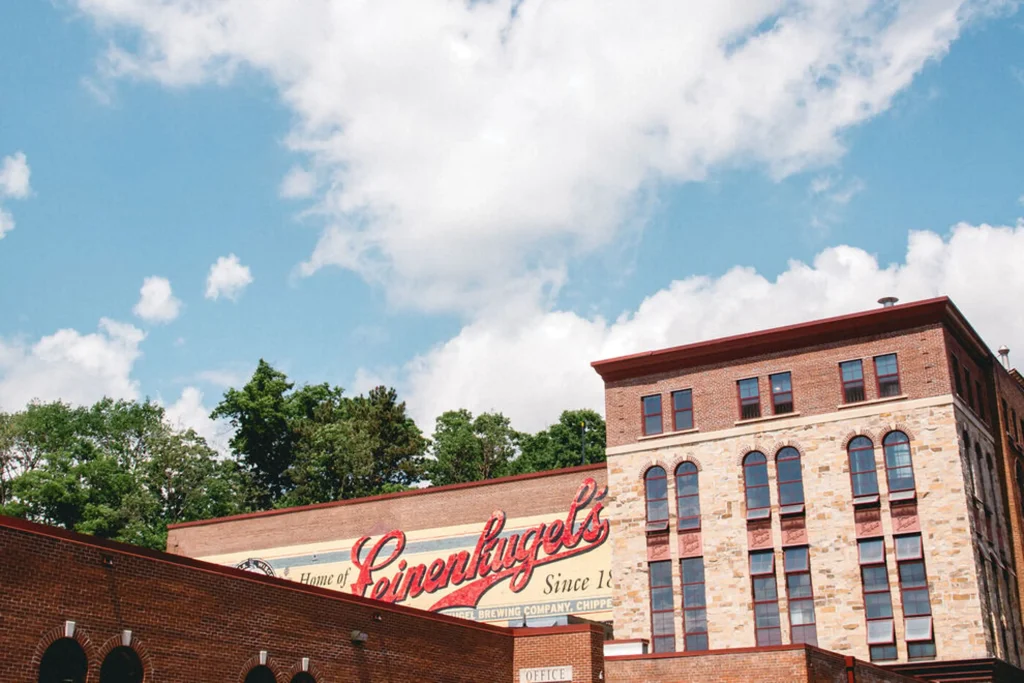
There are beers you drink, and then there are beers you remember. Leinenkugel is the second kind. Whether you first cracked one open at a backyard cookout in Wisconsin, spotted the amber-and-orange label at your local grocery store, or got handed a cold Summer Shandy at a summer barbecue, that first sip tends to stick with you. It is bright, it is honest, and it tastes like someone actually cared about what went into the bottle.
But Leinenkugel is far more than just a good beer. It is a 157-year-old story about a family that refused to quit. It is about a Prussian immigrant who walked into a Wisconsin logging town with a German recipe and a relentless work ethic, and built something that would outlast Prohibition, economic downturns, corporate mergers, and every trend the beer industry has thrown at it. It is about Wisconsin itself — its land, its water, and the kind of people who call it home.
This article covers everything you need to know about Leinenkugel: where it came from, what makes its beers special, how the Summer Shandy changed American drinking culture, and what the brand looks like today. Whether you are new to it or a longtime fan, there is something here worth knowing.
Where It All Began — The Leinenkugel Origin Story
A Prussian Immigrant With Something to Prove
In May 1867, a man named Jacob Mathias Leinenkugel co-founded a brewery in Chippewa Falls, Wisconsin. He was a Prussian immigrant who had traveled with his family from Meckenheim, Germany, in 1845. His father had been an innkeeper and brewer back in Germany. So when Jacob eventually set up shop in Wisconsin, he was not starting from scratch — he was carrying forward a tradition that had already been refined over generations.
He chose Chippewa Falls wisely. The town sat at the heart of Wisconsin’s logging country. Thousands of hardworking lumberjacks lived and worked there, thirsty men who needed a reliable beer after long days in the timber. Jacob and his business partner John Miller quickly built a loyal customer base. The pure water flowing through the Chippewa River and the rich soil around it proved to be ideal for the kind of brewing Jacob had learned back in Germany.
What started as a two-man operation grew steadily. By 1890, Jacob had constructed a four-story brewhouse capable of producing up to 200 barrels per day. He added an icehouse, a bottling facility, and stables for the horses that would carry the beer into town. The 1877 stone malt house became the beating heart of the operation, and it would remain standing and in use for well over a century.
By the time Jacob Leinenkugel passed away in 1899, the brewery he had built was not just a business. It was the oldest business in Chippewa Falls, and would eventually become recognized as the seventh oldest brewery in the entire United States. That kind of legacy does not happen by accident.
When the Leinenkugel Women Saved the Brewery
After Jacob’s death, leadership passed through the family. His son-in-law Henry Casper served as president first, then Jacob’s son Matthias took over in 1907. By 1927, Jacob’s daughter Susan Leinenkugel Mayer had become president — a remarkable move for that era, and a sign of just how deeply the family was committed to keeping this thing alive at all costs.
That commitment would be tested almost immediately. In 1919, Prohibition arrived and devastated breweries across the country. Most simply closed. Leinenkugel’s did not. Rose, Susan, and Kathryn Leinenkugel managed the conversion of the brewery into a soft drink manufacturer, producing malt tonics and non-alcoholic beverages under the name “Leino.” By 1922, the company had quietly become the largest soda bottler in the region — not what anyone planned, but proof that adaptability runs in the family.
When Prohibition ended in 1933, Katherine and Rose Leinenkugel mortgaged their personal homes to raise the money needed to restart brewing operations. Let that sink in. They put their own homes on the line for a beer company. That is not corporate strategy — that is love for what they had built.
Adapting Without Losing the Soul — Decades of Smart Survival
Competing in a Changing Beer Market
Through the 1950s, 60s, and 70s, the American beer industry shifted dramatically. National television advertising gave large national brewers an enormous edge. Hundreds of small, regional breweries went under simply because they could not compete for shelf space or airtime. Leinenkugel’s responded by expanding into new markets and getting creative with its marketing, enlisting local Wisconsin legends like Ray Scott — the beloved voice of the Green Bay Packers — as a spokesperson. It worked. The brand held on when many others folded.
In 1979, as the brewery continued to grow, a hospitality center was built in Chippewa Falls so fans and curious visitors could come learn more about the brand’s history. That spirit of openness and community would become part of Leinenkugel’s DNA going forward.
The 1988 Miller Deal — A Lifeline, Not a Surrender
By the late 1980s, even Leinenkugel’s was feeling the pressure. In 1988, the brewery was purchased by Miller Brewing Company, a subsidiary of Philip Morris at the time. For many craft beer loyalists, a family brand selling to a corporate giant sounds like the beginning of the end. But this story did not go that way. In an unusual move for the time, Miller kept the Leinenkugel family on to run the brewery. The Leinenkugel name, the recipes, the culture — none of it was stripped away. The acquisition gave the brewery the distribution muscle it needed to survive without taking away the identity that made it worth saving.
In 1995, a second brewing facility was added on 10th Street in Milwaukee to handle growing demand. By 2007, through a series of corporate mergers and restructuring, the brand had come under the umbrella of Molson Coors. Despite the ownership changes, Leinenkugel continued to operate with its family feel intact.
The Beer That Changed Everything — Leinenkugel’s Summer Shandy
This section deserves its own spotlight, because what happened in 2007 did not just change Leinenkugel — it changed how millions of Americans think about beer.
The Story Behind the Recipe
The directive was simple. Dick Leinenkugel, then the brewery’s vice president of sales and marketing, told his team to look into what Germans drink during summer. What they found was the radler — a traditional German drink made by mixing beer with lemonade or grapefruit juice, refreshing, low in alcohol, and perfectly suited to warm weather.
The story behind the radler itself is worth a quick mention. Legend has it that in the 1920s, a Munich tavern owner named Franz Kugler was overwhelmed by thousands of cyclists who descended on his place after a race. Running out of beer, he stretched his supply by mixing it with lemon soda. Whether the story is entirely accurate or slightly embellished over time, the radler became a beloved fixture of German beer gardens and eventually made its way into British pub culture under the name “shandy.”
Armed with this history, the Leinenkugel team set R&D brewer Jackie Laumann to the task of building their own version. She experimented for months, trying different base beers mixed with ginger ale, light soda, and various juice blends. Most of them tasted too close to soda. The goal was something that still felt like a real beer — just lighter and more refreshing.
Eventually, Laumann landed on a wheat beer base combined with natural lemonade. The wheat adds a natural smoothness that makes it blend beautifully with the citrus. When Dick Leinenkugel tasted it, he knew immediately they had something special. The beer went through consumer testing in bars across the Midwest. The reactions spoke for themselves — people who had never tasted anything like it were ordering seconds before they had even finished their first.
The name “Summer Shandy” beat out some memorable rejected options: Lifejacket Lager, Lemon Pontoon, and Sour Puss Shandy all made the shortlist. Summer Shandy it was.
What Leinenkugel’s Summer Shandy Actually Tastes Like
Leinenkugel’s Summer Shandy is a traditional weiss beer brewed with natural lemonade flavor. It comes in at 4.2% ABV, which makes it what the beer world calls sessionable — meaning you can have more than one without the evening getting away from you. It sits at around 11 to 14 IBUs, which means it is barely bitter at all. The wheat base gives it a gentle body, and the lemonade integration is surprisingly well-calibrated — sweet enough to be refreshing, but not so sweet that it loses its beer character.
On the pour, it is hazy and golden. The aroma is immediately citrus-forward with a clean, bready wheat note underneath. On the palate, it is crisp and bright, with a lemon finish that lingers pleasantly rather than cloying. It pairs naturally with grilled chicken, fruit salads, watermelon, and freshly caught grilled fish. It is the kind of beer that makes sense at a barbecue, on a boat, or at a summer concert — anywhere the sun is out and things are casual.
In 2012, Summer Shandy won a Silver medal at the Great American Beer Festival in the Fruit Wheat Beer category. That recognition from a respected national competition helped cement its credibility in a market that was becoming increasingly crowded with craft offerings.
Why It Still Dominates After Nearly Two Decades
Summer Shandy launched in spring 2007 and sold out almost immediately. It has remained Leinenkugel’s top-selling product every single year since. In the entire North American market, it holds the position of the top-selling shandy — by a wide margin. Nine out of every ten shandies consumed in the United States are made by Leinenkugel’s. That is not a niche claim. That is category dominance.
What makes that even more impressive is that Summer Shandy has continued growing in an era where hard seltzers flooded the market and hundreds of new craft brands launched flavored beers of their own. The imitations have come and gone. Summer Shandy remains the benchmark.
The Full Leinenkugel Beer Lineup — Beyond Summer Shandy
Summer Shandy may be the flagship, but Leinenkugel’s lineup is far deeper than one product. The brand has always been willing to explore new styles while keeping its core identity grounded in approachable, flavor-forward brewing.
Core Beers Worth Knowing
Leinenkugel’s Original — This is the beer that started it all. A clean, crisp lager based on the original German formula Jacob brought with him in 1867. For over a century, it made up 90% of everything the brewery produced. It was distributed nationwide for the first time in 2017, marking 150 years since the brewery’s founding.
Honey Weiss — A soft, slightly sweet wheat beer with a gentle honey character. This was actually the base beer the team initially experimented with when developing Summer Shandy. It holds up well on its own as a smooth, easy-drinking option.
Sunset Wheat — A wheat ale brewed with natural blueberry and citrus flavors. It is fruity and light, a good companion for the Honey Weiss crowd who want something a little more vibrant.
Big Eddy Series — For drinkers who want something with more muscle, the Big Eddy line delivers. These are high-ABV, small-batch ales produced with serious craft intentions — IPAs, stouts, and barrel-aged offerings that speak to a different kind of beer drinker. The Big Eddy beers are brewed separately and give Leinenkugel’s credibility in the premium craft space.
Spritzen Line — A newer family of beers blending Leinenkugel’s wheat base with sparkling flavors, pitched toward people who enjoy the sessionability and refreshment of hard seltzer but prefer the depth of a real beer.
The Leinie Lodge Experience
Beyond the bottles and cans, Leinenkugel’s has always maintained a physical home base for its fans. The Leinie Lodge in Chippewa Falls — originally built as a hospitality center in 1979 and rebuilt in 2003 on the banks of Duncan Creek right next to the original brewery — is one of the most beloved brewery visitor experiences in the Midwest.
The taproom carries 15 or more different Leinenkugel’s beers at any given time, including seasonal offerings, taproom exclusives, and pilot brewery releases you cannot find anywhere else. Visitors can book tours that walk them through six generations of family history, see vintage equipment and historical photographs, and understand the full brewing process from grain to glass. There are flights, merchandise, live events, and seasonal celebrations. It is the kind of place that turns first-time visitors into repeat guests.
Beer Wisconsin Leinenkugel’s — A Cultural Identity, Not Just a Brand
In Wisconsin, Leinenkugel means something different than it does anywhere else. It is not just a beverage choice. It is a local institution. It is what you bring to the fish fry. It is what gets passed around the tailgate. It is what your grandfather drank, and what you poured for your own kids when they turned 21.
The brand went national, but it never pretended to be something it was not. The Chippewa Falls roots were always front and center — in the packaging, the storytelling, the lodge experience, and the family members who stayed involved in running it even after corporate ownership changed hands multiple times.
The 2025 Brewery Closure — A Chapter Change, Not an Ending
In November 2024, Molson Coors announced it would close both the Chippewa Falls brewery and the 10th Street Brewery in Milwaukee, consolidating production at its central Milwaukee facility. The closure took effect in January 2025. For many fans and longtime employees, the news hit hard. The Leinenkugel family itself described the decision as unexpected and frustrating.
But this is not the end of Leinenkugel as a brand. The beer is still being brewed, still being distributed across all 50 states, and still carrying the same recipes. The Leinie Lodge remains open, the pilot brewery on the original Chippewa Falls grounds continues to produce small-batch exclusives, and tours still run year-round. The history has not gone anywhere. The gathering place is still there. What changed is where the main production happens — not what is in the bottle.
In a long story full of pivots — from lumber towns to Prohibition to corporate acquisitions — this feels like another chapter rather than a conclusion.
How to Enjoy Leinenkugel — Practical Tips for New and Returning Fans
If you have never tried Leinenkugel before, here is an honest guide to getting started. And if you are already a fan, a few of these suggestions might open you up to something you have not tried yet.
Start with Summer Shandy if you are new to the brand and especially if you are not a big beer drinker. The lemon-forward flavor and low bitterness make it one of the most approachable beers on any shelf. Serve it ice cold in a tall glass with a lemon wedge for the full effect.
Try the Original if you want to understand where the brand came from. It is a clean, unfussy lager that lets the quality of the ingredients speak for itself. Pair it with bratwurst or a classic Wisconsin cheese plate for the full experience.
Explore the Big Eddy line if you are already comfortable in the craft beer world and want to see what Leinenkugel’s looks like when it stretches beyond its comfort zone. These beers reward patience and a more attentive palate.
Visit the Leinie Lodge if you are ever within driving distance of Chippewa Falls. The pilot brewery exclusives on tap there are genuinely one-of-a-kind, and the combination of history, hospitality, and great beer makes for a day worth the trip.
Check the seasonal releases year-round. Leinenkugel’s rotates offerings based on season, and some of the best beers in their catalog — like the Canoe Paddle Kölsch — only show up for limited windows. Sign up for their communications to know when things come back.
Final Thoughts
Leinenkugel is the kind of brand that earns its place in people’s lives without asking permission. It does not shout. It does not follow trends. It does not need to. It has been doing what it does since 1867 — brewing honest, flavorful beer, treating its fans like neighbors, and staying true to the German brewing tradition that Jacob carried with him across an ocean.
The Summer Shandy changed everything when it launched in 2007, but what it really did was prove that Leinenkugel had always known something the rest of the industry was only beginning to understand: people want a beer that fits their life, not the other way around. Easy to drink, genuine in flavor, and always welcome at the table.
FAQ 1: How do you pronounce Leinenkugel?
Leinenkugel is officially pronounced “LY-nen-koo-gul” — phonetically written as /ˈlaɪnənkuːɡəl/ in the International Phonetic Alphabet. Wikipedia Many first-time drinkers struggle with the name, which is why the brand is commonly nicknamed “Leinie’s” by loyal fans. The German origin of the name is a nod to the Prussian immigrant family who founded the brewery back in 1867.
FAQ 2: Who owns Leinenkugel today?
Leinenkugel’s is currently a subsidiary of Molson Coors Beverage Company, which became the sole owner of all Miller brands — including Leinenkugel’s — after SABMiller sold its stake in MillerCoors in 2016. Wikipedia Despite the corporate ownership, the brand has maintained its Wisconsin roots and family-connected identity. The Leinenkugel family members remained actively involved in running the brewery for decades even after the initial 1988 sale to Miller Brewing.
FAQ 3: Where is Leinenkugel beer brewed now?
The Jacob Leinenkugel Brewing Company currently brews its award-winning beers at Molson Coors’ brewery in downtown Milwaukee, Wisconsin. Leinenkugel’s The original Chippewa Falls brewery location closed in January 2025 after over 157 years of operation. However, the Leinie Lodge and its pilot brewery in Chippewa Falls remain open to visitors for tours, tastings, and small-batch exclusive beers.
FAQ 4: When was Leinenkugel founded?
The Leinenkugel family brewery was founded in May 1867 in Chippewa Falls, Wisconsin, by Jacob Leinenkugel — a man driven by his German family heritage and iron work ethic. Leinenkugel’s It is recognized as the seventh oldest brewery in the United States and was the oldest continuously operating business in all of Chippewa Falls before the 2025 closure. Six generations of the Leinenkugel family have been involved in the brewery across its 157-year history.
FAQ 5: What type of beer is Leinenkugel’s Summer Shandy?
Leinenkugel’s Summer Shandy is an award-winning, traditional weiss beer — a German-style wheat beer — blended with refreshing natural lemonade flavor, at 4.2% ABV. Total Wine & More It falls into the shandy or radler beer style, inspired by the European tradition of mixing beer with lemonade or citrus juice. In 2012, Summer Shandy won a Silver medal at the Great American Beer Festival in the Fruit Wheat Beer category.
FAQ 6: How many calories are in Leinenkugel’s Summer Shandy?
A 12-ounce serving of Leinenkugel’s Summer Shandy contains approximately 136 calories, with around 13 grams of carbohydrates, 0 grams of fat, and 1 gram of protein. MyNetDiary At 4.2% ABV, it is one of the lighter options in the Leinenkugel lineup. Those watching their caloric intake can also explore the newer Honey Lemon Light, which comes in at just 99 calories per serving.
FAQ 7: Is Leinenkugel’s Summer Shandy gluten-free?
Leinenkugel’s Summer Shandy is not gluten-free, as it contains at least two ingredients that include gluten — consistent with its wheat beer base. Spoonful Because it is brewed on a wheat and barley foundation, it is unsuitable for people with celiac disease or a diagnosed gluten sensitivity. Those seeking a gluten-free alternative should look for certified gluten-free beers made with alternative grains like sorghum, millet, or rice.
FAQ 8: Is Leinenkugel’s Summer Shandy available year-round?
Yes, Summer Shandy was originally a seasonal release but became so popular — growing well beyond 100,000 barrels by its third year — that it is now available year-round in most markets across the United States. Molson Coors Despite being sold in all seasons, it remains Leinenkugel’s top-selling beer every single year, with peak demand unsurprisingly hitting hardest during the summer months when outdoor gatherings and warm-weather activities drive consumption.
FAQ 9: What is the alcohol content of Leinenkugel beers?
Most core Leinenkugel beers range between 4.2% and 4.9% ABV, making them approachable and sessionable for everyday drinking. Leinenkugel’s beers contain zero fat, and fiber content is very small in most varieties because the grains used in brewing are filtered out before bottling, canning, or kegging. Leinenkugel’s The Big Eddy series is the exception, with some small-batch seasonal releases reaching 8% ABV or higher for drinkers seeking more intensity.
FAQ 10: What is the difference between a shandy and a radler?
Both terms refer to a beer mixed with something citrus-based — British drinkers call it a shandy (beer mixed with lemonade or ginger soda), while the German term radler originally described a low-alcohol blend of lager and lemon soda invented in the 1920s for cyclists. All About Beer In practice, American brands like Leinenkugel use both terms somewhat interchangeably. The core idea is the same: a wheat or lager base combined with a fruit juice or flavored mixer for a lighter, more refreshing drinking experience.
FAQ 11: What is Leinenkugel’s best-selling beer?
Summer Shandy is Leinenkugel’s top-selling brand year over year, and it remains the top-selling shandy in all of North America — continuing to grow despite heavy competition from craft brands and hard seltzers. Molson Coors It has held that position since its 2007 launch, making it not just Leinenkugel’s signature product but one of the most commercially successful flavored beers in American beer history. Nine out of every ten shandies consumed in the United States are made by Leinenkugel’s.
FAQ 12: What beers does Leinenkugel currently make?
Leinenkugel’s offers a range of year-round offerings including Honey Weiss, Berry Weiss, and Original, as well as seasonal beers such as Oktoberfest and Grapefruit Shandy. Leinenkugel’s Additional offerings include the Snowdrift Vanilla Porter, Canoe Paddler Kölsch, the Big Eddy high-ABV series, and newer innovations like the Spritzen line and Honey Lemon Light. The brand has also released the Lakeside Cherry, a Gose-style beer brewed with real cherry juice, inspired by Rose Leinenkugel who mortgaged her home to save the brewery after Prohibition.
FAQ 13: Is Leinenkugel considered a craft beer?
This is one of the most debated questions around the brand. While Leinenkugel adheres to high-quality brewing standards, it is owned by Molson Coors, which places it outside the strict Brewers Association definition of an independent craft brewery. Dropt Beer However, many beer enthusiasts and critics still regard it as craft-adjacent because of its deeply rooted family history, flavor-driven approach, and regional brewing tradition going back to 1867. It occupies a unique space — too big to be craft by definition, too authentic to feel like a macro brand.
FAQ 14: Did Leinenkugel survive Prohibition?
Yes — and its survival story is one of the most compelling chapters in American brewing history. During Prohibition, Leinenkugel’s adapted by producing malt tonics and non-alcoholic beverages, and the Leinenkugel women managed the conversion from a brewery to a soft drink manufacturer, eventually becoming the largest soda bottler in the region by 1922. Leinenkugel’s When Prohibition ended in 1933, family members mortgaged their personal homes to restore the brewing equipment and get back into production — a level of commitment that defines the brand’s character.
FAQ 15: Why did Leinenkugel close the Chippewa Falls brewery?
In November 2024, Molson Coors announced that the 157-year-old Chippewa Falls brewery and the 10th Street Brewery in Milwaukee would close, with production consolidated at Molson Coors’ central Milwaukee facility. FOX 9 The Leinenkugel family described the decision as unexpected and frustrating. Production of all Leinenkugel beers continues in Milwaukee, and the Leinie Lodge and pilot brewery in Chippewa Falls remain open year-round for tours, tastings, and exclusive releases.
FAQ 16: Can you visit the Leinenkugel brewery?
Yes — all tours begin at the Leinie Lodge in Chippewa Falls, which is filled with historical photos, vintage memorabilia, and Leinenkugel merchandise, and the taproom carries 15 or more different beers in season including taproom exclusives and pilot brewery releases. Leinenkugel’s While the main production brewery closed in January 2025, the historic grounds, visitor center, and small-batch pilot brewery remain fully operational. Tours cover six generations of family history and the full brewing tradition behind the brand.
FAQ 17: What food pairs best with Leinenkugel beer?
Leinenkugel’s Summer Shandy pairs well with barbecue chicken, fruit salads, watermelon, and freshly caught grilled fish Festival Foods, thanks to its light, citrus-forward profile. The classic Leinenkugel’s Original pairs naturally with brats and sauerkraut, cheese curds, Door County fish boil, and cherry pie. Leinenkugel’s For the Oktoberfest, traditional German fare like pretzels with mustard, spaetzle, and sausages are the natural companions.
FAQ 18: When did Leinenkugel’s Summer Shandy launch?
Leinenkugel’s Summer Shandy first hit shelves in the spring of 2007 — and almost immediately changed how consumers viewed the then-139-year-old Wisconsin brewery, kicking off a flavor renaissance that prioritized refreshment and occasion. Molson Coors The first run sent 30,000 barrels across 11 states and sold out rapidly. By its third year of production, Summer Shandy had already crossed the 100,000-barrel milestone, signaling that it had become far more than a seasonal experiment.
FAQ 19: How many states is Leinenkugel available in?
Leinenkugel’s was historically distributed only in the Upper Midwest, but is now available throughout all 50 states in the United States. Wikipedia National expansion began in earnest after the 1988 purchase by Miller Brewing Company, which provided the distribution infrastructure needed to move the brand beyond its regional roots. Summer Shandy’s national rollout in 2010 was the tipping point that established Leinenkugel as a truly coast-to-coast brand.
FAQ 20: What does the Leinenkugel’s Original taste like?
Leinenkugel’s Original is a classic American Pilsner that has been brewed to the same standard for over 150 years, with a lightly bready, malty character, subtle floral and spicy notes, and just a hint of corn — making it one of the more flavorful examples of the American pale lager style. BeerAdvocate It pours a clear, light gold and finishes clean and smooth. At around 17 IBUs, it carries very mild bitterness and is well-suited for pairing with classic Wisconsin foods like bratwurst, aged cheddar, and grilled fare.
FAQ 21: What is the Leinie Lodge?
The Leinie Lodge is a fellowship of men and women aged 21 or older who love the outdoors and Leinenkugel’s beer — a free membership community that provides access to a monthly newsletter called “The Legend,” along with great offers and notifications of special events throughout the year. Leinenkugel’s Beyond the membership program, the Leinie Lodge is also the name of the physical visitor center in Chippewa Falls. The original hospitality center was built in 1979 and later rebuilt in 2003 on the banks of Duncan Creek right next to the original brewery.
FAQ 22: Does Leinenkugel beer have an expiration date?
Yes — Leinenkugel’s uses a “pull date,” which represents the suggested date by which the beer should be enjoyed at its freshest. This date is located on the neck area of the bottle in MM/DD/YY format, and the brewery code stamped on the second line identifies which facility produced it. Leinenkugel’s Like all beers, Leinenkugel’s is best enjoyed fresh. The pull date helps consumers identify how recently a bottle was packaged and how much shelf life remains for the optimal drinking experience.
FAQ 23: What inspired the name “Summer Shandy”?
The name Summer Shandy came from an impromptu suggestion during early consumer testing — someone simply asked, “Why don’t you call it Summer Shandy?” and the name stuck immediately. Good Beer Hunting Other rejected names from the brainstorming sessions included Lifejacket Lager, Lemon Pontoon, and Sour Puss Shandy. The final name perfectly captured the seasonal, refreshing identity the team was building and went on to become one of the most recognized beer names in the United States.
FAQ 24: Why is Leinenkugel so popular in Wisconsin?
Leinenkugel’s deep roots in Wisconsin go back to 1867, when Jacob Leinenkugel founded the brewery to serve the local lumberjack community of Chippewa Falls. The brewery has a story of six generations of family brewing in Chippewa Falls — a rich heritage and tradition that resonates powerfully with Wisconsin residents who have grown up with the brand as part of their cultural identity. Good Beer Hunting Its approachable, flavor-forward beers, strong community presence, the Leinie Lodge visitor experience, and its local-first storytelling have kept Leinenkugel firmly embedded in Wisconsin culture for over a century and a half.

