
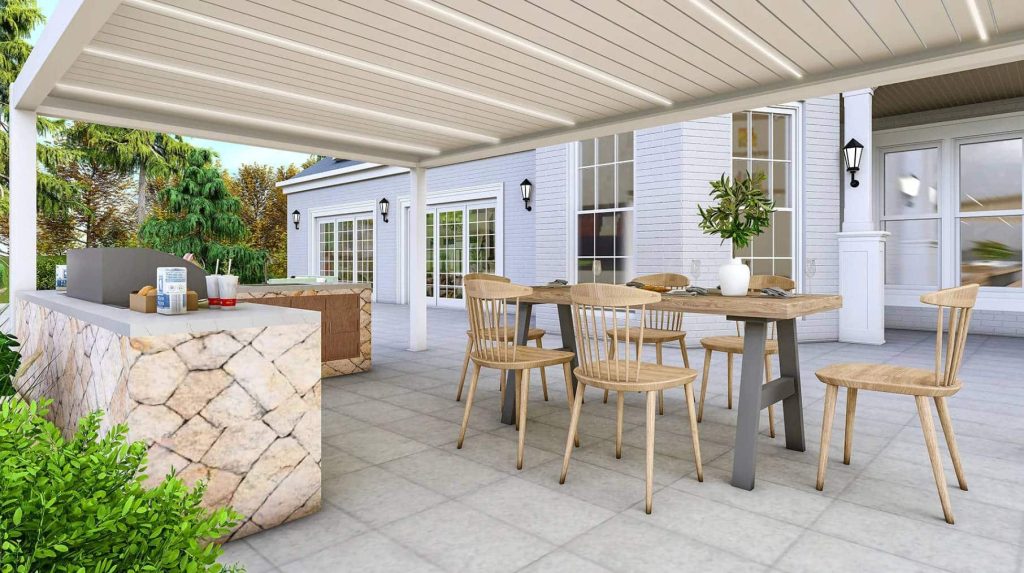
Opening — Why More Homeowners Are Choosing a Louvered Pergola
You finally have a beautiful outdoor space. The deck is laid, the furniture is in place, and you’re ready to enjoy it. Then the afternoon sun turns brutal, or a surprise rain shower sends everyone running inside. Sound familiar?
This is exactly why the louvered pergola has become one of the most talked-about outdoor additions in recent years. It solves a problem that traditional pergolas and basic patio covers simply cannot — the ability to control your outdoor environment without giving up on style or open-air living.
Whether you’re renovating a backyard deck, upgrading a poolside patio, or building from scratch, a louvered pergola gives you a level of flexibility that most outdoor structures don’t offer. In this guide, we break down everything you need to know — from how they work to how much they cost, what to look for when buying, and whether the popular Costco option is worth your money.
What Is a Louvered Pergola and How Does It Work?
A louvered pergola is an outdoor structure with an adjustable roof made up of rotating horizontal slats called louvers. Unlike a traditional pergola with fixed beams or a solid roof cover, the louver blades can tilt at different angles — giving you full sun when you want it, shade when you need it, and weather protection when the skies turn grey.
The basic anatomy is straightforward. You have a sturdy frame — usually made from powder-coated aluminum or treated timber — and a series of parallel louver blades that sit across the top. These blades rotate on a pivot mechanism, controlled either by a hand crank or an electric motor.
How the louver system actually works:
Most modern systems allow the blades to travel from 0° (fully open, like a classic pergola) to 135° or even 160° (fully closed, acting as a weatherproof roof). At mid-positions, they create filtered light and allow partial airflow — something a solid roof simply can’t replicate.
Manual vs motorized operation:
Entry-level models use a manual crank or pull-cord. It works, but it can be a hassle if you’re adjusting frequently throughout the day. Motorized systems, on the other hand, let you control the louvers via a wall switch, remote control, or smartphone app. Premium models even include rain sensors that automatically close the blades the moment a drop is detected.
Many units also come with built-in LED lighting strips along the frame beams, integrated side drainage channels to handle rainfall, and optional heating elements for cooler months. These aren’t luxury extras anymore — they’re standard features on mid-range and above models.
Top Benefits of Installing a Pergola with Louvered Roof
Once people understand what a louvered pergola actually does, the appeal becomes obvious. But the benefits go beyond weather control. Here’s a closer look at why this type of structure has genuinely changed the outdoor living game.
Year-round outdoor living
This is the headline benefit. A pergola with louvered roof extends the usable season of your outdoor space by months. In spring and autumn, you can keep the blades partially open for warmth and light. In summer, close them during peak sun hours to keep things cool. In rain, close them fully and stay dry. With the right heater added, even mild winter evenings become enjoyable.
Energy efficiency at home
A louvered pergola installed along the south or west face of your home acts as a shading device during summer. By blocking direct sunlight from hitting your windows and walls during the hottest part of the day, it can meaningfully reduce the heat load on your interior rooms. This means your air conditioning works less and your energy bills come down — a practical financial benefit most people don’t factor into the cost equation upfront.
Property value and buyer appeal
Outdoor living spaces have consistently ranked among the highest ROI home improvements in real estate surveys. A well-installed outdoor structure signals to buyers that the home is thoughtfully designed and low-maintenance. Compared to a temporary awning or a bare pergola frame, a quality louvered structure looks like a permanent, valuable addition — because it is one.
Privacy and aesthetic appeal
Beyond function, the look of a modern louvered pergola is genuinely impressive. Clean lines, slim aluminum profiles, and integrated lighting create a finished look that a standard patio cover rarely achieves. When the blades are partially tilted, the play of light and shadow across the space below adds a design element that’s hard to replicate. For homeowners who care about aesthetics, this matters.
Types of Louvered Pergolas: Which One Fits Your Space?
Not all louvered structures are built the same way, and understanding the different types helps you make a smarter buying decision from the start.
Freestanding louvered pergolas
These stand independently on four posts and can be placed anywhere in your yard — over a patio slab, on grass with footings, beside a pool, or in the middle of a garden. Freestanding models offer the most flexibility in placement. They’re ideal for large open backyards where you want a defined outdoor room without attaching anything to your house.
Wall-mounted (attached) louvered pergolas
These connect directly to an existing wall — usually the exterior of your home. One side rests against the wall while the opposite side is supported by two freestanding posts. This design uses your house’s structure to its advantage and typically costs less than a fully freestanding unit of the same size. It’s the most common configuration for decks that run along the back of the house.
Aluminum vs wood louvered pergola
Aluminum is the dominant material for a reason. It’s lightweight, corrosion-resistant, requires virtually no maintenance, and accepts powder-coat finishes in a wide range of colors. Wood louvered pergolas do exist and can look stunning — especially in heritage or rural settings — but they demand regular staining or sealing and are more vulnerable to moisture damage over time. For most suburban homeowners, aluminum is the practical choice.
Bioclimatic pergolas
This is the premium category. Bioclimatic models are engineered systems where the louver geometry, drainage, and structural rating are precisely calculated as a complete system. They typically carry higher wind and snow load ratings, use wider louver profiles, and are designed for year-round habitation rather than occasional use. They cost significantly more but perform at a noticeably higher level.
How Much Does a Louvered Pergola Cost? A Real-World Breakdown
Cost is where most buying decisions get made or abandoned. The honest answer is that pricing varies enormously depending on size, materials, and whether you’re going DIY or fully installed.
Entry-level to premium price ranges:
At the lower end, a basic manual louvered kit for a small patio (roughly 10×10 feet) starts around $1,500 to $3,000 for the structure alone. Mid-range motorized aluminum systems for a standard 12×16 foot space typically land between $5,000 and $12,000 installed. Custom bioclimatic builds with full electrical integration, side screens, and integrated heating can run $15,000 to $30,000 or beyond for a large format installation.
Louvered pergola Costco options — what you get and what to watch for
Costco has become a popular search destination for buyers looking for a louvered pergola at a more accessible price point. The big-box retailer periodically offers aluminum louvered pergola kits — often under brand names like Sojag, Yardistry, or similar — at prices that undercut specialty suppliers. These kits typically range from $2,500 to $5,000 and are designed for DIY assembly. The value is real, particularly for homeowners who are handy and comfortable with a multi-day assembly project. However, there are things to watch for. Costco louvered pergola kits tend to have more limited size options, fewer finish colors, and may lack the wind or load ratings of contractor-grade systems. The warranty terms are also worth reading carefully — structural warranties on budget kits are often shorter and more narrowly written. If you’re covering a modest deck and want a clean, functional result on a controlled budget, the Costco route is genuinely worth considering. If you’re after a permanent, high-performance installation, a specialist supplier will likely serve you better.
DIY vs professional installation costs
Installation labor typically adds $1,500 to $5,000 on top of material costs, depending on complexity. DIY is viable for bolt-together aluminum kits on flat concrete surfaces — many homeowners complete these in a single weekend with a helper. But once you’re dealing with uneven ground, timber decking, electrical wiring for motorized louvers, or attaching to a rendered masonry wall, professional installation is almost always the right call.
Ongoing maintenance costs
Aluminum louvered structures are genuinely low maintenance. An annual wash-down with mild soapy water, a check on the louver pivot hardware, and an occasional lubrication of any moving parts is typically all that’s needed. Budget $100 to $200 per year for basic upkeep on an aluminum unit. Motorized systems may occasionally need a drive motor service — roughly every five to eight years under normal use.
Optional add-ons to factor into your budget:
- Motorization upgrade: $800–$2,000
- Integrated LED lighting: $400–$1,200
- Infrared heating panels: $600–$2,500
- Side privacy screens or shade curtains: $300–$900 per panel
- Building permit fees (where applicable): $200–$800
Louvered Roof Pergola Installation: What to Expect from Start to Finish
Understanding the installation process helps you plan better, avoid surprises, and make a more informed decision about whether to DIY or hire a professional.
Site preparation
Before anything goes up, you need a suitable base. Most louvered roof pergola structures require post footings — either concrete piers poured into the ground or base plates anchored to an existing concrete slab. The ground must be reasonably level. Sloping sites require either adjustable feet, stepped footings, or a leveled base pad, all of which add cost and complexity.
Clearance is the other key consideration. Check local building codes for minimum distances from property boundaries, overhead lines, and any drainage easements. In many municipalities, structures over a certain size or with a solid roof require a building permit before work begins.
Step-by-step overview for DIY buyers
For a standard freestanding kit on flat concrete, the general sequence runs like this. First, you mark and anchor the post base plates. Then you erect and plumb the four corner posts. The horizontal beam frames go up next, followed by the louver rail channels and finally the individual louver blades. Electrical wiring for motorized models is the last step before a test run and final adjustment of blade alignment.
Most quality kit manufacturers include detailed assembly guides with numbered hardware and pre-drilled components. Set aside a full weekend — or two weekend days — and have at least one helper on hand for the beam-lifting stages.
Hiring a contractor — what to ask
If you’re going the professional route, ask specifically whether the contractor has installed louvered systems before (not just general pergolas). Ask to see photos of completed jobs. Confirm that their quote includes all footings, electrical rough-in if applicable, and cleanup. A good contractor will also handle the permit application on your behalf.
Red flags to watch for: quotes with no itemized breakdown, contractors unwilling to provide references, and any installer who doesn’t mention footings or anchoring in their proposal.
How to Choose the Right Louvered Pergolas for Your Home
With so many options on the market, a clear decision framework saves a lot of time and stops you from buying something that doesn’t quite fit.
Sizing your pergola
Measure your outdoor footprint carefully and then subtract at least two feet from each dimension to allow for post placement and foot traffic around the edges. A 14×14 foot space typically suits a 10×12 or 12×12 pergola comfortably. Oversizing is a common mistake — a slightly smaller structure that fits the space well looks far better than one crammed wall to wall.
Matching style to your home’s architecture
Modern homes with flat rooflines and minimal detailing suit slim-profile aluminum pergolas in matte black, anthracite grey, or white. Traditional or Hamptons-style homes generally look better with wider frames and natural tones. Timber-look aluminum finishes (powder-coated to mimic wood grain) offer a middle ground for transitional or farmhouse aesthetics.
Key features to prioritize:
- Wind rating: Look for systems rated to at least 60–80 km/h (40–50 mph). Coastal or elevated locations need higher ratings.
- Blade pitch range: A 0–135° range is standard. Systems offering up to 160° give better weatherproofing when fully closed.
- Warranty length: Structural warranties of 10–15 years are reasonable for quality aluminum. Be skeptical of anything less than 5 years on the frame.
- Louver blade width: Wider blades (typically 200mm and above) provide better coverage overlap when closed and are more rigid in wind.
- Drainage system: Built-in gutter channels in the frame beams are essential — without them, rainfall simply drips off the edges.
Top brands worth considering
The market includes a wide range of suppliers from direct importers to full-service outdoor specialists. Brands like Renson, Weinor, Skye Patio, Toja Grid, and Palram are consistently well-reviewed for build quality and after-sales support. For budget-focused buyers, the Costco and home improvement store options from Sojag and Palram have built solid reputations for DIY assembly quality at their price point.
Is a Louvered Pergola the Right Investment for Your Outdoor Space?
After walking through everything — how they work, what they cost, how to choose, and what to expect from installation — the answer for most homeowners is a clear yes.
A louvered pergola delivers something no other outdoor structure currently matches: the ability to fully control your outdoor environment without sacrificing style, openness, or the feeling of being outside. It extends your living space for more months of the year, adds genuine value to your property, and looks impressive doing it.
The range of options available today means there’s a realistic choice at almost every budget level. If you’re working with limited funds, a quality kit from a reputable supplier — or the well-priced Costco offering — gets you into a functional, attractive structure without breaking the budget. If you’re ready to invest in a premium build, a fully engineered bioclimatic louvered pergola will serve you well for decades with minimal upkeep.
The best first step is simple. Measure your outdoor space, set a realistic budget that includes installation and any electrical requirements, and shortlist two or three brands or suppliers to compare. Request quotes, look at completed installations in person if you can, and ask about warranty terms before signing anything.
Your outdoor space deserves to be used all year, not just on perfect days. A louvered pergola makes that genuinely possible.
FAQ 1: What is a louvered pergola?
A louvered pergola is an outdoor structure with a roof made of adjustable horizontal slats — called louvers — that rotate to control sunlight, shade, airflow, and rain protection. Unlike a traditional pergola with fixed beams, the louvers tilt open or closed depending on your preference. Most modern models are operated via a motorized system, a remote control, or a smartphone app.
FAQ 2: How much does a louvered pergola cost?
The cost of a louvered pergola typically ranges from $4,000 to $25,000 for the structure alone, depending on size, material, and features. Motorized aluminum models with smart controls sit in the $8,000–$22,000 range, while DIY kit options from retailers like Costco start closer to $2,500–$5,000. Professional installation adds $1,500–$5,000 on top of material costs.
FAQ 3: Is a louvered pergola worth the investment?
Yes — for most homeowners, a louvered pergola is worth the investment because it extends outdoor usability year-round, reduces indoor cooling costs by shading adjacent walls and windows, and adds genuine curb appeal. Research from the National Association of Realtors indicates that quality outdoor living upgrades can return 50–80% of their cost at resale. The combination of lifestyle value and property appreciation makes it one of the smarter home improvement choices.
FAQ 4: Does a louvered pergola increase home value?
A well-built, permanently installed louvered pergola can increase home value by improving buyer appeal and expanding usable living space. According to real estate data, outdoor structures with engineered permanence — proper footings, electrical integration, and code compliance — perform best at resale. Studies suggest high-quality outdoor upgrades can deliver over 100% cost recovery in outdoor-focused real estate markets.
FAQ 5: How long does a louvered pergola last?
A quality aluminum louvered pergola typically lasts 20 to 30 years with basic maintenance. The powder-coated finish is generally warranted against fading for 10–15 years, while the structural frame should outlast that significantly. Motorized drive systems may need servicing around the 8–12 year mark depending on frequency of use.
FAQ 6: Can a louvered pergola withstand heavy rain?
Yes — when the louver blades are fully closed, a quality louvered pergola acts as a watertight ceiling. Rainwater is channeled into built-in gutter rails along the frame beams and drains down through the posts away from the seating area. The system does not function as a traditional waterproof roof, as the sides remain open, but the overhead protection is reliable in standard to heavy rainfall.
FAQ 7: Can a louvered pergola handle snow?
Yes, premium louvered pergolas are engineered to handle significant snow loads — quality models are rated to support 30–70 lbs per square foot (PSF) when the louvers are fully closed. The recommended practice in heavy snowfall is to open the louvers vertically so snow falls through rather than accumulating on a flat surface. Always confirm the specific snow load rating for your chosen model and size before purchasing in a snow-prone region.
FAQ 8: What wind speed can a louvered pergola handle?
Most mid-range louvered pergolas are rated for wind speeds of 90–120 mph, while premium engineered systems can exceed 160 mph and some commercial-grade models are rated up to 200+ mph with louvers closed. The wind rating varies by brand, model, and the specific size and configuration you purchase — a smaller unit typically carries a higher wind rating than a larger span from the same product line. Always request the wind rating for your exact size, not just the brand’s headline figure.
FAQ 9: Do I need a permit for a louvered pergola?
Whether you need a building permit depends on your local municipality’s zoning code, the size of the structure, whether it’s attached to your home, and whether electrical work is involved. Most jurisdictions require permits for structures above a certain square footage or with solid/semi-solid roofing, which a fully-closed louvered system may qualify as. It’s always best to check with your local planning authority before installation — failing to obtain a permit can create costly problems at resale.
FAQ 10: What is the difference between a louvered pergola and a bioclimatic pergola?
A bioclimatic pergola is the premium, fully engineered tier of the broader louvered pergola category. While the terms are often used interchangeably, bioclimatic specifically refers to systems where the louver geometry, drainage capacity, and structural load ratings are precisely engineered as an integrated climatic management system. Bioclimatic models carry higher wind and snow certifications, use wider louver profiles, and are designed for true year-round habitation rather than occasional seasonal use.
FAQ 11: What is the difference between a louvered pergola and a traditional pergola?
A traditional pergola has fixed open beams that offer partial shade but no weather protection and no adjustability. A louvered pergola replaces those fixed beams with adjustable slats that can be tilted from fully open to fully closed, giving you control over light, shade, and rain coverage. The result is a significantly more versatile structure — one that functions as both an open-air pergola on sunny days and a weatherproof outdoor room when conditions change.
FAQ 12: Can I add a louvered pergola to an existing deck or concrete slab?
Yes — most louvered pergola systems are designed to anchor directly onto concrete slabs using base plate hardware, or through timber decking into the structural subframe below. Wall-mounted (attached) models require only two freestanding footings, using your home’s exterior wall for support on one side. Always ensure your existing surface and substructure can handle the added load, particularly if attaching to a timber deck rather than concrete.
FAQ 13: What is the best material for a louvered pergola — aluminum or wood?
Aluminum is the preferred material for louvered pergolas for practical reasons. It is lightweight, corrosion-resistant, does not warp or rot, and accepts powder-coat finishes that resist UV fading for years. Wood louvered pergolas exist and can look striking in heritage or rural settings, but they require regular staining, sealing, and are more prone to moisture damage over time. For most homeowners, an extruded aluminum louvered pergola offers a far better long-term return.
FAQ 14: How do motorized louvered pergolas work in a power outage?
Most motorized louvered systems include a manual override — typically a hand crank or a battery backup module — so you can adjust or close the louvers without electricity. Some higher-end models automatically close the louvers when power is interrupted to protect the space from weather. This is a key safety and practicality feature worth confirming with your supplier before purchase.
FAQ 15: Can a louvered pergola be integrated with a smart home system?
Yes — many modern motorized louvered pergolas support smart home integration via Somfy, Z-Wave, or Wi-Fi-based systems, allowing control through platforms like Amazon Alexa, Google Home, and Apple HomeKit. Advanced models include built-in sensors for rain, wind, and UV levels that trigger automatic louver adjustments without any manual input. This smart automation capability is now standard on mid-range and premium systems as of 2025.
FAQ 16: What maintenance does a louvered pergola require?
Aluminum louvered pergolas require very little upkeep compared to timber structures. An annual wash-down with mild soapy water, occasional lubrication of the louver pivot points with silicone spray, and a seasonal check of the built-in drainage channels to clear leaf debris is generally all that’s needed. Motorized systems benefit from an annual function test of the drive motor and remote to catch any mechanical issues early.
FAQ 17: Are louvered pergolas better than sunrooms?
For homeowners who want to stay connected to the outdoors, a louvered pergola is often the better choice because it maintains the open-air experience and can be fully opened on fine days — something a sunroom cannot do. Sunrooms typically cost two to four times more, require more significant planning approvals, and eliminate the outdoor atmosphere that most people are trying to preserve. A louvered pergola gives you weather protection on demand without fully enclosing the space.
FAQ 18: Can I hang lights or a ceiling fan from a louvered pergola?
Built-in LED strip lighting is a standard feature on most motorized louvered pergolas, integrated into the frame beams or the louver channels themselves. For hanging lights or ceiling fans, the fixed structural frame — not the louver blades — should be used as the anchor point. Many manufacturers design their frames to accommodate ceiling fan mounting kits and hanging fixtures, so check the specifications of your specific model before purchase.
FAQ 19: How do I choose the right size louvered pergola for my space?
Measure your outdoor space and subtract at least two feet from each dimension to allow for post placement and comfortable clearance around the edges. A 14×14 foot patio comfortably suits a 10×12 or 12×12 pergola. Oversizing is a common mistake — a slightly smaller structure that fits the space proportionally always looks better than one that crowds the edges of a deck or patio.
FAQ 20: What colors and finishes are available for a louvered pergola?
Most aluminum louvered pergolas are available in powder-coated finishes including matte black, anthracite grey, white, bronze, and beige as standard options. Many premium brands also offer faux wood grain finishes — powder-coated aluminum textured to mimic timber — for homeowners who want a natural look without the maintenance. Custom RAL color matching is available from many manufacturers for an additional cost.
FAQ 21: Is a freestanding or attached louvered pergola better?
The right choice depends on your property layout. Freestanding models are more flexible in placement — they can go anywhere in the yard with proper footings — and don’t put any additional structural load on your home. Attached (wall-mounted) models are typically less expensive for the same covered area since they use the home’s structure for support, and they create a more seamless indoor-outdoor connection. If you’re covering a back deck that runs along the house, attached is usually the practical choice.
FAQ 22: How long does it take to install a louvered pergola?
A straightforward DIY kit installation on an existing flat concrete slab typically takes one to two full days with one or two helpers. Professional installation of a mid-size attached model usually runs two to three days including footings. Larger custom builds with electrical integration, complex footings, or uneven terrain can extend to four to five days for a professional crew. Always factor in permit processing time, which can add two to eight weeks depending on your local authority.
FAQ 23: What is the ideal height for a louvered pergola?
The standard height for a residential louvered pergola is 9–11 feet from the ground to the underside of the frame. Most off-the-shelf models are designed with a 9-foot clear height under the frame to allow comfortable circulation beneath. Taller configurations are available for commercial applications or to clear specific architectural features, but 9–10 feet is the functional sweet spot for most backyard installations.
FAQ 24: Can a louvered pergola be used commercially as well as residentially?
Yes — louvered pergola systems are widely used in commercial settings including restaurant alfresco dining areas, hotel pool decks, rooftop bars, and retail outdoor spaces. Commercial applications typically require higher wind and snow load certifications, larger spans, and compliance with commercial building codes. Many leading brands offer specific commercial-grade product lines designed for these applications, often with longer warranty periods and heavier structural profiles than their residential equivalents.

