
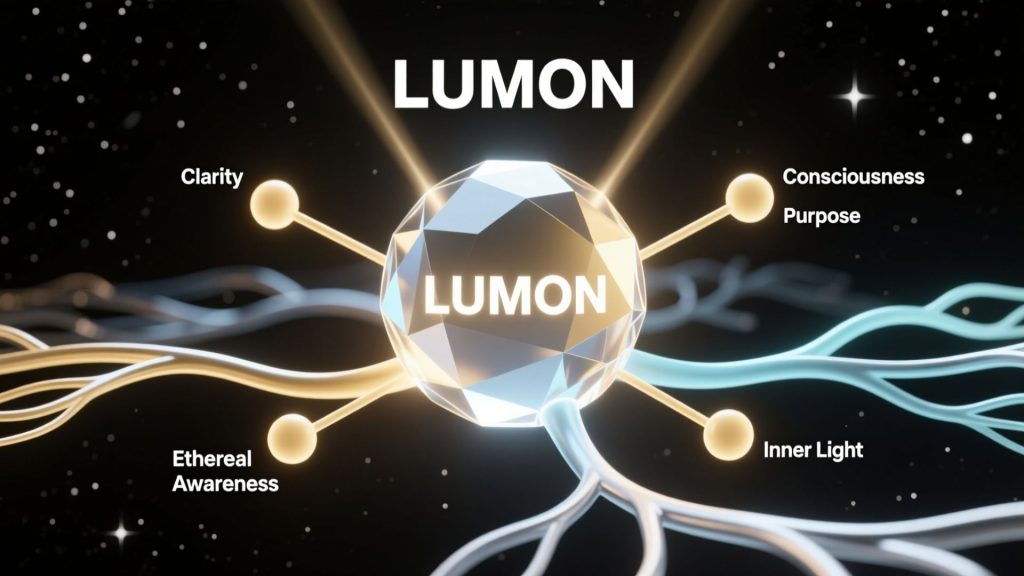
Some words find their way into conversations slowly, over decades. Others explode into the cultural vocabulary almost overnight. The lumon definition falls into the second category. Whether you first encountered it while deep in a late-night binge of a critically acclaimed TV series, stumbled across it in a New York Times puzzle, or spotted it on the side of a glass-balcony brochure — the word stopped you. And you wanted to know more.
That curiosity is completely understandable. Lumon is not a word you will find in a standard English dictionary. It does not have a single, clean definition that settles the matter. Instead, it carries multiple layers of meaning depending on the context in which it appears — linguistic, fictional, architectural, and cultural. And each layer is genuinely interesting.
This article breaks down every dimension of the lumon definition in full. You will discover where the word comes from, what it symbolizes, how it became the name of one of television’s most unsettling corporations, what connection it has to a real Finnish company, and how it ended up as a clue in the New York Times Connections puzzle. By the time you finish reading, you will understand not just what Lumon means — but why it means so much to so many people right now.
What Does Lumon Actually Mean? The Word at Its Root
The first thing worth establishing is this: lumon is not a word that grew organically out of centuries of everyday language use. It is a constructed word. It was built deliberately, shaped to carry specific associations, and deployed with intention. That makes unpacking it more interesting, not less.
Starting With the Latin Root: Lumen
At its foundation, lumon traces back to the Latin word lumen. In Latin, lumen means light, brightness, or illumination. It also carries a secondary meaning of opening, as in a passage through which light can travel. This is where the symbolic weight of the lumon definition begins.
The transition from lumen to lumon is a small linguistic step — just one vowel changed — but it makes the word feel fresher, more modern, and more brandable. The suffix “-on” gives it a futuristic, sleek quality, similar to words like silicon, xenon, or neon. It sounds clinical, precise, and slightly mysterious all at once. That combination is no accident.
It is important to be clear about one common misconception: lumon does not mean light in Latin. Lumen does. Lumon is a stylized modern derivative — phonetically inspired by lumen, symbolically connected to it, but not identical to it. Recognizing this distinction helps you understand how the word functions across different contexts.
The Biological Layer: Lumen in Science
Beyond the poetic association with light, there is a second meaning of lumen worth considering. In biology and medicine, a lumen refers to the hollow interior space inside a tubular structure — a blood vessel, a digestive tract, a microscopic channel in the body. It is an empty space enclosed within a structure, waiting to be filled.
This anatomical layer adds unexpected depth to the definition of lumon. In the context of the TV show Severance, the “innie” identity — the work self — begins with no memories, no personal history, no sense of who they are outside the office. They are, in a very real sense, an empty vessel. A lumen. A hollow space that the corporation fills with tasks, rules, and a manufactured sense of purpose.
The Sound of the Word: Why Lumon Feels Uncomfortable
There is one more layer to consider before moving into specific uses of the word. Lumon sounds like looming. Not exactly, but close enough that the ear registers it. Something that looms feels large, oppressive, and inescapable. It hovers at the edge of your awareness, too big to ignore. For a word associated with a secretive corporation that dominates the lives of its employees, that phonetic quality is doing a great deal of quiet work.
The Lumon Definition in Pop Culture — Severance and the Corporation Behind the Name
When most people search for the definition of lumon today, they are thinking about Lumon Industries — the fictional corporation at the center of Apple TV+’s hit series Severance. To understand why the word has become so culturally significant, you need to understand the show, and what Lumon Industries represents within it.
What Is Severance?
Severance is a science fiction psychological thriller directed by Ben Stiller. It premiered on Apple TV+ in 2022 and quickly became the platform’s most-watched series, earning 14 Emmy nominations in its first season alone. The show is critically celebrated for its sharp writing, unsettling atmosphere, and willingness to ask big questions about work, identity, and corporate power.
The central premise revolves around a procedure called severance. A microchip implanted in a person’s brain splits their consciousness into two entirely separate identities. The “innie” only exists inside the workplace — they have no memories of life outside the office. The “outie” lives normally in the outside world but has no memory of anything that happens at work. Neither self knows the other. Neither can communicate. They simply switch control when the person crosses the threshold into, or out of, the building.
Who Is Lumon Industries?
Lumon Industries is the corporation that pioneered, sells, and administers this severance procedure. Founded in 1865 by a man named Kier Eagan, the company began as a pharmaceutical business selling topical salves before evolving over more than a century and a half into a powerful multinational biotechnology firm headquartered in a town called Kier, Pennsylvania.
By the time the show takes place, Lumon is a sprawling organization with divisions covering drugs, medical devices, cosmetics, research, and more. But its most significant and controversial product is the severance chip — the neurological technology that splits employees in two.
Internally, the company operates more like a religious cult than a corporation. The founder Kier Eagan is revered almost as a prophet. His portraits line the hallways of the severed floor. Employees are expected to know his sayings and philosophy by heart. Management uses euphemistic, flowery language to obscure what is really happening. Discipline takes the form of psychological conditioning rather than conventional punishment.
The Central Irony Built Into the Lumon Definition
Here is what makes the name so brilliantly chosen for storytelling purposes. A company named Lumon — rooted in lumen, meaning light — runs its most sensitive operations in sterile, windowless rooms buried underground. It claims to illuminate the world through innovation and to offer employees a better work-life balance. In reality, it keeps its own workers in total darkness about the nature of their tasks, the purpose of their work, and the full scope of what the corporation is doing.
The MDR team — the group the story follows most closely — spends their days sorting numbers on screens based on the emotional reactions those numbers trigger. They have quotas to meet and receive small rewards — erasers, finger traps, waffle parties — for hitting their targets. They do not know what the numbers mean. They do not know why certain numbers feel scary or sad or angry. Season two of Severance eventually reveals that this seemingly meaningless data entry was actually shaping artificial personalities implanted into human test subjects on a hidden floor below them.
That is the full horror of the definition of lumon as used in the show. The name promises light, knowledge, and transparency. The reality is surveillance, manipulation, and darkness kept carefully from view.
The Real-World Lumon — A Finnish Company With a Very Different Story
Not everything called Lumon belongs to the world of dystopian fiction. There is a real company by this name, and its story is worth knowing — not least because the overlap in naming has created genuine curiosity and some interesting real-world effects.
Lumon Group: Founded in Finland in 1978
The real Lumon Group was founded in 1978 in Outokumpu, a small town in North Karelia, Finland. It started as a modest window renovation business operating out of a chicken coop — about as far from a gleaming biotech corporation as it is possible to get. Over the following decades, the company evolved and expanded, eventually becoming an international specialist in balcony and terrace glazing systems.
Today, Lumon Group operates in more than 20 countries, employs over 1,000 people worldwide, and reported revenue of approximately €149 million in 2024. Its products — glass enclosure systems for balconies, terraces, and outdoor living spaces — are built around a simple idea: that natural light makes spaces better and lives richer.
The alignment between the company’s mission and its name is almost poetic. The real Lumon literally brings more light into people’s homes. Where the fictional Lumon Industries keeps people in the dark, the Finnish Lumon Group opens walls to the sky. Two companies sharing a name, pointing in entirely opposite directions.
What Happened When Severance Made the Name Famous
When Severance became a global hit, the real Lumon Group found itself in an unexpected position. Search traffic for the name spiked. Curious viewers who had spent hours watching the fictional corporation’s sinister operations were arriving at a Finnish glazing company’s website looking for answers. Media outlets noted the overlap, and the brand confusion — however harmless — sparked genuine discussion about identity in the age of viral pop culture.
For the real company, it was an unusual kind of publicity. Their actual values — transparency, sustainability, quality, and bringing natural light into living spaces — stand in complete contrast to everything their fictional namesake represents. That contrast became its own talking point.
Lumon Definition Connections — The NYT Puzzle Moment
One of the clearest signs that a word has entered mainstream culture is when it shows up in a New York Times puzzle. That is exactly what happened to lumon on March 7, 2025, when the NYT Connections puzzle (#635) featured a category packed with Severance Easter eggs.
How Lumon Appeared in the NYT Connections Puzzle
For those unfamiliar with it, Connections is a daily word game published by The New York Times in which players group 16 words into four themed categories. It was created by puzzle editor Wyna Liu, launched in 2023, and quickly became the second-most-played NYT game after Wordle.
In the March 7 puzzle, several categories were quietly built around references to Severance. Character names — Helena, Irving, Phoenix, Buffalo, Mark, Burt — were hidden within categories about US cities and musical biopics. And then there was the standout category: fruits with their second letters changed.
The four answers were ample (apple), dote (date), lumon (lemon), and poach (peach). LUMON = LEMON, with the E swapped for a U. For anyone who knew the show, it landed immediately. For anyone who did not, it still worked as a pure wordplay puzzle. The NYT’s puzzle team had made the lumon definition connections so that no prior knowledge of Severance was required — but having that knowledge made the category feel like a private joke between the puzzle and its audience.
Why This Moment Matters
Appearing in a NYT puzzle is a form of cultural validation. The editorial team at The New York Times Games does not slip words into puzzles without being confident that a broad audience will recognize them. The inclusion of lumon in the Connections grid signals that by early 2025, the word had crossed from niche TV fandom into mainstream cultural awareness.
It also explains why “lumon definition connections nyt” has become a popular search string. Players who encountered the clue in the puzzle — perhaps unsure why LUMON was standing in for LEMON, or curious about the Severance references throughout — went searching for context. That search brought them to the full story behind the word.
Why the Lumon Definition Resonates So Deeply Right Now
Words do not become culturally significant by accident. They gain traction because they tap into something real — a shared anxiety, a widely felt experience, a question that large numbers of people are already asking. The lumon definition has resonated so deeply because it speaks directly to how millions of people currently feel about work.
Work, Identity, and the Severance Metaphor
A 2023 Gallup poll found that only 32 percent of US employees reported feeling genuinely engaged at their jobs. The majority of working adults in the most productive economy in the world are spending large portions of their waking lives in a state of disengagement. They show up, they do the tasks, they collect a paycheck — and a significant part of them feels absent from the whole process.
Severance takes that experience and literalizes it. The severance procedure does not feel like pure science fiction to someone who already experiences their work self and their personal self as two different people. It feels like a metaphor that has been given a name and a plot. Lumon Industries becomes a stand-in for every organization that has ever asked its employees to check their humanity at the door.
Lumon also touches on deeper anxieties about surveillance and control. The innies are watched constantly, rewarded for compliance, and punished psychologically for stepping out of line. They cannot leave. They cannot ask questions. They cannot know what their work actually means. These are extreme fictional versions of dynamics that many real workers recognize in softer forms from their own professional lives.
How Lumon Became Everyday Slang
Online communities did not take long to turn lumon into everyday vocabulary. On Reddit, TikTok, Twitter and X, and Discord, users began tagging their own workplaces with the label. A company that monitors every keystroke? “Totally Lumon.” A manager who speaks in corporate euphemisms rather than direct communication? “Pure Lumon energy.” An open-plan office that feels designed to prevent private thought? “This place is literally Lumon.”
The word has also migrated into usernames, gaming profiles, and creative branding. Its sleek two-syllable sound, its mysterious connotations, and its instantly recognizable cultural weight make it appealing as a personal identity choice in digital spaces. It signals a particular kind of cultural awareness — an interest in ideas about corporate power, identity, and the meaning of work.
The Lumon Definition as a Branding and Naming Strategy
From a pure naming and branding perspective, lumon is a masterclass in how to construct a word that carries symbolic power. Whether you are writing fiction, building a company, or crafting a username, the principles behind the name are worth understanding.
What Makes Lumon Work as a Name?
First, it is short. Two syllables. Easy to say, easy to remember, easy to spell. The best brand names rarely exceed three syllables, and two is often better. Second, it carries meaning without spelling it out. You do not need to be told that lumon relates to light — the sound does that work for you at a subconscious level. Third, it feels modern. The “-on” ending gives it a contemporary, technological quality that fits comfortably alongside names like Amazon, Lexon, or Silicon.
Fourth — and this is the element that elevates it from a good name to a great one — it carries irony. In the context of Severance, a company called Lumon operates in darkness. That tension between what the name promises and what the entity delivers is exactly what great storytelling requires. The name itself contains the show’s central theme.
Light as Symbolism: Why the Root Still Resonates
Light has been a symbol of knowledge, truth, freedom, and transformation in human culture for as long as recorded history. Enlightenment, illumination, clarity — these metaphors are so deeply embedded in how we think and talk that they feel instinctive rather than learned. A name rooted in lumen taps into all of that cultural memory immediately.
For the real Lumon Group in Finland, this etymology aligns perfectly with what the company actually does. Glass lets in light. Their products open living spaces to the outside world. The name fits. For the fictional Lumon Industries, the etymological root creates devastating irony. The name aligns with nothing the company actually does — and that gap is the point.
Conclusion: A Word That Carries More Weight Than It Looks
The lumon definition, when you trace it fully, turns out to be a story about how language, storytelling, and culture intersect. Start with a Latin word for light. Modernize it slightly to make it feel clinical and contemporary. Attach it to a fictional corporation that uses the promise of illumination to justify control and darkness. Watch it become a global cultural touchstone. See it appear in a major newspaper puzzle. Watch real people adopt it as everyday slang for everything they recognize about the worst of corporate culture.
That is not a simple definition. That is a word doing a great deal of work on multiple levels simultaneously. It means light. It means secrecy disguised as transparency. It means a real Finnish company that genuinely opens homes to the sky. It means a crossword clue that delighted Severance fans on a Friday morning. It means that feeling you have when you walk into an office that feels like it was designed to extract your labor and nothing more. The best words carry contradictions. They hold opposites in tension. Lumon promises light and delivers darkness, promises openness and delivers control, promises simplicity and delivers layers of meaning. That is precisely why it has stuck. Whether you came here because of the show, the puzzle, the Finnish company, or simple curiosity about a word you kept encountering — now you know. The lumon definition is richer than you thought, and it is only going to grow from here.
Q1. What is the lumon definition?
The lumon definition is layered. Most commonly it refers to Lumon Industries, the fictional biotechnology corporation in Apple TV’s Severance, which pioneered a procedure to split employees’ memories between work and personal life. Beyond pop culture, the word traces to the Latin root lumen, meaning light or illumination, and is also the name of a real Finnish company specializing in glass balcony systems. Each layer carries different meaning depending on context.
Q2. Does lumon mean light?
Not in a direct, dictionary sense. The Latin word for light is lumen, not lumon. Lumon is a modern, coined word phonetically derived from lumen, carrying the symbolic association of light and illumination but not serving as an actual Latin or English translation of the word. In scientific use, lumen is also a unit measuring visible light output — lumon is not. The connection is symbolic, not etymological in the strict sense.
Q3. What language does the word lumon come from?
Lumon does not originate from a single natural language. It is a modern constructed word designed to sound like the Latin lumen (light) while having a sleek, futuristic quality. The -on suffix gives it a contemporary feel similar to words like silicon or xenon. In Nordic regions, particularly Finland, lumon also exists as a surname with roots connected to charm and light. The show’s creators chose it precisely because it sounds clinical, scientific, and slightly unsettling.
Q4. What is the difference between lumen and lumon?
Lumen is the classical Latin word for light and an official scientific unit measuring the output of visible light. Lumon is a modern, stylized derivative of lumen used as a brand name and a fictional corporate name. Lumen belongs in dictionaries and physics textbooks; lumon belongs in branding, storytelling, and pop culture discussions. Lumen is the real word; lumon is the deliberate, purposeful variation built from it.
Q5. Is lumon a real word in the dictionary?
No. Lumon does not appear in standard English dictionaries such as Merriam-Webster or Oxford. It is a coined term, created intentionally as a brand name and fictional corporate identity. Because of its Latin roots and pop culture reach, it carries real meaning in context, but it is classified as a proper noun or neologism rather than a standard lexical entry. Using it in formal or academic writing without explanation would likely confuse readers unfamiliar with its origins.
Q6. What does the biological meaning of lumen add to the lumon definition?
In biology and medicine, a lumen refers to the hollow interior space within a tubular structure such as a blood vessel or digestive tract. Analysts of Severance point out that this layer adds symbolic depth to Lumon: the innie identity — the work-self that exists only inside the office — starts with no memories, no personal history, and no outside connections. It is effectively an empty vessel, a lumen, waiting to be filled by the corporation’s rules and manufactured purpose.
Q7. What is Lumon Industries in Severance?
Lumon Industries is the fictional multinational biotechnology corporation at the center of Apple TV’s Severance. Founded in 1865 by Kier Eagan in the town of Kier, Pennsylvania, it evolved from a pharmaceutical company into a sprawling conglomerate producing drugs, cosmetics, biotech, and medical equipment. Its most controversial product is the severance procedure, a surgically implanted chip that splits an employee’s memories between their work identity (innie) and personal identity (outie). The company is run like a cult, with founder Kier Eagan revered almost as a prophet.
Q8. What does Lumon actually do in Severance?
This is the central mystery of the show. On the surface, Lumon runs the severance procedure and operates various departments on a sealed severed floor. Its Macrodata Refinement team sorts numbers based on emotional reactions, without knowing why. Season two revealed that this data processing was actually shaping artificial personalities implanted in human test subjects on a hidden Testing Floor below — effectively making employees unknowing participants in psychological experimentation. The full scope of Lumon’s goals remains incompletely explained.
Q9. Why is the company in Severance called Lumon?
The show’s creators deliberately chose the name Lumon for its ironic symbolic power. The word is phonetically derived from lumen, the Latin word for light. A company whose name evokes illumination, transparency, and knowledge operates in total secrecy, keeps its employees in the dark about the nature of their work, and conducts hidden human experimentation. That gap between what the name promises and what the company actually does is central to the show’s thematic design. The name is the first clue that nothing about Lumon is what it presents itself to be.
Q10. What is the severance procedure at Lumon?
The severance procedure is a surgery in which a microchip is implanted in a person’s brain. Once severed, the person’s memories are divided into two entirely separate identities. The innie exists only inside the workplace, with no memories of life outside the office. The outie lives normally in the outside world with no memory of anything that happens at work. The two identities never communicate and cannot share experiences. Lumon markets this as achieving perfect work-life balance, but in practice it is a system of control, psychological conditioning, and ethical violation.
Q11. What do the four tempers mean at Lumon?
The Four Tempers are the emotional categories central to Lumon’s internal philosophy and the Macrodata Refinement team’s work. They are Woe (sadness), Frolic (joy), Dread (fear), and Malice (violence or aggression). MDR employees are trained to recognize numbers that evoke these feelings and to sort them into corresponding folders. Lumon frames this in quasi-religious terms rooted in founder Kier Eagan’s philosophy. Season two reveals this emotional sorting was connected to designing psychological experiences for human test subjects.
Q12. Who is Kier Eagan and why does Lumon worship him?
Kier Eagan is the founder of Lumon Industries, established in 1865. Within the show he is revered almost as a prophet or deity. His portraits line the corridors of the severed floor. Employees are expected to memorize his sayings and philosophy. His Four Tempers doctrine governs internal culture. CEO Jame Eagan has stated the company’s goal is to eventually sever every person on earth. The show uses this reverence to satirize how corporations build cult-like loyalty through manufactured mythology around charismatic founders.
Q13. What is the lumon definition connections NYT puzzle?
On March 7, 2025, the New York Times Connections puzzle numbered 635 featured a category called “fruits with their second letters changed.” One of the four answers was lumon, representing lemon, where the E is swapped for a U to produce L-U-M-O-N. The same puzzle was filled with other Severance Easter eggs including character names hidden in categories about US cities and musical biopics. Players searching for the lumon definition after encountering it in the puzzle drove a significant spike in related search traffic.
Q14. How did lumon appear in the NYT Connections puzzle?
In Connections puzzle 635, the category “fruits with their second letters changed” contained four answers: ample (apple), dote (date), lumon (lemon), and poach (peach). Each answer takes a fruit name and swaps its second letter. Apple becomes ample; lemon becomes lumon. For Severance fans, the inclusion of Lumon was an unmistakable Easter egg. For puzzle-solvers unfamiliar with the show, it still worked as pure wordplay. The category required no prior knowledge of Severance to solve correctly.
Q15. Do you need to watch Severance to solve the lumon NYT Connections clue?
No. The March 7, 2025 NYT Connections puzzle was constructed so that every category stood on its own without requiring Severance knowledge. Lumon appears in the “fruits with second letters changed” category, where the logic is purely linguistic: lemon with E replaced by U equals lumon. The Severance references throughout the puzzle were Easter eggs layered on top of self-contained categories. Fans of the show recognized the references; everyone else could still solve the puzzle using only wordplay logic.
Q16. Is there a real company called Lumon?
Yes. Lumon Group is a real Finnish company founded in 1978 in Outokumpu, Finland. It began as a small window renovation business and grew into an international specialist in glass balcony and terrace enclosure systems. Today Lumon Group operates in more than 20 countries, employs over 1,000 people, and reported revenue of approximately 149 million euros in 2024. The real Lumon has no connection to biotechnology or memory-altering procedures. Its business is literally about letting more natural light into living spaces.
Q17. What does the real Lumon company make?
The real Lumon Group manufactures and installs glass balcony glazing systems, terrace enclosures, and architectural glass solutions that allow homeowners to use outdoor spaces year-round. Their products are engineered for energy efficiency, noise reduction, weather protection, and the maximization of natural light in living spaces. The company operates across more than 20 countries primarily in Europe and North America. Its core mission — bringing openness and light into homes — is almost a literal embodiment of the Latin root lumen from which both the real and fictional Lumon names derive.
Q18. What happened to real Lumon searches after Severance became popular?
After Severance became a global hit, the real Finnish Lumon Group experienced a measurable spike in web traffic from viewers searching for Lumon Industries who landed instead on a glass balcony company’s website. Media outlets reported on this brand crossover, noting the contrast between a company famous for sinister memory-splitting procedures and a Finnish manufacturer whose business is literally designed to let sunlight into homes. The overlap created marketing curiosity and brand confusion discussions across entertainment and business media.
Q19. Is Lumon Industries based on a real company?
No. Lumon Industries is a fictional creation for the show Severance. However, the show deliberately draws on real-world corporate dynamics — surveillance culture, manufactured employee loyalty, meaningless busywork, cult-like founder worship, and the erosion of work-life boundaries — to make Lumon feel unsettlingly plausible. Research cited by corporate culture commentators found that nearly 60 percent of professionals feel they must adopt a different persona at work, a real dynamic that the show literalizes through the severance procedure.
Q20. How is lumon used as slang online?
Online communities on Reddit, TikTok, Twitter/X, and Discord have adopted lumon as informal shorthand for workplaces or organizations that feel overly controlling, surveillance-heavy, joyless, or dehumanizing. Common phrases include “this place is literally Lumon,””total Lumon energy,” and “they pulled a Lumon move” — all implying a setting or behavior that strips away individuality in favor of compliance. The word also appears in usernames, creative branding, and gaming profiles where its sleek, slightly ominous sound has an appealing air of mystery.
Q21. Why does lumon resonate so deeply with people about work culture?
A 2023 Gallup poll found that only 32 percent of US employees reported feeling genuinely engaged at work, meaning the majority spend large portions of their lives in a state of professional disconnection. Severance taps directly into that experience by literalizing it. The severance procedure does not feel like pure science fiction to someone who already experiences their work self and personal self as two different people. Academic papers published in peer-reviewed journals have analyzed the show as a critique of labor alienation and the ideological illusion of work-life balance under corporate capitalism.
Q22. What does “lumon energy” mean in social media?
“Lumon energy” is informal social media shorthand, derived from Severance fan communities, to describe a vibe that feels controlled, sterile, performatively cheerful, and slightly unnerving. Saying a workplace or person has lumon energy implies they are emotionless in a corporate way, overly focused on compliance and productivity, and lacking genuine human warmth. It can also carry a more positive connotation in some circles, where lumon energy means precise, focused, and mysteriously composed — drawing on the name’s lumen-derived association with illuminated intelligence.
Q23. Can lumon be used as a brand name or personal name?
Yes, and it increasingly is. Lumon works well as a brand name in tech, wellness, architecture, and design because it is short, memorable, phonetically clean, and carries symbolic associations with light, intelligence, and forward-thinking energy. As a personal name or username, it appears across gaming profiles, social media handles, and creative projects where its slightly mysterious, futuristic quality is an asset. It has no offensive connotations in any major language and is widely considered safe to use in professional and creative contexts.
Q24. Is Severance renewed for season 3 and what questions about Lumon remain?
Yes. Apple TV officially renewed Severance for a third season in March 2025, immediately after the season two finale aired. In February 2026, Apple acquired full intellectual property rights to the series for an estimated 70 million dollars. New co-showrunners Mary Laws and Eli Jorne have joined creator Dan Erickson for season three. Filming is expected to begin in summer 2026 with a projected premiere window of mid-to-late 2027. Key unanswered questions include the fate of Gemma and Mark’s reunion, what happens to Helly and Helena Eagan, whether the severance procedure can be stopped globally, and the full scope of what Lumon Industries was truly designed to achieve.

