
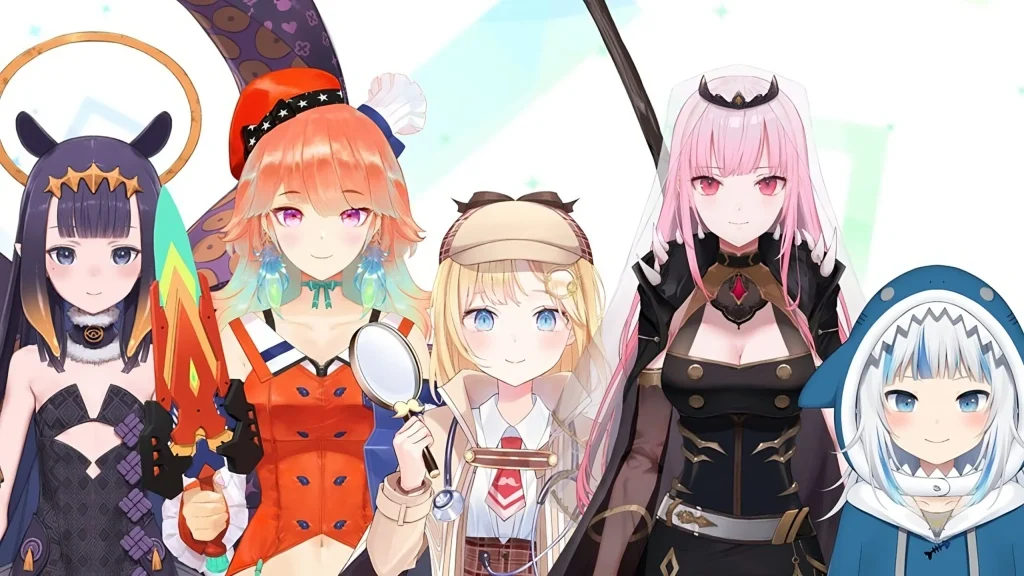
Picture this. Someone goes live on Twitch. Thousands of viewers pour into the stream. Chat moves fast. Donations fly in. The streamer laughs, reacts, plays games, and sings — all while appearing as a glowing, animated anime character with flowing silver hair and cat ears.
There’s no face cam. No real-life backdrop. Just a virtual avatar that moves, blinks, and emotes as naturally as any human you’ve ever watched on screen.
This is VTubing. And it’s one of the fastest-growing forms of entertainment on the internet right now.
If you’ve been scrolling through YouTube or Twitch lately and found yourself wondering what is a VTuber — you’re not alone. Millions of people discover the world of virtual content creators every day and immediately have a hundred questions. So this guide is here to answer all of them.
We’ll cover what a VTuber is from the ground up, how the technology behind it works, what a VTuber model is, what toggles do inside a 3D model, and what it means when a VTuber graduates. By the end, you’ll understand this world as well as any longtime fan.
What Is a VTuber?
A VTuber — short for Virtual YouTuber — is an online content creator who uses a digital animated avatar instead of a traditional face camera. The avatar tracks and mirrors the creator’s real movements, facial expressions, and voice in real time, so viewers are watching a character that feels genuinely alive.
The person behind the avatar is 100% real. Their voice, their humor, their reactions, their personality — all of it is authentic. The only difference is that instead of a camera pointing at their face, there’s an animated character doing the same job.
VTubers create all kinds of content. Some stream video games for hours on end. Others host casual conversation streams called “zatsudan” — a Japanese term for relaxed, unscripted chat sessions. Many sing, cover popular songs, or release original music. Some do art streams, cooking shows, or live-reaction content. A growing number hold virtual concerts that draw tens of thousands of viewers at once.
They stream primarily on YouTube and Twitch, but you’ll also find them active on Bilibili, TikTok, Niconico, and various other platforms depending on their audience and region.
Where Did VTubers Come From?
The story of what is a VTuber begins in Japan. The concept took root in the mid-2010s, when Japanese internet culture was already deeply invested in anime, idol groups, and virtual entertainment.
Kizuna AI is widely credited as the pioneer. She launched her YouTube channel in 2016, presenting herself as an AI-powered virtual character with an upbeat personality and a distinct anime design. She called herself a “Virtual YouTuber” — and that label stuck. She grew to millions of subscribers and sparked something that the internet wasn’t quite ready for.
By 2018 and 2019, the space was growing fast. Small groups of virtual creators started forming, agencies began organizing talent, and the format started to evolve. Then 2020 happened. The global pandemic pushed people indoors, online streaming exploded, and VTubing rode that wave into the mainstream. By the end of 2020, there were over ten thousand active VTubers worldwide. That number has only climbed since.
Major agencies like Hololive and Nijisanji were central to this growth. They auditioned talent, built polished virtual personas, and introduced the model to global audiences. What started as a Japanese internet niche became a worldwide cultural moment.
How Is a VTuber Different from a Regular Streamer?
On the surface, a VTuber does everything a traditional streamer does. They talk to chat, they play games, they share opinions, they build communities. The mechanics are the same.
The difference is in identity and presentation. A regular streamer points a webcam at their face. A VTuber presents a crafted character — complete with a name, a backstory, a visual design, and often an entire fictional world built around them.
That character becomes the brand. Fans follow the character, not the person. This creates a unique kind of connection where the audience is invested in both the content and the mythology of who this character is.
There’s also the privacy element. Creators who might never feel comfortable streaming with their face on camera can build massive, engaged audiences from behind a virtual persona. That’s opened the door for people who previously might have stayed away from content creation entirely.
What Is a VTuber Model?
Once you understand what a VTuber is, the next question is almost always: what exactly is the avatar they’re using, and how does it work?
The avatar is called a VTuber model. It’s the visual representation of the creator’s virtual persona — the character you see on screen during every stream or video. A VTuber model includes everything that defines how the character looks: their face shape, eye color, hair style, clothing, accessories, and any unique features like horns, tails, or wings.
But a VTuber model isn’t a static picture. It’s a rigged, animated digital character that moves in real time, responding to the creator’s actual movements as they happen.
2D vs. 3D — Understanding the Two Main Types of VTuber Models
Not all VTuber models are built the same way. There are two primary types, and each has a distinct look, feel, and technical foundation.
2D Models (Live2D)
The most common type of VTuber model is built using a software called Live2D Cubism. These models start as flat, illustrated artwork — similar to an anime drawing — and are then rigged with a complex system of movement points that allow them to tilt, rotate, blink, and express emotions as if they exist in three-dimensional space.
The result is something that looks like an anime character come to life. They can turn their head, open and close their mouths in sync with speech, raise their eyebrows, and display expressions ranging from joy to shock to absolute panic — all while retaining that illustrated, hand-drawn aesthetic.
2D models are popular for a few key reasons. They look great, they’re well-suited to the anime-adjacent visual style that VTubing is associated with, and they require less processing power than full 3D models. Most of the biggest names in agencies like Hololive and Nijisanji use Live2D models. The software that drives them on stream is usually VTube Studio, which handles face tracking and maps the creator’s movements to the model in real time.
3D Models
3D VTuber models are fully three-dimensional characters built in tools like VRoid Studio, Blender, or Unity. They look closer to the character models you’d find in a video game or animated film. They can rotate freely, show full-body movement, and are capable of being used in virtual reality spaces and live concert environments.
3D models offer a different kind of visual experience. They feel more dynamic and physically present. They’re particularly popular for virtual concerts and performance-heavy content where full-body motion capture matters. The downside is that they demand more powerful hardware to run smoothly and generally require more technical setup.
Many larger VTuber organizations — particularly those that host virtual 3D concerts — use this format for special events, even if their everyday streams rely on a 2D model.
How Is a VTuber Model Made?
The process of creating a VTuber model involves both artistic and technical work. Here’s how it typically unfolds.
First, an artist designs the character concept. This means deciding on everything about the character’s appearance — the color palette, outfit, facial features, accessories, and overall aesthetic. For 2D models, this is done as a layered illustration. For 3D models, it’s sculpted digitally in a 3D environment.
Next comes rigging. Rigging means setting up the movement points within the model so it knows how to animate. In a 2D model, this involves defining how different parts of the illustration respond when the creator moves — how the hair swings when they turn their head, how the eyes narrow when they squint, how the mouth moves in sync with speech. In a 3D model, rigging defines how the bones and joints in the figure move together.
Once rigged, the model is imported into software like VTube Studio or VSeeFace. A webcam or dedicated face-tracking camera captures the creator’s movements and expressions. The software interprets those inputs and applies them to the model in real time. When the creator smiles, the avatar smiles. When they tilt their head, the avatar follows. The creator and the character become one.
What Does a VTuber Model Cost?
The range here is wide. At the free end, tools like VRoid Studio let creators build their own 3D models from scratch without spending a cent. The results won’t match a professionally commissioned model, but they’re functional and often charming in their own way.
Mid-range commissioned 2D models from independent artists typically run anywhere from $300 to $1,500 or more depending on the artist, the complexity of the design, and what’s included. A professional, fully custom 2D model with high-quality rigging, multiple expressions, physics-simulated hair and clothing, and platform optimization can cost anywhere from $1,000 to $5,000 and beyond.
The price reflects the artistry and technical skill involved. A well-made model is essentially a custom-built animated character designed specifically for live performance. That’s not cheap — but it’s also an investment in a creator’s entire brand.
What Is a Toggle for a 3D VTuber Model?
If you spend enough time around VTuber communities, you’ll hear the word “toggle” come up fairly often. Understanding what a toggle is helps you appreciate just how much personality and craft goes into a VTuber model beyond the basic animation.
A toggle is a built-in feature that lets a VTuber switch specific visual elements of their avatar on or off during a live stream, usually with a single key press or hotkey. Think of it as a light switch — but instead of a room light, it controls parts of the character’s appearance or emotional expression.
What Can Toggles Actually Control?
Toggles can be set up to control a surprisingly wide range of elements. Some of the most common include accessories like hats, glasses, wings, tails, and ears — items that can appear or disappear on the avatar at will. A creator might start a stream with their character in a casual outfit and toggle to an alternate look mid-stream to surprise their audience.
Facial expressions are another major use case. A toggle can instantly switch the avatar into a blushing expression, a shocked wide-eyed look, sparkle eyes, or an exaggerated reaction face. These expression toggles are one of the things that make VTuber streams so entertaining — a perfectly timed shocked face or happy expression can land like a punchline on its own.
One of the most beloved toggle features in the VTuber community is the chibi toggle. This shrinks the full-size avatar into an adorably tiny, simplified mini version of the character mid-stream. It’s purely for fun, but fans absolutely love it. Moments where a creator accidentally or dramatically activates their chibi mode have become some of the most clipped and shared content in VTubing.
Special effects are also common — glowing auras, particle effects, costume overlays, or visual transformations that can be triggered by the creator or even tied to viewer interactions like Twitch channel point redeems.
How Toggles Work on a Technical Level
In 2D Live2D models, toggles are set up as parameters within Live2D Cubism and then assigned as expression hotkeys inside VTube Studio. The key thing to understand is that expressions in VTube Studio can be stacked — meaning a creator can have a blush active at the same time as a sparkle eye expression, layering multiple toggles simultaneously.
In 3D models built in VRoid Studio or Unity, toggles function a little differently. They’re typically programmed as blend shapes or visibility switches within the model’s data, then mapped to hotkeys in whatever software is driving the avatar.
Creators can bind any toggle to a keyboard shortcut for quick access during streams. More advanced setups link certain toggles to viewer-triggered events — so when a fan redeems a channel point reward or sends a specific donation, it automatically triggers an expression or visual change on the avatar. It creates a live, interactive loop between the creator and their audience that feels genuinely unique to this format.
Toggles, at their core, are what transform a VTuber model from a pretty moving illustration into a performance tool with range, personality, and spontaneity.
What Is a VTuber Graduation?
If you’ve followed a VTuber for any length of time, you’ve probably seen an announcement that shook their community: a VTuber is graduating. For people new to the space, the word “graduation” sounds almost positive — celebratory, even. But in the VTuber world, it carries a weight that’s closer to farewell.
Graduation is the term used when a VTuber retires their persona or leaves the agency they’re contracted with. The word comes directly from Japanese idol culture, where members of idol groups are said to “graduate” when they leave — framing departure as a life transition rather than a firing or a resignation. VTubing adopted this language wholesale, and it’s now the standard term across the entire industry.
What Does It Mean When a VTuber Is Graduating?
When a VTuber announces they are graduating, it means they will permanently stop streaming, creating content, and interacting with their audience as that specific character. The persona is being retired. The chapter is closing.
This is not a hiatus. It’s not a break. For agency VTubers especially, graduation means the end of that character’s active life. The creator behind the avatar still exists — and often continues working in entertainment — but they will no longer appear as that persona.
For fans, this can feel genuinely emotional. These are creators people have watched for hundreds of hours. Characters with established personalities, running jokes, memorable moments, and deep community traditions. Losing that is real, even if the person behind the avatar hasn’t gone anywhere.
How Does a VTuber Graduation Actually Happen?
The process is usually announced well in advance. The agency or the VTuber themselves will post an official statement across YouTube, Twitter/X, and their agency’s channels. A graduation date is announced — typically anywhere from two to six weeks out.
In the lead-up to that date, the VTuber continues streaming. Fans pack every remaining stream knowing time is running out. Then comes the graduation stream itself. These farewell streams are often among the most viewed events in VTuber history. They’re usually emotional, full of callbacks to memorable moments, messages from fellow VTubers, fan art montages, and heartfelt thank-yous.
Minato Aqua’s graduation stream drew over 740,000 concurrent viewers — the most-watched graduation in VTuber history, a staggering number that speaks to how deeply these events affect the community. Kizuna AI’s graduation stream featured over a thousand VTubers making appearances to say goodbye.
After the graduation stream ends, the reality sets in. Channels may be privated. Past videos can be removed or made inaccessible. Merchandise gets discontinued. The digital footprint of that character begins to shrink.
Why Do VTubers Graduate?
There’s no single reason a VTuber graduates. The circumstances vary widely from person to person and situation to situation.
Burnout is one of the most common factors. Streaming is demanding work, and doing it as a consistent, high-energy public persona — often for years — takes a serious toll on mental and physical health. Some creators simply reach a point where continuing isn’t sustainable.
Creative differences also play a major role, particularly in agency VTubing. The creator’s vision for their character might diverge from what the agency wants. When those two sides can’t align, graduation often becomes the outcome.
Career changes happen too. Some VTubers graduate to pursue voice acting, music careers, or other opportunities in entertainment that their agency contract would restrict.
Contract terms are another factor. An agency agreement ends, and both parties decide not to renew. In that case, graduation is simply the official conclusion of a professional relationship.
Can a VTuber Come Back After Graduating?
This depends almost entirely on whether the VTuber was agency-managed or independent.
For agency VTubers, particularly those under organizations like Hololive, the character — the name, the design, the voice persona — is the intellectual property of the company. After graduation, the performer cannot use that identity again. The character is retired.
What often happens — and this is an open secret in VTubing circles — is that the creator re-emerges as a new, independent VTuber. A different name, a new model, a fresh start. Long-time fans usually piece together who it is fairly quickly, but the unspoken community etiquette is to respect the new identity and not make it an issue.
For independent VTubers who own their own models and branding, the situation is far more flexible. They can take a break and return. They can rebrand. They can step back and come back on their own terms. The creative and legal freedom of being independent means graduation, if it happens at all, is entirely on their own conditions.
The World of VTuber Agencies — Who Is Behind the Biggest Names?
VTubers can be divided into two broad camps: those who work under agencies, and those who operate independently. Understanding this structure is important context for making sense of the wider VTuber landscape.
Hololive, run by Cover Corporation, is the largest VTuber agency in the world. It’s home to some of the most recognized names in the space — Gawr Gura, Korone, Pekora, and dozens of others. Hololive has branches operating in Japan, English-speaking markets, Indonesia, and beyond. The characters that talent portray are company intellectual property, which is why graduation has the permanent weight that it does within Hololive.
Nijisanji, operated by Anycolor Inc., is another dominant force. Nijisanji actually helped popularize the use of Live2D models over 3D ones in the early days, and it operates one of the largest rosters of any VTuber organization. Its English-language branch, Nijisanji EN, built a dedicated following outside of Japan.
VShojo takes a different approach. This US-based agency is known for giving its talents significantly more ownership over their models and brand. Creators under VShojo retain more creative control than is typical under Japanese agency structures. It’s home to popular names like Ironmouse and Filian.
Beyond the agencies, there is a massive and growing community of independent VTubers — creators who design and own their own avatars, manage their own channels, and answer to no one but their audience. Many of the most creative and boundary-pushing content in the space comes from independents who have full freedom to do exactly what they want.
Agencies offer exposure, resources, collab opportunities, and infrastructure. The trade-off is a percentage of revenue, content restrictions, and IP ownership of the character. Independents have creative freedom and model ownership, but they build everything from scratch on their own.
What Makes VTubing So Appealing?
People often ask: why do so many viewers watch VTubers instead of regular streamers? And why do so many creators choose to become one? The answers are connected, but they come from different angles.
Why Viewers Love VTubers
The blend of anime aesthetics and live, unscripted personality is genuinely compelling. There’s something about watching an expressive animated character react to a jump scare or burst into laughter mid-sentence that hits differently than watching a face cam.
The parasocial connection is strong. VTubers build consistent, detailed personas over time. Fans learn the character’s quirks, running jokes, preferences, and recurring moments. The mythology grows. The community builds inside jokes, creates fan art, writes songs, and forms real friendships with each other in the process.
Fan communities around VTubers often have their own names — official designations for the fanbase — and these groups develop a culture of their own. Watching your favorite VTuber starts to feel like belonging to something, not just consuming content.
Why Creators Choose VTubing
Privacy is a major draw. Many talented, charismatic people want to create content but don’t want to put their real face on the internet. VTubing solves that problem entirely. A creator can build a massive, loyal following without ever revealing who they are in real life.
Creative freedom is another pull. Designing a VTuber persona means deciding who this character is, what they look like, where they’re from, what their personality is like. That creative exercise is genuinely fun for a lot of people.
Monetization through this format is real and substantial. Creators earn through Super Chats during live streams, channel subscriptions, merchandise, brand deals, music releases, and more. For those who reach a significant audience, VTubing can become a full-time career.
Accessibility has also improved dramatically. Tools like VRoid Studio are free. OBS Studio is free. A basic webcam is all you need for face tracking to start. The barrier to entry is lower than it has ever been, which has brought a wave of new creators into the space.
Is VTubing Just a Phase?
The numbers say no. The VTuber market is valued in the billions of dollars globally, and growth projections remain strong. Major brands have partnered with VTubers for campaigns. Tech and AI companies are investing in virtual influencer development. Twitch formally added VTuber as a content category with its own tag, acknowledging the format as a distinct and permanent part of the streaming landscape. VTubing content on Twitch grew 467% in 2021 compared to the year before — and the trajectory has continued upward since.
This isn’t a trend. It’s a category.
Final Thoughts — What Is a VTuber, Really?
Strip away the technology, the models, the motion capture, and the toggles, and what you find at the center of every VTuber is a person with something to say and a community to say it to.
A VTuber is a content creator. The avatar is the medium, not the message. The personality, the humor, the connection with the audience — that’s what people show up for every time.
So when someone asks what is a VTuber, the truest answer is this: it’s a creative who chose a different kind of stage. One built from software and imagination rather than cameras and studio lighting. And for millions of people around the world, it’s become their favorite place to spend an evening.
Whether you discovered VTubing five minutes ago or you’ve been watching for years, there’s always more to explore. The community is wide, the content is wildly varied, and somewhere in it, there’s almost certainly a virtual persona whose streams feel made exactly for you.
FAQ 1: What is a VTuber?
A VTuber, short for Virtual YouTuber, is an online content creator who uses a real-time animated digital avatar instead of a face camera. The avatar mirrors the creator’s actual facial expressions, head movements, and voice through motion capture software. VTubers stream, make videos, and interact with live audiences — all while staying hidden behind a virtual character.
FAQ 2: What does VTuber stand for?
VTuber is a shortened form of “Virtual YouTuber,” a term first coined by Kizuna AI in 2016 when she launched her YouTube channel as an animated AI character. The “V” stands for virtual, and the term stuck even as creators expanded beyond YouTube to Twitch, Bilibili, TikTok, and other platforms. Today, VTuber refers to any digital avatar-based online entertainer, regardless of which platform they use.
FAQ 3: Where did VTubers originate?
VTubers originated in Japan in the mid-2010s, heavily influenced by the country’s anime, idol, and internet culture. Kizuna AI, who debuted on YouTube in late 2016, is widely recognized as the first VTuber to achieve major mainstream popularity. From Japan, the trend spread globally — exploding internationally after 2020 when the pandemic pushed more entertainment and audiences online.
FAQ 4: How is a VTuber different from a regular streamer?
The core difference is how the creator appears on screen — a regular streamer shows their real face on a webcam, while a VTuber uses an animated avatar. VTubers also tend to maintain a crafted persona with a fictional name, backstory, and character lore, which creates a unique identity separate from their real-world self. The avatar serves as both the brand and the face, giving creators privacy while still building a genuine audience connection.
FAQ 5: Are VTubers real people or AI characters?
VTubers are real people — the voice, personality, humor, and reactions all come from an actual human being behind the avatar. The digital character is purely a visual layer; it’s the person controlling it who determines the content, tone, and connection with the audience. A small number of VTubers are AI-driven virtual characters with no human performer, but the overwhelming majority are human creators using avatars for privacy and creative expression.
FAQ 6: What is a VTuber model?
A VTuber model is the animated digital avatar a creator uses during streams and videos — it’s the character you see on screen. It can be a 2D illustrated character built with Live2D software or a fully three-dimensional figure created in tools like VRoid Studio or Blender. The model is rigged with movement points and brought to life in real time using face-tracking software that maps the creator’s expressions and movements onto the avatar.
FAQ 7: What is the difference between a 2D and 3D VTuber model?
A 2D VTuber model is created as a flat illustration and animated using Live2D Cubism software, giving it depth and fluid movement while maintaining an anime art style. A 3D VTuber model is a fully dimensional character — similar to a video game or animated film character — built in programs like VRoid Studio, Blender, or Unity, offering full-body motion and 360-degree rotation. Most everyday streaming VTubers use 2D Live2D models, while 3D models are more common in virtual concerts and immersive events.
FAQ 8: What software do VTubers use to move their avatars?
The most popular software for running VTuber models is VTube Studio, which handles face tracking and maps a creator’s expressions and head movements to their avatar in real time using a webcam or iPhone camera. Other popular options include VSeeFace (free and widely used) and Warudo, a newer platform gaining traction in 2024 and 2025. For 3D models, some creators use platforms like VirtualMotionCapture or integrate their model directly into Unity-based setups.
FAQ 9: What is a toggle for a 3D VTuber model?
A toggle in a VTuber model is a built-in switch that lets the creator instantly turn specific visual elements on or off during a stream, usually with a hotkey or button press. Toggles can control accessories (hats, glasses, wings), outfit changes, special effects, and facial expressions like blush, sparkle eyes, or a shocked reaction. The beloved “chibi toggle” — which shrinks the avatar into an adorable tiny version mid-stream — is one of the most popular toggle features among VTuber fans.
FAQ 10: How much does a VTuber model cost?
The cost of a VTuber model ranges widely depending on whether you go the free or commissioned route. Free tools like VRoid Studio let anyone create a basic 3D model at no cost, while a mid-range commissioned 2D Live2D model from an independent artist typically runs $300 to $1,500 or more. A fully custom, professionally rigged 2D model with multiple expressions, hair physics, and platform optimization can cost anywhere from $1,000 to $5,000 and up, depending on the artist’s skill level and what’s included.
FAQ 11: What is a PNGTuber?
A PNGTuber is a simplified version of a VTuber who uses a static or mildly animated PNG image instead of a fully rigged Live2D or 3D model. The PNG image typically switches between a few frames — such as a default state and a talking state — to simulate expression. It’s a budget-friendly and accessible entry point for creators who want to start streaming with an avatar before investing in a full model.
FAQ 12: What is a VTuber graduation?
A VTuber graduation is when a creator permanently retires their virtual persona or parts ways with the agency they’re contracted with. The term comes from Japanese idol culture, where “graduation” is used instead of “resignation” or “retirement” to frame departure as a life milestone rather than an abrupt ending. For fans, a VTuber graduation is an emotional event — it marks the end of a character they may have followed and supported for years.
FAQ 13: What does it mean when a VTuber is graduating?
When a VTuber is graduating, it means they will stop streaming and creating content as that specific character, and the announcement typically comes with a set farewell date. For agency VTubers, graduation usually means the character is permanently retired since the persona is the company’s intellectual property. The real person behind the avatar often continues working in entertainment, sometimes returning as a brand-new independent VTuber under a different name and design.
FAQ 14: Why do VTubers graduate?
VTubers graduate for a variety of reasons including burnout, mental or physical health challenges, creative differences with their agency, expired contracts that aren’t renewed, or a desire to pursue other career opportunities like voice acting or music. In agency environments like Hololive, the performer doesn’t own the character — meaning that when the professional relationship ends, the persona ends with it. Graduation is not always negative; for some creators it represents a personal milestone or the start of a new chapter.
FAQ 15: What happens after a VTuber graduates?
After a VTuber graduates, their channel may be privated, past stream archives can be removed, and merchandise associated with the persona is typically discontinued. A graduation stream is usually held beforehand — an emotional farewell event that can draw enormous viewership, such as Minato Aqua’s graduation stream which attracted over 740,000 concurrent viewers. In most cases, the agency retains all rights to the character, and the performer moves on, often re-emerging as a new persona elsewhere in the streaming world.
FAQ 16: Can a VTuber come back after graduating?
Agency VTubers generally cannot return as the same character after graduating because the persona, name, and design belong to the company. However, many former agency VTubers re-enter the space as new, independently operated characters — sometimes with a clearly different aesthetic but a recognizable personality that longtime fans can identify. Independent VTubers who own their own models have much more flexibility and can pause, rebrand, or return on their own terms without the restrictions of a corporate agreement.
FAQ 17: What is kayfabe in VTubing?
Kayfabe in VTubing refers to the practice of maintaining the fictional persona as if it were real — treating the character’s lore, backstory, and personality as genuine during streams and public appearances. The term is borrowed from professional wrestling, where performers stay in character to preserve the audience’s suspension of disbelief. In VTubing, kayfabe is generally understood as a willing performance both parties participate in, with fans choosing to engage with the character on its own terms.
FAQ 18: Do VTubers ever reveal their real face?
Some VTubers do reveal their real face — known in the community as a “face reveal” — though it is entirely optional and relatively uncommon. Many creators choose to keep their real identity private indefinitely because privacy was one of their primary reasons for choosing the VTuber format in the first place. When face reveals do happen, they’re usually significant community events and can draw massive attention, though they don’t affect the creator’s ability to continue operating as their virtual persona.
FAQ 19: What is a VTuber debut?
A VTuber debut is a creator’s first official stream or video as their virtual persona — essentially their launch event. For agency VTubers, debuts are carefully planned and announced in advance, often with teaser content to build anticipation, and they serve as the first opportunity for the creator to introduce their character’s name, personality, backstory, and content plans. Debut streams are typically among the most-viewed streams a VTuber will ever have, as curiosity peaks around a new character’s first appearance.
FAQ 20: What is a VTuber lore?
VTuber lore refers to the fictional backstory and world-building elements associated with a creator’s virtual persona — things like the character’s origin story, species, age, relationships, and mythology. For example, Gawr Gura from Hololive is officially a 9,000-year-old shark girl from the lost city of Atlantis, and Kizuna AI presented herself as an artificial intelligence. Lore adds depth and personality to a character, though most VTubers evolve beyond their initial lore as their authentic personality takes over organically through streaming.
FAQ 21: How do you become a VTuber?
Becoming a VTuber requires three core things: a virtual avatar (model), software to animate it using your movements, and a streaming or video platform to share your content. You can create a free 3D model in VRoid Studio, download VTube Studio or VSeeFace to run it, and start streaming on YouTube or Twitch with nothing more than a basic webcam for face tracking. The barrier to entry has dropped significantly — anyone with a computer, internet connection, and something to say can start their VTuber journey today.
FAQ 22: What are the biggest VTuber agencies?
The three dominant VTuber agencies globally are Hololive (operated by Cover Corp), Nijisanji (operated by Anycolor Inc.), and VShojo. Hololive is the largest, with branches in Japan, English, and Indonesia, and is home to globally recognized names like Gawr Gura and Korone. Nijisanji features one of the most diverse rosters of any agency, while VShojo stands out for giving its talents more creative control and greater ownership over their own personas compared to the typical Japanese agency model.
FAQ 23: How do VTubers make money?
VTubers earn revenue through multiple streams including Super Chats (viewer donations sent during live streams), channel memberships and subscriptions, merchandise sales, music releases, brand sponsorship deals, and for agency VTubers, a salary or revenue share from the organization they’re signed with. Top-tier VTubers can earn millions annually through a combination of these channels, particularly those signed to large agencies with strong merchandise programs and live concert revenues. Even smaller independent VTubers can build sustainable income with a dedicated community and consistent content output.
FAQ 24: Is VTubing just a trend or is it here to stay?
VTubing is not a passing trend — the global VTuber market is worth billions of dollars, continues to grow year over year, and has attracted investment from major tech, entertainment, and AI companies. Platforms like Twitch have added dedicated VTuber categories, and major brands have launched collaborations with VTubers, including the Los Angeles Dodgers partnering with Hololive for a themed game night in 2024. With the low barrier to entry, growing creator tools, and deep fan culture, VTubing has firmly established itself as a permanent and expanding category of online entertainment.