
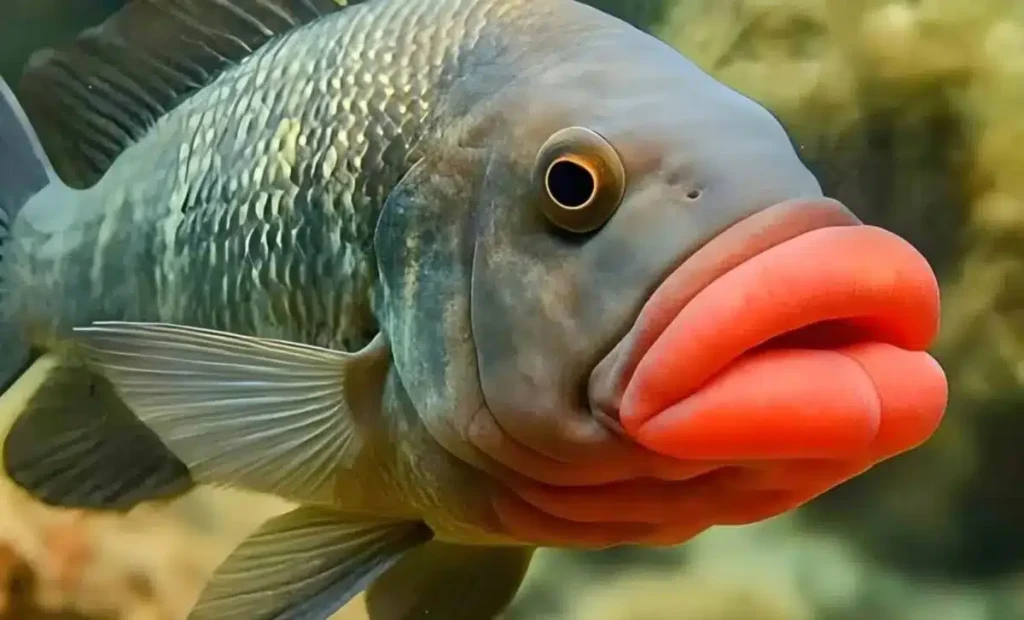
Have you ever scrolled through your phone and stopped dead at a photo of a fish with a pout so dramatic it looked like it just got rejected? You are not alone. Fish with big lips have a way of making people do a double-take — whether they are spotted on a coral reef, swimming across a TV screen, or popping up as a reaction meme on social media.
The truth is, this isn’t just a funny internet phenomenon. Big-lipped fish are a real and fascinating part of the natural world. There are actual species out there with lips so thick and expressive that they look almost human. And somewhere along the way, animators, meme creators, and pop culture fans fell in love with that image — turning it into something much bigger than biology.
In this article, we are going to cover all three worlds. We’ll start with the science — why some fish develop such prominent lips in the first place. Then we’ll move into the world of cartoons and animation, where big-lipped fish have become iconic characters. And finally, we’ll dive headfirst into the meme culture that made the fish with big lips a permanent fixture on the internet.
Whether you are a marine biology nerd, an aquarium enthusiast, or just someone who saw a funny fish photo and wants to know more — this one is for you.
What Makes a Fish With Big Lips So Distinct in the Animal Kingdom?
Before we get into specific species, it helps to understand why fish develop oversized lips in the first place. The answer is simpler than you might think — it comes down to survival.
In the fish world, lips are not just for show. They serve highly functional purposes. Thick, fleshy lips help certain species create a powerful suction force when feeding. Others use their lips to grip rocky surfaces in fast-moving rivers. Some scrape algae off coral or rocks, using their lips almost like a sponge to seal around their target before pulling back.
The Biology of Oversized Lips
The scientific term for this trait is hypertrophied lips. In plain terms, it simply means lips that have grown beyond average size due to environmental or genetic adaptation. This is not a random mutation — it is evolution doing what it does best, shaping a body part to perfectly match its environment.
Habitat plays a massive role in lip development. Fish living in rocky riverbeds or rubble-heavy coral reefs tend to develop thicker lips over generations. Those lips help them feed in crevices that smooth-lipped fish simply cannot access. Research on African cichlids in particular has shown that lip size can even change within a single fish’s lifetime — shrinking when the habitat changes and thickens grow back when rocky conditions return.
Lips as a Mating Signal
In some species, lips also signal health and genetic fitness. Larger, more prominent lips can indicate a healthy, well-fed fish — making them attractive to potential mates. So the pout is not purely practical. It can double as a status symbol in the underwater world.
The Most Jaw-Dropping Fish With Big Lips Found in the Wild
Now for the good stuff. Let’s meet some of the most striking big-lipped species that actually exist on this planet. Some of these will surprise you.
The Napoleon Wrasse (Humphead Wrasse)
If there is one fish that defines the term big-lipped, it’s the Napoleon Wrasse. Also called the humphead wrasse, this giant reef fish is found throughout the Indo-Pacific and is instantly recognizable by its massive, bulbous forehead and those unmistakable thick, rubbery lips.
Napoleon Wrasse can grow up to six feet long and weigh over 400 pounds. Their lips are built for one purpose — cracking open hard-shelled prey like mollusks and sea urchins. They are slow, confident fish. They move through the reef like they own the place, and with a face like that, it’s hard to argue.
Sadly, the Napoleon Wrasse is listed as endangered on the IUCN Red List. Overfishing — particularly for the luxury live seafood market in Asia — has dramatically reduced their population. Conservation efforts are ongoing, but encounters with wild Napoleon Wrasse are becoming increasingly rare.
The Red-Lipped Batfish
If you want to talk about a fish that looks like it got into someone’s makeup bag, the red-lipped batfish takes the crown. Found near the Galápagos Islands and along the Pacific coast of Central America, this bizarre little creature walks along the seafloor on its fins rather than swimming.
And those lips — bright, vivid red, almost as if painted on. Scientists believe the coloration helps with species recognition during mating, helping batfish identify each other in the murky depths where they live. The red-lipped batfish has become one of the most shared “weird fish” photos on the internet, and it deserves every bit of that fame.
African Cichlids — The Thick-Lipped Varieties
For aquarium hobbyists, African cichlids are well-known and well-loved. But the thick-lipped varieties — particularly species like Lobochilotes labiatus from Lake Tanganyika — are something else entirely. Their lips are dramatically enlarged, giving them a pouty, expressive look that makes them stand out in any tank.
These fish are hardy and adaptable, but they do best in tanks that mimic their rocky native habitat. Water should be slightly alkaline, temperatures around 75–80°F, and tank mates should be chosen carefully — cichlids can be territorial. Despite that, they reward experienced fishkeepers with incredible personality and fascinating feeding behaviors.
Kissing Gourami and Thick-Lipped Gourami
The kissing gourami needs no introduction to freshwater fish fans. Those puffy, protruding lips are used for filter feeding and — despite what it looks like — for mouth wrestling with rival fish. What appears to be a kiss is actually a dominance battle. The thick-lipped gourami (Trichogaster labiosa) is a slightly smaller, more peaceful cousin that works well in community tanks. Both are popular choices for hobbyists who want a fish with genuine visual character.
Triggerfish and Other Honorable Mentions
Triggerfish are known for their powerful jaws and prominent lips, which they use to bite through coral and crustacean shells. The clown triggerfish in particular — with its bold coloring and thick lips — is a head-turner in reef tanks. Then there is the flap-lipped shark, the star gazer, and numerous deepwater species that develop exaggerated mouth structures due to pressure and feeding adaptations in the dark ocean depths.
How the Cartoon Fish With Big Lips Became an Animation Staple
Big-lipped fish did not just stay in the ocean. They found their way onto television screens and into animated films — and once they got there, they never left.
Animators have long understood something that nature already knew: lips are expressive. A small adjustment to the shape or size of a character’s lips can communicate an entire emotional range without a single word of dialogue. For fish characters — who have relatively limited facial anatomy to work with — exaggerated lips become one of the most powerful tools in the visual storytelling kit.
SpongeBob Fish With Big Lips — The Most Famous Example in Animation
No discussion of cartoon fish with big lips is complete without talking about SpongeBob SquarePants. The show’s Bikini Bottom is populated by dozens of recurring background fish — collectively known in fan communities as “Incidentals” — many of whom have been given thick, pronounced lips as part of their character design.
These Bikini Bottom background fish are not just filler. Over two decades of the show, several of them have become beloved fan favorites, recognized by their distinctive features — including those unforgettable lips. The spongebob fish with big lips has become a category of its own in fan art, memes, and internet culture. Animators on the show deliberately exaggerated marine biology for comedic effect, and the big-lip aesthetic fit perfectly into that world.
The show set in Bikini Atoll actually drew inspiration from real Pacific marine life for some of its character designs — so even the cartoon fish with big lips have a thread of biological truth running through them.
Other Cartoons and Films Featuring Fish With Big Lips Cartoon Style
SpongeBob isn’t the only show that went this route. Pixar’s Finding Nemo and Finding Dory featured strikingly expressive fish with carefully animated mouths and lips — striking a balance between biological accuracy and emotional expressiveness. Disney’s The Little Mermaid filled the ocean with colorful, big-featured sea creatures that helped define the visual language of animated underwater worlds.
Disney Channel’s Fish Hooks took the concept even further, fully anthropomorphizing fish into human-like high school characters — with expressive lips as a central part of their character designs. Even classic Looney Tunes and Merrie Melodies cartoons featured fish caricatures, often leaning into bulging eyes and thick lips for comedic exaggeration.
The Design Philosophy Behind Big-Lipped Fish Characters
What drives animators to this choice again and again? Lips communicate. They show joy, disgust, exhaustion, confidence, and sarcasm — all without needing extra dialogue. In a medium where every frame costs time and money, a well-designed mouth can carry a scene. Fish have naturally limited facial movement compared to mammals, so animators compensate by enlarging and expressive the features they do have. Big lips become a shorthand for personality.
The Fish With Big Lips Meme — How a Pout Broke the Internet
At some point — and no one pinpoints exactly when — photos of real fish with enormous, expressive lips started flooding social media platforms. Reddit, Twitter, Instagram, and TikTok all became home to a growing archive of big-lip fish content. And the internet, being the internet, turned it into gold.
The Most Viral Fish Meme Formats
The Napoleon Wrasse was among the first to go truly viral. Close-up photos of its enormous, frowning lips started circulating as reaction images — used to express judgment, disapproval, or pure unbothered confidence. The meme format was simple and perfect: here is a fish that looks like it has seen everything and is not impressed by any of it.
The red-lipped batfish became a recurring Halloween and makeover meme — captioned with things like “didn’t ask for notes” or “ready to go out.” Its already absurd appearance made it naturally meme-ready. No editing required.
SpongeBob crossovers were inevitable. The spongebob fish with big lips quickly migrated from the show into real reaction GIF territory, blending with the existing meme culture around the show’s many iconic still frames. The combination of cartoon exaggeration and nostalgic familiarity made these memes extremely shareable.
Why These Memes Keep Coming Back
Internet culture has a deep and documented love for animals that look accidentally human. Fish with big lips hit this sweet spot perfectly. They are not scary. They are not gross. They just look… opinionated. Like they’ve been waiting to say something important and no one is listening.
This is sometimes called the “ugly cute” phenomenon — or affectionately referred to online as “uggos.” Animals with objectively strange features that somehow become lovable because of those very features. A fish with enormous rubbery lips fits this category almost perfectly. It’s strange enough to stop the scroll, and relatable enough to prompt a share.
Aquarium visitors also played a role. As phone cameras improved and public aquariums became popular weekend destinations, people started photographing fish up close through the glass — and sharing the results. A face-to-face encounter with a thick-lipped wrasse or a gourami pressed against the tank wall is genuinely funny. That content spread organically, adding to the meme ecosystem.
Can You Keep a Fish With Big Lips in Your Home Aquarium?
Great news if you have fallen in love with the look — many big-lipped fish are absolutely aquarium-friendly. You do not need to book a diving trip to the Galápagos to enjoy these characters up close. Some of the most popular and accessible aquarium fish happen to have naturally prominent lips.
Best Big-Lipped Fish for Freshwater Tanks
The thick-lipped gourami is one of the most beginner-friendly choices available. It is peaceful, manageable in size (around 3–4 inches), and does well in community tanks with other non-aggressive species. It prefers slightly warm water — around 77–82°F — and appreciates some plant cover to feel secure.
The kissing gourami is a slightly more demanding option but worth it for the personality alone. It can grow up to 12 inches in a well-maintained tank and lives up to 7 years in captivity. Keep at least two together, since they are social fish — but be aware that their “kissing” behavior is dominance-based and occasional aggression can occur.
Thick-lipped African cichlids are better suited to experienced fishkeepers. They need larger tanks (minimum 50 gallons), rocky aquascape, and compatible tank mates that can handle a cichlid’s territorial nature. But the reward is a visually stunning, highly active fish that showcases some of the most dramatic natural lip structures in the freshwater world.
Essential Care Tips for Thick-Lipped Fish Species
Regardless of species, a few universal care principles apply. First, invest in a quality filter — most big-lipped fish come from clean, well-oxygenated water. Second, match your water parameters to the species’ native habitat; cichlids need alkaline water, while gouramis prefer slightly acidic to neutral conditions. Third, feed variety — algae wafers, sinking pellets, and occasional live or frozen food keep these fish healthy and their natural behaviors active. Finally, avoid overstocking. These are expressive fish with real personalities, and crowded tanks bring out stress and aggression.
7 Things You Probably Did Not Know About Big-Lipped Fish
These facts are worth reading slowly — a couple of them will genuinely surprise you.
- Some fish use their lips to ‘kiss’ rivals — this is actually a dominance battle, not affection. The fish pressing harder typically establishes dominance and the other backs down.
- The kissing gourami can live up to 7 years in a well-maintained home aquarium, making it a long-term companion for dedicated fishkeepers.
- Napoleon Wrasse can change sex from female to male as they mature. This process — called protogynous hermaphroditism — is common in wrasse species and allows them to adapt to population dynamics on the reef.
- The red-lipped batfish is technically a terrible swimmer. It uses modified pectoral fins to walk along the seafloor rather than swim through the water.
- Lip size in thick-lipped cichlids can physically shrink if the fish is moved to a smooth-bottomed habitat with no rocky crevices to feed from. The lips grow back if rocky conditions return — a remarkable example of adaptive morphology.
- SpongeBob’s animators used documented reference material from real Bikini Atoll marine surveys when designing Bikini Bottom’s residents — meaning some of those cartoon fish with big lips are loosely based on actual Pacific species.
- In parts of Southeast Asia and the Pacific, Napoleon Wrasse are considered a premium delicacy — which is a significant driver of the overfishing that has pushed the species toward endangerment.
Final Thoughts on the Wonderful World of Fish With Big Lips
Whether you first came across the fish with big lips through a viral meme, a childhood cartoon, or a real-life encounter at an aquarium — there is clearly something about that dramatic pout that captures people’s attention and doesn’t let go.
These fish are more than a joke. They are evolutionary success stories — animals whose physical features were shaped over thousands of generations to help them survive in specific, demanding environments. The fact that those features also happen to look hilarious in a close-up photo is just a bonus.
From the reef-dwelling Napoleon Wrasse to the walking, lipstick-wearing red-lipped batfish, from SpongeBob’s Bikini Bottom residents to the viral reaction memes that keep resurfacing every few months — fish with big lips have earned their place in both the natural world and the cultural conversation.
If you want to see one in person, your local aquarium is a great place to start. If you want to keep one at home, a thick-lipped gourami or kissing gourami makes a wonderful introduction. And if you just want to send a meme to someone who has been getting on your nerves — the Napoleon Wrasse’s unimpressed stare has you covered.
Q1. What is a fish with big lips called?
Several species are commonly called big-lipped fish, but the most well-known are the Humphead Wrasse (also called Napoleon Wrasse), the Kissing Gourami, the Sweetlips, and the Pacu. In scientific terms, the trait itself is called lip hypertrophy or hypertrophied lips — referring to lips that have grown unusually large due to evolutionary adaptation.
Q2. Why do some fish have big lips?
Fish develop big lips as an evolutionary adaptation for survival. Thick, fleshy lips help with suction feeding, scraping algae off rocks, gripping rough coral surfaces, and crushing hard-shelled prey like crustaceans and mollusks. Research from the Tokyo Institute of Technology (2025) found that large lips in African cichlids are rich in proteoglycans — structural molecules that retain water and give tissues their plump, cushioned form. Simply put, big lips solve a feeding problem in a specific environment.
Q3. What is the most famous fish with big lips?
The Napoleon Wrasse (Humphead Wrasse) is widely regarded as the most iconic fish with big lips. Found in Indo-Pacific coral reefs, it can grow over 6 feet long and weigh up to 400 pounds. Its enormous, rubbery lips and distinctive forehead hump make it one of the most photographed reef fish in the world. It also regularly goes viral online as a reaction meme due to its naturally unimpressed expression.
Q4. Is the fish with big lips meme based on a real fish?
Yes, the most popular fish with big lips meme is based entirely on real animals. Close-up photos of the Napoleon Wrasse — with its thick, drooping lips and heavy-lidded eyes — became widely shared reaction images on Reddit, Twitter, and Instagram. The red-lipped batfish also became a popular meme subject. No editing or Photoshop is required — these fish genuinely look that expressive in real life.
Q5. What SpongeBob fish has big lips?
SpongeBob SquarePants features multiple background fish characters with exaggerated big lips. The most notable is ‘Lip Service’ (Lipp Cervas), a villain fish from the episode ‘Karate Island’ who uses her oversized lips as a weapon. Beyond named characters, dozens of unnamed Bikini Bottom ‘Incidentals’ — recurring background fish — are drawn with thick, prominent lips as part of the show’s exaggerated cartoon style.
Q6. What freshwater fish has the biggest lips?
Among freshwater fish commonly kept in aquariums, the Kissing Gourami and the thick-lipped varieties of African cichlids (especially Lobochilotes labiatus from Lake Tanganyika) have some of the most dramatically oversized lips. In the wild, the Giant Gourami and the Pacu are freshwater species known for their thick, fleshy mouths. The Largemouth Bass also has a noticeably wide, prominent mouth structure.
Q7. Are fish with big lips dangerous?
Most fish with big lips are not dangerous to humans. Species like the Kissing Gourami, Koi, and Sweetlips are peaceful or semi-peaceful. However, some big-lipped fish can be territorial or aggressive — African cichlids may attack tank mates, and triggerfish can bite if provoked during breeding season. The Piranha, which also has prominent lips, is potentially dangerous in the wild but rarely attacks unprovoked. In general, big lips alone do not indicate aggression.
Q8. Can you keep a fish with big lips as a pet?
Absolutely. Many popular aquarium fish have naturally large lips and thrive in home tanks. The Kissing Gourami, Thick-Lipped Gourami, Koi (in outdoor ponds), Flowerhorn Cichlid, and Angelfish are all widely kept as pets. African cichlids with hypertrophied lips are also available in the hobby but require more specific water conditions. Species like the Napoleon Wrasse are not suitable for home aquariums due to their enormous size.
Q9. What does it mean when a fish has swollen lips?
Swollen lips in aquarium fish can indicate a health issue, not just natural anatomy. A condition known as ‘duck lips’ can be caused by bacterial infection (usually gram-negative bacteria like columnaris or aeromonas) or, in Lake Malawi cichlids specifically, a slow-progressing virus. Bacterial duck lips can develop quickly and become fatal without antibiotic treatment. If a fish develops suddenly swollen lips that are unusual for its species, it should be examined and treated promptly.
Q10. What is the red fish with big lips called?
The most well-known red-lipped fish is the Red-Lipped Batfish (Ogcocephalus darwini), found near the Galápagos Islands and the Pacific coast of Central America. Its lips are naturally vivid red — believed to help with species recognition during mating. The red-lipped batfish also walks on the seafloor using modified fins rather than swimming, making it one of the most unusual fish in existence.
Q11. What cartoon has a fish with big lips?
SpongeBob SquarePants is the most iconic cartoon featuring fish with big lips, with numerous Bikini Bottom characters drawn with exaggerated mouths and prominent lips. Other examples include Fish Hooks (Disney Channel), where fish characters are fully anthropomorphized with human-like lip features, and Finding Nemo and Finding Dory (Pixar), which balance biological accuracy with expressive mouth animation. Classic Looney Tunes also featured exaggerated fish caricatures in various shorts.
Q12. Why do animated fish always have big lips in cartoons?
Animators use exaggerated lips on fish characters because lips are one of the most expressive features on any face. Since fish have limited facial anatomy compared to mammals, big lips allow animators to convey emotion — joy, frustration, sarcasm, or confusion — without relying on other features. It is a visual storytelling shortcut that gives cartoon fish instant personality and relatability. This is why virtually every animated fish, from SpongeBob characters to Pixar’s sea creatures, has a prominent mouth.
Q13. Do fish with big lips use them for mating?
Yes, in several species big lips play a role in reproduction. Fish with thicker, more prominent lips may signal better feeding ability and genetic fitness to potential mates — making them more attractive partners. Some cichlids also use their mouths and lips to carry fertilized eggs and protect fry, making larger lips functionally useful during the breeding process. Kissing Gouramis famously make lip-to-lip contact, though this is actually a dominance behavior rather than romance.
Q14. Is the Napoleon Wrasse endangered?
Yes. The Napoleon Wrasse (Humphead Wrasse) is listed as Endangered on the IUCN Red List. The main threats are overfishing — particularly for the live reef food fish trade in parts of Asia — combined with coral reef degradation and slow reproduction rates. The species grows slowly, matures late, and has complex sex-change biology, making population recovery difficult. Marine protected areas and trade regulations are the primary conservation tools currently in use.
Q15. What fish has lips that look human?
The Pacu fish from South America is often described as having eerily human-like features. Its square, flat teeth closely resemble human molars, and its thick, fleshy lips add to the uncanny appearance. The red-lipped batfish also draws comparisons to humans wearing bold lipstick. Online, the Napoleon Wrasse is frequently memed for its ‘human-like’ expression, particularly its thick downturned lips that resemble a frowning or judgmental face.
Q16. How do thick lips help fish feed on coral reefs?
On coral reefs, thick lips help fish in several ways. Fat-lipped species like the Napoleon Wrasse use their lips to create a suction seal against rocky or coral surfaces, pulling out prey from narrow crevices. Studies of African cichlids show that a pointed snout combined with fleshy lips works like a specialized tool — the snout reaches into a crack while the lips form a seal, allowing the fish to suck prey out efficiently. Thick lips also cushion the mouth from sharp coral edges during feeding.
Q17. What are the four types of fish mouth structures?
Fish mouths are generally divided into four main categories. A terminal mouth faces directly forward and is common in predatory surface feeders. An inferior (or subterminal) mouth faces downward, seen in bottom feeders like koi and carp. A superior mouth faces upward, found in species that feed near the water surface. A protrusible mouth can extend outward to create suction, which is common in many big-lipped species like gouramis and some cichlids. These structures determine feeding behavior as much as lip size does.
Q18. Are there any deep sea fish with big lips?
Yes. Several deep sea species have developed exaggerated mouth structures, including oversized lips and jaws, as adaptations to the scarcity of food in the deep ocean. The Gulper Catfish (also called Ogre Catfish), found in South American deep river systems, has a disproportionately large mouth and thick lips capable of swallowing prey its own size. Fangtooth fish and various anglerfish species also have dramatically enlarged mouth structures, though their adaptations skew more toward teeth than lips.
Q19. What fish has big lips in the Amazon River?
The Amazon River is home to several big-lipped fish. The Pacu is one of the most striking — a relative of the piranha with thick lips and human-like flat teeth used for cracking open nuts and seeds. The Piranha itself also has noticeably prominent lips alongside its famous teeth. The Arowana, a large predatory freshwater fish native to the Amazon basin, also has a wide, distinctive mouth with pronounced lip structure that makes it a popular (if challenging) aquarium species.
Q20. Why do koi fish have big lips?
Koi fish have large, fleshy lips because they are bottom feeders that sift through mud and sediment in search of food. Their lips are packed with sensitive nerve endings that allow them to detect edible matter by feel — essentially acting as sensory organs as much as feeding tools. Koi also have pressure receptors around their mouths that help them manage how they take in and filter food. This is why koi are often seen at the water’s surface opening and closing their mouths, begging for food from pond keepers.
Q21. Can fish with big lips change the size of their lips over time?
Remarkably, yes — in some cichlid species, lip size can change within a single fish’s lifetime. Research on thick-lipped cichlids in African rift lakes found that when these fish are moved to smooth-bottomed habitats with no rocky crevices to forage in, their lips can measurably shrink. When returned to rocky environments, the lips grow back. This is a rare example of phenotypic plasticity — a body part physically adapting to habitat changes within one individual animal’s lifespan.
Q22. What is the sweetlips fish?
Sweetlips are a group of marine fish belonging to the genus Plectorhinchus, found in Indo-Pacific coral reefs and warm ocean waters. They get their name from their thick, swollen lips, which become more pronounced as the fish ages. Sweetlips are predators that feed on crustaceans, worms, and small invertebrates, using their lips to suck food off sandy or rocky bottoms. They are popular in marine aquariums for their striking patterned coloring but are considered difficult to keep due to their specific dietary and space needs.
Q23. How do I identify a fish with big lips in the wild?
Identifying big-lipped fish in the wild is easier once you know the visual cues. Look for visibly thick, protruding lips that extend beyond the jawline and appear soft or rubbery. In many species, the lips contrast in color with the rest of the face — like the Napoleon Wrasse’s pale, fleshy pout or the red-lipped batfish’s vivid scarlet mouth. Behavior also helps: big-lipped fish are often bottom feeders, reef grazers, or crevice foragers. If you see a fish probing rocks, scraping surfaces, or pressing its face into coral, its lips are likely part of the feeding strategy.
Q24. What is the genetic reason behind big lips in cichlids? A 2025 study led by Dr. Nagatoshi Machii at the Tokyo Institute of Technology identified the molecular mechanisms behind big lips in African cichlids. The research found that thick lips in cichlids are rich in proteoglycans — large molecules that retain water and give tissues structural volume. Genes responsible for building extracellular matrix components are more active in big-lipped species even in juvenile fish, before the lips fully develop. The Wnt signaling network — a pathway involved in cell growth and development — also plays a role. This is an example of parallel evolution: cichlids in different African Great Lakes independently evolved the same big-lip trait under similar environmental pressures.

