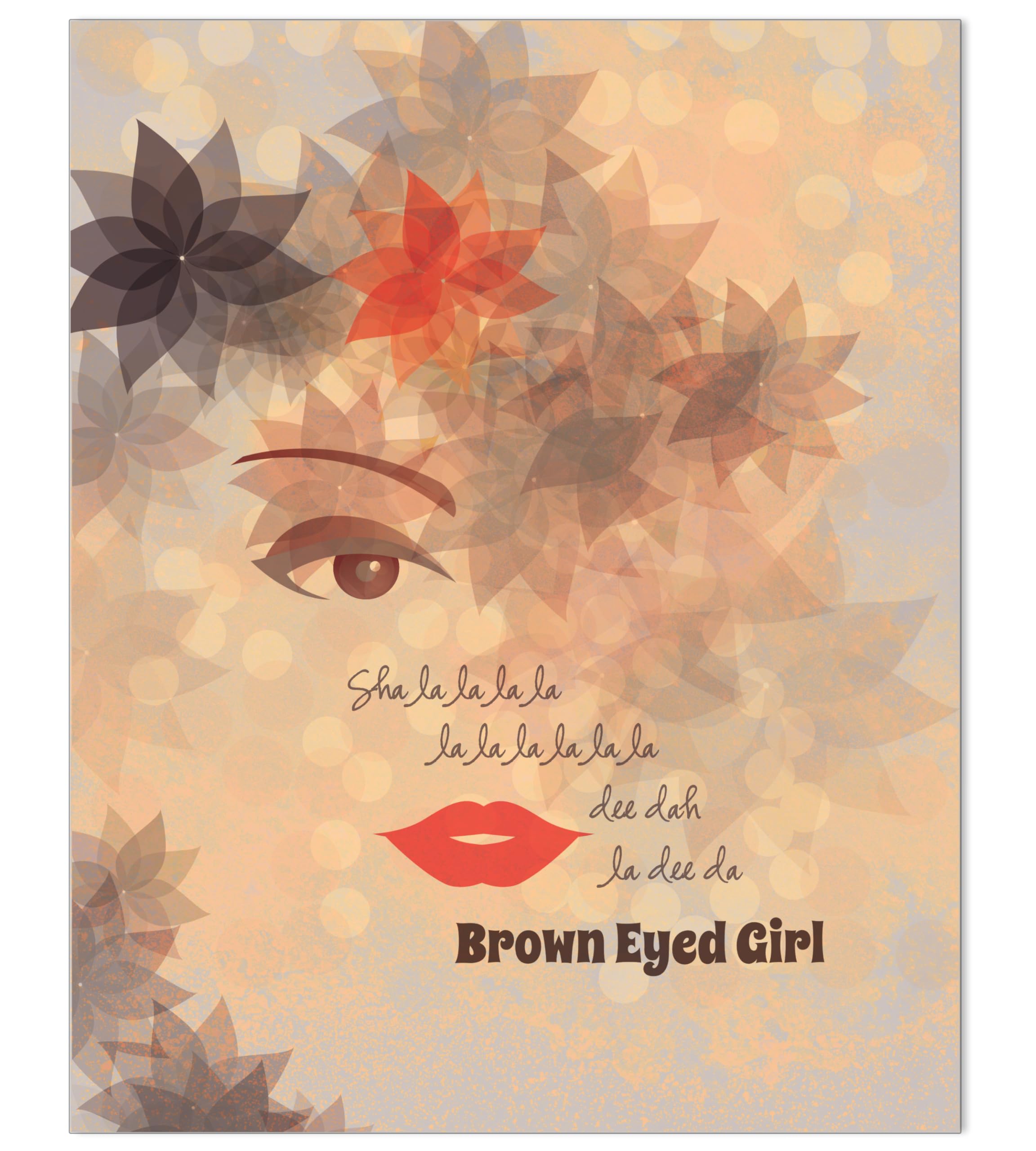
Some songs just refuse to die. You hear the opening guitar strum and something inside you shifts — suddenly you are somewhere else, someone younger, caught in a moment you thought you had forgotten. That is exactly what happens with the brown eyed girl lyrics. From the very first verse, Van Morrison pulls you into a world of misty mornings, waterfalls, and a love so vivid it aches. The song has been playing on radio stations for nearly sixty years, and people are still searching for it, singing it, and trying to understand what it really means.
This article goes deep. We cover the full story of the song — where it came from, why it almost had a completely different title, what each verse is actually saying, and why a single line got scrubbed from radio broadcasts for years. We also look at the fascinating parallel story of a South Korean girl group who share the name Brown Eyed Girls and whose song “Abracadabra” became one of the most influential K-pop tracks of the 2000s. Whether you landed here looking for the lyrics, the meaning, or just the backstory, you are in the right place.
The Origins of Brown Eyed Girl Lyrics — Van Morrison, 1967
To understand the brown eyed girl lyrics, you first have to understand the moment they were born. It was March 1967. Van Morrison was twenty-one years old, freshly arrived in New York City, and recording for a label called Bang Records. He had just come off the breakup of his band Them and signed a contract with Bang’s owner, Bert Berns, under circumstances that Morrison would later describe as deeply regrettable — he had no legal advice when he signed, and the deal would haunt him financially for decades.
In a two-day recording session starting March 28, 1967, Morrison recorded eight songs intended to be released as four singles. One of those songs would go on to become his most recognizable work — though he has never quite come to terms with that fact himself.
Here is where things get interesting. The song was not originally called “Brown Eyed Girl.” It was called “Brown-Skinned Girl.” Morrison has described it as a Jamaican-influenced, calypso-style song. When the recording was done and he looked at the tape box, the title had changed — seemingly without him fully realizing it. His explanation over the years has been casual, almost dismissive: he said it was just a mistake, that it slipped his mind. Some music historians accept that story at face value. Others point out that the original title was likely considered too charged for American radio in 1967, particularly because it could be interpreted as a reference to an interracial relationship. The softer title “Brown Eyed Girl” was far safer for broadcast.
Either way, the world got “Brown Eyed Girl,” and the rest is history.
The recording session also featured the Sweet Inspirations on backing vocals. This was not just a casual hire — the Sweet Inspirations were a formidable gospel-rooted vocal group who also appeared on major recordings by Aretha Franklin and Dionne Warwick. Their presence gives the song a warmth and communal feel that is a big part of why it lands so emotionally. That “sha-la-la” chorus does not work without them.
A Verse-by-Verse Breakdown of the Brown Eyed Girl Lyrics
Understanding what the brown eyed girl lyrics are actually saying, line by line, changes how you hear the song. On the surface it sounds sunny and carefree. But when you slow down and read it carefully, there is a quiet sadness running through the whole thing.
The First Verse — Pure Joy
The opening verse is a memory of young love at its most uncomplicated. The narrator and his brown-eyed girl are out in nature together, playing, laughing, running through hollows on rainy days. They are skipping and jumping in a misty morning fog. Their hearts are pounding. It is the kind of scene that belongs to a very specific time in life — before responsibilities, before distance, before loss. Morrison captures that feeling without overexplaining it. The images are vivid but not cluttered: the hollow, the fog, the thumping hearts. You feel the season and the age without being told either.
The Second Verse — A World Slowing Down
The second verse shifts the tone slightly. The pace of life has changed. Tuesday moves slowly. There is a transistor radio in an old mine. There is a rainbow’s wall and sunlight laughing. And then the famous “slipping and sliding, all along the waterfall.” This is still memory, still beautiful, but something has softened — as if the narrator is trying to hold the details tightly because he already knows they are gone.
The transistor radio is worth noting. It is not a throwaway image. It places the song firmly in a particular era of working-class youth — a kid with a cheap portable radio, listening to music in places he probably should not have been. It grounds the whole story in real, recognizable life.
The Third Verse — The Gut Punch
This is where the brown eyed girl lyrics shift from nostalgic to genuinely melancholy. The narrator has been separated from this person for long enough that he is now finding his way alone. Then, unexpectedly, he sees her. She has grown. He is overwhelmed. The memory of making love in the green grass behind the stadium comes flooding back, and the “sha-la-la” chorus that follows feels almost like a sob dressed up as a sing-along.
This third verse is the emotional engine of the whole song. The first two verses set up the beauty of what was. The third verse tells you it is gone — and that the narrator has not fully accepted that.
The Chorus — When Words Run Out
The “sha-la-la-la-la-la-la-la-la-la te da” section has been sung by millions of people who probably could not tell you a single other lyric from the song. That wordlessness is intentional. Music critic Paul Williams once wrote that “Brown Eyed Girl” is, at its heart, a song about singing — about the act itself, about how melody carries what language cannot. The chorus proves his point perfectly.
Brown Eyed Girl Lyrics Meaning — More Than Just a Love Song
Ask most people what the brown eyed girl lyrics are about and they will say love. A guy misses his girlfriend. Simple. But the meaning goes deeper than that, and the more you sit with it, the more layers appear.
Nostalgia as the Real Subject
At its core, this is a song about the pain of looking back. The brown-eyed girl is almost a stand-in for an entire period of life — youth, freedom, first love, the feeling that time stretches out endlessly in front of you. The narrator is not just missing a person. He is missing who he was when he was with her. That distinction is what makes the song universal. You do not need to have loved a brown-eyed girl. You just need to have had something you cannot get back.
Who Was She?
Nobody knows for certain. Morrison has been deliberately evasive about this over the years. When pressed to explain his lyrics, he has famously said that sometimes he himself has no idea what he means — and that if the song is troubling you, it is probably not meant for you. He compared his approach to Jack Kerouac’s prose: it means what it means.
Some music historians have suggested the song is rooted in Belfast — that the stadium in the lyrics could be The Oval in east Belfast, a real place that would have been familiar from Morrison’s youth. Others have pointed to the song’s original “Brown-Skinned Girl” title as evidence that the muse may have been a Black woman, given the racial landscape of 1960s Northern Ireland and America. Morrison’s earliest musical influences were almost entirely Black artists — blues, gospel, soul, jazz — so a romantic connection across racial lines would not have been out of character.
But the honest answer is this: she may not have been anyone. She may be a composite, a feeling, a Belfast morning dressed up as a person. That ambiguity is part of what keeps people coming back to the song.
The Line That Got Cut
Here is something most casual listeners do not know. The third verse of the brown eyed girl lyrics contains a line about physical intimacy that many American radio stations in 1967 considered too suggestive to broadcast. A radio edit was created that replaced the line with a phrase borrowed from the first verse. Most people who grew up hearing the song on oldies radio heard that cleaned-up version for years without realizing it.
The unedited version is the one that matters artistically. That moment — that specific line in the third verse — is exactly where the song shifts from innocent memory into something more honest about what the relationship actually was. Removing it softens the whole emotional arc. It turns the narrator from a man remembering a real, physical love into something more sanitized and less true.
In a strange historical footnote, when a major compilation of Van Morrison’s greatest hits was released on CD in 1990, the edited version was accidentally used, apparently because whoever compiled the disc did not know two versions existed.
Today, most classic rock stations play the original.
How Brown Eyed Girl Became One of the Most Played Songs of the 20th Century
When “Brown Eyed Girl” was released as a single in June 1967, it peaked at number 10 on the Billboard Hot 100 and spent sixteen weeks on the chart. Those are solid numbers for any debut single. What nobody predicted was what would happen to the song over the next six decades.
By 1999, BMI had listed it as one of the Top 100 Songs of the Century. In 2000, Rolling Stone and MTV ranked it at number 21 on their list of the 100 Greatest Pop Songs. VH1 placed it at number 49 on their list of the 100 Greatest Rock Songs. In 2011, it was formally honored for reaching 10 million US radio airplays — making it one of only ten BMI-registered songs to achieve that milestone. As of the mid-2010s, it remained the most downloaded and most-played song of the entire 1960s decade.
That kind of longevity does not happen by accident. It happens because the brown eyed girl lyrics tap into something that does not age — the specific pain of remembering something beautiful that you cannot return to. Every generation hears it and finds their own version of that feeling waiting inside it.
The Royalties Betrayal
Here is the darkest corner of the song’s history. Despite all of that success, Van Morrison has stated publicly that he never received royalties for writing or recording “Brown Eyed Girl.” The contract he signed with Bang Records without legal counsel essentially made him liable for all recording expenses before any royalties would be paid out. The math never worked in his favor. He eventually vented his frustration in a sarcastic song called “The Big Royalty Check.”
He has also been candid that the song is not among his favorites — not even close. He has said he has written around three hundred songs he considers better, and that in recent years he finds it difficult to connect emotionally with something he wrote as a very young man. For Morrison, the song belongs to a version of himself he can barely recognize.
Notable Covers and Pop Culture Moments
The song has been covered dozens of times and placed in countless films, TV shows, and commercials. Bruce Springsteen has performed it in concert multiple times over the years. The Latin group El Chicano charted with their own version in 1972. The Counting Crows song “Mr. Jones” was accused by some of borrowing the famous “sha-la-la” melody, though the band has pushed back firmly on that claim.
The song has appeared in everything from wedding playlists to stadium sing-alongs. It is one of those rare pieces of music that crosses every demographic and era without losing its power.
Brown Eyed Girls Abracadabra Lyrics — A Completely Different Kind of Spell
Here is where the story takes a sharp turn in a fascinating direction. There is a second “Brown Eyed Girl” story that has nothing to do with Van Morrison, Belfast, or 1967. It involves a South Korean girl group called Brown Eyed Girls and a song called “Abracadabra” that became one of the defining K-pop tracks of the 2000s.
Who Are Brown Eyed Girls?
Brown Eyed Girls are a four-member South Korean girl group made up of Jea, Miryo, Narsha, and Ga-In. They debuted in 2006 and spent their early years operating in a relatively innocent, soft pop space. By 2009, the K-pop landscape had become intensely competitive, with new girl groups debuting at a rapid pace. The Brown Eyed Girls made a deliberate decision to reinvent themselves — to step away from the cute and wholesome image that was saturating the market and return as something edgier and more mature.
That reinvention produced “Abracadabra.”
What the Song Is About
Released in July 2009 as the second single from their third studio album Sound-G, “Abracadabra” was originally titled “Voodoo” — and the lyrical content reflects that darker origin. The song is about obsessive love taken to its most extreme emotional edge. A woman who was once gentle and soft has been driven, by jealousy and desperation, to cast spells on a doll that resembles her lover in an attempt to make him leave the other woman. The Brown Eyed Girls Abracadabra lyrics blend vulnerability with menace in a way that was almost unprecedented in mainstream K-pop at the time.
The lyrics were written by Kim Eana, a respected South Korean lyricist, with rapper Miryo contributing her own verse. The production was handled by Lee Min-soo and DJ Hitchhiker.
The core emotional tension in the song — between who the narrator used to be and who she is becoming — is what gives it staying power. She says plainly that she used to be nice, soft, and tender, but this love is changing her into something harder. That transformation, set against a backdrop of voodoo imagery and pulsing electronic production, made for a genuinely striking piece of pop music.
The Cultural Impact of Abracadabra
“Abracadabra” topped multiple Korean music charts and maintained a three-week run at the top of the Mnet portal. It became the song that defined the Brown Eyed Girls’ second act — and arguably helped reshape expectations for what a K-pop girl group could be. The music video’s distinctive dance, particularly the hip movement sequence in the chorus, became one of the most parodied and referenced moments in K-pop history.
In 2009, members of boy groups 2AM and 2PM created a parody video under the name “Dirty Eyed Girls,” which the Brown Eyed Girls publicly welcomed as a sign of the original video’s reach.
In 2013, Psy — still riding the global wave of “Gangnam Style” — used the “Abracadabra” dance in his video for “Gentleman,” and member Ga-In appeared in the video. That moment introduced the original song to an entirely new international audience. A decade later, in 2023 and 2024, the group (G)I-dle performed covers of the song at their fan meetings, demonstrating that the Brown Eyed Girls Abracadabra lyrics still resonate with the newest generation of K-pop fans.
Why These Lyrics Still Connect Across Generations
It would be easy to treat Van Morrison’s “Brown Eyed Girl” and the K-pop group Brown Eyed Girls as two completely unrelated things that happen to share a name. But there is a thread connecting them that is worth naming.
Both are, at their core, about a feeling that is too large for ordinary words. Van Morrison’s song uses nostalgia and natural imagery to communicate the weight of lost love. The Brown Eyed Girls use voodoo metaphor and sonic intensity to communicate the madness of love that will not let go. One looks backward with sadness. The other looks forward with desperation. Both are honest about what love does to people.
That honesty is why lyrics stick. The brown eyed girl lyrics have survived nearly sixty years not because they are complicated, but because they tell the truth simply. And the Brown Eyed Girls Abracadabra lyrics have earned their place in K-pop history not because they are flashy, but because they capture a real psychological state with unusual precision.
Music that tells the truth tends to outlast music that chases trends. Both of these songs are proof of that.
Conclusion
The story behind the brown eyed girl lyrics is richer than most people realize. What looks like a simple, cheerful pop song from 1967 turns out to carry a complicated history — a title that may have been changed to avoid racial controversy, a line that was silenced for years, a songwriter who never got paid, and a meaning that keeps shifting the closer you look.
At the same time, the Brown Eyed Girls of K-pop prove that the emotional territory covered by the name is bigger than one song or one artist. Their “Abracadabra” took a completely different path — darker, stranger, more confrontational — but it arrived at the same destination: a piece of music that captures something true about love and refuses to let go.
Both songs reward a closer listen. Whether you are hearing “sha-la-la-la-la” for the first time or the hundredth time, there is always something new waiting inside it.
FAQ 1: What are the brown eyed girl lyrics about?
The brown eyed girl lyrics tell the story of a man looking back on a carefree, deeply felt romance from his past. Verse by verse, he revisits shared memories — running through hollows, listening to a transistor radio, sliding by the waterfall — before the final verse reveals he has spotted her again after years apart, and is suddenly overcome with everything he lost. At its core, the song is about nostalgia, first love, and the ache of time passing. Music critic Paul Williams once described it as being, at heart, a song about sex, youth, memory, and the very act of singing itself.
FAQ 2: Who wrote the brown eyed girl lyrics?
The brown eyed girl lyrics were written entirely by Van Morrison, a Northern Irish singer-songwriter from Belfast. He composed the song and recorded it on March 28, 1967, at A&R Recording Studios in New York City, during a two-day session that produced eight songs in total. The recording was produced by Bert Berns, owner of Bang Records, who added a notable Latin and calypso flavor to the final sound. Morrison was just 21 years old at the time of the recording.
FAQ 3: When was “Brown Eyed Girl” released and what chart position did it reach?
“Brown Eyed Girl” was released as a single in June 1967 on the Bang Records label. It entered the Billboard Hot 100 chart on July 9th, 1967, and peaked at number 10 on September 24th of that same year. It spent sixteen weeks on the chart in total. The song also reached number eight on the Cash Box chart. It was Van Morrison’s very first release as a solo artist, following the breakup of his band Them.
FAQ 4: What was the original title of the brown eyed girl lyrics, and why was it changed?
The song was originally titled “Brown-Skinned Girl.” Morrison has said the title change was simply a mistake — that he subconsciously changed it during the recording process and only noticed when he saw “Brown Eyed Girl” written on the tape box. However, music historians widely believe the original title was altered because it suggested an interracial relationship, which would have been controversial for American radio in 1967. Sixteen US states still had laws against interracial marriage that year. Renaming the song to “Brown Eyed Girl” made it far more acceptable for broadcast. Morrison described the original as having a calypso or Jamaican feel, and the rhythmic influence is still audible in the final recording.
FAQ 5: Why was a line removed from the brown eyed girl lyrics for radio play?
Even after the title was softened, one specific line in the third verse of the brown eyed girl lyrics was considered too sexually suggestive for many American radio stations in 1967. That line referred to making love in the green grass behind the stadium. A radio-edit version was created that overdubbed that line with a phrase borrowed from the first verse. For years, most listeners heard only the censored version without realizing it. Interestingly, the 1990 Best of Van Morrison CD accidentally released the edited version because whoever compiled the disc was unaware that two separate versions of the recording existed. Most classic rock and oldies stations today play the original uncensored version.
FAQ 6: Did Van Morrison ever receive royalties for the brown eyed girl lyrics?
No. Van Morrison has publicly stated that he has never received royalties for writing or recording “Brown Eyed Girl.” The contract he signed with Bang Records in 1967 was made without any legal advice, and it held him liable for virtually all recording expenses before any royalties could be paid. The financial terms were, by most accounts, deeply unfair to Morrison. He later vented his frustration about the arrangement in a sarcastic, deliberately unlistenable song called “The Big Royalty Check.” Despite the song becoming one of the most played recordings of the 20th century, Morrison saw none of the financial rewards that would normally accompany that level of success.
FAQ 7: Who actually is the “brown eyed girl” — was she a real person?
Nobody knows for certain, and Van Morrison has never confirmed the identity of the brown-eyed girl. When pressed about the meaning of his lyrics over the years, Morrison has consistently deflected, saying that sometimes even he does not know what he means, and that lyrics mean what they mean. Some historians believe the song is rooted in Belfast, with the “Hollow” mentioned in the first verse being a real park near where Morrison grew up on Hyndford Street. The stadium in the third verse has been suggested to be The Oval in east Belfast. Others believe the girl may have been a romantic composite or even a completely imagined figure — a symbol of an entire era of youth rather than one specific person.
FAQ 8: What is the “sha-la-la” chorus in the brown eyed girl lyrics supposed to mean?
The “sha-la-la-la-la-la-la-la-la-la te da” chorus is not meant to have a literal meaning. It functions as pure emotional expression — the feeling that goes beyond what words can carry. When language runs out, melody steps in. The backing vocals on the chorus were performed by The Sweet Inspirations, a gospel-rooted group who also appeared on Aretha Franklin’s “Chain of Fools” and Dionne Warwick’s “I Say a Little Prayer.” Their presence gives the chorus its warmth and communal feel. Music writer Paul Williams argued this is why the song works so powerfully: it is ultimately about the experience of singing itself, and the chorus is where that idea lives most completely.
FAQ 9: What musical style and genre do the brown eyed girl lyrics belong to?
“Brown Eyed Girl” is most commonly classified as classic rock or pop rock, but its musical makeup is richer than those labels suggest. The song draws heavily on calypso and Afro-Caribbean rhythms — an influence brought in by producer Bert Berns, who had spent time in Havana and regularly incorporated Latin flavors into his productions. The guitar arrangement features a syncopated, jangly riff that drives the song forward with an almost irresistible bounce. Morrison himself has connected the song’s origins to a Jamaican, calypso-style idea he was working with. The combination of these Caribbean rhythms with rock instrumentation and gospel-influenced backing vocals gives the song a genuinely distinctive sound.
FAQ 10: Where does “the Hollow” in the brown eyed girl lyrics refer to?
The “hollow” referenced in the first verse of the brown eyed girl lyrics is a real location. It refers to a park and waterway area in Bloomfield, east Belfast, approximately 200 metres from where Van Morrison grew up on Hyndford Street. This detail is one of the strongest pieces of evidence that the song is autobiographical and rooted in Morrison’s Belfast upbringing. The lyric “down in the hollow, playin’ a new game” takes on a very specific geographic meaning when you know the neighborhood. Musicologist Stuart Bailie of the Oh Yeah Music Centre has suggested that the song is fundamentally a Belfast story, with the hollow being one of several real landmarks from Morrison’s youth hidden within the lyrics.
FAQ 11: What movies and TV shows have featured the brown eyed girl lyrics?
The brown eyed girl lyrics have appeared in a remarkable number of films and television programs over the decades. Most notably, the song was prominently featured in the 1983 ensemble drama The Big Chill, the 1989 Oliver Stone film Born on the Fourth of July, and the 1991 Julia Roberts thriller Sleeping with the Enemy. It was also parodied in the 1993 comedy Fatal Instinct. Beyond film, the song has appeared in countless TV commercials, episodic dramas, and sports broadcasts. Its presence in The Big Chill in particular helped introduce the song to a whole new generation of listeners in the 1980s, cementing its status as a cultural touchstone.
FAQ 12: Has “Brown Eyed Girl” won any major music awards or honors?
Yes — the song has accumulated a significant number of prestigious recognitions over its lifetime. It was inducted into the Grammy Hall of Fame in 2007. BMI listed it as one of the Top 100 Songs of the Century in 1999. Rolling Stone and MTV ranked it number 21 on their list of the 100 Greatest Pop Songs in 2000. VH1 placed it at number 49 on its list of the 100 Greatest Rock Songs. The Rock and Roll Hall of Fame included it on their list of “500 Songs That Shaped Rock and Roll.” In 2011, it was formally recognized for reaching 10 million US radio airplays — one of only ten songs ever registered with BMI to achieve that figure.
FAQ 13: What US Presidents have publicly named “Brown Eyed Girl” among their favorite songs?
Two former US presidents have famously claimed the song as a personal favorite. In April 2005, the White House announced that “Brown Eyed Girl” received regular rotation on George W. Bush’s personal iPod playlist. Then in March 2009, former president Bill Clinton selected it as the top pick on his list of favorite ten songs, included on a signed iPod he donated to a charity auction raising money for victims of Hurricane Katrina. Van Morrison responded to the Bush news somewhat dryly, saying he was pleased to hear it but would have preferred a newer song of his to be the one getting attention at the White House.
FAQ 14: How many times has “Brown Eyed Girl” been covered by other artists?
The song has been covered by hundreds of artists across virtually every genre imaginable — estimates from the database Second Hand Songs put the number of recorded covers at close to or exceeding 200. Notable cover versions include Jimmy Buffett’s rendition on his 1983 album One Particular Harbour, and El Chicano’s version, which charted at number 45 on the Billboard Hot 100 in 1972. The Henry Paul Band also charted with the song in 1982. Bruce Springsteen has performed it live on multiple occasions. Its guitar pattern has also been widely taught in beginner music lessons, making it one of the most learned songs by amateur guitarists worldwide.
FAQ 15: Does Van Morrison actually like the brown eyed girl lyrics and the song?
Not particularly, and he has said so many times. Morrison has publicly called “Brown Eyed Girl” a “throwaway song,” adding in a 2009 interview with Time magazine that he has around 300 songs he considers better. He famously avoided performing it live for an extended period after its release. In more recent years, he has said he finds it difficult to emotionally connect with something he wrote as a very young man, describing it essentially as a teenage song that no longer feels like his own. His complicated feelings are also tied to the painful contract and financial exploitation associated with the recording. For many fans, this disconnect between the artist’s indifference and the song’s universal beloved status is one of the most fascinating parts of its story.
FAQ 16: What is the connection between the brown eyed girl lyrics and the Romantic poets?
Musicologists and literary critics have pointed out that the pastoral imagery woven through the brown eyed girl lyrics — hollows, waterfalls, misty mornings, green grass, rainbows — reflects a deep influence from the English Romantic poets, whom Van Morrison has openly cited as a source of inspiration throughout his career. Wikipedia’s entry on the song specifically notes that the lyrics show early hints of the idealized pastoral landscapes that would run through Morrison’s work for decades, linking him directly to that Romantic poetic tradition. Writers like Keats and Wordsworth used similar natural imagery to explore memory, loss, and the passage of time — which is precisely what Morrison is doing in this song.
FAQ 17: Who sang the backing vocals on the original brown eyed girl lyrics recording?
The female backing vocals were performed by The Sweet Inspirations, a formidable gospel-influenced vocal group. The group’s founding members included Cissy Houston — mother of Whitney Houston and aunt to Dionne Warwick. Their gospel roots gave the “sha-la-la” chorus its distinctive warmth and emotional depth. The Sweet Inspirations were one of the most in-demand session groups of the era; they also appear on Aretha Franklin’s “Chain of Fools” and Dionne Warwick’s “I Say a Little Prayer.” Later, in 1969, they went on to become Elvis Presley’s regular touring and recording backing singers, a position they held until his death.
FAQ 18: Was the brown eyed girl lyrics recording the first take, or were multiple takes needed?
According to music historians who have researched the recording session, it took 22 takes before producer Bert Berns was satisfied with the result. The final, released version was the 22nd take recorded at A&R Studios in New York on March 28, 1967. The session featured an elite group of studio musicians including guitarists Eric Gale, Al Gorgoni, and Hugh McCracken — a rhythm guitar lineup that has been described by some music writers as among the finest ever assembled for a single pop recording. Arranger Garry Sherman also played keyboards on the session and wrote the charts for the musicians.
FAQ 19: Is there a connection between the brown eyed girl lyrics and another song recorded at the same session, “T.B. Sheets”?
Yes, and it is a poignant one. “T.B. Sheets” was recorded during the same two-day session in March 1967. It is a nearly ten-minute blues-driven song about a woman named Julie who is dying of tuberculosis. Morrison, who had reportedly lived with this woman, broke down during the recording and had to cancel the rest of the session after finishing it. Some music historians have speculated that the brown-eyed girl and Julie from “T.B. Sheets” may be the same person — and that “Brown Eyed Girl” is Morrison looking back on happier times with someone whose life ended tragically. If true, it adds an entirely different layer of sadness to an already nostalgic song.
FAQ 20: How did the brown eyed girl lyrics influence Van Morrison’s later musical career?
“Brown Eyed Girl” launched Morrison’s solo career but also trapped him in a commercial identity he resisted. The song’s success as a pop single ran directly counter to the direction he wanted to take his music. After the Bang Records contract imploded, he signed with Warner Bros. and recorded Astral Weeks in 1968 — an album of impressionistic, jazz-influenced music that could not have been further from the bright pop simplicity of “Brown Eyed Girl.” Many music critics consider Astral Weeks one of the greatest albums ever recorded. Morrison has always wanted to be seen as an artist in the tradition of that record, not as the man who wrote “Brown Eyed Girl.” The song’s overwhelming commercial shadow has been something he has spent his entire career trying to step out from under.
FAQ 21: Are there two different versions of the brown eyed girl lyrics floating around, and how can you tell them apart?
Yes. There is the original studio recording, which contains the unedited third verse, and there is the radio-edit version with that verse overdubbed. The easiest way to tell them apart is to listen to the third verse carefully. In the original version, the narrator recalls a specific intimate moment in the green grass behind the stadium. In the censored version, that memory is replaced with a repetition of the playful “laughin’ and a-runnin’” imagery from the first verse. The cleaned-up version feels slightly repetitive and emotionally softer than the original. If you are hearing the song for the first time, make sure you seek out the original — it is the version that carries the full emotional arc Morrison intended.
FAQ 22: What is the difference between the K-pop Brown Eyed Girls and the Van Morrison “Brown Eyed Girl” song?
They are completely unrelated — the shared name is coincidental. Van Morrison’s “Brown Eyed Girl” is a 1967 classic rock song about nostalgic, lost love. The Brown Eyed Girls are a South Korean K-pop girl group, formed in 2006, consisting of four members: Jea, Miryo, Narsha, and Ga-In. Their music is entirely distinct from Morrison’s and covers a range of genres including R&B, pop, and electronic dance music. Their most famous song, “Abracadabra” (2009), deals with obsessive love and voodoo imagery. The two acts simply happen to share a name that resonates with audiences in different parts of the world for completely different reasons.
FAQ 23: What does the line “whatever happened to Tuesday and so slow” mean in the brown eyed girl lyrics?
This line from the second verse has puzzled listeners for decades, and Van Morrison has never offered a definitive explanation. The most widely accepted interpretation is that “Tuesday and so slow” describes the leisurely, unstructured pace of a specific day — perhaps a recurring meeting day with the brown-eyed girl, or simply a memory of how time moved differently when they were together. Some literary scholars connect it to the broader theme of time’s passage: Tuesdays that once felt significant and precious have become unremarkable now that the relationship is over. The line functions more as an emotional impression than a literal statement, which is consistent with Morrison’s generally impressionistic approach to lyric writing.
FAQ 24: Why do the brown eyed girl lyrics still feel relevant and emotionally powerful in 2026?
Because the feelings at the center of the song — nostalgia, the bittersweet weight of memory, the way a person or a moment can stand in for an entire era of your life — are timeless. Every generation has a version of this experience. The brown eyed girl lyrics do not depend on the listener knowing Belfast, or 1967, or even Van Morrison. They depend only on the listener having once loved something they can no longer return to. That is a universal condition. The song also benefits from a musical structure — the bouncing calypso rhythm, the gospel-warmed chorus, the gradually darkening emotional arc — that makes it feel both joyful and sad at the same time. That emotional complexity is rare in a three-minute pop song, and it is the real reason the recording has outlasted nearly everything else from its era.