Three digits. That is all it takes to send someone down two completely different paths on the internet. Type this number into a search engine and you will find yourself split between two worlds. One is practical and rooted in everyday life — a telephone area code serving millions of people across North Texas. The other is fictional, strange, and wildly popular — a monstrous reptile that refuses to die, living inside one of the internet’s largest collaborative horror projects. Whether you landed here because an unfamiliar number appeared on your phone or because you fell into a late-night rabbit hole about indestructible creatures, this guide covers both sides of the story in full. By the end, you will walk away with clear answers about the real-world telecom side of things and a solid understanding of the fictional lore that turned a simple designation into a cultural phenomenon.
What Is the 682 Area Code?
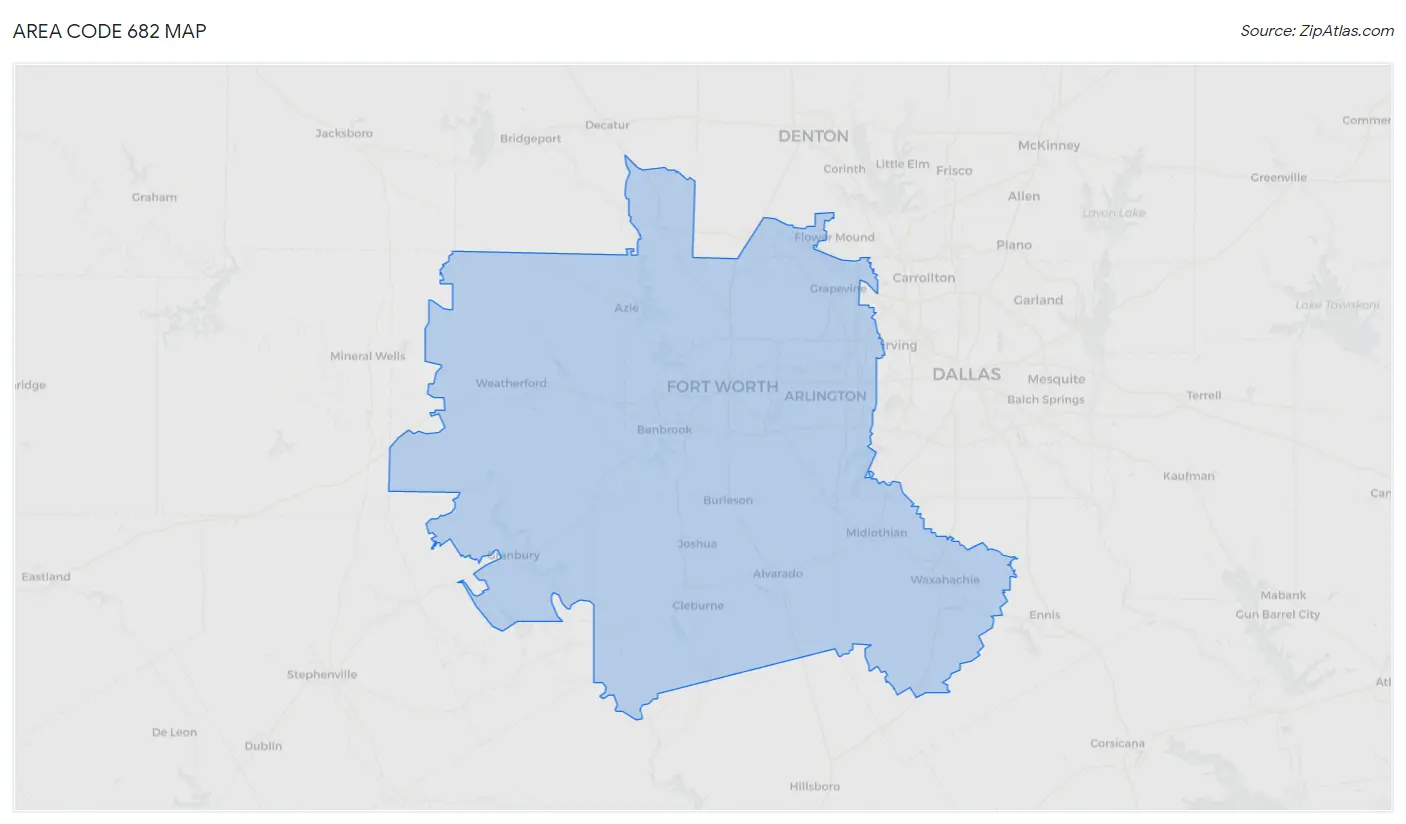
If you have ever received a phone call from a number starting with these three digits and wondered where it came from, the answer is straightforward. Area code 682 is a telephone prefix assigned to a large stretch of North Texas, covering much of the Dallas–Fort Worth Metroplex. It is a legitimate, fully operational code used by millions of residents and businesses every single day.
Origin and History
The story behind this particular area code begins at the turn of the millennium. On October 7, 2000, the Public Utility Commission of Texas officially put it into service. It was the 284th area code to go live in the United States, and it arrived as part of a wave — one of fourteen new codes introduced that year across the country. The reason for its creation was simple. The existing 817 code, which had served the Fort Worth side of the Metroplex for decades, was running out of available phone numbers. Population growth, the rise of cell phones, and the increasing demand for dedicated fax and business lines had stretched the old code to its limit. Rather than forcing everyone in the region to change their existing numbers, regulators chose an overlay model. Under this system, the original 817 numbers stayed exactly as they were. New subscribers in the same geographic footprint simply received the fresh prefix instead. This approach avoided the confusion and expense of a full-scale number reassignment while still meeting the region’s growing telecommunications needs.
Cities and Counties Served
The coverage area is broad and densely populated. Fort Worth sits at its center, but the reach extends far beyond a single city. Arlington, North Richland Hills, Grapevine, Keller, Mansfield, Euless, Weatherford, Roanoke, and Decatur all fall within its boundaries. On the county level, the code spans Tarrant, Johnson, Parker, Hood, Denton, and Wise counties. When you combine the subscriber base with its 817 overlay partner, the total population served exceeds six million people. That makes this one of the most heavily used overlay complexes in the entire state of Texas, which itself has nearly thirty area codes in operation.
Time Zone and Dialing Format
Every number under this prefix sits in the Central Time Zone. During standard months, that means UTC-6, shifting to UTC-5 when daylight saving time kicks in. If you are calling from within the United States, the format is simple: dial 1 followed by the three-digit code and then the seven-digit local number. From outside the country, you will need your nation’s exit code first, then the U.S. country code (+1), followed by the full ten-digit number. One important detail — because this is an overlay region, ten-digit dialing is mandatory for all local calls. Even if you are calling your next-door neighbor, you must include the prefix.
Why People Search for These Phone Numbers
Not every search is about geography or dialing instructions. A large number of people look up this code because they received a call they were not expecting and want to know whether it was legitimate or a scam. Both possibilities are real, and it helps to understand each one.
Major Businesses and Institutions in the Region
The Dallas–Fort Worth Metroplex is home to some of the biggest corporate names in the country. American Airlines operates its global headquarters near DFW International Airport. BNSF Railway, one of the largest freight rail networks in North America, is headquartered in Fort Worth. Lockheed Martin runs major defense and aerospace operations in the area. Texas Health Resources, a sprawling healthcare network, has hospitals and clinics spread across the region. Beyond these giants, thousands of small and mid-sized businesses operate here, from real estate agencies and law firms to logistics companies and financial advisors. If you receive a call from this prefix that you were not expecting, there is a reasonable chance it is coming from a doctor’s office confirming an appointment, a shipping company providing a delivery update, or a bank’s fraud prevention department reaching out about unusual account activity. The sheer density of commercial activity in this part of Texas means that legitimate calls from this code are extremely common.
Spam and Scam Calls — What to Watch For
Unfortunately, scammers know that people are more likely to pick up a call that looks local. This is where a tactic called neighbor spoofing comes into play. Fraudsters use technology to fake their caller ID, making it appear as though the call is coming from a familiar prefix — even when the actual caller is located on the other side of the country or overseas entirely. Reports from the Federal Trade Commission and consumer watchdog platforms show several recurring scam patterns associated with spoofed numbers from this region. Social Security impersonation calls are among the most common, where a recorded voice claims that legal action has been filed against your Social Security number and demands an immediate callback. Fake motor vehicle refund texts have also surged, with messages claiming you are owed a large payment and directing you to click a suspicious link. Fraudulent utility calls posing as the local electric provider, Oncor, pressure victims into making instant payments to avoid a supposed service shutoff. Health insurance enrollment scams round out the list, with callers posing as agents from a made-up national enrollment center and fishing for personal information.
The important thing to remember is that the prefix itself is not a red flag. It is a fully legitimate code used by real people and real businesses. The problem lies with the spoofing technology, not the number. To protect yourself, never share personal or financial details with an unsolicited caller. Verify any claims independently by contacting the organization through its official channels. Register your number on the National Do Not Call Registry, and consider using a call-blocking app to filter known spam numbers before they even ring.
SCP 682 — The Hard-to-Destroy Reptile Explained
Now we step into entirely different territory. If your search had nothing to do with phone calls and everything to do with a giant, acid-soaked lizard that hates all life, you are looking for information about one of the internet’s most famous fictional creatures.
What Is the SCP Foundation?
Before diving into the creature itself, it helps to understand the universe it lives in. The SCP Foundation is a massive collaborative fiction project hosted on a dedicated wiki. Contributors from around the world write entries styled as clinical research documents, each one describing a fictional anomalous object, entity, or phenomenon. The format mimics the tone of classified government reports — cold, procedural, and heavy on redacted details. The project started in the late 2000s on internet forums and quickly grew into something much larger. Today, the wiki contains thousands of entries spanning horror, science fiction, dark comedy, and philosophical thought experiments. All of the content is published under a Creative Commons license, which means fans are free to create art, games, films, and other derivative works based on the material. This open approach has turned the Foundation into one of the most significant collaborative storytelling projects in internet history, with a community that rivals many mainstream fandoms in size and dedication.
The Core Lore of the Entry
Within this universe, the entry designated SCP-682 holds a special place. It describes a large, vaguely reptilian creature of unknown origin. The writing portrays it as extremely intelligent — intelligent enough to engage in complex verbal communication during interviews and even hold conversations with other contained anomalies. But its defining trait is not its intelligence. It is the creature’s deeply expressed hatred for all living things. During documented interviews within the fiction, it has referred to humans and other organisms as disgusting, and it attacks any living being it encounters with lethal force and apparent satisfaction. The Foundation’s fictional containment procedure calls for the creature to be kept submerged in hydrochloric acid at all times inside a reinforced chamber at a remote, undisclosed site. The acid does not kill it. Nothing does. It simply slows the creature’s regeneration enough to keep it from breaking out. The entry was originally written by a community member known as Dr. Gears and has been revised, expanded, and debated by the community many times over the years. It carries a Keter classification, which in the Foundation’s system represents the highest standard threat level — meaning the entity is extraordinarily difficult to contain and poses a severe risk if it ever escapes.
What Makes SCP-682 Nearly Impossible to Destroy
The creature’s reputation rests on two pillars: its body’s ability to adapt to virtually anything, and a long, detailed log of every failed attempt to kill it.
Adaptive Regeneration and Raw Physical Power
The fictional documentation describes a body that is in constant flux. The creature grows larger by consuming organic or inorganic material, and it can shed mass just as quickly when needed. It has been reduced to a tiny fraction of its original size during experimentation, only to regenerate fully once the threat passes. Its physical strength is portrayed as immense — strong enough to tear through reinforced steel barriers with its bare claws. Its speed and reflexes scale with its form, meaning a larger version is not necessarily slower. What makes it truly terrifying within the fiction, however, is its adaptive capability. When exposed to a threat, the creature’s body changes to counter it. Hit it with fire, and it develops heat-resistant tissue. Expose it to a corrosive chemical, and it builds a tolerance. Attack it with a reality-warping anomaly, and it somehow adjusts on a conceptual level. This adaptive trait is the core mechanic that makes it functionally indestructible within the story.
The Termination Log — Dozens of Creative Failures
One of the most popular companion documents on the entire SCP wiki is the termination attempt log attached to this entry. It reads like a catalog of the Foundation’s most ambitious and desperate ideas, every single one ending in failure. Over the years, community writers have proposed exposing the creature to other dangerous contained entities. SCP-173, the statue that can only move when unobserved, was introduced into its chamber — the reptile simply adapted and survived. SCP-096, a creature that enters an unstoppable rage when its face is seen, engaged it in a prolonged fight that ended in a stalemate. Even SCP-999, a harmless blob that induces euphoria, was tested on the theory that overwhelming positive emotion might pacify it. The creature tolerated the contact briefly before becoming hostile again. Beyond cross-testing with other entities, the log documents attempts using conventional military weaponry, experimental acids, nuclear-level energy output, and even abstract conceptual attacks designed to erase the creature from reality itself. Each entry follows the same grim pattern: the method is applied, the creature suffers damage, and then it adapts and recovers. The log has become a storytelling engine in its own right. Community members pitch new termination scenarios, and the collaborative nature of the project means the list keeps growing. It is, in many ways, the heart of why this particular entry remains so engaging years after it was first written.
Why SCP 682 Became an Internet Icon
Plenty of entries on the SCP wiki are well-written and imaginative. Only a handful have crossed over into mainstream internet culture. This one sits at the very top of that short list, and the reasons go beyond the quality of the writing itself.
Cultural Reach and Community Participation
Alongside SCP-173, the entry about the Hard-to-Destroy Reptile is arguably the single most recognized piece of content the Foundation has ever produced. It has inspired an enormous volume of fan art, from detailed illustrations to comedic sketches. Independent animators have produced short films and explainer videos that have collectively pulled in millions of views. The creature appears as a major threat in SCP – Containment Breach, an indie horror game that became a cult hit. Modders have brought it into Minecraft, ARK: Survival Evolved, and other sandbox games. Merchandise ranging from enamel pins to T-shirts keeps the character visible in physical spaces, not just digital ones. But the deepest driver of its lasting popularity is the participatory structure of the termination log. Unlike a traditional story where the author controls the narrative, this format invites anyone in the community to contribute. A new writer can propose a scenario, have it reviewed by peers, and see it added to the official record. That open door keeps the entry alive and evolving in a way that a static piece of fiction simply cannot match.
Criticism and Continued Evolution
Not everyone in the community views the entry favorably. Veteran writers and readers have pointed out that the original article, by modern wiki standards, leans too heavily on redacted text and reads more like a creature stat block than a compelling narrative. The criticism is not unfounded — early SCP entries were written quickly, with less editorial oversight than the wiki enforces today. But despite these critiques, the entry has undergone several revisions. More importantly, it has spawned complex extended lore that addresses many of the original shortcomings. SCP-6820, a later entry, recontextualizes the creature as something far stranger than a physical reptile — an abstract, multidimensional threat that exists beyond the reach of conventional reality. This evolution mirrors the growth of the SCP project as a whole, which started with simple monster entries and gradually matured into a platform for sophisticated, layered storytelling. The tension between the creature’s rough origins and its sprawling expanded universe is part of what makes it such a fascinating case study in collaborative fiction.
Putting It All in Context — The Real and the Fictional
It is worth stepping back for a moment and appreciating the oddity of the situation. A single three-digit number carries two completely unrelated identities online, and both of them generate significant search traffic for very different reasons. One group of searchers is trying to figure out whether the call they just missed was worth returning. The other is trying to understand the lore behind an unkillable lizard. Both groups deserve clear, accurate, and well-organized information. On the telecom side, knowing the facts about area code 682 helps people avoid falling for spoofed scam calls. It gives them the confidence to pick up a call from a Texas hospital or ignore one from a fake Social Security office. On the fiction side, understanding the actual lore of SCP-682 — where it comes from, how the community built it, and what the termination log really represents — prevents the spread of misinformation within the fandom and gives newcomers a solid foundation before they dive deeper into the wiki. The broader takeaway is simple. Context matters. The same number can mean a phone call from Fort Worth or a fictional monster in a vat of acid, depending entirely on where you encounter it.
Conclusion
Whether you arrived here with a practical question or a creative curiosity, the story behind this number is richer than most people expect. On one hand, you have a fully operational telephone prefix that connects millions of people across the Dallas–Fort Worth Metroplex — a region packed with major corporations, healthcare networks, and one of the fastest-growing populations in the United States. On the other hand, you have one of the internet’s most enduring fictional creations, a creature built through years of collaborative writing that continues to evolve and attract new fans. For those dealing with the phone side of things, the practical advice is clear. Treat unfamiliar calls with caution, never hand over personal information to an unsolicited caller, and use the tools available to you — call-blocking apps, the Do Not Call Registry, and independent verification through official channels. For those exploring the fiction, the best place to start is the official SCP Wiki, where the original entry and its many companion documents live under a Creative Commons license. Whatever brought you here, a little knowledge goes a long way. Three digits can mean a lot of different things, and now you know exactly what this particular set means in every context that matters.
1. Where is area code 682 located?
Area code 682 is located in the state of Texas. It covers the western portion of the Dallas–Fort Worth Metroplex, with Fort Worth as its largest and most prominent city. Other major cities within its coverage include Arlington, North Richland Hills, Grapevine, Mansfield, Keller, Euless, and Weatherford. The code spans multiple counties, primarily Tarrant, Johnson, Parker, Hood, Denton, and Wise.
2. Is 682 a legitimate area code or a scam?
It is a completely legitimate telephone area code that has been in active service since October 7, 2000. It serves millions of real residents and businesses across North Texas. However, scammers frequently spoof numbers with this prefix using caller ID manipulation technology, so individual calls should always be evaluated based on their content rather than the area code alone.
3. What is the difference between area code 682 and 817?
Both codes serve the exact same geographic area in the Fort Worth region of Texas. Area code 817 is the original code that was established decades earlier. When the region ran out of available phone numbers due to population growth, regulators introduced 682 as an overlay in 2000. The two codes coexist in the same territory, and ten-digit dialing is mandatory for all local calls.
4. What time zone does area code 682 follow?
The entire coverage area falls within the Central Time Zone. That means UTC-6 during standard time and UTC-5 during daylight saving time. This is consistent with the rest of the Dallas–Fort Worth Metroplex and most of central Texas.
5. Can I get a 682 phone number if I do not live in Texas?
Yes. Many VoIP providers and virtual phone services allow individuals and businesses to purchase a number with this prefix regardless of their physical location. This is a common practice for companies that want to establish a local presence in the North Texas market without maintaining a physical office there.
6. Is +682 the same as the Texas area code?
No, and this is one of the most common points of confusion. Within the United States, 682 is a domestic area code serving North Texas. Internationally, however, +682 is the country calling code for the Cook Islands, a small island nation in the South Pacific. These are two entirely separate systems. If you receive a call from +682 followed by a five-digit number, it originates from the Cook Islands, not from Texas.
7. What are the most common scam calls from 682 numbers?
Based on FTC complaint data and consumer reports, the most frequently reported scam types include Social Security impersonation robocalls, fake motor vehicle refund text messages, fraudulent Oncor Electric billing threats, phony health insurance enrollment pitches, and fake law enforcement collection calls. These scams use spoofed caller IDs to appear local and trustworthy.
8. Should I answer a call from a 682 number?
If you live in or do business with the Fort Worth and DFW Metroplex region, there is a good chance the call is legitimate — it could be a doctor’s office, a delivery service, or a local business. If you do not recognize the number and were not expecting a call, letting it go to voicemail is the safest approach. Legitimate callers almost always leave a message.
9. How do I block spam calls from 682 numbers?
You can register your phone number on the National Do Not Call Registry, use the built-in call-blocking features on your iPhone or Android device, or download a third-party app like CallerSmart, Hiya, or Truecaller that identifies and filters known spam numbers. Avoid blocking the entire area code, as that would also prevent legitimate calls from reaching you.
10. What major companies use 682 phone numbers?
The region served by this code is home to several major corporations and institutions, including American Airlines (headquartered near DFW Airport), BNSF Railway (headquartered in Fort Worth), Lockheed Martin (major defense operations), Texas Health Resources (extensive hospital network), and Bell Textron. Thousands of smaller businesses across healthcare, logistics, finance, and real estate also use numbers under this prefix.
11. What is SCP-682?
SCP-682 is a fictional entity from the SCP Foundation, a collaborative internet horror writing project. Within the fiction, it is described as a large, intelligent, reptile-like creature of unknown origin that expresses a profound hatred for all life. It is classified as Keter, the highest standard threat level, and is considered one of the most dangerous and difficult-to-contain anomalies in the Foundation’s universe.
12. Is SCP-682 a real creature?
No. SCP-682 is entirely fictional. It was created by a community writer known as Dr. Gears for the SCP Foundation wiki, a collaborative fiction project. The famous photo sometimes associated with the entry is based on a real decomposed animal carcass (identified by scientists as the remains of a beluga whale) that washed ashore on Sakhalin Island, Russia, in 2006. The creature itself, however, is pure fiction.
13. Why is SCP-682 called the Hard-to-Destroy Reptile?
The nickname comes directly from the creature’s central characteristic within the story. Every termination attempt documented in the SCP Foundation’s logs has ended in failure. The creature’s body adapts to whatever method is used against it — fire, acid, other anomalous entities, even reality-warping attacks — making permanent destruction seemingly impossible within the established lore.
14. What is the SCP-682 termination log?
The termination log is one of the most popular companion documents on the entire SCP wiki. It catalogs dozens of creative experiments conducted by the fictional Foundation in an effort to permanently destroy the creature. Each entry describes a new method, the result (always failure), and a brief note from the supervising researcher. The log doubles as a participatory storytelling device where community writers propose new scenarios and their inevitable unsuccessful outcomes.
15. Has anything ever killed SCP-682 in the SCP lore?
Within the mainline canon, no. Every termination attempt has failed. The creature has survived exposure to extreme corrosive substances, nuclear-level energy outputs, other dangerous SCP entities like SCP-173 and SCP-096, reality-bending anomalies, and even conceptual erasure. Some extended lore entries and alternate universe tales explore scenarios where the creature is neutralized, but these exist outside the primary canon.
16. Why does SCP-682 hate all life?
The creature’s motivation depends on which interpretation of the SCP canon you follow. In the core entry, it simply describes all living things as disgusting without further explanation. In one popular extended lore thread known as “Dust and Blood,” it is portrayed as a child of the Scarlet King, an ancient and supremely powerful entity, which may explain its existential hostility. Other canons suggest it views life itself as a fundamental corruption that it feels compelled to eradicate.
17. What is the relationship between SCP-682 and SCP-053?
SCP-053 is a young girl contained by the Foundation whose passive anomalous effect causes anyone near her for more than ten minutes to become violently hostile before dying of cardiac arrest. In a notable cross-testing experiment, SCP-682 was introduced to her containment area and, against all expectations, became completely docile. The creature allowed the girl to draw on its hide with crayons and eventually fell asleep beside her. Some extended lore canons suggest both entities are children of the Scarlet King, implying a familial bond.
18. What happened when SCP-999 was tested on SCP-682?
SCP-999, known as the Tickle Monster, is a gelatinous orange blob that induces feelings of joy and euphoria in any living creature it touches. When placed in contact with the reptile during a containment experiment, SCP-999 managed to temporarily pacify it — the creature even appeared to laugh and eventually fell asleep. However, once SCP-999 was removed, the creature released a massive psychic shockwave, resumed its hostile behavior, and initiated a containment breach. The experiment was deemed a failure.
19. What is SCP-682’s connection to SCP-079?
SCP-079 is a sentient artificial intelligence housed inside an old computer. During a brief period when both entities were placed in the same containment cell, they engaged in complex communication. The two appeared to develop a mutual understanding, possibly because SCP-079 is not a biological lifeform and therefore does not trigger the creature’s hatred of living things. After separation, both entities asked to meet each other again, and SCP-079 permanently saved its conversation data with the reptile in its memory.
20. Who wrote the original SCP-682 article?
The original entry was authored by a SCP Foundation community member known by the pen name Dr. Gears. It is one of the earliest and most influential entries on the wiki. Since its initial publication, the article has been revised and expanded multiple times by other contributors, and it has spawned a vast body of extended lore, spinoff entries, and cross-references throughout the SCP universe.
21. Why do some SCP fans criticize the SCP-682 entry?
Veteran community members have pointed out that the original article relies heavily on redacted text, reads more like a creature stat block than a narrative, and depicts the Foundation trying to destroy the entity rather than simply containing it — which arguably contradicts the Foundation’s core motto of “Secure, Contain, Protect.” Despite these critiques, the entry remains one of the most read and referenced pieces on the wiki, and later additions like SCP-6820 have added significantly more narrative depth and complexity.
22. What is SCP-6820 and how does it relate to SCP-682?
SCP-6820 is a later entry on the SCP wiki that recontextualizes the reptile as something far more abstract and terrifying than a physical creature. In this expanded lore, the Foundation builds a machine designed to erase the entity from existence on a conceptual level. The attempt fails catastrophically, and the creature transforms into SCP-6820-A — a formless, multidimensional threat that exists beyond the boundaries of conventional reality. This entry is widely regarded as one of the most ambitious and well-written expansions of the original concept.
23. What games feature SCP-682?
The creature appears most prominently in SCP – Containment Breach, a free indie horror game that became a cult hit in the early 2010s. In the game, the creature’s presence is felt through its roars and the structural damage it causes during a facility-wide security failure. It also appears in several community mods for games like Minecraft, ARK: Survival Evolved, Teardown, and Roblox. Multiple fan-made games on platforms like Steam and itch.io have also featured the entity in various roles.
24. Is the SCP Foundation real or fictional?
The SCP Foundation is entirely fictional. It is a collaborative creative writing project hosted on a public wiki where thousands of contributors write entries styled as classified research documents about imaginary anomalous objects, creatures, and phenomena. All of the content, including every SCP entry and the Foundation itself, is published under a Creative Commons license and exists purely as a work of community-driven fiction.