
Every year, more than one billion plastic toothbrushes are thrown away worldwide. Most of them sit in landfills for centuries. Some end up in the ocean, breaking into microplastics that find their way into marine life — and eventually into the food we eat.
That number is staggering. And the worst part? It’s entirely preventable.
The bamboo toothbrush has quietly become one of the most popular zero-waste swaps of the past decade. It looks simple. It feels familiar. But behind that smooth handle is a genuinely smarter choice — for your teeth, your home, and the planet.
This guide covers everything you need to know. What it’s made of. Whether it cleans just as well as plastic. How to pick the right one. How to care for it. And what to do when it’s time to replace it. By the end, you’ll have everything you need to make the switch with full confidence.
What Exactly Is a Bamboo Toothbrush?
At first glance, a bamboo toothbrush looks a lot like any other toothbrush. Same shape. Same bristles. Same function. The difference is in the handle — and in what that difference means at scale.
How It’s Made
The handle is crafted from bamboo, most commonly the Moso species (Phyllostachys edulis). Moso bamboo grows incredibly fast — up to 91 centimetres in a single day under the right conditions — and doesn’t require pesticides, fertilisers, or replanting after harvest. The roots regenerate the plant naturally, without any human intervention.
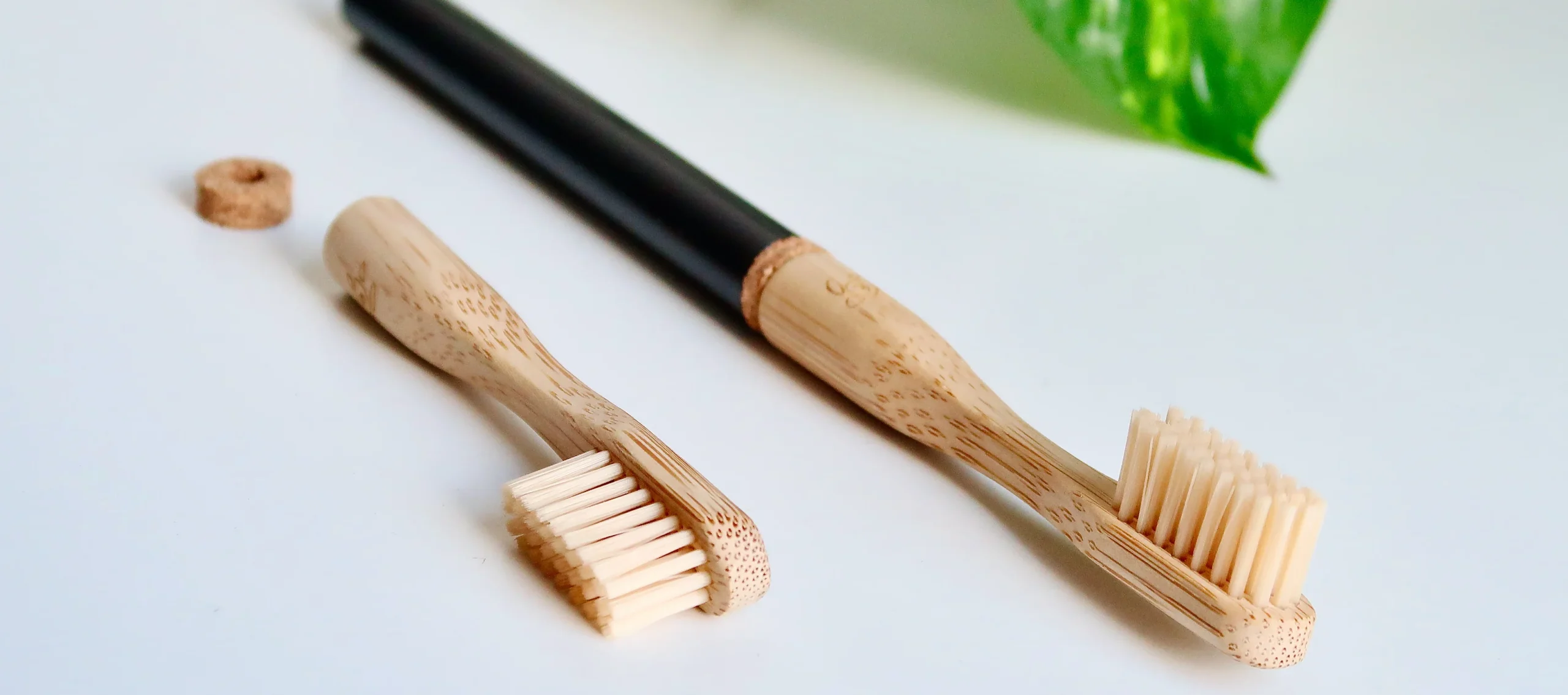
Once harvested, the stalks are cut, shaped into handles, and either left raw or lightly treated with food-grade wax or non-toxic lacquer to repel moisture. The bristles are then attached to the head, which is typically made from the same bamboo as the handle.
Bristles are where things get more nuanced. Most products on the market use nylon bristles — specifically nylon-4 or nylon-6 — because fully biodegradable bristles that also perform well are still in development. Some brands offer plant-based options made from castor oil derivatives, and others use charcoal-infused nylon for added antibacterial properties. Each has trade-offs in softness, durability, and environmental impact.
The Types Available Today
The market has expanded well beyond a single style. Here is what you will find:
- Manual versions — the classic and most widely available, offered in soft, medium, and firm bristle options.
- Electric-compatible heads — replacement heads designed to fit Oral-B or Philips Sonicare bases, made with bamboo-derived or recycled materials.
- Children’s sizes — smaller heads, ultrasoft bristles, and sometimes brightly coloured handles to make the switch easier for kids.
- Travel designs — compact or foldable brushes with protective cases made from recycled or natural materials.
Whatever your routine, there is a version designed to fit it.
The Environmental Benefits of Choosing a Bamboo Toothbrush
This is where the real case is made. The environmental argument for switching is not built on vague, feel-good claims. It is backed by clear, measurable differences in how bamboo and plastic are produced, used, and disposed of.
Bamboo as a Raw Material
Bamboo is one of the most sustainable plants on earth. It sequesters carbon at a rate comparable to many tree species but grows to full maturity in just three to five years — compared to decades for hardwood. It improves soil quality, prevents erosion, and produces roughly 35% more oxygen than an equivalent stand of trees.
Plastic toothbrush handles, by contrast, are made from polypropylene — a petroleum-derived polymer. Producing it requires fossil fuel extraction, releases greenhouse gases during manufacturing, and the finished product takes between 400 and 1,000 years to decompose after disposal.
When you choose a bamboo toothbrush over plastic, you are not just avoiding one piece of plastic. You are opting out of an entire production and disposal chain that compounds environmental harm at every stage.
What Actually Biodegrades — and What Does Not
Here is where honesty matters. A bamboo toothbrush is not 100% biodegradable — and any brand that claims otherwise deserves scrutiny.
The handle, yes. It breaks down in a home or industrial compost facility in a matter of months, leaving no toxic residue. The bristles, in most cases, will not. Nylon-4 biodegrades under specific industrial conditions, but nylon-6 — the more common type — does not. Plant-based bristles are improving but are not yet the standard across the industry.
The correct disposal process is straightforward:
- Use pliers to remove the bristles from the head.
- Dispose of the bristles in general waste.
- Break or snap the bamboo handle into smaller pieces if preferred.
- Add the handle to a home compost bin or bury it in garden soil.
Some brands also run take-back or recycling programmes. If yours does, it is worth using.
Packaging and the Bigger Picture
Many brands have extended their sustainability commitment beyond the product itself. Cardboard boxes, compostable cellulose wrappers, and recycled paper inserts are now standard among reputable manufacturers. Some ship in entirely plastic-free packaging from end to end.
This matters because product packaging often accounts for a significant share of a brand’s total plastic output. Choosing a company that takes packaging seriously is part of making your switch count.
Does It Actually Clean as Well as Plastic?
This is the question most people arrive with. And it deserves a direct answer: yes, a good bamboo toothbrush cleans just as effectively as a plastic one — provided you are using the right technique and replacing it on schedule.
Bristle Performance
The bristles do the cleaning, not the handle. Since most options use the same nylon bristle material as their plastic counterparts, cleaning performance is functionally identical.
The American Dental Association (ADA) recommends soft-bristled brushes for the vast majority of adults, as medium and hard bristles can cause gum recession and enamel wear over time. Most bamboo toothbrush brands default to soft bristles, which puts them squarely in line with professional guidance from the start.
Charcoal-infused bristles deserve a separate note. They are marketed as whitening and antibacterial, but the evidence is mixed. They will not harm your teeth, but whitening results are modest at best. If you like the aesthetic, they are fine — just do not expect dramatically different outcomes.
Handle Grip and Ergonomics
Bamboo handles feel different to plastic — that is simply honest. They are lighter, warmer to the touch, and have a slightly different texture depending on the finish.
Most people adapt within a few days. Some prefer the feel immediately. A small number find the lighter weight takes a little getting used to. None of this affects cleaning performance. The head angle, width, and bristle spread vary by brand, so reading reviews on ergonomics before committing is time well spent.
Moisture, Mold, and Natural Antimicrobial Properties
The most common concern raised about this type of toothbrush is mold. It is a fair question. Bamboo is a natural material, and natural materials can be more susceptible to moisture-related problems than sealed plastic.
Here is what the science shows: bamboo contains a compound called bamboo kun, which has natural antimicrobial properties. This makes it inherently resistant to bacteria and mold — one of the reasons bamboo has been used in kitchenware and textiles for centuries.
That said, any toothbrush left in standing water will eventually degrade. The rule is simple: rinse thoroughly after use, shake off excess water, and store upright in an open holder where air can circulate. Do that consistently, and mold is not a realistic concern.
What Dental Professionals Say
Dentists who have commented on bamboo toothbrushes tend to offer a qualified endorsement: they work, they are safe, and they are a reasonable alternative to plastic — provided patients use soft bristles, brush for two minutes twice daily, and replace on a three-month schedule. The handle material is secondary to technique and consistency.
Best Bamboo Toothbrush Picks: What to Look For Before You Buy
Not all bamboo toothbrushes are created equal. The market has grown rapidly, and with that growth has come variation in quality, ethics, and environmental credentials. Here is what to evaluate before buying.
Key Buying Criteria
Bristle type — Soft or extra-soft nylon is the safest baseline for most adults. Plant-based options are worth considering if you want to push further toward full biodegradability, but check durability reviews before committing.
Handle finish — Raw, uncoated bamboo is the most biodegradable. Food-grade wax or non-toxic lacquer finishes offer better moisture resistance without meaningfully affecting composting at end of life.
Certifications — FSC certification confirms sustainably sourced bamboo. BPA-free confirmation matters for bristles. Vegan certification covers bristle materials for those who require it.
Packaging — Plastic-free or fully compostable packaging signals that a brand’s commitment is genuine, not cosmetic.
Price — A quality option typically costs between £2 and £6 per brush, comparable to mid-range plastic alternatives. Subscription packs of four — a year’s supply — often bring the cost down further.
Choosing Across Budget Tiers
At the budget end, you will find no-frills options that perform perfectly well. They may lack premium certifications or refined packaging, but the fundamentals — soft bristles, solid handle, responsible sourcing — are usually in place.
Mid-range choices tend to offer better finishes, stronger certification credentials, more bristle variety, and more thoughtful packaging. These suit buyers for whom sustainability credentials matter as much as the brushing experience.
Premium options often combine sustainability with design — ergonomic handles, charcoal bristles, branded travel cases. If you appreciate a well-designed everyday object, the extra spend can feel worthwhile.
The Electric Toothbrush Option
If you already use an electric toothbrush and do not want to sacrifice performance, compatible replacement heads are a strong middle-ground solution. Several brands now produce heads compatible with Oral-B or Philips Sonicare bases, using bamboo-derived materials in the housing to reduce plastic waste without replacing your entire electric system.
Standalone bamboo electric toothbrush models also exist, though the market is smaller and the technology is still maturing. For most people, compatible replacement heads offer the best balance of performance and reduced environmental impact right now.
For Children and Sensitive Teeth
Children’s versions are widely available — smaller heads, ultrasoft bristles, and sometimes coloured handles make brushing more appealing for younger users. They are an excellent way to build sustainable habits from an early age.
For adults with sensitive teeth or gum recession, look specifically for extra-soft bristle options, which are increasingly common and provide the gentlest clean without compromising effectiveness.
How to Use and Care for Your Bamboo Toothbrush Properly
Switching does not require any dramatic change to your routine. The brushing technique is identical to what your dentist has always recommended. But a few care habits are worth building to get the most from your brush.
Day-to-Day Brushing
Brush for two full minutes, twice a day. Use gentle circular or short back-and-forth strokes along the gumline. Do not press too hard — let the bristles do the work. This guidance applies to any toothbrush, and a bamboo handle changes none of it.
One difference some people notice is weight. Bamboo is lighter than plastic. Some brushers find this comfortable immediately; others need a few days to adjust. Neither experience is better — it is purely personal preference.
Storage That Protects the Handle
The single most important habit for longevity is keeping the handle dry between uses. After rinsing, shake off the excess water and store your bamboo toothbrush upright in a holder that allows air to circulate on all sides.
Avoid cups or holders that trap water at the base. Open-top bamboo holders, ceramic stands, or wall-mounted clips all work well. A handle that dries properly after each use will comfortably last the full three months without any degradation.
Knowing When to Replace It
The three-month rule applies here just as it does for any toothbrush. When the bristles begin to splay — losing their straight alignment and bending outward — cleaning effectiveness drops. A visual check every few weeks is a good habit.
Some brands include a coloured indicator bristle that fades over time as the brush approaches the end of its useful life. This is a helpful feature for anyone who finds it difficult to judge bristle wear by sight alone.
Responsible Disposal at End of Life
This step completes the sustainability picture. When your brush has reached the end of its life:
- Use pliers to pull out the bristles from the head. They are nylon — dispose of them in general waste.
- Snap or cut the bamboo handle into smaller pieces if preferred.
- Add the handle to your home compost bin or bury it directly in garden soil.
In a home compost environment, the handle breaks down within four to six months. There are no toxic residues — bamboo returns to the earth cleanly, leaving nothing harmful behind.
Common Myths About Bamboo Toothbrushes — Debunked
As the category has grown in popularity, a handful of persistent myths have grown alongside it. Here is the honest truth about each one.
Myth 1: “They go moldy easily.” Bamboo’s natural antimicrobial compound — bamboo kun — makes it resistant to bacteria and mold. Mold is a result of improper storage, not the material itself. Dry it properly after each use and it will not be a problem.
Myth 2: “They are 100% biodegradable.” The handle is. The nylon bristles, in most cases, are not. Brands that claim full biodegradability without specifying bristle materials are either using plant-based alternatives — worth verifying — or overstating the case. Read the packaging carefully.
Myth 3: “They are more expensive than plastic options.” Compared to premium plastic toothbrushes or subscription brush-head services, the cost difference is negligible. A four-pack — a year’s supply — typically costs £8–£20. That is very competitive.
Myth 4: “They do not clean as well.” The bristles clean your teeth, not the handle. Since most bamboo toothbrushes use the same nylon material as plastic ones, performance is functionally identical. Multiple dental professionals and independent consumer reviews confirm this consistently.
Myth 5: “They are just a trend.” Bamboo has been used in tools, construction, textiles, and food for thousands of years across many civilisations. Switching to a bamboo toothbrush is not a novelty — it is a return to a material that has always worked, applied to a modern daily habit.
Conclusion
The bamboo toothbrush is not a radical idea. It is just a better one. It cleans your teeth just as well as plastic. It lasts just as long. It costs about the same. And when you are finished with it, it disappears back into the earth instead of sitting in a landfill for the next five centuries.
One toothbrush might feel like a small decision. But multiply it across four replacements a year, across a lifetime, across a household — and the numbers start to mean something real.
The growing variety of options means there is now something for every preference: manual or electric-compatible, adults or children, budget or premium, raw handle or sealed finish. There is no longer a meaningful trade-off to navigate.
If you have been thinking about making the switch, here is your practical nudge. Try one. Pay attention to how it feels and performs over the next three months. It is a small daily habit. But small daily habits, repeated at scale, are how things actually change.
FAQ 1: Is a bamboo toothbrush as effective as a plastic toothbrush?
Yes. A bamboo toothbrush cleans just as effectively as a plastic one. The cleaning power of any toothbrush comes from its bristles and the user’s brushing technique, not the handle material. Since most bamboo toothbrushes use the same BPA-free nylon bristles as conventional plastic ones, plaque removal performance is functionally identical. The American Dental Association (ADA) confirms that manual toothbrushes — bamboo or plastic — are equally effective when used with proper two-minute brushing technique twice daily.
FAQ 2: How long does a bamboo toothbrush last?
A bamboo toothbrush lasts approximately three months with regular use, which is the same lifespan recommended by dentists for any toothbrush. With careful maintenance and proper drying after each use, some brushers report getting up to four months from a single brush before bristle splaying occurs. You should replace it sooner if the bristles visibly splay outward, as worn bristles reduce cleaning effectiveness and can irritate the gum line.
FAQ 3: Is a bamboo toothbrush 100% biodegradable?
Not entirely — and this is one of the most important things to understand before buying. The bamboo handle is 100% biodegradable and will break down in a home compost bin within four to six months. However, the bristles on most bamboo toothbrushes are made from nylon-6, which is not biodegradable. Some brands use nylon-4 or plant-based castor bean oil bristles (Nylon 11 or Nylon 1010), which have better biodegradability credentials but may still not fully decompose in a standard home compost environment. Always read the packaging or manufacturer’s website to understand exactly what materials are in your brush.
FAQ 4: Do bamboo toothbrushes go moldy?
Bamboo toothbrushes can develop mold if stored incorrectly, but this is a storage problem, not a material flaw. Bamboo contains a natural antimicrobial compound called bamboo kun, which makes it inherently resistant to bacteria and mold. The key to preventing mold is simple: rinse the brush thoroughly after each use, shake off excess water, and store it upright in an open-air holder that allows airflow around the handle and head. Avoid sealed cups or holders that trap moisture at the base. Some brands also apply a natural carnauba wax or food-grade lacquer coating to the lower handle to add moisture resistance.
FAQ 5: How do you dispose of a bamboo toothbrush properly?
Proper disposal involves two steps. First, use a pair of pliers to pull the bristles out of the head — these are nylon and should be placed in general waste or taken to a local recycling centre if guidelines allow. Second, the bamboo handle can be composted at home, buried in garden soil, or broken into smaller pieces to speed up decomposition. In a home compost bin, the handle typically breaks down in four to six months. A few brands also run take-back programmes, allowing you to return used brushes for responsible recycling.
FAQ 6: Are bamboo toothbrushes safe to use in your mouth?
Yes, bamboo toothbrushes are completely safe for daily oral use. Reputable brands produce toothbrushes that are verified BPA-free and chemical-free by independent testing agencies. The bristles are the same nylon material used in standard plastic toothbrushes, so there are no additional safety concerns. Some brands sanitise the bamboo handle during production using a hydrogen peroxide rinse and seal it with food-grade wax to prevent moisture absorption, adding an extra layer of hygiene assurance.
FAQ 7: Are bamboo toothbrushes approved by dentists?
Many dentists do recommend bamboo toothbrushes as a safe and effective alternative to plastic. While most bamboo toothbrushes do not carry the ADA Seal of Acceptance — a formal certification that requires costly independent clinical testing — some brands are described as ADA-compliant, meaning they meet the association’s published standards for bristle type, size, and safety. Dentists generally endorse them provided users choose soft bristles, brush for two minutes twice daily, and replace the brush every three months.
FAQ 8: What type of bamboo is used to make toothbrush handles?
The most widely used species is Moso bamboo (Phyllostachys edulis), a giant variety grown primarily in mountain regions of southern China. Moso bamboo is favoured because it grows exceptionally fast — reaching full height in two to three years — and regenerates naturally from its root system after harvest without needing replanting. Importantly, Moso is not a food source for pandas, which eat 42 other bamboo species but not Moso, so purchasing these toothbrushes does not threaten panda habitats or food supplies.
FAQ 9: How do bamboo toothbrushes compare to plastic in terms of carbon footprint?
Research confirms that bamboo toothbrushes have a lower carbon footprint than standard plastic toothbrushes. A peer-reviewed study published in a dental journal found that of all common toothbrush types, the bamboo manual toothbrush and the replaceable-head plastic brush performed best across environmental impact categories. The standard plastic toothbrush — especially when manufactured outside Europe using coal-dependent energy — scored worst across greenhouse gas emissions, water use, and land impact. That said, a 2020 study from Trinity College Dublin noted that a theoretically continuously recycled plastic toothbrush would be the single most sustainable option, though this does not currently exist at scale.
FAQ 10: Can children use bamboo toothbrushes?
Yes. Many brands produce children’s versions with smaller head sizes and ultrasoft bristles specifically designed for younger teeth and more delicate gum tissue. These are just as safe as conventional children’s plastic toothbrushes and are an excellent way to introduce sustainable habits early. Look for options with bristle softness and head size appropriate for your child’s age. Some brands also add coloured details or fun handle engravings to make brushing more engaging for kids.
FAQ 11: What are the bristles on a bamboo toothbrush made of?
Most bamboo toothbrush bristles are made from nylon — either nylon-4 or, more commonly, nylon-6. Some brands use charcoal-infused nylon, which has mild antibacterial properties. A smaller number of brands use plant-based bristles derived from castor bean oil (marketed as Nylon 11 or Nylon 1010), which are partially biobased. Bristles made from natural animal hair such as boar or badger are also available but are not suitable for vegans and carry their own hygiene and ethical considerations. Avoid any brand claiming fully biodegradable bristles without providing independent testing documentation to back up the claim.
FAQ 12: How much does a bamboo toothbrush cost compared to plastic?
A single bamboo toothbrush typically costs between £2 and £6 ($2.50–$8 USD), which is comparable to a mid-range plastic toothbrush. Subscription packs — usually four brushes per year — often reduce the per-brush cost further and ensure you replace on schedule without having to remember to reorder. When compared to premium plastic toothbrush subscription services, the price difference is negligible. Budget-conscious buyers can find quality bamboo options for as little as £1.50–£2 per brush in multipacks of 10 or more.
FAQ 13: Can you recycle a bamboo toothbrush?
The bamboo handle itself does not need traditional recycling — it composts naturally. For the bristles, some local recycling centres accept nylon, so it is worth checking your local guidelines. A few brands have established dedicated recycling or take-back programmes. The Bamboo Brush Society, for example, runs a Bamboo Recycling Program allowing customers to return used brushes. Plant-based bristles from castor bean oil can, in theory, decompose, though independent testing suggests the conditions required may not be met in standard home composting.
FAQ 14: Is bamboo sustainably sourced for toothbrush production?
Bamboo itself is one of the most renewable raw materials on earth — it grows rapidly, regenerates from its own roots, requires no pesticides or fertilisers, and sequesters carbon. However, sustainable sourcing varies by brand. The most reliable indicator is FSC (Forest Stewardship Council) certification on the packaging, which confirms third-party verified responsible harvesting. Not all bamboo toothbrush brands carry this certification, so it is worth checking. Most reputable brands source Moso bamboo from China, where bamboo production is most advanced and regulations on harvesting exist.
FAQ 15: Do bamboo toothbrushes splinter in your mouth?
Splintering is a rare but real concern, particularly with lower-quality brushes or those that have been stored improperly in very humid conditions. High-quality bamboo toothbrushes are sanded smooth and finished with food-grade wax or non-toxic lacquer to prevent surface deterioration. Heat-treated or carbonised handles are even more resistant to moisture and surface degradation. To minimise any risk, always buy from established brands with good reviews, store the brush in an open-air holder, and replace it every three months before the handle has a chance to degrade.
FAQ 16: What is the environmental impact of the manufacturing process?
Manufacturing bamboo toothbrushes is generally less energy-intensive than manufacturing plastic ones. Bamboo can be shaped using mechanical processes that require less energy than petroleum-based plastic moulding. However, the full lifecycle picture is nuanced. Because most bamboo toothbrushes are produced in China and shipped internationally, transport emissions add to their footprint. Additionally, if the manufacturing facility uses coal-dependent energy, those emissions offset some of the gains from using bamboo over plastic. Consumers who prioritise the lowest possible impact should look for brands that disclose their manufacturing energy sources and packaging credentials.
FAQ 17: How should you store a bamboo toothbrush to make it last?
Store your bamboo toothbrush upright in an open-air holder that allows the handle and head to air dry fully between uses. Bamboo toothbrush holders, ceramic stands, and wall-mounted clips are all suitable. Avoid closed cups or containers that collect water at the base of the handle, as prolonged moisture contact degrades the bamboo and can encourage mold. After brushing, rinse the head thoroughly, shake off excess water, and place it bristle-side up. Gently towel-drying the handle once a day in humid climates can further extend the life of the brush.
FAQ 18: Are there bamboo toothbrush options for electric toothbrush users?
Yes. Several brands now produce replacement brush heads compatible with major electric toothbrush systems including Oral-B and Philips Sonicare. These heads use bamboo-derived or partially bamboo materials in the housing, significantly reducing the plastic waste generated by replacement head use. Sustainable Tomorrow produces FSC-certified bamboo heads with castor bean oil bristles compatible with Sonicare, and their replacement heads are designed to decompose in approximately six months. Standalone bamboo electric toothbrush models also exist, though the market is still maturing compared to manual bamboo options.
FAQ 19: Can you use a bamboo toothbrush if you have sensitive teeth or gums?
Yes, and many people with sensitive teeth actually prefer them. Most bamboo toothbrush brands default to soft or extra-soft bristles, which are the dentist-recommended standard for adults with gum sensitivity or enamel wear. The natural antimicrobial properties of bamboo may also contribute to a cleaner brush between uses, which is beneficial for anyone managing gum health. If you have specific conditions such as gum recession or enamel erosion, look specifically for brands labelled “extra soft” and check that the bristle density is appropriate for sensitive gum care.
FAQ 20: What makes a good bamboo toothbrush — what should I look for?
The best bamboo toothbrush shares these characteristics: soft or extra-soft BPA-free bristles, an FSC-certified bamboo handle, plastic-free or compostable packaging, a food-grade finish on the handle (wax or light lacquer) for moisture resistance, and clear disposal instructions from the manufacturer. Honest brands will openly state whether their bristles are nylon-6 (not biodegradable) or plant-based, rather than making vague biodegradability claims across the whole product. Certifications to look for include FSC, BPA-free, vegan (if relevant), and any dentist endorsement.
FAQ 21: Will switching to a bamboo toothbrush actually make a difference environmentally?
The numbers suggest yes. Approximately 3.5 billion toothbrushes are sold globally each year, the vast majority plastic, and most are non-recyclable due to their mixed material construction. Each individual who switches to bamboo removes around four plastic toothbrushes from the waste stream per year — small in isolation, but significant at scale. Research consistently shows that bamboo toothbrushes outperform standard plastic across most environmental impact categories including greenhouse gas emissions, water use, and end-of-life waste. It is one of the simplest, lowest-cost sustainability swaps available.
FAQ 22: How do you know when to replace a bamboo toothbrush?
Replace your bamboo toothbrush every three months, following the same timeline recommended by dentists for all toothbrushes. The visual signal to watch for is bristle splaying — when the bristles lose their upright alignment and begin to fan outward or bend irregularly. At this point, the brush can no longer clean effectively and may irritate the gums. Some brands include indicator bristles, typically dyed blue or another colour, that gradually fade to white as the brush approaches the end of its useful life. Replace immediately after any illness regardless of how recently you started using the brush.
FAQ 23: Is there a difference between charcoal bamboo toothbrushes and regular ones?
Charcoal bamboo toothbrushes have bristles infused with activated charcoal, which gives them a distinctive black or dark grey appearance. They are marketed for mild teeth whitening and enhanced antibacterial performance. The antibacterial claims align with activated charcoal’s known properties. The whitening effect, however, is modest at best — activated charcoal is mildly abrasive, which can help remove surface stains, but it does not change the natural colour of your teeth or replicate professional whitening treatments. Charcoal bristles are safe for most users when soft-bristled, but people with enamel sensitivity should approach with mild caution and consult their dentist if unsure.
FAQ 24: What is the oldest toothbrush ever — and does bamboo have historical roots?
According to the Library of Congress, the earliest known toothbrush was invented in China during the 15th century, using a bamboo or bone handle fitted with bristles made from the stiff neck hair of a Siberian boar. In this sense, the bamboo toothbrush is not a modern invention at all — it is a return to the original design, updated with modern bristle materials and production standards. The modern plastic toothbrush emerged in 1938 with the introduction of nylon bristles, making it a relatively recent development. The current wave of bamboo toothbrushes is, in many ways, history coming full circle.