Date: May 21, 2026
There is something almost hypnotic about watching a telescope goldfish move through the water. Those round, globe-like eyes catching the light. Those flowing fins trailing behind like silk ribbons. It is the kind of fish that stops you mid-step at a pet store and makes you forget what you came in for.
But beyond the visual drama, this is a fascinating creature with a rich history, a surprising range of varieties, and care needs that are specific enough to trip up even experienced fish keepers. Whether you are thinking about adding one to your aquarium or you already own one and want to make sure you are doing everything right, this guide covers it all — from tank setup to feeding, from the boldly colored black telescope to the rare and sought-after panda variety.
What Is a Telescope Goldfish? Origin, History, and Basic Traits
A Fish With Centuries of History Behind It
The telescope goldfish did not appear overnight. It was first developed in China in the early 1700s, where its distinctive protruding eye trait was considered so striking that the fish was called “Dragon Eye” or “Dragonfish.” The feature was seen as majestic rather than unusual — a symbol of power and good fortune.
From China, the fish made its way to Japan, where breeders gave it a new name: Demekin. Japanese aquarists refined the breed further, enhancing the body shape, fin length, and eye protrusion until the fish became the elegant variety we recognize today. Eventually, it reached the United States and spread across the world, becoming one of the most recognizable fancy goldfish in the hobby.
What Does a Telescope Eye Goldfish Look Like?
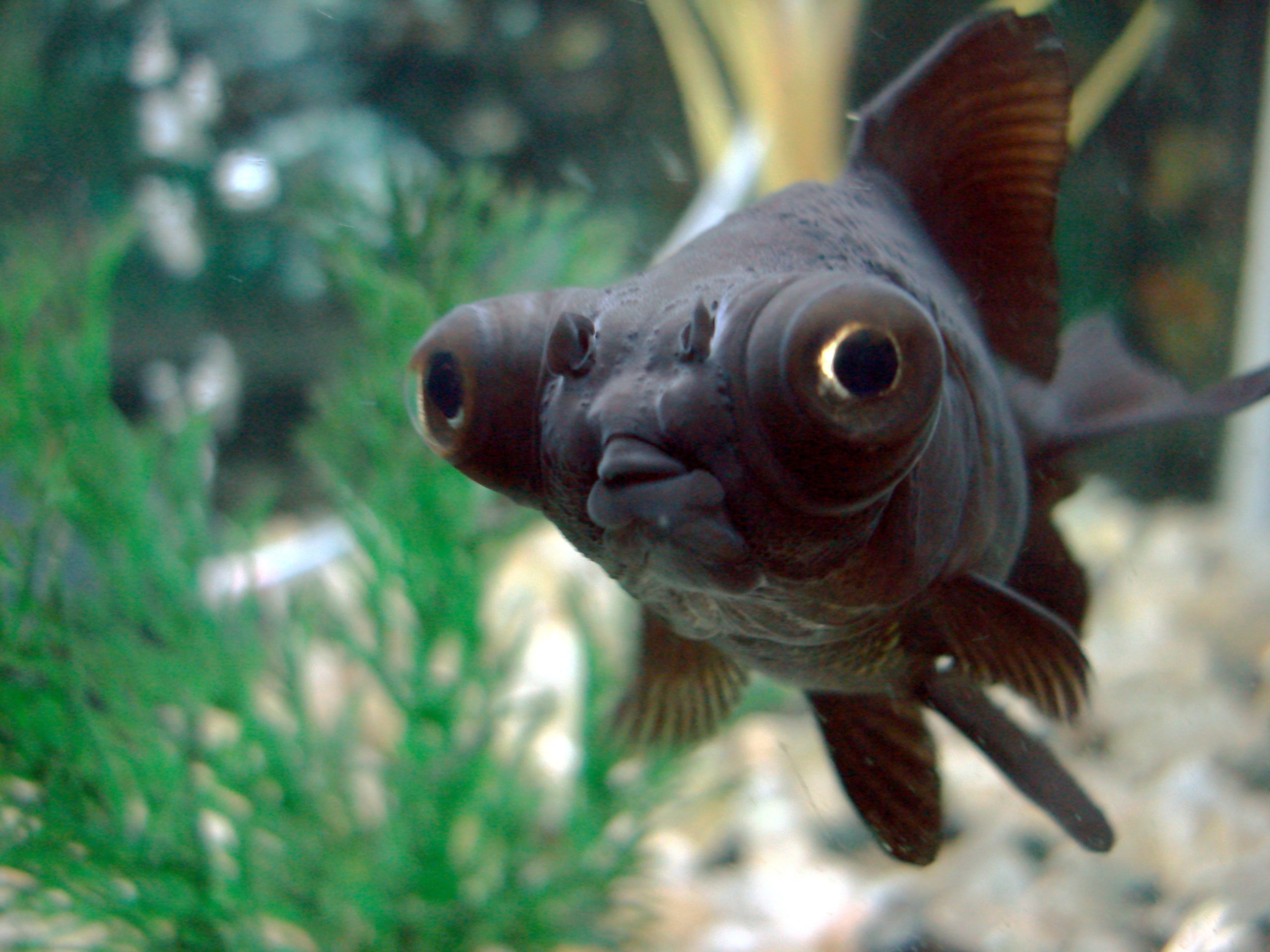
The defining feature is, of course, those eyes. They protrude outward from the head in a way that is impossible to miss — round, large, and positioned to look sideways and slightly forward rather than directly ahead. This gives the fish a permanently curious, wide-eyed expression that many owners find endearing.
Beyond the eyes, it has a short, deep, rounded body that is distinctly different from the streamlined shape of a common goldfish. The fins are long and flowing, particularly the tail fin, which can be broad, veiled, or shaped like a butterfly depending on the variety. Color options are extensive: black, red, orange, white, calico, chocolate, and combinations of these, available in both metallic and nacreous (pearlescent) scale types. Most adults reach around 6 to 8 inches in length, though fish kept in large ponds can grow even bigger.
Popular Varieties of Telescope Goldfish You Should Know
One of the best things about keeping these fish is that there is no single version of them. The variety within this breed is remarkable, and each type brings its own personality and visual appeal to an aquarium.
Black Telescope Goldfish
The black telescope goldfish — widely known as the Black Moor — is probably the most recognizable member of this family. Its entire body is covered in a deep, velvety black that absorbs light rather than reflecting it, giving it a dramatic, almost theatrical appearance.
What many new owners do not realize is that juveniles actually look quite different from adults. Young fish resemble bronze fantail goldfish, and the signature black coloration along with the characteristic eye protrusion develops gradually as the fish matures. Another surprise: the black color is not always permanent. Many develop orange or rust-colored patches over time, particularly on the underside of the belly, as they age or when water conditions shift.
Within the telescope family, the Black Moor is considered the most beginner-friendly variety, largely because it tolerates a wider range of water temperatures than most fancy goldfish. That said, it still shares the eye vulnerabilities common to all telescope-eyed varieties and needs a safe, smooth environment.
Butterfly Telescope Goldfish
The butterfly telescope goldfish is what happens when you take an already striking fish and add a tail fin that fans out horizontally into a perfect butterfly shape when viewed from above. Seen from the side, it looks like any elegant fancy goldfish with flowing fins. Seen from above, it looks completely different — symmetrical, dramatic, and almost architectural in its form.
This variety originated from China and was further developed in Japan and Asia before making its way to Western aquarists. Breeders often keep them in shallow tanks specifically to display that overhead tail shape, since the top-down view is where most of the visual impact lies. Colors range from calico and panda to all-red, all-white, and bi-colored combinations. Because of their flowing fins, these fish need extra swimming room and should not share a tank with fin-nipping companions.
Panda Telescope Goldfish
The panda telescope goldfish is the rarest and arguably the most dramatic variety. Its coloring mimics the black-and-white pattern of a giant panda — patches of deep black against a bright white body — and the effect is stunning in any aquarium. This color pattern is achieved through selective cross-breeding of panda moors and is not easy to produce consistently, which is why quality specimens command a premium price and are eagerly sought by collectors, particularly across Asia.
One thing worth knowing about the panda variety is that its color pattern is not always stable over a lifetime. The black patches can fade or shift as the fish ages or as water temperature and chemistry change. This is not a sign of illness — it is simply a biological quirk of this variety. A specimen that holds its pattern into adulthood is considered especially valuable.
Like all telescope-eyed varieties, panda telescopes are bottom-explorers that like to dig, which makes smooth substrate essential to protect those delicate eyes from scratches and injury.
Other Varieties Worth Knowing
Beyond these three standout types, the telescope goldfish comes in red, orange, yellow, white, chocolate, calico, and tricolored versions. There is also a chocolate variety with orange pompom-like growths around its nose that looks almost like a living work of art. Whether you are drawn to the subtle elegance of an all-white specimen or the bold warmth of a deep red-orange, there is a variety that will match your vision for your aquarium.
Setting Up the Perfect Tank for Telescope Goldfish
Getting the tank right is not optional with these fish — it is the foundation that everything else rests on.
How Much Space Do They Actually Need?
Start with a minimum of 30 gallons for a single fish. That number goes up by at least 10 gallons for each additional tank mate. Do not be tempted to go smaller. These fish produce a significant bioload — a lot of waste relative to their size — and cramped conditions lead quickly to water quality problems that are especially dangerous for fish with sensitive eyes.
If you plan to keep a small group, which telescope goldfish genuinely enjoy being social creatures, aim for a 55-gallon tank or larger. More water volume means more stable chemistry, which translates directly to healthier, longer-lived fish.
Water Parameters to Keep Them Healthy
These are cold-water fish that prefer cool, stable conditions. Keep water temperature between 65°F and 75°F (18–24°C). pH should sit between 6.5 and 7.5. Ammonia and nitrite levels must be maintained at zero — any spike in these readings is dangerous for all goldfish, but especially for varieties with eye vulnerabilities.
Perform water changes of 25–30% weekly without fail. This is not optional maintenance — it is the single most effective thing you can do to keep your fish healthy long-term. Pair this habit with a high-quality external canister filter or a good hang-on-back filter sized for the actual tank volume, not just the fish count.
Tank Décor — What to Include and What to Avoid
This is where many owners make their biggest mistake. Because a telescope eye goldfish has reduced vision, it navigates its environment with limited visual accuracy and relies heavily on memory and water movement to detect its surroundings. Sharp decorations, rough gravel, pointed driftwood, and hard plastic plants are all genuine injury hazards. A fish brushing its protruding eye against a sharp edge can suffer a scratch, an infection, or in serious cases, permanent eye damage.
Use smooth, rounded substrate — fine sand or small, smooth pebbles work well. Choose soft silk plants rather than stiff plastic ones. Use decorations with no sharp points or edges. Avoid strong water current from filters or powerheads. These fish need calm, slow-moving water to swim comfortably and locate their food. Live plants are a welcome addition too — java fern and anubias, attached to smooth rocks or driftwood, are solid beginner-friendly choices.
Feeding Your Telescope Goldfish the Right Way
Feeding correctly makes a bigger difference to health than most owners realize, and the details genuinely matter here.
What Do They Eat?
This breed is omnivorous. In the wild, goldfish graze on insects, plant material, small crustaceans, and organic matter found at the bottom of ponds and slow-moving streams. In a home aquarium, the goal is to replicate that nutritional variety while keeping portion sizes controlled.
Staple foods — High-quality sinking pellets formulated for fancy goldfish should make up the bulk of the diet. Sinking pellets are important for two reasons: they match the fish’s natural bottom-feeding behavior, and they reduce the amount of air the fish gulps from the surface while eating, which helps prevent swim bladder problems. Choose a pellet with around 30% protein content. Soaking the pellets in tank water for 30 seconds before feeding softens them and further reduces air intake.
Vegetable supplements — Blanched peas (removed from their skins) are a classic recommendation for good reason. They provide fiber that helps prevent constipation, a real concern in these rounded-bodied fish. Blanched spinach and sliced zucchini are also well-received additions. Aim to include vegetables two or three times per week.
Protein treats — Frozen or freeze-dried bloodworms, daphnia, and brine shrimp can be offered once or twice per week. These foods provide protein and stimulate natural foraging behavior. Avoid live foods unless you are confident they are disease-free, as they can introduce pathogens to the tank.
How Often and How Much?
Feed small amounts twice daily — morning and evening. The rule of thumb is to offer only as much food as can be consumed in about one minute. Any food left in the tank after that should be removed promptly.
Overfeeding is one of the most common mistakes with goldfish in general, and it causes two cascading problems: leftover food decays and degrades water quality, and fish that overeat develop constipation, buoyancy problems, and other digestive issues. Because these fish have poor vision and may take longer than normal to locate sinking food, be patient during feeding. A feeding ring can help by keeping food concentrated in one spot, making it far easier to find.
Health, Common Problems, and Eye Care
The eye care aspect of keeping this breed is arguably the most important — and the most overlooked by new owners.
The Eye Problem No One Talks About Enough
Those beautiful, globe-like eyes are also the fish’s greatest vulnerability. Because they protrude significantly from the head, they are constantly at risk of physical injury from décor, substrate, and even aggressive tank mates. They are also prone to bacterial infections, particularly when water quality slips.
Signs of eye trouble include cloudiness, swelling beyond the normal protrusion, redness around the eye socket, or visible difficulty navigating the tank. These symptoms warrant immediate attention — a water change, assessment of tank conditions, and if infection is suspected, consultation with a veterinarian experienced in fish health. Because these fish navigate partly by memory, rearranging the tank frequently is genuinely stressful for them. Once you find a layout that works, leave it in place.
Common Diseases in Telescope Goldfish
Ich (White Spot Disease) is caused by a protozoan parasite and presents as tiny white dots across the body and fins. It is one of the most common aquarium diseases and is treatable with heat therapy and aquarium salt or commercial ich treatments, but it needs to be caught early.
Fin Rot is a bacterial infection that causes fins to look frayed or discolored at the edges. It is almost always a symptom of poor water quality. The treatment starts with immediate water changes and improved filtration, followed by antibacterial medication if conditions do not improve within a few days.
Swim Bladder Disorder is particularly common in fancy goldfish due to their rounded body shape, which puts pressure on internal organs. Affected fish may float sideways, swim at odd angles, or struggle to stay upright. Dietary changes — feeding sinking pellets, adding peas, and fasting the fish for one or two days — often resolve mild cases. Chronic cases may need veterinary advice.
Bacterial Eye Infections are unique to telescope-type varieties and can develop quickly if water quality drops or if the fish suffers an eye injury. Cloudy, swollen eyes should be treated seriously and promptly. A clean, consistently well-maintained tank is the best prevention available.
Tank Mates — Who Gets Along With These Fish?
Choosing the right tank mates is not just an aesthetic decision. For a telescope goldfish, it is genuinely a safety issue.
Because these fish have reduced vision and are slow swimmers, they should never be housed with fast-moving goldfish varieties like comets or shubunkins. Fast tank mates will outcompete them for food at every single meal, leaving your fish underfed and chronically stressed. In some cases, faster fish will also nip at long flowing fins.
The safest companions are other fancy goldfish varieties that share similar limitations — other telescope varieties, black moors, bubble eye goldfish, and celestial goldfish. These fish move at similar speeds and have similar visual challenges, making for a much more harmonious and fair community tank.
Large apple snails are another excellent companion. They clean up leftover food, are slow and non-threatening, and are too large for the goldfish to accidentally swallow. Avoid smaller snail species, as these can be ingested and cause choking. Tropical fish should not be housed together at all — the water temperature requirements are incompatible, quite apart from any behavioral differences.
Breeding Telescope Goldfish — What You Need to Know
Breeding these fish is a realistic goal for dedicated hobbyists, and the process follows the same general pattern as other fancy goldfish varieties.
How to Tell Males from Females
Sexing juvenile fish is notoriously difficult, and even experienced aquarists often cannot tell males from females with certainty outside of breeding season. The most reliable indicators appear in adults during spawning time. Males develop small white pimple-like bumps called tubercles on their gill covers and the top of their head — commonly called breeding stars. Females carrying eggs appear visibly rounder and fuller when viewed from above.
Creating the Right Conditions for Spawning
Telescope goldfish spawn most readily when conditions mimic the natural transition from winter to spring. In practice, this means gradually raising the water temperature over several days and performing daily partial water changes to simulate spring rainfall and temperature shifts.
You will need a spawning tank of at least 20 gallons, planted with fine-leaf plants or spawning mops where eggs can be deposited and protected. Flat smooth stones also work as spawning surfaces. Once spawning begins, remove the adults — these fish have no parental instincts and will eat their own eggs without hesitation. Fertilized eggs hatch within four to seven days depending on temperature. Feed fry with specialty fry food initially, then transition to baby brine shrimp or finely ground flake food as they grow larger.
How Long Do These Fish Live?
With consistent, attentive care, a telescope goldfish can live anywhere from 10 to 15 years in a well-maintained aquarium. Some sources report individuals reaching 15 to 20 years under exceptional conditions — a large tank or outdoor pond, pristine water quality, and a well-managed diet throughout their lives.
The biggest factors affecting longevity are water quality, appropriate diet, a safe tank environment, and the absence of chronic stress. A fish kept in an overcrowded, poorly filtered tank with sharp decorations and inconsistent water changes may only live a few years. The same fish in a well-managed 55-gallon tank with compatible companions and weekly water maintenance has every chance of outliving the average family cat.
Buying a Telescope Goldfish — Tips to Avoid Common Mistakes
Not all specimens sold in pet stores are healthy, and buying a sick fish is a frustrating and often heartbreaking experience. Knowing what to look for saves you that trouble.
A healthy fish moves actively through the water, holds its fins extended rather than clamped against its body, and shows curiosity about its surroundings. The fins should be intact with no fraying, tears, or discoloration at the edges. The body should be smooth and free of white spots, lesions, or ulcers. The eyes should look clear — as clear as protruding eyes can be — without swelling beyond normal protrusion or visible cloudiness.
Pay close attention to the tank the fish is being sold from. If the water is cloudy, other fish in the display show signs of illness, or the fish appear lethargic, walk away — regardless of how much you want that specific specimen. Introducing a sick fish to an established tank risks the health of every fish already in it.
Standard black telescope goldfish are widely available and reasonably priced. Butterfly and panda varieties command higher prices, particularly specimens with clean, well-defined markings or exceptional fin development. Quality-bred specimens imported from Asian breeders can be significantly more expensive and are typically found through specialist aquarium retailers or reputable online breeders rather than at a big-box pet store.
Final Thoughts
The telescope goldfish is not a fish you choose because it is the easiest to care for. You choose it because once you have watched one drift through a well-planted tank — fins flowing, those remarkable eyes scanning the world with calm curiosity — you simply cannot imagine your aquarium without one.
With the right setup, clean stable water, smooth décor, and thoughtful feeding, this extraordinary breed will reward your effort with a lifespan that can stretch across a decade and beyond. Whether you start with a hardy black telescope or go straight for the showstopping drama of a panda or butterfly variety, the experience of keeping one of the oldest ornamental fish in the world is genuinely one of the most rewarding in the freshwater hobby.
FAQ 1: What is a telescope goldfish?
A telescope goldfish is a fancy variety of Carassius auratus — the common goldfish species — selectively bred for its dramatically protruding, globe-like eyes that extend outward from the head on stalk-like orbits. It has a deep, rounded body, flowing double tail fins, and comes in a wide range of colors including black, red, white, calico, and panda (black and white). First developed in China in the early 1700s, where it was called the “Dragon Eye” or “Dragonfish,” it is one of the most recognizable fancy goldfish varieties in the world and is kept in both aquariums and outdoor ponds.
FAQ 2: How long do telescope goldfish live?
With proper care, telescope goldfish typically live between 10 and 15 years in a well-maintained home aquarium. In large, well-filtered outdoor ponds with optimal water quality and diet, lifespans of 20 years or more have been reported. The key factors affecting longevity are consistent water quality, an appropriate diet, a safe tank environment free of sharp decorations, and compatible tank mates. Poor water conditions and overfeeding are the most common reasons their lifespan falls short of its potential.
FAQ 3: How big do telescope goldfish get?
Most telescope goldfish reach between 6 and 8 inches (15–20 cm) in length in a well-maintained aquarium. Some individuals kept in very large tanks or outdoor ponds may grow slightly larger, since goldfish grow to fit their environment to a degree. Their rounded, egg-shaped body makes them appear larger than they actually measure from tip to tail. Adequate tank size — a minimum of 30 gallons for a single fish — plays a significant role in healthy growth.
FAQ 4: What is the minimum tank size for a telescope goldfish?
A single telescope goldfish needs a minimum tank size of 20 to 30 gallons. For each additional fish added to the same tank, you should increase the volume by at least 10 gallons. These fish produce a high amount of waste relative to their size, so a larger water volume is important for maintaining stable water chemistry. Overcrowding leads rapidly to ammonia spikes, poor water quality, and increased risk of the eye infections and swim bladder issues these fish are already prone to.
FAQ 5: What water temperature do telescope goldfish need?
Telescope goldfish are cold-water fish. They prefer a stable water temperature between 65°F and 75°F (18–24°C). They do not need a heater in most temperate home environments, though a heater may be useful in very cold rooms or climates during winter months. Sudden temperature swings are more harmful than slightly cool water — always make sure any water added during changes is temperature-matched to the tank to prevent shock. Avoid keeping them with tropical fish, which require significantly warmer temperatures.
FAQ 6: What pH level do telescope goldfish need?
Telescope goldfish thrive in a water pH between 6.5 and 7.5 — a slightly acidic to neutral range. Ammonia and nitrite levels must be maintained at zero parts per million (ppm), while nitrate should be kept below 20–40 ppm through regular partial water changes. Testing water weekly with a liquid test kit (rather than strips, which are less accurate) is strongly recommended. Stable parameters matter more than hitting a perfect number — fluctuations in pH stress the fish and weaken their immune response.
FAQ 7: What do telescope goldfish eat?
Telescope goldfish are omnivores. Their diet in a home aquarium should include high-quality sinking pellets formulated for fancy goldfish as the staple food, supplemented with blanched vegetables such as peas (skin removed), spinach, and zucchini for fiber. Protein treats like frozen bloodworms, brine shrimp, and daphnia can be offered once or twice per week. Sinking pellets are preferred over floating food because they reduce air ingestion at the water surface, which helps prevent swim bladder problems. Always soak pellets in tank water before feeding to soften them.
FAQ 8: How often should I feed my telescope goldfish?
Feed telescope goldfish twice daily — once in the morning and once in the evening — offering only as much food as they can consume in approximately one minute per feeding session. Remove any uneaten food immediately after feeding. Because these fish have poor eyesight and may struggle to find food that has sunk beyond their immediate area, a feeding ring or a consistent feeding spot helps ensure they get enough to eat without the tank being overfed. Overfeeding is one of the leading causes of constipation and water quality problems.
FAQ 9: Are telescope goldfish blind?
Telescope goldfish are not blind, but their vision is significantly impaired compared to most other goldfish varieties. The protruding eye structure positions their eyes to look sideways rather than forward, and the eye shape itself reduces optical sharpness. This means they struggle to compete for food with faster, better-sighted tank mates and are more likely to miss food items that are not directly in front of them. They compensate partly by using their lateral line system to detect water movement and vibration, and partly by learning the layout of their tank through memory over time.
FAQ 10: Why are my telescope goldfish’s eyes protruding so much — is something wrong?
Protruding eyes are a completely normal and defining characteristic of the telescope goldfish. The degree of protrusion is genetic and develops gradually as the fish matures — juveniles typically have much smaller eye protrusions than adults. What you should watch for as a problem is sudden swelling beyond the fish’s normal eye size, cloudiness, redness around the eye socket, or a fuzzy or discolored appearance — these can indicate an injury or bacterial infection called Cloudy Eye, usually triggered by poor water quality or physical trauma from sharp tank décor.
FAQ 11: What is Cloudy Eye in telescope goldfish and how is it treated?
Cloudy Eye is a condition that commonly affects telescope goldfish, causing one or both eyes to develop a milky, foggy appearance. It is almost always caused by poor water quality, inadequate nutrition, or physical injury from rough substrate or sharp decorations. In mild cases, it can often be resolved by performing a large water change (25–30%) and improving tank conditions. For bacterial infections, a broad-spectrum antibiotic such as kanamycin may be needed. Removing any sharp décor and switching to smooth substrate is the best long-term prevention, since these fish’s eyes are in near-constant contact with their environment.
FAQ 12: Can telescope goldfish live in a pond?
Yes, telescope goldfish can be kept in outdoor ponds, but they require more careful management than hardier common or comet goldfish. They are cold-water fish and can tolerate outdoor temperatures within their preferred range of 65–75°F. However, their poor eyesight makes them vulnerable to predators such as herons and cats, and their inability to compete aggressively means they should not be housed with fast-moving pond fish. Shallow ponds with good filtration, smooth surfaces, and visual barriers from predators are the most suitable setup. In very cold climates, they may need to be brought indoors for winter.
FAQ 13: What are the best tank mates for telescope goldfish?
The best tank mates for telescope goldfish are other slow-moving fancy goldfish with similar visual limitations, including black moor goldfish, bubble eye goldfish, celestial goldfish, and lionhead goldfish. These varieties move at similar speeds and are equally disadvantaged in competing for food, making the community fairer for everyone. Large apple snails are also excellent companions. Fast-moving varieties like comets, shubunkins, and common goldfish should be avoided — they will outcompete telescope goldfish for food at every feeding. Tropical fish are incompatible due to temperature differences.
FAQ 14: What is the difference between a telescope goldfish and a Black Moor?
A Black Moor is a specific color variety within the broader telescope goldfish family — it is simply the all-black version. Every Black Moor is a telescope goldfish, but not every telescope goldfish is a Black Moor. The telescope goldfish family includes many color varieties: panda (black and white), red, white, calico, chocolate, tricolored, and more. The Black Moor is also generally considered the hardiest and most widely available of all telescope varieties, making it a popular entry point for aquarists new to this breed.
FAQ 15: What is a panda telescope goldfish?
A panda telescope goldfish is a variety of telescope goldfish with a striking black-and-white color pattern that resembles the markings of a giant panda. The coloring is produced through selective cross-breeding of panda moor strains and is relatively rare and difficult to produce consistently. One important thing to know is that the panda pattern can be unstable — the black patches may fade or shift to orange and white as the fish ages or if water temperature and chemistry fluctuate. A specimen that holds a clean panda pattern into adulthood is considered especially valuable by collectors and show enthusiasts.
FAQ 16: What is a butterfly telescope goldfish?
A butterfly telescope goldfish is a variety of telescope goldfish defined by its unique tail fin shape — when viewed from directly above, the tail spreads out symmetrically to form the shape of a butterfly’s wings. From the side, it looks like a standard fancy goldfish with flowing fins, but the overhead view is what makes it special. This variety was first described in 1994 and is particularly prized in Asian fish shows. It comes in a wide range of colors including calico, panda, all-red, and all-white. Breeders often keep them in shallow tanks specifically to showcase the butterfly tail from above.
FAQ 17: Do telescope goldfish recognize their owners?
Yes — over time, telescope goldfish can learn to recognize the person who feeds them and will often respond with increased activity, swimming toward the front of the tank, or gathering near the feeding spot when that person approaches. Goldfish in general have been shown in studies to distinguish between different human faces and can associate certain faces with positive experiences like food. While their visual impairment affects their ability to spot details clearly, they compensate with their lateral line sensitivity and memory of patterns, schedules, and movement. Regular, gentle interaction reinforces this recognition over time.
FAQ 18: Why is my telescope goldfish swimming sideways or floating?
A telescope goldfish swimming sideways, floating upside down, or struggling to stay upright is most likely experiencing swim bladder disorder. This is a common condition in fancy goldfish due to their compressed, rounded body shape, which puts physical pressure on the swim bladder — the organ that controls buoyancy. Common causes include overfeeding, constipation, gulping air from floating food, bacterial infection, or physical deformity. Mild cases often respond to a 24-hour fast followed by feeding blanched, skin-removed peas, switching to sinking pellets, and soaking all food before feeding. Persistent cases may require veterinary attention.
FAQ 19: How do I know if my telescope goldfish is male or female?
Sexing telescope goldfish is difficult, especially in juveniles. Outside of breeding season, males are generally slimmer and slightly smaller than females when viewed from above. During breeding season, the differences become clearer — males develop small white pimple-like bumps called tubercles (or breeding stars) on their gill covers and the top of their head. Females that are ready to spawn appear noticeably rounder and fuller in the abdomen when viewed from above. The presence of tubercles on the male is the most reliable indicator and typically appears as water temperature begins to rise in spring.
FAQ 20: Can telescope goldfish breed in a home tank?
Yes, telescope goldfish breed readily in a home aquarium when the right conditions are present. To encourage spawning, gradually raise the water temperature by a few degrees over several days and perform daily partial water changes to mimic the seasonal shift from winter to spring. A spawning tank of at least 20 gallons, planted with fine-leaf plants or spawning mops, provides surfaces for egg deposition. After spawning, remove the adults immediately — they have no parental instinct and will eat their own eggs. Eggs hatch in four to seven days depending on temperature, and fry should be fed specialty fry food followed by baby brine shrimp.
FAQ 21: What diseases are telescope goldfish most prone to?
Telescope goldfish are particularly prone to Cloudy Eye (eye infections caused by injury or poor water quality), swim bladder disorder (caused by overfeeding, constipation, or gulping air), ich (white spot disease caused by a protozoan parasite), fin rot (a bacterial infection linked to poor water conditions), constipation (from an improper diet or dry pellet feeding), and skin flukes (external parasites introduced via live food or new fish). Most of these conditions are preventable through consistent water changes, smooth tank décor, a sinking-pellet diet with vegetable fiber, and a quarantine protocol for any new fish or plants before they enter the main tank.
FAQ 22: How much does a telescope goldfish cost?
The price of a telescope goldfish varies widely depending on variety, quality, and source. Standard black telescope goldfish (Black Moors) are among the most affordable fancy goldfish, typically priced between $5 and $15 at general pet stores. Mid-range varieties like red or calico telescopes may cost $10–$30. The more sought-after panda telescope goldfish and high-quality butterfly telescope specimens — especially those imported from Asian breeders with strong coloration or exceptional fin development — can range from $30 to well over $100 for show-quality individuals. Buying from reputable specialty breeders generally ensures healthier fish, even if the upfront cost is higher.
FAQ 23: Can telescope goldfish live in a fishbowl?
No — telescope goldfish should never be kept in a fishbowl. Fishbowls have a very small water surface area, which means oxygen exchange is poor and waste concentrates rapidly. Goldfish produce significant amounts of ammonia, and without proper filtration and adequate water volume, conditions deteriorate quickly and can be fatal. Round-bodied fancy goldfish like the telescope variety also fare better in rectangular tanks that allow more open swimming space. A minimum of 20–30 gallons with proper filtration is the baseline for responsible telescope goldfish care. Fishbowls are a setup best avoided entirely for any goldfish variety.
FAQ 24: What filter is best for a telescope goldfish tank?
A high-quality canister filter or a hang-on-back (HOB) filter rated for at least 1.5 to 2 times the actual tank volume is recommended for telescope goldfish. For a 40-gallon tank, a filter rated for 60 to 80 gallons is ideal. Strong biological filtration is especially important because goldfish produce significantly more waste than most similarly sized aquarium fish. However, the outlet flow should be baffled or directed toward the tank wall to reduce current — telescope goldfish need calm water and can struggle to swim comfortably against strong flow. A supplemental sponge filter is a worthwhile addition, especially for tanks with fry or during breeding.