You know the feeling. It hits around three in the afternoon. Your stomach growls, your focus drifts, and suddenly that vending machine down the hall starts looking like your best friend. You reach for whatever is closest — a bag of chips, a candy bar, maybe a handful of something from the office jar. Twenty minutes later, you are hungrier than before and about 400 calories deeper into your day with nothing to show for it.
Here is the thing most people get wrong about snacking. The problem was never the snacking itself. It was the lack of a simple plan. When you walk into hunger without a strategy, you almost always overshoot. But when you keep a short list of go-to options that fall around the 100 calorie mark, everything changes. You eat enough to kill the craving, you stay within your daily budget, and you move on with your afternoon without the guilt spiral.
This guide breaks down everything you need to know about 100 calorie snacks — from quick homemade ideas and the best store-bought picks, all the way to what happened to those famous snack packs that disappeared from shelves, and printable handouts you can stick on your fridge. No gimmicks. No deprivation. Just practical, real-food options that taste good and actually hold you over until dinner.
Why the 100 Calorie Mark Matters for Everyday Snacking
Most people do not overeat at meals. They overeat between meals. It sounds counterintuitive, but the research backs it up. A 2014 study published in the International Journal of Obesity found that larger snack packages consistently led to higher calorie intake, regardless of whether people were hungry or not. The bigger the bag, the more they ate. It was that simple.
And the numbers at a national level tell the same story. According to data from UCHealth, the average American now consumes roughly 23 percent more daily calories than they did in 1970. A significant chunk of that increase comes from unplanned, unstructured snacking — the kind where you eat straight from the bag without thinking about how much you have had.
That is where the 100 calorie ceiling becomes useful. Not as a rigid diet rule, but as a practical guardrail. Think about a typical day where you eat around 1,800 to 2,200 calories. Your three main meals take up most of that. Two or three small snacks at 100 calories each fit comfortably into the remaining space without crowding out your breakfast, lunch, or dinner. You are not starving yourself. You are not obsessing over numbers. You are simply choosing snacks that do their job — bridge the gap between meals — without doing damage.
The real power of this approach is not the number itself. It is what it forces you to do. When you set a cap at 100 calories, you naturally start reaching for foods with more volume, more fiber, and more protein per calorie. You stop grabbing fistfuls of candy and start thinking about what will actually keep you satisfied for the next two hours.
15 Homemade Snacks Under 100 Calories You Can Prep in Minutes
The cheapest and healthiest options will always come from your own kitchen. And the good news is that most of them require zero cooking and less than five minutes of effort.
Fresh Fruit and Vegetable Combos
Two cups of whole strawberries clock in at about 92 calories. That is a generous portion — enough to feel like you actually ate something. Twenty to twenty-five baby carrots come in right around 90 to 100 calories and give you the crunch factor that a lot of people crave in the afternoon. One cup of cherry tomatoes with a pinch of sea salt makes a surprisingly satisfying bite, and a cup of sliced cucumber with lemon juice and a dusting of chili flakes is refreshing, filling, and practically calorie-free.
Protein-Packed Options That Actually Satisfy
A single hard-boiled egg sits at about 78 calories and delivers six grams of protein. Half a cup of low-fat Greek yogurt mixed with a small handful of blueberries gets you close to the 100 calorie mark while giving you protein, probiotics, and antioxidants in one bowl. One ounce of turkey breast rolled around a pickle spear is a quick savory option that travels well and keeps you full far longer than any cracker ever will.
Crunchy and Savory Bites
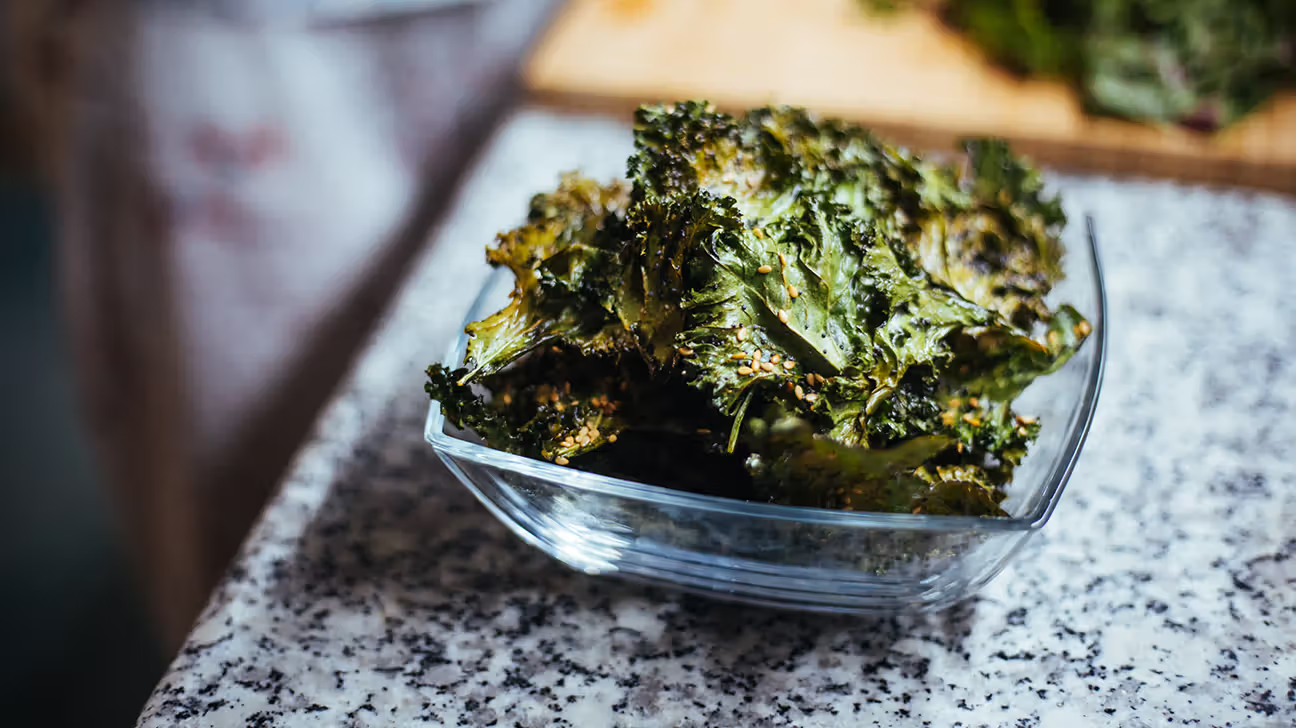
Two cups of air-popped popcorn with a light drizzle of olive oil and sea salt deliver volume, fiber, and that satisfying crunch — all for about 90 calories. A quarter cup of chickpeas tossed in olive oil and your favorite seasoning and then roasted in an air fryer makes a warm, crunchy snack right around the 100 calorie range. Six whole-grain pretzel sticks are cholesterol-free, low in sugar, and provide over three grams of fiber to hold you over.
Quick Sweet Fixes
One small banana comes in at roughly 90 calories and provides natural sugar plus potassium to fight that mid-day fatigue. An unsweetened applesauce cup runs between 50 and 80 calories depending on the brand, and it is naturally sweet with zero fat. For something a little more involved, blend half a banana with half a cup of unsweetened almond milk and three-quarters of a cup of frozen strawberries. The result is a fruit smoothie that tastes indulgent but barely crosses the 100 calorie line.
Best Store-Bought 100 Calorie Snacks Worth Keeping in Your Desk Drawer
Not everyone has time to meal prep. And that is perfectly fine. The store-bought market has come a long way since the old processed snack pack era. There are real, whole-food options available now that are pre-portioned, portable, and genuinely nutritious.
Pre-Portioned Nut Packs and Protein Snacks
Brands like Blue Diamond and Emerald sell single-serve almond packs at exactly 100 calories. They are portable, shelf-stable, and packed with protein and healthy fats. Meat sticks and jerky options — particularly those made from grass-fed beef or turkey — often come in right around the 100 calorie mark per stick and deliver serious protein. Pairing a low-fat cheese stick with a few whole-grain crackers is another fast combination that balances protein with just enough carbohydrate to curb the craving.
Bars and Bites That Hit the Sweet Spot
Several protein bar brands now specifically portion their bars at 100 calories, making them ideal for on-the-go snacking without overcommitting. Two small squares of dark chocolate at 70 percent cacao or higher give you that rich, indulgent taste for roughly 100 calories while delivering antioxidants. A plain rice cake topped with a thin spread of almond butter is a classic pairing that covers your sweet, salty, and crunchy bases all at once.
What to Check on the Label Before You Buy
Just because something says “100 calories” on the front of the package does not make it a smart choice. Flip the package over. Look for at least three grams of fiber — that is the ingredient that keeps you full. Watch for added sugars hiding under names like maltodextrin, dextrose, or high-fructose corn syrup. Compare sodium levels between brands, especially with jerky and crackers, because some brands pack in twice the sodium of their competitors for the same calorie count. The number on the front gets you in the door. The ingredient list tells you whether you should stay.
The Rise and Fall of 100 Calorie Snack Packs — And What Replaced Them
If you were alive and grocery shopping in the mid-2000s, you remember these. They were everywhere. Small pouches. Familiar brand names. A bold “100 Calories” printed across the front. And for a few years, they completely dominated the snack aisle.
How Kraft Started a $150 Million Snacking Trend in 2004
It all started in 2004 when Kraft introduced 100 calorie packs of Oreo Thin Crisps and Wheat Thin Minis. The timing was perfect. America was deep into a national conversation about obesity, portion control, and personal responsibility around food. The idea of eating your favorite snacks in a guilt-free, pre-measured package was wildly appealing. Consumers grabbed them off shelves faster than stores could stock them. Other companies saw the numbers and jumped in. General Mills and Kellogg launched their own lines. Within two years, the 100 calorie pack category went from zero to over $150 million in sales — and that figure did not even include Walmart. By 2006, you could find 100 calorie versions of Chips Ahoy, Doritos, Cheetos, Sun Chips, Ritz Crackers, and Fudge Shoppe Mini Fudge Stripes. It felt like every snack brand in America had its own miniature pouch.
Why Chips Ahoy Candy Bites and Other Fan Favorites Disappeared
Among all the varieties, the Nabisco Candy Bites line had a particularly devoted following. The Chips Ahoy Candy Bites version was a small, chocolate-coated cookie bite that people genuinely loved — not just tolerated as a diet compromise. When it quietly disappeared from shelves, consumers noticed immediately. Online forums and review sites filled with frustrated fans who had been searching store after store for months. What made it worse was that Nabisco initially told customers the product was still being manufactured and that availability was a regional decision made by grocery chains. But the boxes never came back. The same fate hit the Oreo Candy Bites, Cheese Nips Thin Crisps, and the Ritz 100 Calorie Snack Mix. One by one, the fan favorites vanished while the less popular varieties lingered.
Why Sales Dropped and What Shoppers Prefer Now
The decline was sharp. According to Datamonitor, dollar sales of Kraft’s 100 calorie Oreo Thin Crisps dropped over 30 percent in a single year. The broader category followed the same downward curve. By 2009, the trend had largely run out of steam. There were several reasons. First, consumers realized that many of these packs contained more air than food. You would open a pouch expecting a satisfying snack and find four thin wafers and a lot of empty space. Second, the ingredients were still the same processed, refined-flour formulas as the full-size products — just in a smaller bag. Third, the environmental cost was hard to ignore. All that extra packaging for a tiny handful of crackers did not sit well with increasingly eco-conscious shoppers. Today, the market has moved toward whole-food snacks with clean ingredient lists. People still want portion control, but they want it paired with actual nutrition. That shift is the direct legacy of the snack pack era — it taught an entire generation to think about portions, but it also taught them to read the back of the package, not just the front.
How to Use a 100 Calorie Snacks Handout for Meal Planning and Education
One of the most underused tools in healthy eating is also one of the simplest: a printed handout. It sounds old-school in a world of apps and trackers, but a physical reference sheet stuck to your refrigerator or pinned inside a pantry door works because it is visible at the exact moment you are making a decision.
What a Good Snack Handout Actually Includes
The best versions use visual comparisons. They show you what 100 calories actually looks like across different foods — how many almonds, how many grapes, how many crackers, how much cheese. That visual contrast is powerful because most people drastically underestimate portion sizes when they eyeball them. A well-designed handout also teaches you how to pair foods for staying power: protein plus fiber, healthy fat plus a small carbohydrate. The Nutrition Education Store sells a popular color handout that aligns with USDA MyPlate guidelines and has been used by dietitians, school nutrition programs, and corporate wellness offices for years.
Where to Find Free and Printable Versions
You do not have to spend money to get a useful reference. Government sites like Nutrition.gov maintain a printable materials section with free handouts covering snacking, portion control, and balanced eating. Many county health departments publish their own PDF snack lists tailored to local dietary patterns. Dietitian blogs frequently offer free downloadable 100 calorie snack lists that you can print and post wherever you make your food decisions — your kitchen, your office breakroom, even your gym bag.
Who Benefits Most From a Printed Handout
Parents packing school lunches are the obvious audience. A quick visual reference takes the guesswork out of choosing what goes into the lunchbox. But workplace wellness coordinators use these handouts too, posting them in breakrooms next to the coffee machine where snacking decisions happen on autopilot. Diabetes educators and registered dietitians use them in clinical counseling sessions to give patients something tangible to take home. And anyone transitioning off a structured diet benefits from having a simple, no-math-required reference that says “grab this, not that.”
Common Mistakes People Make With 100 Calorie Snacks
Having a calorie target for your snacks is a great start. But there are a few traps that can undo the whole strategy if you are not aware of them.
Eating Multiple Packs and Losing the Portion Benefit. A 2008 study published in the Journal of Consumer Research found something counterintuitive: small-pack snacking actually caused some dieters to eat more, not less. The reason was psychological. The small package size made people feel like they had permission to have another. And then another. One pack is a tool. Three packs is just a regular bag of cookies with extra packaging. The whole point of a pre-portioned snack is to eat one and move on. If you consistently find yourself reaching for a second, the format is not working for you and it may be better to portion out whole foods yourself.
Choosing Low-Calorie but Nutritionally Empty Options. Not all snacks under 100 calories are created equal. A rice cake made entirely of refined flour and air will technically hit the calorie target, but it will spike your blood sugar, leave you hungrier than before, and contribute nothing meaningful to your nutrition. Every snack you eat should include at least one of the following: protein, fiber, or healthy fat. Those are the three nutrients that slow digestion, stabilize blood sugar, and actually make you feel full. Without at least one of them, you are just eating calories for the sake of eating calories.
Ignoring Hydration Before Reaching for Food. This one is so simple that people overlook it constantly. Your brain processes thirst and hunger through overlapping signals. A glass of water before you snack is a two-second habit that eliminates a surprising number of unnecessary eating moments. You do not need to drink a gallon. Just one glass, then wait five minutes. If you are still hungry after that, eat. If not, you just saved yourself from a snack you did not actually need.
A Full Week of Snacks Under 100 Calories — Your Monday to Sunday Plan
Variety is what keeps any eating pattern sustainable. If you eat the same thing every day, boredom sets in within a week and you are back to grabbing whatever is in front of you. Here is a sample seven-day rotation that alternates between homemade and store-bought options, balances flavors across sweet, salty, savory, and crunchy, and keeps every single snack at or below 100 calories.
Monday: Mid-morning — one small banana. Afternoon — two cups of air-popped popcorn with sea salt.
Tuesday: Mid-morning — a 100 calorie pack of almonds. Afternoon — one cup of cherry tomatoes with black pepper.
Wednesday: Mid-morning — half a cup of Greek yogurt with blueberries. Afternoon — six whole-grain pretzel sticks.
Thursday: Mid-morning — one hard-boiled egg. Afternoon — one unsweetened applesauce cup.
Friday: Mid-morning — a meat stick or jerky stick. Afternoon — two cups of sliced strawberries.
Saturday: Mid-morning — a rice cake with a thin layer of almond butter. Afternoon — baby carrots with a squeeze of lemon.
Sunday: Mid-morning — two small squares of dark chocolate. Afternoon — a quarter cup of air-fried roasted chickpeas.
This plan is not meant to be followed rigidly. Swap days around. Replace options with whatever is in season or on sale. The point is to show that eating well between meals does not require variety sacrifices or complicated recipes. It just requires a short list that you rotate through.
Frequently Asked Questions
FAQ 1: What are the best 100 calorie snacks for weight loss?
The most effective options pair protein or fiber with low added sugar. Hard-boiled eggs, Greek yogurt with berries, air-popped popcorn, and pre-portioned almond packs all keep you full longer than processed alternatives. These snacks support a calorie deficit without triggering the rebound hunger that leads to overeating at your next meal.
FAQ 2: How many snacks under 100 calories should I eat per day?
Most registered dietitians recommend two to three small snacks daily between meals. If each one stays at or below 100 calories, your total snack intake adds only 200 to 300 calories to your day, which fits comfortably within a standard 1,800 to 2,200 calorie budget without crowding out your main meals.
FAQ 3: Is 100 calories too little for a snack?
Not if the snack contains protein, fiber, or healthy fat. A 100 calorie snack covers roughly five percent of an average adult’s daily intake, which is enough to bridge the gap between meals and curb hunger. The key is choosing nutrient-dense foods over empty-calorie processed options that leave you unsatisfied.
FAQ 4: Are 100 calorie snack packs actually healthy?
It depends on what is inside them. Pre-portioned packs of almonds, jerky, or whole-grain crackers offer real nutritional value. However, many packaged 100 calorie packs of cookies and chips are made with refined flour, added sugar, and unhealthy fats, providing portion control but almost zero nutritional benefit.
FAQ 5: What happened to the Chips Ahoy Candy Bites 100 calorie snack packs?
Nabisco quietly discontinued the Chips Ahoy Candy Bites along with several other popular 100 calorie pack varieties. Despite strong consumer demand and online petitions, the product disappeared from store shelves. Nabisco initially claimed the product was still manufactured, but availability dropped to zero at retailers nationwide.
FAQ 6: Why were Nabisco 100 calorie packs discontinued?
Sales of 100 calorie snack packs peaked around 2006 and then declined sharply by 2009. Consumers realized the packs contained very little food, were made with the same processed ingredients as full-size products, and generated excessive packaging waste. The market shifted toward whole-food, clean-ingredient snacks instead.
FAQ 7: How many almonds can I eat for 100 calories?
You can eat approximately 14 almonds for about 98 calories. Almonds are rich in protein, fiber, and healthy monounsaturated fats, making them one of the most satisfying nut options at the 100 calorie mark. Opt for raw or dry-roasted unsalted varieties to avoid added oils and sodium.
FAQ 8: What fruits are under 100 calories per serving?
Most single servings of whole fruit fall well under 100 calories. One small banana has about 90 calories, a medium apple has roughly 95 calories, two cups of whole strawberries come in at 92 calories, and one cup of blueberries is approximately 85 calories. Fresh fruit also delivers fiber and hydration, which helps you feel full.
FAQ 9: Can 100 calorie snacks help with portion control?
Yes. Research published in the journal Obesity found that pre-portioned small packages reduced overall calorie consumption, particularly among people who were overweight. The fixed portion removes guesswork and prevents mindless eating from large bags or containers, which studies show consistently leads to overeating.
FAQ 10: What are good 100 calorie snacks for diabetics?
Diabetic-friendly options should be low in added sugar and contain protein or healthy fat to prevent blood sugar spikes. Good choices include a handful of almonds, a cheese stick with celery, half a cup of cottage cheese, or sliced vegetables with a small portion of hummus. Always check with your healthcare provider for personalized guidance.
FAQ 11: What 100 calorie snacks can I eat before bed?
The best late-night options are light, easy to digest, and include protein or magnesium to support sleep quality. A small container of plain Greek yogurt, a cheese stick, half an avocado, or ten cashews are all solid picks. Avoid snacks high in sugar or caffeine, which can interfere with restful sleep.
FAQ 12: Are there keto-friendly snacks under 100 calories?
Absolutely. Many keto staples naturally fall under 100 calories per serving. A single cheese stick has about 80 calories, one ounce of beef or turkey jerky sits around 70 to 100 calories, and a quarter of an avocado runs approximately 80 calories. All three are high in fat or protein and very low in carbohydrates.
FAQ 13: What are good 100 calorie snacks for kids?
Kid-friendly options include a small banana, a cheese stick, a cup of grapes, a single-serve applesauce cup, or a rice cake with a thin spread of peanut butter. These snacks are familiar, easy to pack in a lunchbox, and provide real nutrients instead of the refined sugar found in most packaged children’s snacks.
FAQ 14: How do I make my own 100 calorie snack packs at home?
Measure out portions of nuts, dried fruit, popcorn, or whole-grain crackers using a kitchen scale or measuring cups, then divide them into small reusable containers or zip-lock bags. Prepping a week’s worth at once takes about 15 minutes. You control the ingredients, freshness, and cost, which is cheaper and healthier than buying pre-packaged versions.
FAQ 15: What is the most filling snack under 100 calories?
A hard-boiled egg is widely considered one of the most filling options at just 78 calories. It delivers six grams of protein plus healthy fats, which slows digestion and keeps you satisfied far longer than a carb-only snack. A close runner-up is half a cup of plain Greek yogurt, which provides about 75 calories and 10 grams of protein.
FAQ 16: Are 100 calorie snacks good for pregnancy?
Light snacks around 100 calories can help manage nausea and stabilize blood sugar between meals during pregnancy. However, pregnant women typically need an extra 300 to 500 calories per day during the second and third trimesters, so 100 calorie snacks should supplement balanced meals rather than replace them. Always follow your healthcare provider’s dietary recommendations.
FAQ 17: What store-bought 100 calorie snacks are worth buying?
Some of the top-rated options include Blue Diamond 100 calorie almond packs, Emerald mixed nut variety packs, Chomps turkey or beef jerky sticks, SkinnyPop mini popcorn bags, and Fiber One brownies at 70 calories. Look for snacks with at least three grams of fiber or protein and minimal added sugar on the nutrition label.
FAQ 18: How many cups of popcorn is 100 calories?
Roughly three cups of air-popped popcorn equal about 93 to 100 calories. Popcorn is a whole grain, high in fiber, and offers a large volume per calorie, which makes it one of the best options when you want something crunchy and satisfying. Avoid adding butter or heavy seasonings, which can quickly double the calorie count.
FAQ 19: Can eating too many 100 calorie snack packs backfire?
Yes. A 2008 study in the Journal of Consumer Research found that small-pack formatting can give dieters psychological “permission” to eat more, leading to higher total calorie intake than a single regular-sized portion. The key is treating each pack as a single serving and putting the box away after one.
FAQ 20: Where can I find a free printable 100 calorie snacks handout?
Government sites like Nutrition.gov offer free downloadable handouts on healthy snacking and portion control. Many county health departments also publish their own PDF snack lists. Dietitian blogs and community wellness programs frequently share printable references that you can post in your kitchen, office breakroom, or gym bag.
FAQ 21: What are good vegan snacks under 100 calories?
Excellent plant-based choices include a cup of edamame (about 95 calories), a quarter cup of roasted chickpeas, two cups of air-popped popcorn, a small handful of raw cashews, sliced cucumber with a tablespoon of hummus, or a frozen fruit smoothie. These options provide fiber, plant protein, and essential nutrients without any animal products.
FAQ 22: What are 100 calorie snacks I can take to the office?
Desk-friendly options that require no refrigeration include pre-portioned almond or mixed nut packs, individual popcorn bags, beef or turkey jerky sticks, whole-grain pretzel sticks, rice cakes, and protein bars portioned at 100 calories. Keep a small stash in your desk drawer so you always have a smart option when the afternoon slump hits.
FAQ 23: Do 100 calorie snacks really help you lose weight?
They can, but only as part of a broader calorie-aware eating plan. Snacking at the 100 calorie level helps prevent the extreme hunger that leads to overeating at meals, which supports a sustainable calorie deficit. However, the nutritional quality of the snack matters just as much as the calorie count — protein and fiber keep you full, while refined sugar does not.
FAQ 24: What does 100 calories of chocolate look like?
Two small squares of dark chocolate at 70 percent cacao or higher come in at roughly 100 calories. That is about 20 grams or two-thirds of an ounce. Dark chocolate also delivers antioxidants and magnesium, making it a smarter sweet treat than milk chocolate, which packs more sugar and less nutritional benefit per calorie.
Conclusion
Smart snacking is not about deprivation. It is about preparation. When you keep a handful of reliable options within arm’s reach — whether that means a bowl of prepped fruit in the fridge, a few store-bought packs in your desk, or a printable handout pinned to your pantry door — the 3 p.m. decision stops being a struggle and starts being automatic.
The 100 calorie framework works because it is simple enough to follow without tracking apps, flexible enough to fit any dietary preference, and forgiving enough that no single snack choice can derail your entire day. You do not need perfection. You need a short list, a rough portion size, and the habit of pausing for two seconds before you eat.
Whether you are a parent packing lunchboxes, an office worker fighting the afternoon crash, or someone trying to build healthier habits one small decision at a time, the approach is the same. Pick snacks that include real ingredients. Keep them visible and accessible. And stop treating snacking like something you need to earn or apologize for.
It is one small bite between meals. Get it right often enough, and everything else gets a little easier.