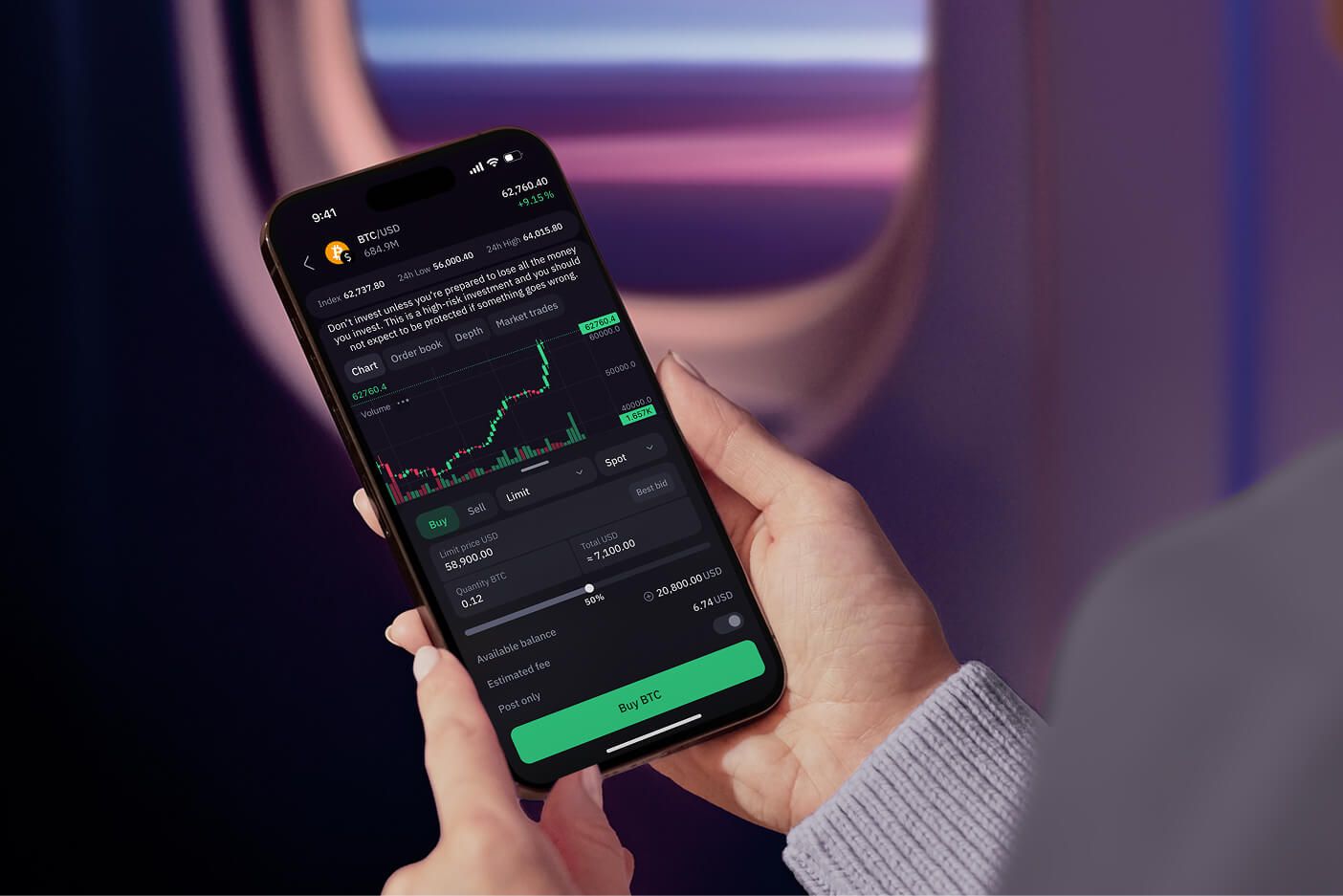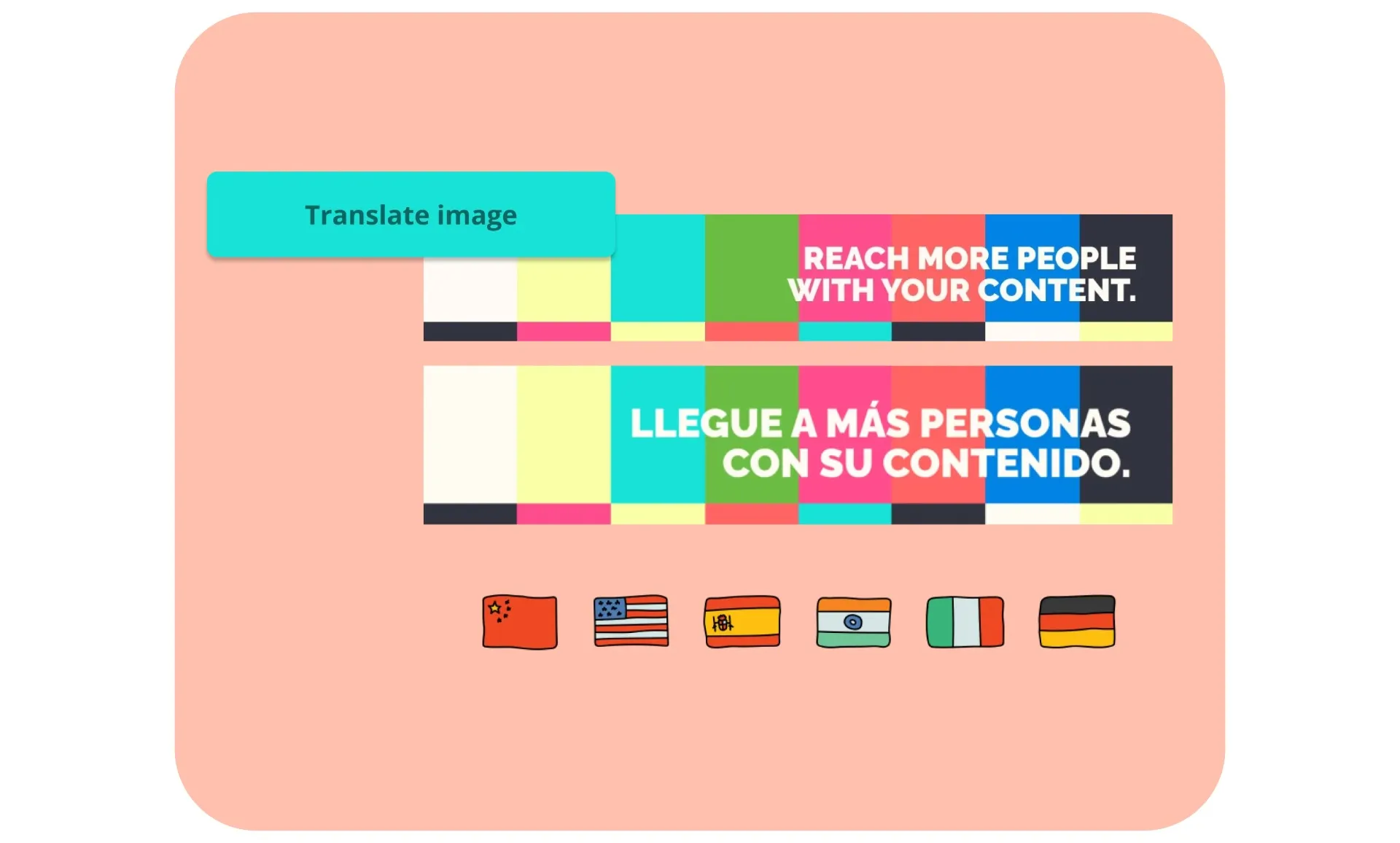
Picture this. You are sitting in a café in Berlin, staring at a menu written entirely in German. Your flight to Istanbul leaves in four hours, and you still need to send an urgent email to a client in London — in English. A decade ago, you would have been stuck flipping through a pocket dictionary. Today, you pull out your phone, open an app, and the words rearrange themselves into a language you understand. That small act, so routine now that we barely think about it, is çeviri at work.
Çeviri, at its simplest, means translation. But anyone who has ever tried to move meaning from one language to another knows it is far from simple. Words carry culture, history, humor, and emotion. Swap the wrong term, miss a subtle shade of formality, and your perfectly polished sentence suddenly sounds awkward — or worse, offensive. This is why understanding how translation really works matters more today than ever. Whether you are a student wrestling with an English research paper, a business owner expanding into the German market, or a grandmother trying to video-call her grandson in Munich, the tools and strategies you choose shape how well your message lands.
In the sections ahead, we will break down everything from the rise of Google çeviri and its limitations to practical tips for the two most searched language pairs among Turkish speakers — ingilizce türkçe çeviri and almanca türkçe çeviri. We will also look at when machines can handle the job and when you absolutely need a human translator by your side. By the end, you will know how to pick the right approach for every situation — saving yourself time, money, and a few red-faced moments along the way.
The History and Importance of Translation
Translation is as old as civilization itself. The Rosetta Stone, carved over two thousand years ago, exists precisely because rulers understood that governing a multilingual empire required putting the same decree into multiple scripts. Ottoman-era dragomans served as interpreters between the Sultan’s court and foreign diplomats. And in the 1950s, early computer scientists at Georgetown University fed Russian sentences into an IBM machine, hoping a computer could do in seconds what a human translator took hours to complete. That experiment was crude, but the ambition behind it never faded.
Fast-forward to the present day, and we live in an era where the global language services industry is on track to surpass one hundred billion dollars in value within the next few years. The demand is driven by several forces at once. International trade keeps growing, with Turkey alone exporting goods to over 200 countries. Tourism brings millions of foreign visitors to Istanbul, Antalya, and Cappadocia every year. Remote work has connected Turkish software developers, designers, and marketers with teams scattered across Europe and North America. Social media has turned everyone into a publisher — and publishers need to reach audiences who do not always speak their language. In this landscape, translation is no longer a specialty service reserved for diplomats and literature professors. It is a daily necessity for ordinary people navigating a connected world.
Google Çeviri — Strengths, Limits, and Smart Usage Tips
No conversation about modern translation is complete without mentioning Google çeviri. Since its launch in 2006, it has grown from a clunky phrase-swapper into a genuinely powerful tool that supports over 130 languages, translates documents in PDF and Word formats, reads text through your phone camera in real time, and even handles live bilingual conversations.
The engine behind this is Google’s Neural Machine Translation system, introduced in 2016. Unlike the older statistical approach that chopped sentences into fragments and translated each piece separately, the neural model processes entire sentences as a whole. It considers the full context before deciding on the output. The result is noticeably more natural phrasing, especially for widely spoken language pairs like English-Spanish or French-German.
Where It Works Well
For quick, everyday tasks, the platform is hard to beat. Need to understand a news headline in Portuguese? Done. Want to know what a Korean restaurant review says before booking a table? A few seconds and you have your answer. Traveling abroad and need to ask for directions? The conversation mode lets you speak into your phone and hear the response in the other language almost instantly. For low-stakes, informal situations, it saves time and gets the job done.
Where It Falls Short
The problems start when the stakes go up. Legal contracts, medical reports, and technical manuals demand precision that machine translation still cannot guarantee. Turkish, in particular, is an agglutinative language — meaning a single word can carry suffixes that convey tense, mood, possession, and negation all at once. A small misread of one suffix can flip the meaning of an entire sentence. Idiomatic expressions are another weak spot. Try putting “gözden düşmek” into a machine translator, and you might get something about eyes falling instead of the intended meaning of falling out of favor.
Tips for Better Results
There are a few practical habits that improve output quality dramatically. First, write short and clear source sentences. Long, complex clauses confuse the algorithm. Second, avoid slang, abbreviations, and incomplete sentences in the input — the cleaner the text you feed in, the cleaner the output you get back. Third, always cross-check important results with a second tool. DeepL, Tureng, and Reverso Context each have strengths that complement Google’s engine. Finally, use the “suggest an edit” feature when you notice a bad output. The system learns from user corrections, and your fix helps improve results for everyone.
İngilizce Türkçe Çeviri — A Practical Guide to the Most Searched Language Pair
Among Turkish speakers, ingilizce türkçe çeviri is far and away the most frequently searched translation query. And that makes perfect sense. English dominates global business, academic publishing, software development, entertainment, and diplomacy. If you want to read the latest research in your field, the odds are strong that the paper is written in English. If you are launching an app, your interface and documentation need an English version to reach international users. If you simply enjoy watching Hollywood films or following English-language podcasts, you are engaging in informal ingilizce çeviri every single day.
Common Mistakes in English-Turkish Translation
The structural differences between English and Turkish create traps that catch both beginners and experienced speakers. English follows a Subject-Verb-Object word order — “The cat sat on the mat.” Turkish flips that to Subject-Object-Verb — the equivalent sentence places the verb at the end. Machine translators often struggle to rearrange these elements gracefully, especially in longer, more complex sentences.
False friends and misleading cognates trip people up as well. The Turkish word “fabrika” looks like “fabric” but actually means “factory.” Similarly, “sempatik” in Turkish means likable or pleasant, not “sympathetic” in the English sense. These subtle mismatches can distort meaning in ways that are hard to spot unless you are actively looking for them.
Another frequent issue is register mismatch. Casual English translated into overly formal Turkish sounds stiff and robotic. Formal English translated into overly casual Turkish sounds disrespectful. Matching the tone of the original text to the cultural norms of the target language requires judgment that no algorithm fully masters yet.
Best Tools and Resources for English Translation
For ingilizce çeviri, several tools stand out depending on the task. Google Translate works for quick lookups and casual understanding. DeepL often produces smoother, more natural-sounding Turkish output for longer paragraphs. Tureng is excellent for single-word lookups with multiple contextual meanings and usage examples. Reverso Context shows you how a word or phrase has been used in real translated documents, giving you a sense of natural phrasing.
For anything professional or high-stakes, the recommended workflow is straightforward: generate a machine draft, then have a human reviewer — ideally a native speaker of the target language — refine and polish the output. This hybrid approach balances speed with accuracy and has become the industry standard in 2026.
Almanca Türkçe Çeviri — Beyond the Diaspora
Germany is home to over three million people of Turkish descent, making almanca türkçe çeviri one of the most practically important language pairs in Europe. But the demand goes well beyond the diaspora. Bilateral trade between Turkey and Germany runs into tens of billions of euros annually, creating a constant flow of contracts, invoices, product specifications, and regulatory documents that need accurate translation.
Why This Language Pair Is Uniquely Challenging
German and Turkish are structurally different in ways that make translation tricky. German loves compound nouns — a single word like “Handschuhschneeballwerfer” packs an entire concept into one long string. Machine translators sometimes choke on these, producing awkward or nonsensical output. German grammatical gender (der, die, das) has no equivalent in Turkish, so the translator must make judgment calls about how to handle references that rely on gender markers. And the formal-informal distinction between “Sie” and “du” mirrors the Turkish “siz” and “sen” divide, but the cultural rules for when to switch are not identical — translating the wrong register can come across as rude or overly distant.
Practical Recommendations
For daily quick lookups in almanca türkçe çeviri, PONS and Langenscheidt online dictionaries remain strong choices with rich entry detail and example sentences. Eflasoft offers an offline dictionary with over 82,000 words specifically for this language pair, along with flashcards and exercises that help build vocabulary. For longer documents, DeepL handles German-Turkish pairs with noticeably better fluency than most competitors. And for anything official — sworn translations for residence permits, university enrollment documents, or court filings — a certified human translator is not optional. German bureaucracy is exacting, and a mistranslated form can delay your application by months.
Machine Translation vs. Human Translation — When to Use Which
One of the most common questions people ask about çeviri is whether machines have finally caught up with humans. The short answer is: it depends entirely on the context.
When Machines Are Enough
Machine translation shines in situations where speed matters more than perfection. Scanning foreign news articles to stay informed, understanding a customer review written in another language, translating internal team messages that do not leave the company — these are all cases where an automated tool delivers value without significant risk. The cost is zero, the speed is instant, and the output is usually good enough to act on.
When Humans Are Essential
The moment accuracy becomes non-negotiable, human translators earn their place. Legal contracts where a misplaced clause can cost millions. Medical documents where a dosage error can endanger lives. Literary translation where the beauty of the language is the entire point. Marketing transcreation where a campaign slogan needs to land with the same emotional punch in the target culture. Certified and notarized translations demanded by government agencies for immigration or academic purposes. In all of these cases, no machine can match the judgment, cultural awareness, and creative problem-solving of an experienced human translator.
The Hybrid Approach
The smartest strategy in 2026 combines both. A machine produces a rapid first draft, and a professional linguist steps in to review, refine, and correct. This “human-in-the-loop” model cuts turnaround time by 30 to 50 percent compared to translating from scratch while maintaining the quality standards that critical documents require. It is no longer an experimental method — it is how most major translation agencies and enterprise localization teams operate today.
Trends Shaping the Çeviri Landscape in 2026
The translation world is evolving fast, and staying informed about current trends helps you make better decisions about which tools and services to invest in.
Large Language Models and Conversational AI
ChatGPT, Gemini, and similar large language models have changed what people expect from translation. These tools understand context, maintain tone, handle idiomatic expressions with surprising skill, and can even adjust formality levels on request. They are not dedicated translation engines, but their versatility makes them increasingly popular for everyday tasks. The key difference from traditional machine translators is their ability to take instructions — you can tell them to translate a paragraph “in a friendly, informal tone” or “using medical terminology,” and they adjust accordingly.
Real-Time and Multimedia Translation
Live speech-to-text translation for meetings and conferences has moved from experimental to mainstream. Video platforms now offer automated subtitle generation in dozens of languages. Wearable translation earbuds allow travelers to have face-to-face conversations across language barriers without pulling out a phone. These advances are expanding the definition of what translation means — it is no longer just about text on a page.
Privacy and Ethics
One trend that deserves more attention is data security. Every time you paste a confidential document into a free online translator, that text passes through external servers. For personal use, the risk is low. For businesses handling sensitive contracts, patient records, or proprietary research, it is a genuine concern. Enterprise-grade tools with end-to-end encryption and compliance certifications like ISO 27001 and GDPR exist for exactly this reason. Choosing the right tool is not just about output quality — it is also about protecting your data.
Five Criteria for Choosing the Right Translation Tool
Not every tool suits every need. Here are the five factors worth weighing before you commit.
Language pair strength is the first consideration. A tool might be excellent for English-French but mediocre for Turkish-German. Test your specific pair before relying on it for important work.
Contextual accuracy matters more than raw word-matching. Tools that process full sentences and consider surrounding context produce noticeably better output than those that translate phrase by phrase.
Privacy and security should never be an afterthought, especially for business or legal content. Check where the data goes after you paste it and whether the provider stores your input.
File and format support becomes critical when you need to translate entire documents. The ability to handle PDFs, Word files, and presentations while preserving layout saves hours of reformatting work.
Pricing rounds out the picture. Free tiers work for personal use. Subscription plans suit regular professional needs. And per-word professional rates are justified when the stakes are high enough that a mistake would cost more than the translator’s fee.
Conclusion
Translation touches nearly every corner of modern life — from the student decoding an academic paper to the entrepreneur negotiating a cross-border deal. The tools available today are more powerful, more accessible, and more affordable than anything previous generations could have imagined. Google çeviri alone handles billions of requests every day. Specialized platforms like DeepL and Tureng fill gaps that general-purpose engines leave behind. And large language models are pushing the boundaries of what automated systems can achieve.
But tools are only as good as the understanding behind them. Knowing when a machine can handle the job and when a professional linguist needs to step in is a skill in itself — one that saves time, money, and reputation. Whether your priority is English-to-Turkish translation for academic work, almanca türkçe çeviri for navigating life in Germany, or any other language pair, the strategy remains the same. Start with the right tool for the task. Verify the output. And never assume that speed alone equals quality.
The world of çeviri will keep evolving. Real-time speech translation, AI-driven transcreation, and privacy-first enterprise platforms are already reshaping the landscape in 2026. The people who stay curious, test new tools, and understand both the power and the limits of technology will always communicate better — no matter how many languages stand between them and their audience.
FAQ 1: What does çeviri mean in English?
Çeviri is the standard Turkish word for “translation.” It refers to the process of converting written or spoken content from one language into another while preserving the original meaning, tone, and context. While “tercüme” is also used in Turkish and comes from Arabic roots, çeviri is the more commonly used native Turkish term that covers both written and spoken translation in everyday language.
FAQ 2: Is Google Çeviri accurate for Turkish translations?
Google Çeviri performs reasonably well for simple, everyday Turkish sentences and achieves an estimated accuracy rate above 90% for basic text. However, it struggles significantly with Turkish-specific challenges such as agglutinative word structures, idiomatic expressions, and formal-versus-informal register differences. Research from Talkpal and independent studies confirm that Google Translate handles straightforward Turkish sentences with high accuracy but frequently produces awkward or misleading output when dealing with complex, literary, or culturally nuanced content.
FAQ 3: What is the difference between çeviri and tercüme?
Both words mean translation in Turkish, but they have different linguistic origins and slightly different traditional uses. Tercüme is borrowed from Arabic and historically referred more to oral interpretation and diplomatic translation. Çeviri is the native Turkish term derived from the verb “çevirmek” (to turn or convert) and is used more broadly today for all forms of translation, including written, spoken, and digital. In modern usage, the two words are largely interchangeable, though çeviri is more common in everyday conversation and digital contexts.
FAQ 4: Which is more accurate for Turkish — DeepL or Google Translate?
According to multiple 2026 benchmarks including studies by Intento and IntlPull, DeepL generally produces more natural and contextually accurate translations for European language pairs. For Turkish specifically, DeepL added Turkish as a supported language and handles nuanced sentence structures and formal text better than Google Translate. However, Google Translate still leads in broader language coverage with over 130 languages supported and performs better for quick, casual lookups. For professional Turkish content, most experts recommend DeepL as the starting point followed by human review.
FAQ 5: Can I use free online çeviri tools for legal documents?
No. Free translation tools like Google Translate, DeepL, and Microsoft Translator are not suitable for legal documents. Courts, government agencies, immigration offices, and universities in Turkey and abroad require certified or sworn translations completed by authorized human translators. In Turkey, sworn translators must hold an oath certificate from a notary public, and their translations carry legal weight. Machine-translated legal documents are routinely rejected by institutions and can result in serious delays or legal complications.
FAQ 6: How many languages does Google Çeviri support in 2026?
As of 2026, Google Translate supports text translation between more than 130 languages. Additional features vary by language — camera-based instant translation is available for approximately 94 languages, offline translation packs cover around 59 languages, conversation mode supports about 70 languages, and handwriting recognition works for roughly 96 languages. Google has also announced long-term plans to eventually expand support to over 1,000 languages, though no specific timeline has been confirmed for that milestone.
FAQ 7: What is the best tool for ingilizce türkçe çeviri?
The best tool depends on the task at hand. For quick, casual translations, Google Translate remains the most accessible option due to its speed, free access, and wide feature set including camera and conversation modes. For longer paragraphs and more natural-sounding output, DeepL generally produces smoother English-to-Turkish results. For single-word lookups with multiple contextual meanings, the Tureng dictionary is highly regarded among Turkish speakers. For professional or high-stakes documents, a hybrid workflow is recommended — generate a machine draft using DeepL or Google, then have a native Turkish-speaking professional review and refine the output.
FAQ 8: Will AI completely replace human translators?
Not in the foreseeable future. While AI translation tools have improved dramatically, they still fall short in areas that require deep cultural understanding, creative adaptation, emotional nuance, and legal accountability. The American Translators Association has publicly stated that the risks of relying solely on AI translation in high-stakes fields such as law, medicine, and diplomacy are significant. A 2026 CNN report highlighted that professional translators are increasingly working alongside AI rather than being replaced by it. The industry consensus is moving toward a hybrid model where AI handles first drafts and high-volume tasks, while human linguists provide the final layer of quality assurance.
FAQ 9: Is it safe to paste confidential documents into free çeviri tools?
There are real privacy risks involved. When you paste text into free online translation tools, the data typically passes through external servers and may be stored, logged, or used for training purposes. For personal or casual content, this is generally low risk. However, for business contracts, medical records, financial data, or any sensitive material, free tools are not advisable. Enterprise-grade translation platforms with end-to-end encryption, ISO 27001 certification, and GDPR compliance are designed specifically for handling confidential documents. Always review the privacy policy of any translation tool before submitting sensitive information.
FAQ 10: Why is almanca türkçe çeviri considered particularly challenging?
German-to-Turkish translation presents unique structural difficulties that trip up both machine translators and human learners. German is known for extremely long compound nouns that pack multiple concepts into a single word, which machine translators often fail to break down correctly. German grammatical gender (der, die, das) has no equivalent in Turkish, creating ambiguity in the translated output. Additionally, both languages have formal and informal address systems — “Sie/du” in German and “siz/sen” in Turkish — but the cultural rules for switching between them are not identical, which can lead to inappropriate tone if the translator does not account for context.
FAQ 11: What is a sworn or certified translation in Turkey?
A sworn translation in Turkey is a legally recognized document translated by a “yeminli tercüman” (sworn translator) who has taken an official oath before a Turkish notary public. The translator must prove their language competence by submitting diplomas or language certificates to the notary, who then issues an oath certificate. When a sworn translator signs and stamps a translated document, it carries legal validity and is accepted by Turkish courts, government agencies, universities, and official institutions. For additional authentication, the document can also be notarized, where the notary verifies the translator’s identity and affixes an official seal. Fees for notarized translations in Turkey are regulated annually by the Turkish Notaries’ Union.
FAQ 12: How can I improve the accuracy of machine çeviri output?
There are several practical steps that significantly improve results. Write short, clear source sentences and avoid complex multi-clause structures. Remove slang, abbreviations, and incomplete thoughts from your input text. Always specify the correct source language instead of relying on auto-detection. Cross-check important translations with a second tool — for example, run the same text through both Google Translate and DeepL, then compare. Use the “suggest an edit” feature on Google Translate when you notice errors, which helps improve community translations over time. Most importantly, always proofread machine output manually before using it for anything important.
FAQ 13: What is the difference between translation and localization?
Translation converts text from one language to another while preserving the original meaning. Localization goes further — it adapts the entire content to fit the cultural norms, units of measurement, date formats, currency, idioms, and lifestyle expectations of the target audience. For example, translating a recipe from English to Turkish might convert cups to grams, replace unfamiliar ingredients with local alternatives, and adjust cooking instructions to reflect common Turkish kitchen equipment. Localization is essential for software interfaces, marketing campaigns, e-commerce platforms, and any content intended to feel native to the reader rather than just readable.
FAQ 14: How much does professional Turkish translation cost?
Pricing varies significantly depending on the language pair, subject matter, urgency, and certification requirements. General Turkish-English translation typically ranges from $0.06 to $0.12 per word for standard content. Technical, legal, and medical translations command higher rates, often between $0.10 and $0.20 per word, due to the specialized expertise required. Sworn and notarized translations in Turkey carry additional notary fees regulated by the Turkish Notaries’ Union, calculated based on the number of text lines and pages. Rush delivery and weekend turnaround also increase costs. For large-volume projects, many agencies offer discounted per-word rates or monthly retainer packages.
FAQ 15: Can Google Çeviri translate entire documents like PDFs and Word files?
Yes. Google Translate supports document translation for files in .docx, .pdf, .pptx, and .xlsx formats, with a maximum file size of 10 MB. PDF documents must be under 300 pages. The tool attempts to preserve the original formatting and layout of the document, though results vary depending on the complexity of the file. For documents that exceed these limits, Google recommends using its Cloud Translation API, which is designed for larger-scale enterprise translation needs. It is worth noting that document translation through Google Translate is currently supported only on desktop browsers and is not available on smaller screens or mobile devices.
FAQ 16: What are the biggest mistakes people make with ingilizce çeviri?
The most common mistake is over-reliance on machine translation without any human review. Other frequent errors include ignoring word-order differences between English (Subject-Verb-Object) and Turkish (Subject-Object-Verb), which leads to awkward sentence structures. False friends and misleading cognates catch many people off guard — for example, “fabrika” in Turkish means factory, not fabric. Register mismatch is another persistent issue where casual English gets translated into overly stiff Turkish, or formal English comes out too informal. Finally, many users feed long, complex sentences into translation tools when shorter, simpler input would produce far better results.
FAQ 17: What is machine translation post-editing (MTPE)?
Machine translation post-editing is a professional workflow where a machine translator generates the initial draft and a qualified human linguist then reviews, corrects, and polishes the output. There are two levels: light post-editing, which focuses on fixing critical errors to make the text understandable, and full post-editing, which refines the translation to publication-ready quality. MTPE has become the industry standard in 2026 because it combines the speed and cost-efficiency of machine translation with the accuracy and cultural sensitivity of human expertise. Studies show that MTPE reduces turnaround time by 30 to 50 percent compared to translating entirely from scratch.
FAQ 18: Does Google Çeviri work offline?
Yes, partially. Google Translate offers downloadable offline language packs for approximately 59 languages, including Turkish. Once downloaded to your mobile device, these packs allow basic text translation without an internet connection. However, offline translations are generally less accurate than online translations because they use smaller, compressed language models. Features like camera translation, conversation mode, and document translation require an active internet connection to function. For travelers who need reliable offline access, downloading the relevant language packs before departure is highly recommended.
FAQ 19: What are the best çeviri apps for travelers visiting Turkey?
For travelers, Google Translate remains the top all-around choice due to its camera translation feature, offline packs, and conversation mode. Microsoft Translator offers similar functionality with a slightly different interface and strong integration with other Microsoft services. For more context-aware translations, DeepL’s mobile app delivers noticeably more natural Turkish output for longer phrases. Dedicated Turkish-English translator apps like the one developed by ProPhrasebook are praised for their simplicity and offline capability. For travelers who want to learn Turkish alongside translating, Lingopie offers immersive learning through Turkish TV shows and movies with interactive subtitles.
FAQ 20: How do large language models like ChatGPT compare to traditional çeviri tools?
Large language models such as ChatGPT and Gemini handle translation differently from dedicated tools like Google Translate or DeepL. Traditional tools are optimized purely for translation speed and accuracy across many languages. LLMs, on the other hand, understand instructions — you can ask them to translate a paragraph in an informal tone, adjust formality for a business email, provide multiple translation alternatives, or explain why a particular word choice is better. This flexibility makes LLMs especially useful for creative, marketing, and context-sensitive translation tasks. However, they can be slower, sometimes hallucinate content, and lack features like document upload, camera translation, and offline mode that dedicated translation apps offer.
FAQ 21: Is Turkish a difficult language to translate accurately?
Yes, Turkish is widely considered one of the more challenging languages for machine translation. It is an agglutinative language, meaning that suffixes are stacked onto root words to express tense, mood, possession, negation, and other grammatical functions — a single Turkish word can carry the meaning of an entire English sentence. This makes word-by-word translation nearly impossible. Turkish also follows Subject-Object-Verb word order, which differs from the Subject-Verb-Object structure of English, German, and most European languages. Additionally, vowel harmony rules, extensive use of postpositions instead of prepositions, and rich idiomatic expressions all add layers of complexity that machine translators frequently mishandle.
FAQ 22: What documents commonly require certified çeviri for immigration purposes?
Immigration authorities in Turkey, Germany, the United States, and most other countries require certified or sworn translations for a range of official documents. The most commonly requested include birth certificates, marriage certificates, divorce decrees, death certificates, academic diplomas and transcripts, police clearance records, medical reports, financial statements, employment contracts, adoption papers, residence permits, powers of attorney, and court judgments. Each country has specific requirements for what qualifies as a certified translation, so it is essential to verify the exact standards of the receiving institution before commissioning the work.
FAQ 23: How is real-time speech translation changing the çeviri landscape in 2026?
Real-time speech translation has moved from experimental novelty to mainstream tool in 2026. Platforms like Google Translate’s conversation mode, Microsoft Translator’s live captioning, and newer specialized apps like JotMe and Transync AI now offer near-instant spoken translation for meetings, conferences, and customer support calls. Wearable translation earbuds from companies like Timekettle allow face-to-face multilingual conversations without pulling out a phone. Video platforms increasingly offer automated subtitle generation in dozens of languages. These advances are fundamentally expanding what translation means — it is no longer confined to text on a screen but now encompasses live voice, video content, and immersive real-time communication across language barriers.
FAQ 24: What should I look for when choosing a professional translation service?
Five factors matter most when selecting a translation provider. First, verify their expertise in your specific language pair — a service that excels in English-French may not have the same depth for Turkish-German. Second, check their subject-matter specialization, especially for legal, medical, or technical content where terminology precision is critical. Third, ask about their quality assurance process — reputable services use a translate-edit-proofread workflow with at least two linguists reviewing every document. Fourth, confirm their data security practices, including encryption protocols, non-disclosure agreements, and compliance certifications like ISO 27001 or GDPR. Fifth, evaluate turnaround time and pricing transparency — reliable providers give clear per-word or per-page quotes upfront and honor delivery deadlines consistently.